

To maintain the integrity of UGG boots beyond a single season, a quality ugg repellent spray is an essential tool. It is the most effective measure for shielding the delicate twin-face sheepskin from water, salt, and dirt. This application creates an invisible barrier, preventing stains from setting and preserving the suede's natural texture and color.
Understanding Suede's Vulnerability
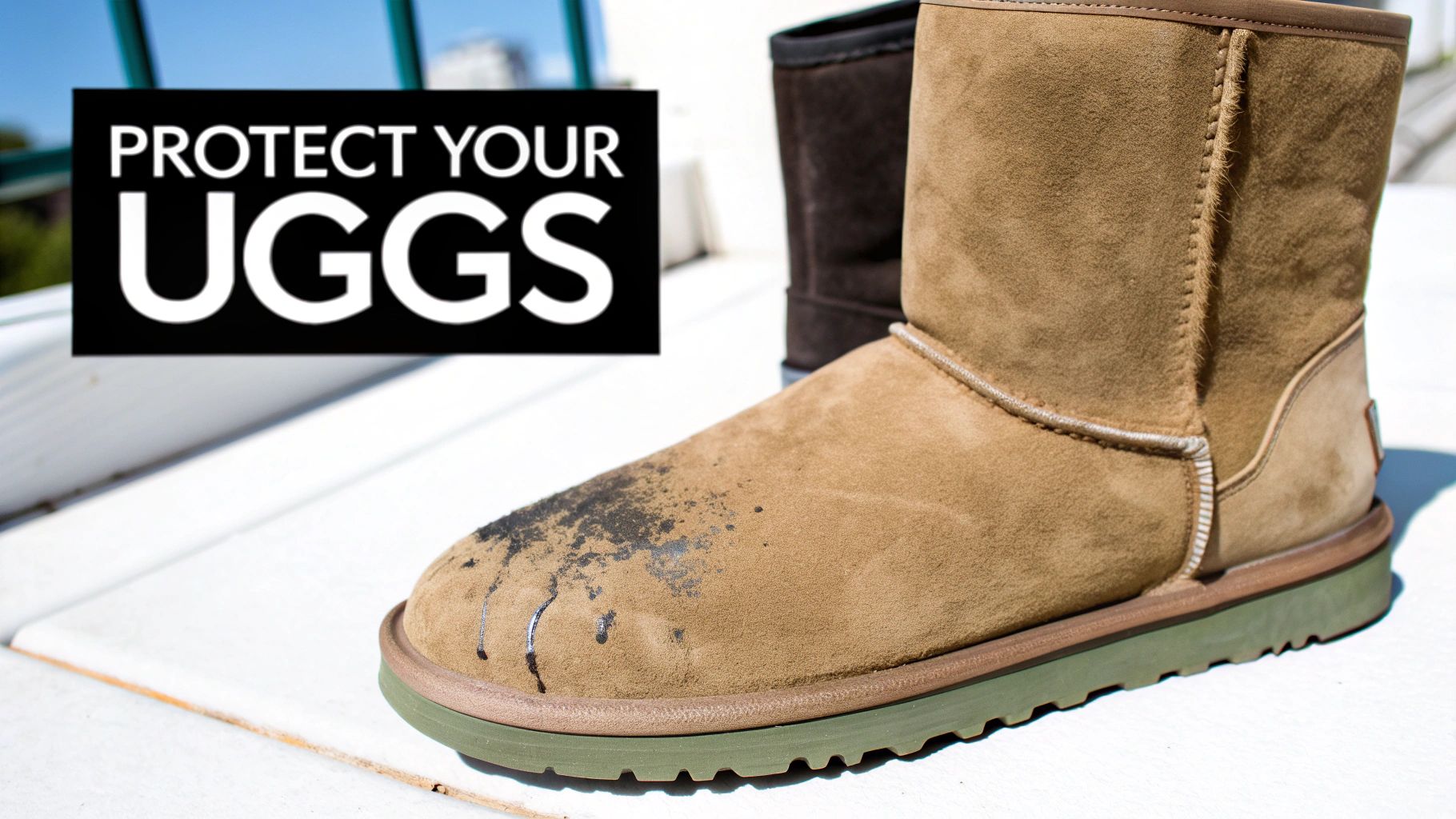
The exceptional comfort of UGG boots is derived from their twin-face sheepskin construction. However, the very properties that make them comfortable—the soft, porous nap of the suede—also make them highly susceptible to environmental damage. Untreated suede readily absorbs liquids, leading to permanent alteration.
This absorption is the direct cause of water spots and salt lines. When water penetrates the suede and subsequently evaporates, it displaces the material's delicate fibers and natural oils. The result is often a stiffened, darkened area where the texture and color have been permanently changed.
The Material Science of Suede Damage
Unlike top-grain leather, which possesses a sealed outer layer, suede is the flesh-side of the hide, lacking a natural protective surface. This structural difference accounts for its velvety hand-feel and its inherent vulnerability.
- Water Absorption: The primary threat, leading to discoloration, textural changes (stiffness), and the formation of distinct water spots.
- Salt Stains: De-icing salt in winter moisture leaches oils and moisture from the suede, leaving behind damaging crystalline deposits that are difficult to remove.
- Dirt and Oil: Particulate matter becomes embedded within the suede's fibers, causing progressive discoloration and attracting further contaminants.
This is not anecdotal. When sheepskin footwear gained mass popularity, cosmetic damage from water and salt quickly became the leading cause of consumer dissatisfaction. Retail audits have indicated that over 60% of complaints regarding sheepskin boots were related to preventable cosmetic issues, not manufacturing defects. You can explore more data about consumer product care trends in the footwear industry to understand the broader market context.
Proactive care is not merely a recommendation; it is essential for protecting the investment made in premium footwear. A properly formulated repellent spray creates a hydrophobic barrier, providing crucial time to address spills before they can penetrate the material and cause irreversible damage.
Beyond Simple Water Resistance
While avoiding precipitation is ideal, it is not always practical. A high-quality ugg repellent spray serves as the primary defense, allowing the suede to maintain its natural breathability while preventing liquid ingress.
This single, preparatory step is often the determining factor in a boot's lifespan, separating footwear that lasts one season from a pair that remains in a wardrobe for years. It is the foundation of a sound suede care regimen, ensuring UGGs retain their softness, color, and serviceability.
Selecting the Correct Repellent Spray for Suede
The choice of repellent spray is a critical material science decision. An improper formulation can be as detrimental to UGGs as exposure to the elements. Many general-purpose sprays utilize heavy silicones, which create an occlusive, plastic-like film. While this may block some water, it critically compromises the suede's breathability, trapping moisture vapor and potentially leading to discoloration or material degradation over time.
Effective protection operates on a more sophisticated principle. It is not about creating an impermeable seal. Suede must breathe. A superior formula functions at a microscopic level, bonding to individual suede fibers. This creates a surface tension that causes water to bead and roll off, while allowing air and water vapor to permeate freely.
This distinction is fundamental to preserving the aesthetic, tactile properties, and longevity of the sheepskin.
Analyzing Formula Components
When evaluating a product, focus on its functional properties over marketing claims. The objective is a spray that provides robust protection without altering the suede's inherent characteristics. Formulations developed specifically for delicate napped leathers like suede and nubuck are strongly preferred.
The definitive test of a quality ugg repellent spray is its invisibility after application. Once fully cured, the suede should exhibit no change in hand-feel; it should remain soft and velvety, not stiff, sticky, or oily.
Formulations to Avoid for Suede Protection
Understanding which ingredients are incompatible with premium footwear is as important as identifying beneficial ones. Certain chemical agents are contraindicated for use on sheepskin.
- Heavy Silicones: As noted, these create a non-breathable layer that suffocates the suede's natural fibers, leading to a loss of texture and potential moisture damage.
- Petroleum-Based Solvents: These aggressive solvents can strip the natural conditioning oils from the sheepskin, leaving it dry, brittle, and susceptible to cracking.
- Aggressive Propellants: Certain aerosol delivery systems can project the formula unevenly, causing oversaturation in spots that can permanently darken the material.
A well-engineered protector utilizes advanced, breathable polymers that work in concert with the material's structure. By making an informed selection, you are investing in the long-term preservation of your UGGs' color, texture, and character.
For a more detailed analysis, explore our comprehensive guide to suede and leather waterproof spray technology. This knowledge is key to maximizing the lifespan of your footwear.
Proper Application Technique for UGG Repellent Spray
The efficacy of even the most advanced repellent spray is contingent upon proper application. Technique is as critical as the chemical formulation itself.
A rushed or improper application results in incomplete coverage, leaving the boots vulnerable to the very water and stain damage the process is meant to prevent. The objective is not merely to wet the surface, but to create a uniform, durable, and invisible shield that bonds completely with every suede fiber.
Consider the analogy of painting a wall: applying a finish coat over a dirty, unprepared surface yields a flawed result. Any pre-existing dirt or debris on the boots will become trapped beneath the protective barrier, potentially causing permanent discoloration.
Step 1: Surface Preparation
Before application, the suede must be properly prepared. This initial step is non-negotiable, as it ensures the formula can bond directly to the material's nap for maximum effectiveness and durability.
Begin by brushing both boots thoroughly with a dedicated suede brush. Use consistent, unidirectional strokes to lift the nap and dislodge any embedded dust or particulates. This process also revives the suede's texture and prepares the fibers for treatment. For minor, dried-on spots, localized pressure can be applied, but aggressive scrubbing must be avoided to prevent damage to the nap.
This flowchart outlines the criteria for selecting a spray that complements suede's properties.
As illustrated, a gentle, breathable formula is the cornerstone of effective, non-damaging protection.
Consult this checklist before beginning the application process.
Pre-Application Checklist
Ensure optimal results by verifying these conditions before applying the repellent.
| Checklist Item | Rationale | Professional Recommendation |
|---|---|---|
| Boots are completely dry | Applying repellent to damp suede traps moisture, which can lead to watermarks and material degradation from within. | After cleaning, allow a full 24-48 hours for air drying before treatment. |
| Boots are clean and brushed | Dirt and dust impede the repellent's ability to bond with suede fibers, creating vulnerabilities in the protective barrier. | Utilize a proper suede brush and eraser kit to address any scuffs or spots prior to application. |
| Work in a ventilated area | Repellent formulas contain solvents and propellants that require adequate ventilation for safe use. | Application is best performed outdoors. If indoors, ensure cross-ventilation with open windows or a fan. |
| Protect your work surface | Overspray can deposit a film on floors or furniture that can be difficult to remove. | A drop cloth, flattened cardboard box, or several layers of newspaper will suffice. |
Adherence to these preparatory steps is critical for a successful outcome.
Step 2: The Application Process
With the boots clean and the workspace prepared, you can proceed.
Hold the spray canister approximately six to eight inches from the boot's surface. This distance is optimal; too close, and you risk oversaturation and darkening, while too far reduces the amount of product that effectively coats the material.
Field Technique: Employ light, sweeping, side-to-side motions. Begin at the top of the boot and work downwards, ensuring each pass slightly overlaps the previous one. This method prevents streaking and guarantees comprehensive coverage.
Pay special attention to seams, as these are common points of water ingress. After applying one light, even coat to the first boot, set it aside and repeat the process for the second.
Step 3: The Curing Phase
The drying, or curing, process is a critical chemical phase during which the liquid formula bonds to the suede fibers and solidifies into a durable, hydrophobic barrier. Abbreviating this step will result in a compromised, ineffective shield.
- Allow Adequate Time: Let the boots air dry naturally for a minimum of 24 hours. Never use an artificial heat source such as a hairdryer or radiator. Direct heat can cause the sheepskin to shrink and permanently deform the boots.
- Apply a Second Coat: For maximum durability, a second light coat is highly recommended, particularly for boots that will be exposed to significant rain or snow. Wait approximately one hour after the first application before applying the second coat, then allow the full 24-hour curing period.
This two-coat method establishes a more robust and reliable barrier, providing confidence that your UGGs are properly protected against the elements.
Maintaining Protection and Addressing Common Issues
The application of a quality ugg repellent spray is not a permanent solution. The protective barrier degrades over time due to abrasion, friction, and environmental exposure. Maintaining this barrier is the key to the long-term preservation of your UGGs.
The required frequency of reapplication is dictated by usage. Boots worn primarily indoors or for short commutes will require less frequent treatment than those worn daily in harsh weather conditions. There is no fixed schedule; instead, learn to recognize the signs of a weakening barrier.
The most reliable diagnostic is the water drop test. Apply a single drop of water to an inconspicuous area, such as the rear of the heel. If the water beads and rolls off, the hydrophobic barrier is intact. If the water begins to absorb and darken the suede, the barrier has been compromised and reapplication is necessary.
Reapplication Frequency Guidelines
A systematic approach to maintenance, tailored to your wear patterns, is most effective. A baseline check at the beginning of each fall/winter season is recommended, with more frequent attention required in certain scenarios.
- Daily Wear in Inclement Weather: If UGGs are your primary footwear in rain or snow, re-spray every two to three months.
- Occasional Wear in Dry Conditions: For boots worn infrequently, a single, thorough application at the start of the season is typically sufficient.
- Post-Cleaning: Any intensive cleaning process, particularly for stain removal, will likely strip the protective layer in the treated area. Always reapply repellent after the boots have completely dried.
A common error is waiting for a stain to occur before considering protection. This is a reactive, not proactive, approach. Regular maintenance ensures the protective barrier is always active, preventing damage before it happens.
Troubleshooting Common Suede Issues
Despite proper protection, incidents can occur. Prompt and correct intervention is critical to preventing minor issues from becoming permanent damage.
Issue 1: Isolated Water Spotting
If caught in light rain, a faint spot may appear. Allow the boot to air dry completely, away from heat. In many cases, the spot will vanish as the moisture evaporates evenly. If a faint demarcation remains, the methods for how to clean suede sneakers are applicable. Once resolved, reapply a light coat of repellent to the entire boot to restore the barrier.
Issue 2: Minor Scuffs or Dry Dirt
For dry contaminants like surface dirt or light scuffs, a suede brush is the first tool to use. Gently brush the affected area in a single direction to lift the particles from the nap. A dedicated suede eraser can effectively remove small, persistent marks without compromising the protective layer. Avoid using water for these minor issues, as it can spread the dirt and create a larger stain.
Issue 3: Oil or Grease Stains
This requires immediate action. Using a clean cloth, gently blot—do not rub—the stain to absorb any excess oil. Apply a generous amount of cornstarch directly to the area and let it sit for several hours, or overnight. The cornstarch will draw the oil out of the suede fibers. Brush away the powder. This will almost certainly require a follow-up spot cleaning and subsequent reapplication of ugg repellent spray to the affected area.
Extending Suede Protection Across Your Footwear Collection
Mastering the protection of UGGs provides a methodology applicable to a wide range of premium footwear. The principles used to preserve delicate sheepskin are directly transferable to other porous, high-end materials.
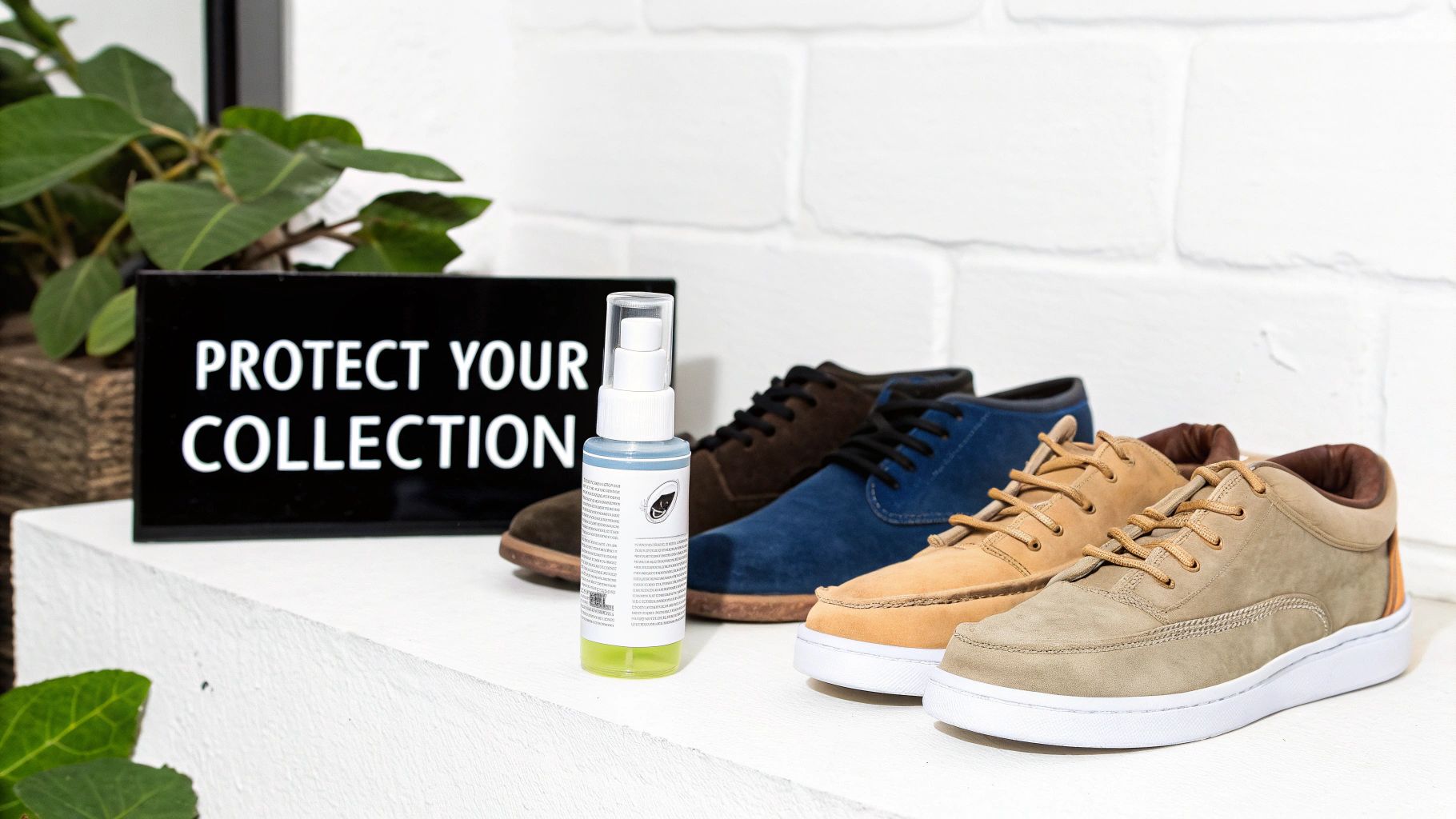
Any footwear constructed from napped leathers, such as suede or nubuck, faces the same environmental threats: water, dirt, and stains. From classic desert boots and chukkas to luxury suede sneakers, these materials are equally vulnerable. The application of a breathable, protective barrier is just as critical for them as it is for winter boots.
Unifying Your Care Regimen
Adopting a unified approach to footwear care streamlines the process and enhances the protection of your investments. Instead of managing multiple single-purpose products, a single high-quality, material-safe repellent can serve as the primary protective agent for most of your collection, ensuring consistency and reliability.
- Suede Sneakers: The suede panels on athletic footwear are often the first areas to show wear and soil. A repellent treatment maintains their original appearance.
- Nubuck Work Boots: While durable, nubuck's napped surface readily absorbs moisture and oil. A repellent is essential for preserving its velvety finish.
- Dress Loafers: Suede loafers can be irreparably damaged by a single misstep into a puddle or a spilled beverage. Proactive protection is mandatory for maintaining their usability.
This mindset elevates care from a task-based approach for one pair of boots to a systematic strategy for an entire collection. You can explore this concept further in our guide on choosing the right sneaker water repellent spray, which details the material science for various footwear types.
The ultimate goal is to establish a single, high standard of care for all valuable footwear. A versatile, high-performance repellent is not just a product; it is the cornerstone of an intelligent maintenance strategy that preserves the value and appearance of your entire collection.
Ultimately, a top-tier repellent is a fundamental tool for any individual serious about footwear preservation. It enables a system that ensures every pair remains in optimal condition, regardless of the material.
Suede Protection FAQs: Expert Answers
Even with a detailed process, questions arise. As material care specialists, we have addressed nearly every conceivable issue. Correct information is the difference between preserving and damaging your footwear.
Here are direct, field-tested answers to the most common questions regarding repellent spray application on UGGs.
Can I Use Repellent Spray on Old or Stained Uggs?
This is a critical point: repellent spray must only be applied to clean, dry boots.
Applying a protective coating over existing dirt, water spots, or salt stains will seal these contaminants into the suede. This makes subsequent removal nearly impossible and can permanently alter the material's texture.
If your boots are stained, your first priority is a thorough cleaning with a dedicated suede cleaning kit. After cleaning, allow them to air dry for a minimum of 24 hours. Only when they are completely clean and dry is it appropriate to apply a protective spray.
How Do I Know When It's Time to Reapply the Spray?
The most reliable method is the water-drop test. It is simple and definitive.
Flick a single drop of water onto an inconspicuous area, such as the back of the heel, and observe its behavior.
- If the water beads up and rolls off, the protective barrier remains effective.
- If the water begins to soak into the suede and darken it, the protection has degraded. It is time to clean the boots and reapply the repellent.
As a general practice, perform this test at the start of each wet season and after any deep cleaning.
Will Repellent Spray Change the Color or Feel of My Boots?
A high-quality, suede-specific repellent is formulated to be imperceptible after curing. While the boots may appear temporarily darker immediately after application (when wet), they should dry to their original color and soft texture. A superior spray functions without leaving a visible or tactile trace.
In contrast, lower-quality, all-purpose sprays often contain heavy silicones or other chemicals that can leave the suede feeling stiff or with an oily residue. This is precisely why a specialized formula for delicate materials is essential. Always perform a patch test on a hidden area before treating the entire boot to confirm compatibility.
Is One Coat of Repellent Spray Really Enough?
While one coat provides a degree of protection, in our professional experience, it can leave microscopic gaps in the barrier.
For a truly durable, hydrophobic shield, we consistently recommend applying two light, even coats rather than a single heavy one.
Allow the first coat to dry for approximately one hour. Then, apply a second light coat, focusing on vulnerable areas like seams where moisture tends to penetrate. This two-pass method creates a more uniform and robust shield, offering superior protection against the elements.
Protecting your investment is straightforward with the right professional tools. The Gold Standard Water & Stain Repellent is engineered to provide a breathable, durable barrier for all your suede, nubuck, and premium footwear.
Ensure your collection is ready for anything with our premium repellent spray.