

The most effective way to waterproof shoes is not a single product, but a material-specific treatment that shields footwear from moisture without compromising its texture, color, or breathability.
For most sneakers and casual shoes—including suede, knit, or canvas—a high-quality, polymer-based spray offers the optimal balance of protection and material preservation. For rugged leather boots, a more robust solution like a penetrating wax or conditioning cream is required for a deeper, more durable defense.
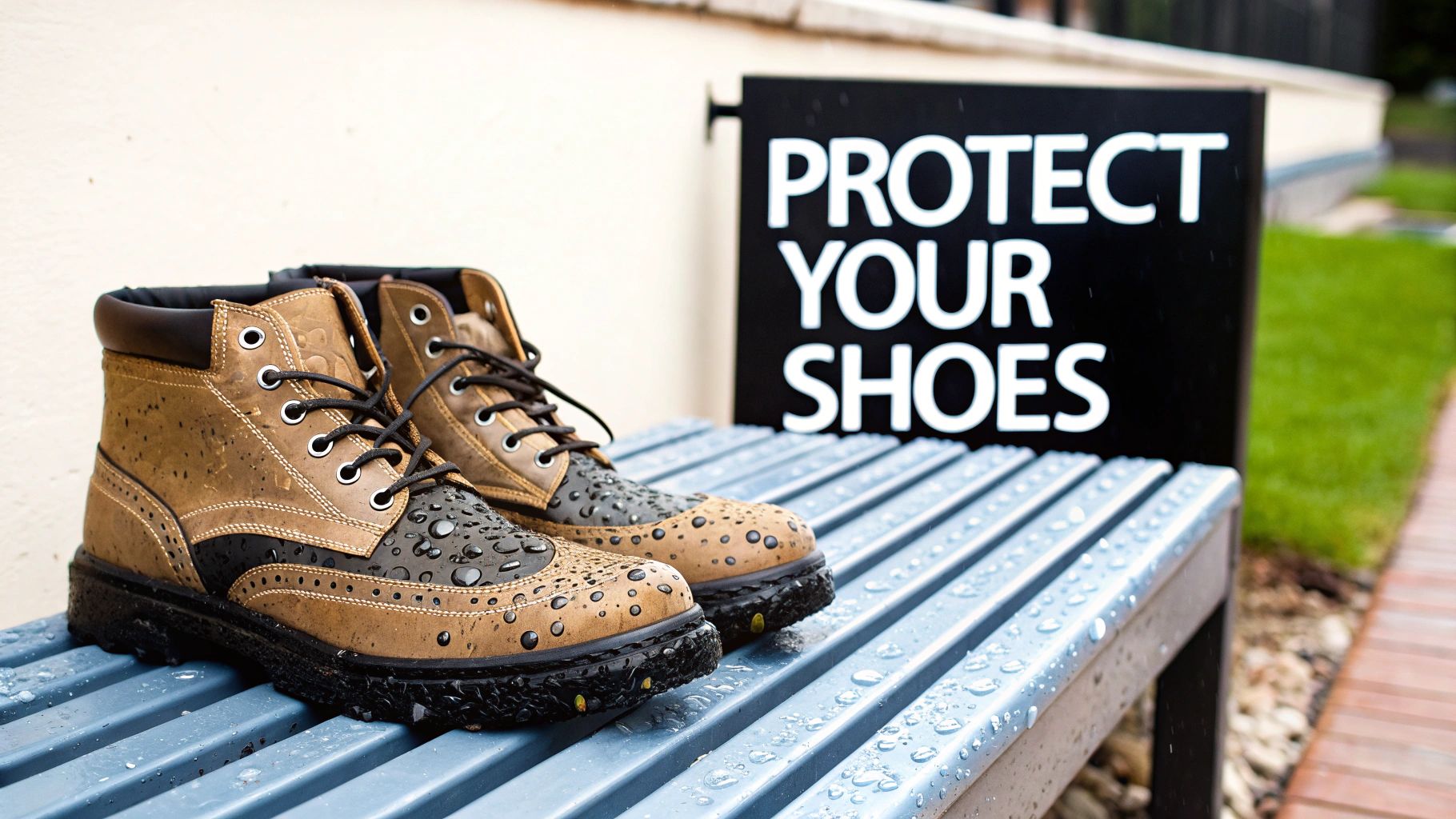
Why Professional-Grade Waterproofing is a Critical Investment
Effective waterproofing is not a temporary fix for rain; it is essential maintenance for your footwear. Whether you've invested in premium leather work boots, collectible sneakers, or everyday canvas shoes, moisture is the primary adversary, threatening their lifespan, appearance, and structural integrity.
A single downpour initiates a destructive process at a microscopic level, causing damage that often becomes visible only after it is irreversible.
This guide provides a technical breakdown of how water permanently warps and cracks leather, degrades the adhesives binding your footwear, and facilitates deep-set stains. Understanding this process is the first step toward properly protecting your investment.
The True Cost of Water Damage
Neglecting proper waterproofing leads to predictable and often permanent damage. The consequences extend far beyond temporary discomfort; you are actively shortening the life of your shoes.
Here is what you are up against:
- Material Degradation: Water strips the natural oils from leather, leaving it brittle and prone to cracking. For suede and nubuck, moisture flattens the delicate nap, creating permanent dark spots and a ruined texture.
- Adhesive Failure: The adhesives used in modern footwear are highly vulnerable to moisture. Repeated exposure can cause delamination, where the sole separates from the upper—a common and often costly repair.
- Aesthetic Ruin: Water acts as a vehicle for dirt and salt, carrying them deep into the fibers of the material. This results in permanent "tidelines," discoloration, and stains that cannot be removed with surface cleaning.
The foundational principle of advanced footwear care is 'material-specific protection.' Applying an inappropriate product can be as damaging as using nothing at all. The objective is to establish a breathable shield, not to suffocate the material.
More Than a Niche Concern
What was once a concern primarily for hikers is now a priority for sneaker collectors and discerning wearers. For adventurers on the challenging and often wet terrain of Slovenia, waterproofing hiking boots is non-negotiable for comfort and safety. You can prepare for your next trip by researching some of the best Slovenian hiking trails.
This broader awareness is reflected in market data. The waterproof footwear sector was valued at USD 19.1 billion in 2022 and is projected to reach USD 32.6 billion by 2030. Consumers are investing seriously in protection, and this guide provides the technical expertise to do it correctly.
Choosing Your Waterproofing Method: Sprays, Waxes, and Creams
The shoe care market offers a range of waterproofing solutions: sprays, waxes, and creams. Each promises protection, but their chemical compositions are engineered for different materials and purposes. There is no single "best" product; there is only the correct chemistry for a specific material.
Selecting the right method is analogous to choosing appropriate outerwear for weather conditions. A light windbreaker is insufficient for a hurricane, and a heavy parka is impractical for a light drizzle. Let's analyze the primary options to enable an informed choice.
Polymer Sprays: The Modern Technical Shell
Modern waterproofing sprays function as the technical shell jackets of the footwear world. They employ advanced polymers, such as fluoropolymers or silicones, to create an invisible, microporous shield over the shoe's surface.
The microscopic matrix of this barrier is engineered to be small enough to block larger water molecules while allowing smaller water vapor molecules (perspiration) to escape. This maintains the material's breathability—a critical factor for foot health and comfort.
- Best For: Suede, nubuck, performance knits (e.g., Flyknit), and canvas. Ideal for any material where preserving the original color, texture, and breathability is paramount.
- Key Advantage: Provides significant water repellency with zero aesthetic impact. The shoe's look and feel remain unchanged.
Sprays create a functional, hydrophobic surface. They do not deeply condition the material, making them the superior choice for nearly all sneakers and casual footwear.
Penetrating Waxes: The Traditional Heavy-Duty Barrier
If a spray is a modern technical shell, wax is a traditional, heavy-duty oilskin jacket. Products based on beeswax, paraffin, or other durable blends do not merely coat the surface; they penetrate deep into the material's fibers, filling every pore to create a robust, long-lasting barrier.
This method is exceptionally effective and durable, which is why it has been the standard for rugged leather work boots and hiking gear for generations. However, this deep protection comes with a significant trade-off.
Wax treatments will almost always alter the appearance of your footwear. They darken leather, typically imparting a richer, slightly oiled finish. By filling the material's pores, wax also dramatically reduces breathability.
For a pair of hard-wearing work boots, this rugged aesthetic and maximum protection is often the desired outcome. Be aware that this is a permanent modification.
Conditioning Creams: The Nourishing Protector
Conditioning creams are a distinct category. They function like a high-end moisturizer with protective properties. Their primary purpose is to nourish and hydrate leather, replenishing the natural oils lost to environmental exposure.
These formulas contain a blend of nourishing oils, conditioners, and a small amount of waxes or polymers to provide a light protective layer. While they offer a moderate level of water resistance, their true function is preservation. They keep leather supple, prevent it from drying and cracking, and restore its natural luster.
Behind every perfectly beaded raindrop on a leather or knit upper is applied chemistry. The global shoe care market illustrates the value consumers place on this invisible protection, estimated at USD 4.92 billion in 2024 and projected to reach USD 6.43 billion by 2033. For sneaker collectors, this is not just about appearance; it is about preserving asset value, as condition can impact resale prices by 20–40%. You can explore more data on the global shoe care market's growth.
For premium dress shoes or high-end leather sneakers, a quality conditioning cream is essential for long-term material health. It offers a solid baseline of protection without the dramatic, permanent changes of a heavy wax. It is the ideal tool for routine care.
This table provides a concise comparison of these methods.
Waterproofing Methods At a Glance
| Method | Mechanism | Best For | Effect on Appearance | Breathability Impact |
|---|---|---|---|---|
| Polymer Spray | Creates a breathable, microporous barrier on the surface. | Suede, nubuck, knit, canvas, performance fabrics. | None. Preserves original look and feel. | Minimal. Designed to maintain breathability. |
| Penetrating Wax | Penetrates and saturates fibers, filling pores to block water. | Heavy-duty leather (work boots, hiking boots). | Darkens color, adds a matte or slightly oiled finish. | High. Significantly reduces or eliminates breathability. |
| Conditioning Cream | Nourishes leather with oils, adds a light protective surface layer. | Smooth leather dress shoes, premium leather sneakers. | Can slightly darken and add a natural sheen. | Low. Primarily conditions rather than seals. |
The objective is to achieve the correct balance of protection, breathability, and aesthetics for each specific pair of shoes. With this knowledge, you can make the correct decision every time.
The Right Waterproofing for Every Shoe Material
Understanding which waterproofing method to use is only half the process. The other, more critical half, is understanding the specific properties of each material. Applying an incorrect product can cause irreversible damage.
For example, a heavy wax that is ideal for a leather work boot will completely ruin a pair of technical knit sneakers by suffocating the material. This "material-first" approach is the core of expert footwear care.
This decision guide helps you choose between prioritizing the original appearance of your shoes or maximizing durability.
The key takeaway is straightforward: sprays are the superior choice for maintaining a factory-fresh appearance, while waxes deliver the most rugged, long-lasting protection available.
Here is a quick-reference guide matching common materials with the safest and most effective treatments.
Material-Specific Waterproofing Recommendations
| Shoe Material | Recommended Treatment | Treatment to Avoid | Key Tip |
|---|---|---|---|
| Smooth Leather | Conditioning creams, light polymer sprays | Heavy waxes, pure silicone sprays | The objective is nourishment and breathability, not a suffocating seal. |
| Suede & Nubuck | Polymer-based protector sprays | Waxes, creams, alcohol-based formulas | Preserve the delicate nap. Any greasy or solvent-based product will cause permanent damage. |
| Canvas | Polymer sprays, light beeswax application | Heavy oils or silicone | Focus on creating a consistent surface barrier without making the fabric overly stiff. |
| Synthetic Knits | Polymer-based protector sprays | Waxes, creams, any heavy coating | Breathability is the primary functional attribute of these materials. Do not clog the weave. |
Let's examine why these pairings are effective.
Smooth Leather: The Classic Defender
Smooth leather possesses natural toughness and some inherent water resistance, but it is not impervious. Its porous structure contains natural oils that maintain its suppleness. An improper treatment—especially a heavy, non-breathable silicone—can clog these pores, trapping moisture inside the leather, leading it to dry, stiffen, and crack.
For premium leather dress shoes or sneakers, a balanced approach is required. The goal is to repel water while allowing the material to breathe and remain nourished.
- Best Treatment: A high-quality conditioning cream or a light application of a polymer-based spray. Creams nourish the leather while providing moderate water resistance.
- Treatment to Avoid: Heavy waxes and pure silicone sprays. These are excessive for most smooth leather applications and can permanently alter the finish and eliminate breathability.
Suede and Nubuck: The Delicate Nap
The soft, velvety texture of suede and nubuck is also their primary vulnerability. The fine, raised fibers are highly absorbent, acting like a sponge for water, dirt, and oil. Moisture not only creates dark spots but also flattens the nap, permanently ruining the signature texture.
Waxes or creams are entirely unsuitable for these materials. They will instantly mat the fibers and create a greasy, stained appearance. Alcohol-based formulas should also be avoided, as they can strip color and dehydrate the hide.
The only safe and effective method to protect suede and nubuck is with a polymer-based protector spray formulated specifically for these materials. It creates an invisible shield that repels water without altering color or texture. Our detailed guide on how to waterproof suede and leather provides further technical detail.
Canvas: The Versatile Staple
Canvas, a tightly woven fabric of cotton or linen, is durable but offers negligible water resistance. When wet, the fibers swell and absorb moisture, making the shoe heavy and slow to dry. This creates an ideal environment for stains and mildew.
Fortunately, canvas is a resilient material that can tolerate a range of treatments. The primary goal is to prevent saturation by creating a reliable surface barrier.
- Best Treatment: A high-quality polymer spray is the most effective and straightforward choice. It provides excellent water repellency without affecting the fabric's color or flexibility.
- Acceptable Alternative: For a traditional approach on casual footwear like Converse, a light application of beeswax can offer heavy-duty protection, though it may slightly darken the color and stiffen the fabric.
Synthetic Knits: The Modern Performer
Modern athletic footwear from brands like Nike (Flyknit) and adidas (Primeknit) heavily utilizes synthetic knits. These materials are engineered for maximum breathability. Their open-weave construction provides excellent airflow but is highly susceptible to water ingress.
The challenge is to add water resistance without compromising this core function. Clogging the weave with a heavy wax or cream would defeat the shoe's design intent, creating a non-breathable, uncomfortable environment.
For sneaker enthusiasts who may own 20–50 pairs or more, proper care is a sound financial decision. If premium waterproofing extends the functional life of each pair by 1–2 years, the savings in replacement costs can amount to hundreds or thousands of dollars over time. It is not surprising that advanced waterproof products receive high user satisfaction, with more than 40% of users expressing strong satisfaction.
For these high-tech materials, a meticulously formulated polymer spray, such as the Gold Standard Water & Stain Repellent, is the only logical solution. It bonds to the individual fibers without sealing the interstitial spaces, preserving airflow while causing water to bead and roll off the surface.
How to Apply Waterproofing for Flawless Protection
Knowing which product to use is only the first step. The application process is what transforms a quality product into an effective, durable shield for your footwear.
Even the most advanced waterproofing formula can fail if applied incorrectly. The objective is not merely to coat the shoes, but to create a complete, uniform bond at a molecular level that withstands environmental stressors.
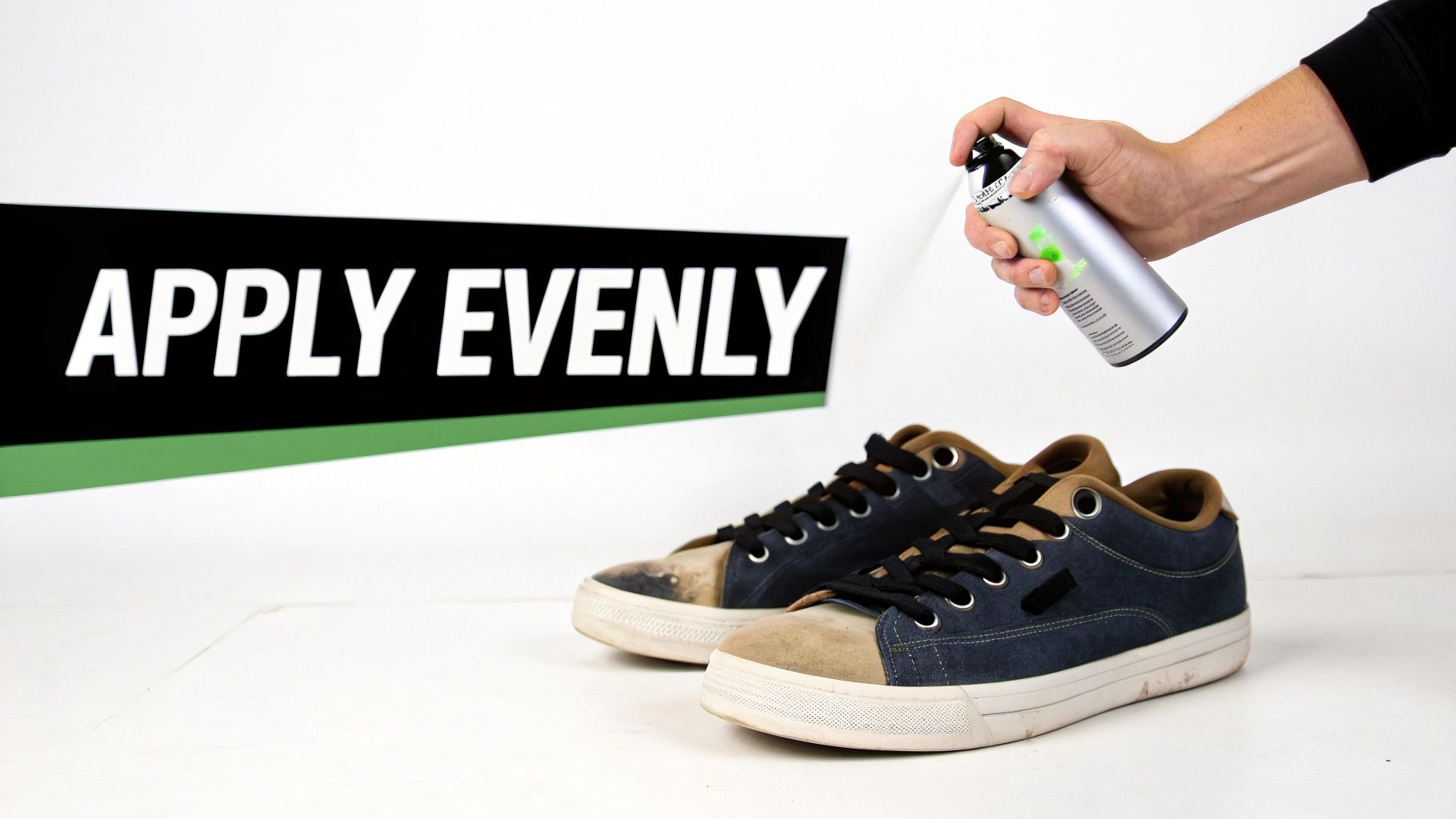
This field-tested process ensures a professional-grade finish every time, resulting in an even cure and long-lasting protection.
Step 1: Prepare the Footwear
The most critical step occurs before application begins. Applying a protector to a dirty or damp shoe is the most common mistake and renders the product ineffective.
The principle is analogous to painting a surface. One would not apply paint over dirt and grime. The paint would not adhere properly, resulting in a flawed finish.
The same applies here. Dirt and dust create a physical barrier, preventing the formula from bonding directly to the material. This leaves microscopic gaps for water to penetrate. Furthermore, this process seals abrasive dirt particles against the shoe, where they can mechanically degrade delicate fibers like suede or knit with every step.
Preparation Checklist:
- Deep Clean: Thoroughly clean your shoes with a product appropriate for their specific material. For canvas sneakers, our guide on using a canvas sneaker protector spray details the necessary cleaning steps.
- Remove Laces: Always remove the laces to ensure complete access to the tongue and eyelet areas—common points of moisture ingress.
- Ensure Completely Dry: The shoes must be 100% dry. Allow them to air dry for a minimum of 24 hours in a well-ventilated area, away from direct sunlight or heat sources that can warp or damage the materials.
Step 2: Conduct a Patch Test
Never omit this step, especially with a new pair of shoes or when using a product for the first time. Even the highest quality formulas can react unpredictably with the unique dyes and finishes used by different manufacturers. A patch test is your safeguard against discoloration.
Select a small, inconspicuous area—the inside of the heel, a portion of the tongue covered by laces, or the inner arch. Apply a small amount of the protector, allow it to dry completely, and then inspect for any change in color or texture. If there is no adverse reaction, you may proceed.
Step 3: Apply with Precision
Proper technique is essential. The goal is an even, effective barrier without oversaturating the material. Oversaturation is a common error that clogs the pores of breathable fabrics, leaving them stiff and non-functional. The solution is light, consistent coats.
Apply two thin coats of product rather than one thick, heavy one. This builds a stronger, more flexible, and more breathable barrier that works in concert with the fabric, not against it.
For sprays like the Gold Standard Water & Stain Repellent, use this professional technique:
- Ventilate: Always apply waterproofing products outdoors or in a well-ventilated space.
- Maintain Distance: Hold the can upright, approximately 6 to 8 inches from the shoe. This distance ensures a fine, even mist rather than a concentrated stream.
- Use a Sweeping Motion: Depress the nozzle and move the can in a steady, sweeping motion across the entire shoe. Ensure complete coverage of seams, stitching, and the critical junction where the upper meets the sole.
- Apply a Light First Coat: The first pass should be light and uniform. The material should appear damp, but not saturated or dripping.
- Wait, Then Repeat: Allow the first coat to dry for approximately 15-20 minutes. Then, apply a second light coat using the same technique to ensure complete and even coverage.
Step 4: Allow to Cure for Full Strength
The final step is patience. The waterproofing formula requires time to fully cure and cross-link, forming a durable, protective matrix. While the surface may feel dry to the touch in under an hour, the chemical bonding process is still occurring at a microscopic level.
For maximum performance, allow the shoes to cure undisturbed for a full 24 hours. Place them in a dry, well-ventilated area away from direct heat. Rushing this step will compromise the strength and longevity of the barrier, necessitating more frequent reapplication.
Common Waterproofing Mistakes That Ruin Footwear
Understanding correct procedure is essential. Understanding what not to do is what separates professional results from amateur mistakes and preserves the integrity of your footwear.
Even the highest quality waterproofing product can fail—or worse, damage your shoes—if applied improperly. These common mistakes are easily avoidable once identified.
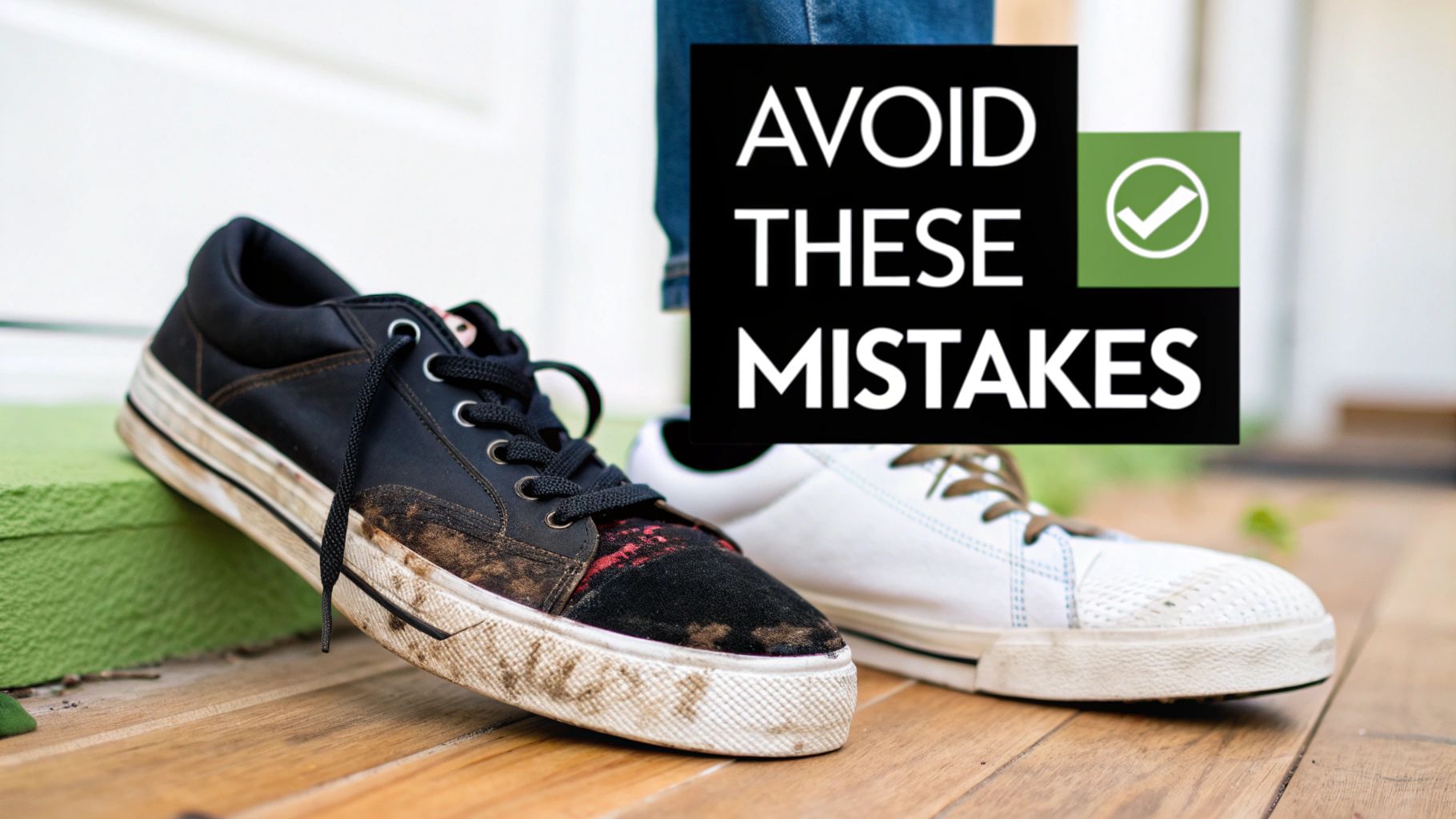
Mistake 1: Applying Protector to Dirty Shoes
This is the cardinal sin of shoe care. Spraying a waterproofing formula over a layer of dirt, dust, or grime is akin to applying a screen protector to a dirty phone screen: it will not adhere.
-
What Happens: The protective formula cannot bond with the shoe's material. Instead, it adheres to the dirt, creating a weak, incomplete barrier that offers no real protection. You are also effectively bonding abrasive dirt particles to the surface, which will accelerate wear on materials like suede and knit.
-
How to Avoid It: Always begin with a perfectly clean and dry surface. Use a material-safe cleaner and brush to remove all debris. Allow the shoes to air dry for a full 24 hours before applying any protective product.
Mistake 2: Over-Saturating the Material
With waterproofing, more is not better. The impulse to apply a heavy coat for more protection is counterproductive. Drenching your shoes is a common mistake that leads to poor results.
-
What Happens: Excess product clogs the microporous structure that allows materials like leather and performance fabrics to breathe. Trapped moisture turns the shoe into a humid environment. It also can leave a stiff, sticky residue and may permanently darken or discolor certain materials.
-
How to Avoid It: Apply two light, even coats instead of one heavy one. Hold the can 6-8 inches from the shoe and use a smooth, sweeping motion. Allow the first coat to dry for approximately 20 minutes before applying the second.
Mistake 3: Using the Wrong Product for the Material
This is where preventable mistakes become catastrophic. As detailed previously, different materials have fundamentally different needs. Using a heavy wax on delicate suede or an alcohol-based spray on premium leather can cause irreversible damage.
A one-size-fits-all approach is a recipe for disaster in footwear care. The chemical composition of your protector must be compatible with the fibers, dyes, and finish of your specific shoe material to be effective and safe.
Adhere to these strict rules:
- Never use wax or heavy creams on suede, nubuck, or knit fabrics.
- Avoid silicone-heavy sprays on high-end smooth leather; they inhibit breathability.
- Avoid alcohol-based formulas for suede and nubuck, as they can cause dehydration and color fading.
Mistake 4: Forgetting to Reapply Regularly
A waterproofing treatment is not a permanent application. The protective barrier is a sacrificial layer that is constantly degraded by friction, abrasion, UV rays, and cleaning.
-
What Happens: The protective layer gradually wears away, eventually leaving the shoe with no water repellency. You are then caught unprotected in inclement weather, resulting in wet feet and new water stains.
-
How to Avoid It: Establish a reapplication schedule. For daily-wear shoes, a fresh application every few weeks is a sound practice. For less frequently worn shoes, reapplication once per season is sufficient. When in doubt, perform a quick "water bead test": flick a few drops of water onto the shoe. If they bead and roll off, the barrier is intact. If they absorb into the material, it is time for another coat.
Maintaining and Reapplying Your Waterproof Barrier
Applying a quality waterproofing treatment is the first step, not the final one. This protective layer is analogous to the tread on a tire—it is designed to wear down over time through friction, abrasion, cleaning, and environmental exposure.
Effective maintenance involves identifying when the shield is weakening, before it fails completely. Waiting until your feet get wet is reactive, not preventative. Proactive reapplication must be an integral part of your shoe care regimen.
The Water Bead Test
The most reliable method for determining when to reapply is the water bead test. It is a simple, field-tested technique that provides an immediate assessment of your shoe's protection level.
Flick a few drops of water onto a high-wear area, such as the toe box or along the seams.
- If the water beads up into tight spheres and rolls off the surface, your barrier is holding strong.
- If the water spreads out and begins to darken the fabric, it is being absorbed. This is the definitive sign that the protection has degraded and reapplication is necessary.
This simple diagnostic removes all guesswork.
When to Reapply Your Protector
There is no universal reapplication frequency; it depends entirely on wear and tear. However, these guidelines will help you maintain protection.
Your waterproofing is a sacrificial layer. Its purpose is to absorb environmental damage so the shoe's material does not. Regular reapplication ensures this defense system remains effective.
Use this framework based on wear frequency:
- Daily Wear: For a go-to pair worn daily, reapply waterproofing spray every 3-4 weeks.
- Regular Wear (2-3 times a week): For shoes in a regular rotation, a fresh application every 6-8 weeks is typically sufficient.
- Occasional Wear: For seasonal or special-occasion footwear, reapplication once every 3-4 months or at the beginning of the season is recommended.
Always remember to thoroughly clean shoes before reapplying a protective coating. If your shoes become completely saturated before re-treatment, proper drying is critical. Our guide on the best way to dry wet sneakers demonstrates how to do so safely without damaging the materials.
Frequently Asked Questions About Shoe Waterproofing
Even with a detailed process, specific questions often arise. Here are our answers to the most common inquiries we receive from individuals serious about footwear care.
Can I Make Suede or Nubuck Completely Waterproof?
No, and for good reason. Suede and nubuck are open-pored leathers prized for their delicate, velvety texture. You can make them highly water-resistant—causing water to bead and roll off—but you cannot make them truly waterproof without destroying their inherent characteristics.
Applying a heavy sealant like wax would permanently mat the nap and eliminate breathability. The objective is to build a robust defense, not an impermeable barrier. For a deeper technical dive, understanding the critical difference between 'waterproof' and 'water-resistant' is essential.
Will a Waterproofing Spray Alter the Color of My Shoes?
This is a valid concern, particularly for those who have used older, silicone-heavy sprays that left behind a dark, oily film. Modern, high-quality polymer sprays are chemically different.
A top-tier, material-safe spray should be completely invisible after curing. It is engineered to form a molecular bond with the shoe’s fibers, rather than sitting on the surface as a coating. This protects the footwear while preserving its original color, texture, and breathability.
However, as a best practice, always perform a spot test on an inconspicuous area first.
How Often Do I Need to Reapply a Waterproofing Product?
Reapplication frequency depends entirely on how often and in what conditions you wear your shoes. A waterproofing barrier is not permanent; it degrades with use.
Use this as a general guideline:
- Daily Drivers: For shoes worn several times a week, reapply every 3-4 weeks.
- Regular Rotation: For shoes worn once or twice a week, reapplication every 6-8 weeks is appropriate.
- Occasional Wear: For seasonal or special-occasion pairs, reapplication once every 3-4 months is sufficient.
When in doubt, perform the water bead test. If water absorbs rather than beading and rolling off, it is time to reapply.
For a professional-grade, invisible shield that respects the integrity of every material—from the most delicate suede to high-tech knit—trust the Gold Standard Water & Stain Repellent. Protect your investment the right way. Explore our premium care solutions.