

When sneakers get saturated—whether from a sudden storm or an unfortunate puddle—the correct drying method is paramount. The single most critical principle is to use cool, circulating air and to strictly avoid direct heat. Your actions in the first few moments dictate whether the materials warp, adhesives fail, or the shoe's structural integrity is compromised.
The process begins immediately: remove laces and insoles to open all airways, blot excess surface water with an absorbent towel, and stuff the shoes to begin wicking moisture from the interior. This foundational protocol prevents material degradation and preserves the sneaker's form.
The First 30 Minutes: A Material Preservation Protocol
The moment you feel water saturate your footwear, a critical window opens. The first half-hour is your opportunity to mitigate the most severe forms of damage, including material breakdown, delamination of the sole, and permanent loss of shape.
A swift, methodical response is not about panic; it is about preservation. Every component of your sneaker, from a technical knit upper to a multi-density foam midsole, reacts differently to moisture. Your immediate objective is to deconstruct the shoe for maximum ventilation and begin extracting water from every layer.
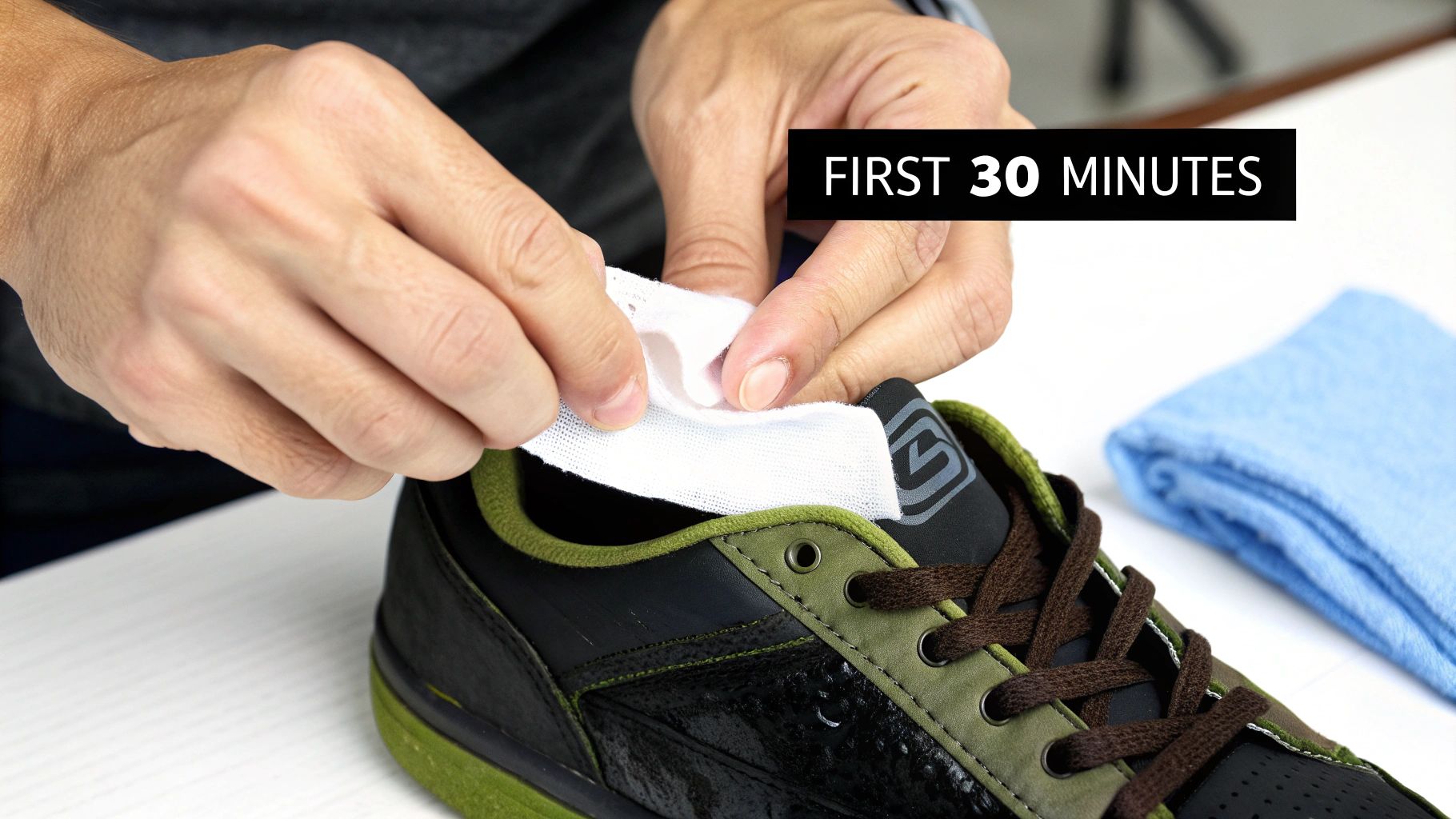
Step 1: Deconstruct for Maximum Airflow
First, remove the shoelaces completely. This action immediately opens the tongue and eyestays—areas that trap significant moisture and are prone to mildew if left constricted. The laces can be laundered and dried separately.
Next, and this is non-negotiable, extract the insoles. Insoles are porous and act as sponges, holding water against the footbed and preventing the shoe's interior from drying. Removing them exposes the internal stitching and midsole structure to air, which is essential for a thorough and even drying process.
Step 2: Blot, Do Not Rub
With the sneaker fully opened, address the surface water. Employ a clean, highly absorbent microfiber towel. The common impulse is to scrub the shoe, but this is a mistake. Rubbing can damage delicate textiles like knit or mesh and can force water deeper into the pores of leather or suede.
Instead, use a deliberate press-and-lift motion. Blot the exterior of the shoe, applying firm, even pressure to absorb water. Use a dry section of the towel to repeat the process on the interior, reaching as deep into the toe box as possible. This blotting technique removes a significant volume of free-standing water.
Expert Takeaway: Blotting is not intended to dry the shoe. Its purpose is to remove excess surface water that would otherwise prolong the evaporative drying process and increase the risk of water stains, particularly on sensitive materials like leather and suede.
Finally, perform the initial stuffing. Lightly pack the sneaker with crumpled, unprinted paper towels or a dry microfiber cloth. This initiates the wicking process from within and provides structural support, preventing the upper from collapsing or creasing as it dries. This step prepares the sneaker for the primary drying phase.
The Principle of Patient Airflow
The impulse to accelerate drying by applying heat—from a hairdryer, radiator, or clothes dryer—is the single most destructive action you can take. We have analyzed countless pairs of footwear ruined by this common mistake.
The foundation of proper footwear care is not speed; it is the mastery of cool, circulating air.
Direct heat is the primary adversary of modern sneaker construction. The thermosensitive adhesives bonding the outsole, midsole, and upper are engineered for strength and flexibility. High temperatures cause these adhesives to soften and fail, leading to sole separation—a catastrophic structural failure. The peeling often seen on mistreated sneakers is a direct result of heat-induced adhesive damage.
For organic materials like leather, heat is equally ruinous. It rapidly extracts the natural oils, or lipids, that keep the hide supple. This results in a stiff, brittle material prone to cracking and irreversible damage. Synthetic textiles, such as knits and mesh, can shrink, warp, or lose their shape, permanently altering the fit and performance of the footwear.
Establishing the Ideal Drying Environment
The optimal method for drying wet sneakers involves creating an environment that mimics a cool, breezy day. The goal is consistent, gentle air movement, not high-velocity wind or thermal intensity.
- Avoid Direct Sunlight: While a sunny spot seems logical, ultraviolet (UV) radiation can fade dyes and degrade synthetic polymers and leather over time.
- Avoid Heat Vents: Placing footwear near a heat source causes rapid, uneven drying. This can leave certain areas brittle while others remain damp, creating stress points in the material.
- Select an Open Area: A well-ventilated corner of a room, a covered patio, or a dry garage provides the necessary ambient circulation.
Once you have identified a suitable location, position the sneakers to maximize air exposure. Do not lay them flat. Prop them against a wall or on their sides to allow air to circulate freely into, out of, and around the entire shoe.
Implementing Gentle Air Circulation
To enhance drying efficiency without compromising material safety, introduce a small fan. This is the professional's tool for safe and effective drying. The objective is not to create a wind tunnel but a gentle, consistent breeze.
Position a standard room fan several feet from the sneakers and set it to its lowest speed. This constant airflow accelerates evaporation by wicking moisture vapor away from the shoe's surface far more effectively than static air. This technique ensures an even, thorough dry that preserves the integrity of all materials and adhesives.
Gold Standard Insight: The challenge of proper shoe drying has spurred a significant market. The Global Home Shoe Dryer Market was valued at USD 25.54 billion in 2024, demonstrating widespread demand for better solutions. However, many commercial dryers utilize low heat, which still presents a risk to footwear materials. Unheated, fan-based airflow remains the safest and most reliable method. For a deeper analysis of the footwear care market, consult reports from firms like TechSci Research.
The Correct Use of Absorbent Materials
Drying the exterior is only half the process. Actively drawing moisture from the sneaker's interior is essential for preventing microbial growth (mold and mildew), inhibiting odor-causing bacteria, and accelerating the overall drying time. This involves creating a wicking environment inside the shoe.
While many sources recommend using old newspaper, we strongly advise against it. The inks used in newsprint can easily transfer to the light-colored lining of your sneakers or your socks during subsequent wear. This is an unnecessary risk, especially for premium footwear.
A far safer and more effective alternative is plain, unprinted paper towels or basic packing paper. They offer excellent absorbency without the risk of staining, making them suitable for any sneaker.
Mastering the Stuffing Technique
Proper technique is critical. The goal is to balance moisture absorption with the need for internal airflow. Stuff the sneakers firmly enough to help them retain their natural shape, which prevents warping and the formation of new creases as the materials dry.
The most common error is packing the paper too tightly. Over-stuffing obstructs airflow, trapping moisture deep within the lining and padding. This significantly extends drying time and creates an ideal environment for mildew. The stuffing should fill the volume of the shoe but remain loose and permeable to air.
Gold Standard Tip: During the initial drying phase, replace the saturated paper with fresh, dry material every 2 to 4 hours. This repeated wicking action is highly effective at drawing out deep-seated moisture and ensures the interior dries at a rate comparable to the exterior.
The Superior Solution: Cedar Shoe Trees
For those serious about their footwear collection, unfinished cedar shoe trees are the definitive solution. While paper towels are effective for occasional use, cedar offers superior, long-term benefits.
The porous nature of unfinished cedar allows it to actively absorb moisture from leather, canvas, and textiles while helping the sneaker maintain its intended shape. Furthermore, cedar contains natural aromatic compounds that neutralize odor-causing bacteria, leaving footwear smelling fresh. A quality pair of cedar shoe trees is not an accessory; it is an essential tool for footwear preservation.
A Material-Specific Guide to Drying Sneakers
Applying a one-size-fits-all drying method to different sneakers is a recipe for material damage. The open-weave structure of a mesh runner requires a different approach than the dense, organic grain of a leather court shoe.
Understanding material properties is the difference between basic recovery and professional-grade preservation.
A universal constant is that clean footwear dries more effectively. Before beginning the drying process, address any surface dirt or grime. Our comprehensive guide on how to clean sneakers at home details the necessary preparation. Once clean, you can apply the appropriate drying protocol.
Canvas and Mesh Synthetics
Canvas and modern synthetic mesh are the most forgiving materials. Their open, breathable construction is designed to dissipate moisture efficiently. For these materials, you can employ a more active drying approach.
A fan set to a low speed is ideal. The consistent, cool airflow penetrates the woven fibers, accelerating evaporation without the risk of heat damage. Ensure the sneakers are positioned to allow air to circulate both internally and externally.
Suede and Nubuck
Here, the approach must be one of utmost caution. Suede and nubuck require a patient, sheltered drying process. These napped leathers are highly susceptible to water damage; rushing the process will result in stiffness, discoloration, and water spots, permanently ruining their characteristic velvety texture.
The methodology for these materials centers on passive drying and indirect airflow.
- No Fans: Direct, forced air dries the surface too quickly, causing the delicate nap to become stiff and crusty.
- Stuff Diligently: Keep the sneakers filled with paper towels or, preferably, cedar shoe trees to draw moisture from the inside out while maintaining their form. Replace the stuffing frequently.
- Post-Drying Restoration: After the sneaker is 100% dry, use a specialized suede brush to gently restore the nap, lifting the fibers to return their soft, uniform appearance.
Gold Standard Insight: The most common mistake with suede is handling or attempting to clean it while damp, which can permanently flatten the nap. All restorative work must wait until the material is completely dry to the touch.
Leather Sneakers
Leather is an organic material containing natural oils that maintain its flexibility. Aggressive drying methods, using either heat or high-velocity air, strip these essential oils. The result is a brittle, cracked upper—damage that is difficult, if not impossible, to reverse. For leather, a slow, gradual drying process is the only acceptable method.
The objective is to allow the leather to release moisture at its natural rate. Stuff the sneakers to preserve their shape and place them in a cool, dry room with good ambient air circulation. A full dry may take 24-48 hours. This patience is non-negotiable.
Once you are certain the leather is fully dry, conditioning is the final, critical step. A quality leather conditioner replenishes the oils lost during the wetting and drying process, restoring the material's suppleness and preventing future cracking.
This decision guide helps visualize the best stuffing choice for your footwear.
While both are functional, cedar shoe trees represent the premium, long-term investment in footwear care.
Sneaker Material Drying Guide
This quick-reference table outlines the best practices for common sneaker materials, serving as a practical guide to prevent drying-related damage.
| Material Type | Recommended Drying Method | Key Risks to Avoid | Essential Post-Drying Care |
|---|---|---|---|
| Canvas & Mesh | Air-dry in a well-ventilated area; use a fan on a low, cool setting. | High heat, direct sunlight (can cause yellowing/fading). | None required, just ensure they are completely dry. |
| Leather | Stuff and air-dry slowly in a cool, dry place. No direct airflow. | Heat sources (radiators, hair dryers), quick drying. | Apply a quality leather conditioner to restore oils. |
| Suede & Nubuck | Stuff and air-dry in a sheltered spot away from drafts. No fans. | Direct air, handling while wet, any form of heat. | Use a suede brush to restore the nap once bone-dry. |
The critical insight here is that the method appropriate for a canvas shoe will destroy a premium leather or suede sneaker. Always match the protocol to the material.
Common Drying Errors That Destroy Sneakers
We have witnessed countless high-quality sneakers ruined by well-intentioned but misguided drying attempts. Understanding what not to do is as crucial as knowing the correct procedure.
The primary cause of damage is almost always impatience.
The most prevalent—and catastrophic—error is the application of direct, high heat. A hairdryer, clothes dryer, or placement near a radiator may seem like an efficient shortcut, but it is a death sentence for modern footwear construction.
This intense, localized heat melts the specialized adhesives that bond the upper to the midsole, causing permanent sole separation. It also warps rubber components, cracks leather, and can shrink knit fabrics, irretrievably altering the shoe's fit and structure.
The Dangers of "Quick Fixes"
Beyond overt heat sources, several other common practices can cause significant long-term damage. Recognizing these subtle mistakes is key to preserving your collection.
-
Direct Sunlight: Drying sneakers on a sunny windowsill exposes them to harsh UV rays. This photodegradation process fades colors and causes materials like rubber and leather to become brittle.
-
Stagnant, Humid Air: Leaving saturated sneakers in an unventilated space like a gym bag or a sealed closet creates a perfect breeding ground for mold and mildew. This results in a persistent musty odor that is exceptionally difficult to eliminate.
-
Improper Stuffing Materials: As stated, newspaper ink can bleed and permanently stain the sock liner of your shoes—a particularly disastrous outcome for sneakers with white or light-colored interiors.
The demand for better drying solutions is growing. The global shoe dryer market was valued at US$ 26.2 million in 2023 and is projected to reach US$ 42.9 million by 2033. This indicates increasing consumer awareness, yet many commercial products still rely on low-heat systems that pose a risk. Further data is available in the shoe dryer market report from Fact.MR.
Gold Standard Warning: Never place sneakers in a clothes dryer, even inside a protective bag. The combination of high heat and tumbling action is a guaranteed way to destroy them. It will deform the shoe's structure, weaken every seam, and can damage the machine itself.
Protecting Your Investment
Ultimately, avoiding these critical errors comes down to one principle: patience.
Proper drying protects the material integrity, structural soundness, and lifespan of your sneakers. Taking the time to execute the correct process ensures they will maintain their performance and appearance for years to come.
Once your sneakers are fully clean and dry, the final step is proactive protection. Applying a high-quality repellent creates a hydrophobic barrier that helps prevent them from becoming saturated in the first place. Our Premium Sneaker Protector Spray forms an invisible shield against water and stains.
Frequently Asked Technical Questions
Even with a solid understanding of the principles, specific questions often arise. Here are our field-tested answers to the most common queries we receive.
How Long Does It Realistically Take for Sneakers to Air Dry?
The honest, technical answer is: it varies. Drying time is a function of material type, ambient humidity, and airflow.
A lightweight canvas or mesh sneaker in a well-ventilated room may be fully dry in 12-24 hours. However, a leather sneaker or a style with significant interior padding will require 24-48 hours, or potentially longer. There are no safe shortcuts; attempting to accelerate the process with heat will cause irreversible damage.
Gold Standard Tip: Do not rely on an external touch test. The toe box and heavily padded areas are always the last to dry. If the interior feels even slightly damp, allow more time.
Is It Safe to Use a Boot Dryer on Sneakers?
This requires extreme caution. We only endorse the use of boot dryers that operate with forced, unheated air.
Many common models use low-level convective heat, which can still be sufficient to compromise the adhesives and synthetic materials in modern sneakers, leading to delamination and warping. If you must use such a device, ensure it has a "fan-only" or "no-heat" setting. However, a standard room fan positioned a few feet away remains the safest and most effective method.
My Sneakers Were Wet and Now Have an Odor. How Do I Fix It?
That malodor is the result of bacterial proliferation in a damp, anaerobic environment. The first and most critical step is to ensure the sneakers are 100% dry. Any residual moisture will allow the bacteria to continue thriving.
Once completely dry, you can introduce odor-absorbing agents. Natural materials like cedar shoe trees or pouches of activated charcoal are highly effective. For persistent odors, a more direct intervention is needed. Our specialized guide on how to permanently remove odor from sneakers provides advanced techniques. Remember the cardinal rule: never apply deodorizing sprays to damp footwear. You will only trap moisture and exacerbate the underlying problem.
At Gold Standard, we believe that proper care is an investment in the longevity and appearance of your footwear. Our premium care products are engineered by footwear experts to protect and preserve your collection, ensuring your favorite pairs remain in optimal condition for years to come.
Explore the complete collection and provide your sneakers with the expert care they deserve at https://gold-standard-approved.myshopify.com.