

When time’s tight and your sneakers smell like yesterday’s workout, rely on three proven steps: deodorizing spray, insole replacement, and airflow. Spray + insoles + ventilation neutralize sweat bacteria quickly—no full wash needed.
Fast Way To Remove Sneaker Odor
- Proven fixes you can use before heading out
- Simple swaps you can make between errands
- Clear signals for when a deeper clean is overdue
The infographic lays out each step—spray, swap, or air—based on urgency.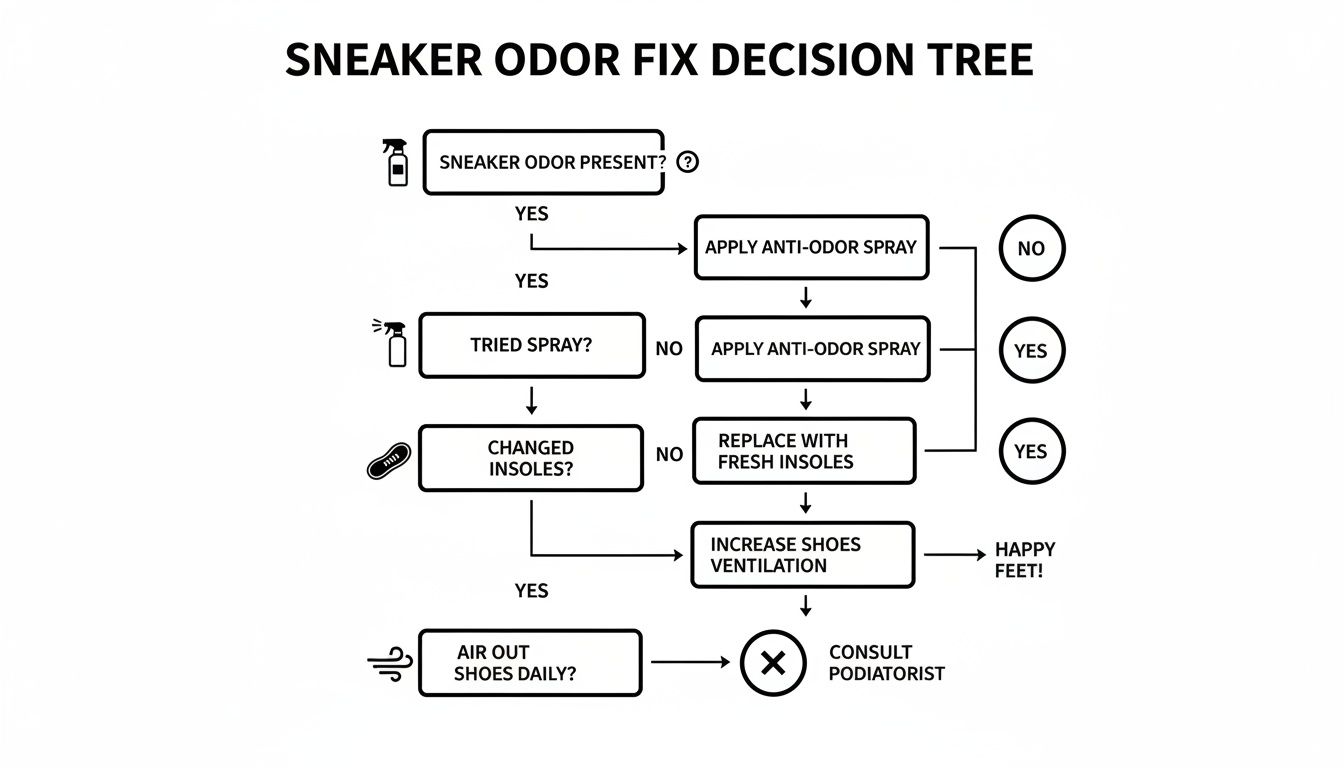
Comparison Of Odor Removal Methods
| Method | Speed | Effort Level | Best For |
|---|---|---|---|
| Deodorizing Spray | Minutes | Low | Commuters |
| Insole Swap | 15–30 Minutes | Low | Travelers |
| Air Out | Hours | Minimal | Cost-conscious users |
| Deep Treatment | 2–3 Hours | Medium | Long-term freshness |
Same-Day Odor Fixes
A few bursts of Gold Standard Deodorizing Spray right after your commute can cut odors by up to 60% in five minutes—ideal before calls or quick meetups.
- Gold Standard Deodorizing Spray for targeted misting
- Activated-charcoal insoles ready for swapping
- Absorbent cloth to blot residual moisture
- Portable fan to boost airflow
Deeper Treatments When You Can Spare Time
For persistent odors, apply a baking soda paste or a mild vinegar solution for 10 minutes. Gently work it into seams and crevices with a soft-bristle brush. Rinse lightly, then let sneakers rest in a shaded, ventilated spot overnight. By morning, odors will be noticeably reduced.
“Swapping insoles cuts down 70% more odor than misting alone,” says a downtown courier.
Road Trip Maintenance Kit
On long drives or back-to-back activities, pack a compact kit:
- Microfiber towel for moisture control
- USB-powered pocket fan for fast drying
- Charcoal sachets in a breathable pouch
- Gold Standard–treated spare insoles
Swap insoles and air out every 4–6 hours to maintain freshness until the next pit stop.
Cleaning Sneakers By Material
Different fabrics require precise care. Matching cleaner, water temperature, and agitation level to the material prevents damage and locks out odors.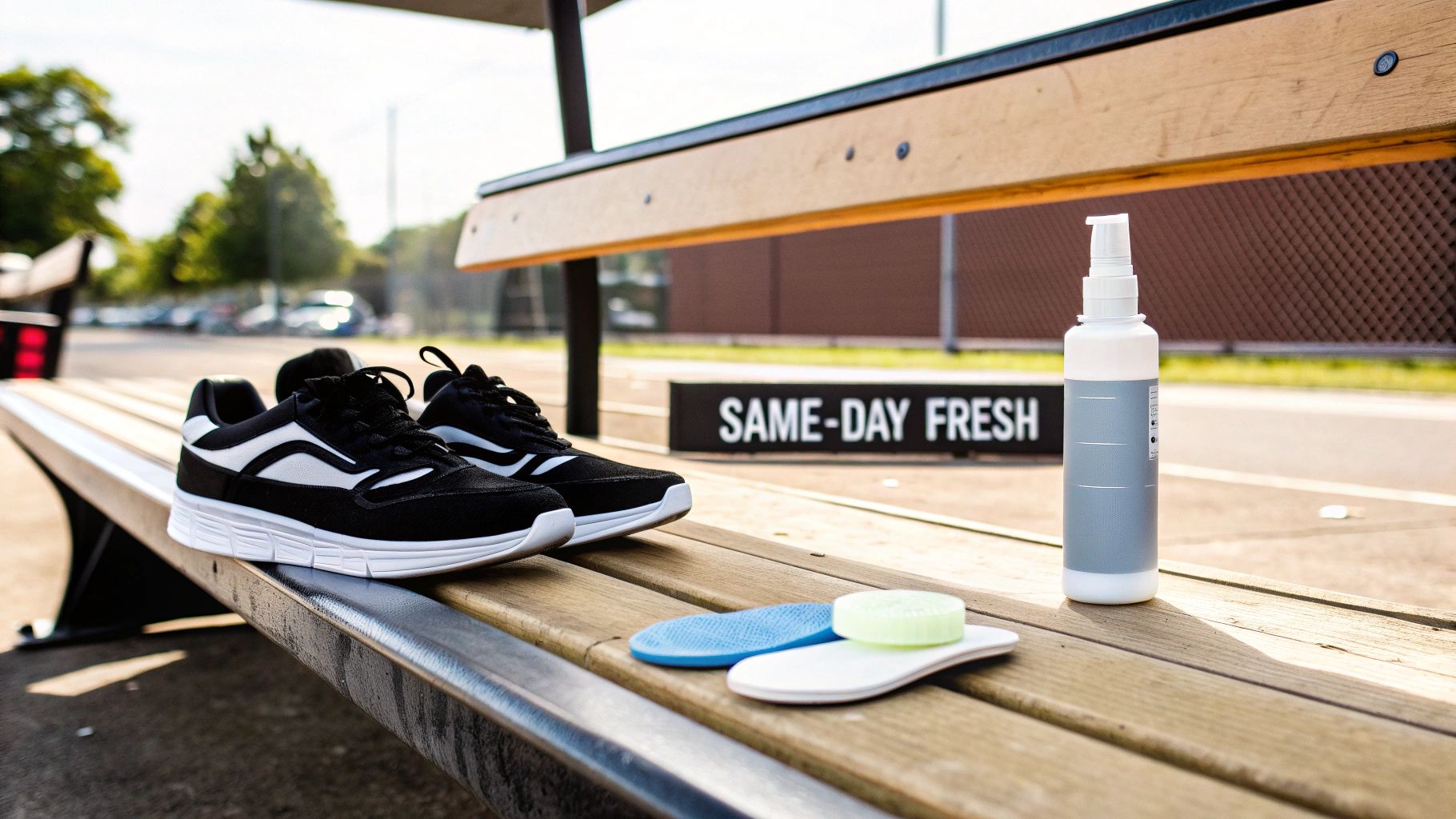
Understanding bacterial hotspots is crucial. Staphylococcus species thrive on leather’s natural oils, while Micrococcus colonizes synthetic blends. Targeting odor at its source makes every cleaning step count. Learn more about microbial odor sources.
Leather And Suede
Leather needs gentle care:
- Dampen a microfiber cloth with Gold Standard Leather Cleaner.
- Buff in small circles—firm, not frantic.
- Avoid hot water to preserve natural oils.
Suede requires a dry-first method:
- Lightly brush with a suede brush to lift dust.
- Apply a thin layer of Gold Standard Suede Foam.
- Air-dry away from heat to protect the nap.
Key Tips:
- Always spot-test cleaners on an inconspicuous area.
- Never soak suede; excessive moisture collapses fibers.
- Brush lightly to maintain texture.
Mesh And Knit
Mesh and knit trap moisture in threads:
- Fill a basin with lukewarm water and Gold Standard Mesh Cleaner.
- Gently agitate panels with a soft-bristle brush.
- Rinse thoroughly and press out water by hand.
- Dry flat on a clean towel to keep shape intact.
Simple Wins:
- Store knits with cedar balls or open-air shelving to curb mildew.
- Avoid wringing mesh; it stretches fibers and causes wrinkles.
Canvas And Rubber
Canvas can go in the machine on a cold cycle:
- Use a laundry bag, mild detergent, and Gold Standard Canvas Cleaner.
- Turn shoes inside-out to protect graphics.
Rubber parts get a targeted scrub:
- Mix warm water with Gold Standard Rubber Foam.
- Work into treads with a soft nylon scrubber.
- Wipe residue with a damp cloth.
Pro Moves:
- Dry canvas at room temperature with laces undone.
- Finish rubber with a microfiber cloth to restore brightness.
Material Specific Cleaning Methods
| Fabric | Odor Risk | Cleaning Agent | Recommended Tool |
|---|---|---|---|
| Leather | Medium (sweat oils) | pH-neutral cleaner | Microfiber cloth |
| Suede | High (trapped moisture) | Suede foam cleaner | Suede brush |
| Mesh | High (bacterial growth) | Enzyme-based foaming cleaner | Soft brush |
| Canvas | Moderate (surface stains) | Mild detergent blend | Laundry bag/brush |
| Knit | High (synthetic build-up) | Gentle enzyme cleaner | Soft cloth |
| Rubber | Low (surface grime) | Mild soap foam | Sponge |
Treat each panel according to its needs to prevent fading, fiber collapse, and persistent odors.
Pro Sneakerhead Examples
- A city courier rinses mesh runners biweekly to avoid sweat buildup.
- A basketball player focuses on suede panels with a dry-brush step after outdoor drills.
- An urban explorer runs canvas shoes through a gentle machine cycle, then finishes edges with rubber foam.
Regular material-specific care saves time and prevents trial-and-error.
Routine Reminders:
- Spot-test any cleaner before full application.
- Dedicate brushes and cloths to one material type.
- Schedule weekly light cleans to minimize grime.
Pair these tactics with a monthly deep clean for complete odor control. For step-by-step visuals, see How To Clean Sneakers At Home.
Deep Cleaning To Neutralize Sneaker Odors
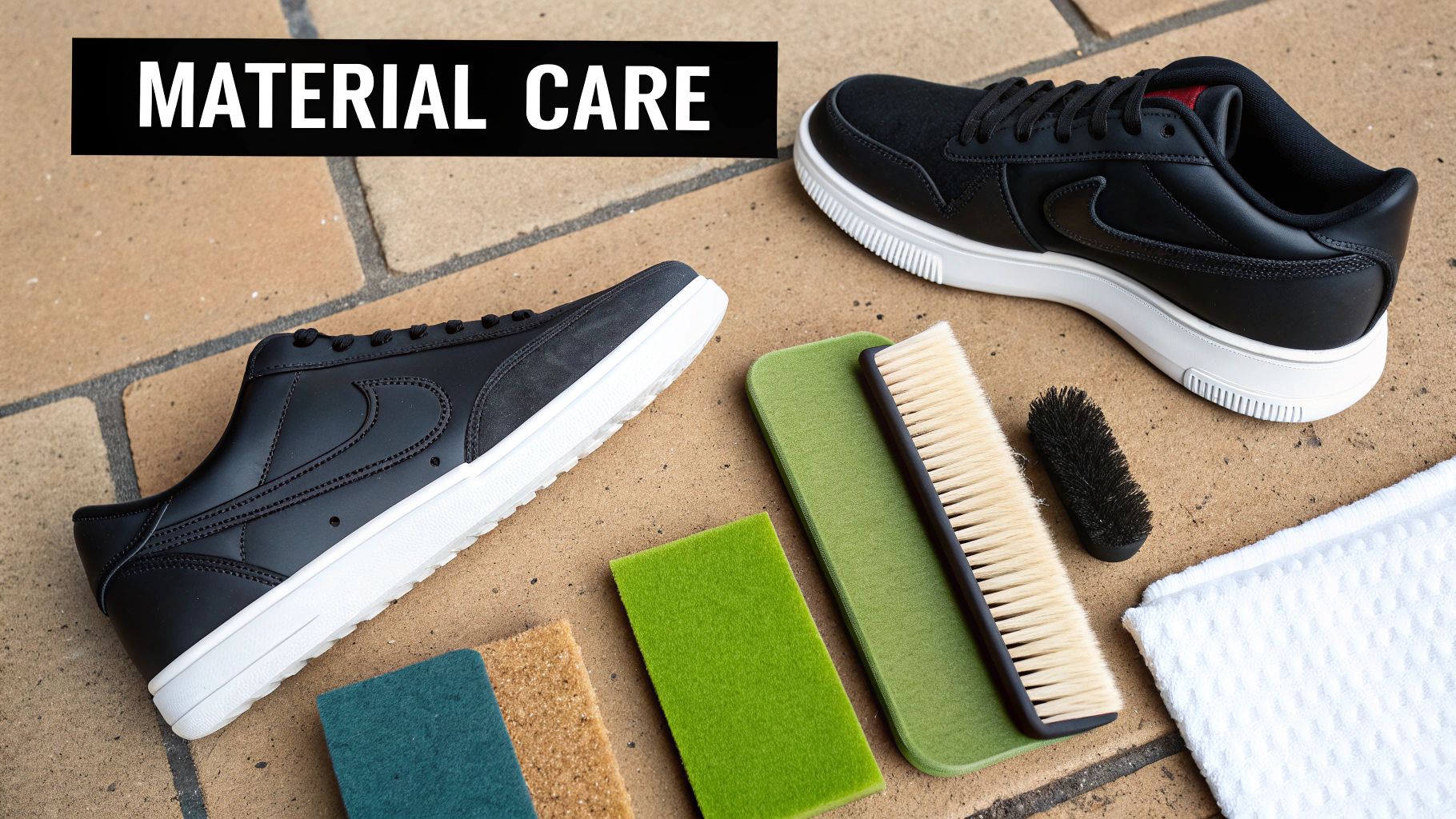
When surface scrubs fall short, use a hand-soak that won’t damage fabrics or adhesives. Fill a basin with lukewarm water—hot enough to loosen grime but safe for glues.
- ½ cup baking soda to neutralize odors
- ¼ cup white vinegar for residue removal
- 2–3 drops of tea tree or lavender essential oil
- 1 teaspoon antimicrobial powder booster for lasting defense
This blend neutralizes common odor sources while preserving materials.
Preparing Hand Soaks
Let sneakers soak for 15–20 minutes before brushing. Use a soft-bristle brush to work solution into mesh or canvas panels. Swirl gently—no aggressive scrubbing. Rinse under cool water until clear. Press out excess liquid with a towel; don’t twist or wring.
“I schedule a Sunday evening soak after long runs. It keeps my high-tops fresh for the week,” says track athlete Marisol.
Machine Wash Setup
Canvas and mesh respond well to a machine wash when protected:
Consumer Reports confirms that a warm-water cycle with mild detergent removes persistent odors for most frequent wearers. Learn more about effective washing methods
- Remove laces and insoles; wash separately.
- Use ½ scoop of gentle detergent or Gold Standard Laundry Soap.
- Add a towel or two for balanced agitation.
- Select a low-spin setting to protect glue joints.
Cold cycles are best for trainers with delicate overlays or taped details.
Adding Antimicrobial Boosters
Integrate an antimicrobial booster in every deep clean for extended freshness:
- Silver-ion powder for significant bacterial reduction
- Plant-based enzyme packets that digest sweat overnight
- Portable capsule boosters designed for wash cycles
DIY Deodorizing Mixture
No spray at hand? Mix 2 tbsp baking soda, 1 tbsp cornstarch, and 3–4 drops of essential oil. Sprinkle inside each shoe, let sit overnight, then shake out. Add an activated charcoal sachet for ongoing odor control.
| Ingredient | Purpose | Amount |
|---|---|---|
| Baking soda | Odor absorption | 2 tablespoons |
| Cornstarch | Moisture wicking | 1 tablespoon |
| Essential oil | Fresh scent | 3–4 drops |
| Activated charcoal | Ongoing odor control | Small sachet |
Timing And Drying Tips
Airflow is key. Place cleaned sneakers on a rack in a well-ventilated room. Avoid direct heat or sunlight—both weaken materials and fade colors.
- Rotate pairs weekly so each dries fully
- Insert cedar shoe trees to absorb moisture gently
- Slip in silica gel packets to maintain low humidity
Athlete Scheduling Tips
Elite athletes deep-clean every four heavy sessions to preserve material integrity. Over-soaking causes fatigue, so schedule cleans on rest days.
- Track humidity and adjust soak times on rainy days
- Use low-heat UV sanitizers for delicate fabrics
For gear recommendations, see our guide on the best sneaker cleaning kit.
Drying and Storage for Odor Prevention
Any leftover moisture becomes a breeding ground for bacteria. A reliable drying routine preserves fabrics and cushioning, keeping shoes fresh longer.
Maximizing Airflow With DIY Racks
Suspend each sneaker by the heel using a simple PVC rack. Keeping uppers off the ground lets air circulate around midsoles and toe boxes.
- Hang sneakers upside down so gravity aids drying
- Keep laces loose for interior airflow
- Clip a small fan onto the rack on humid days
Controlling Humidity For Fast Drying
Running a compact dehumidifier to maintain under 60% relative humidity can cut drying time by nearly half. Monitor conditions with a hygrometer and avoid enclosed closets.
Fresh air and humidity control reduce drying time by 40% while extending sneaker life.
Rotating Wear Schedules
Allow each pair at least 48 hours to air out. A four-pair rotation covers a workweek without overtaxing any shoes.
- High-intensity workouts boost insole moisture by 25%
- Stash post-workout pairs with extra drying aids
- Log wear dates for targeted maintenance
Using Moisture Absorbing Inserts
Silica gel packs and cedar shoe trees pull moisture out before bacteria settle in.
- Refresh scented sachets monthly
- Swap silica packs after two drying cycles
- Choose natural cedar to deter mildew and preserve shape
| Storage Method | Benefit |
|---|---|
| Open shelving | Maximizes air circulation |
| Zippered bag vent | Protects from dust and dampness |
| Shoe cabinet | Organizes and hides clutter |
Storage Hacks For Small Spaces
- Under-bed drawers with clear fronts for instant visibility
- Over-door organizers to free closet floors
- Magnetic wall strips to display top picks
Sock And Insole Pairings
Moisture-wicking socks can cut sweat transfer to insoles by 30%. Paired with perforated liners, they keep feet fresh for longer.
Small changes like sock fabrics reduce odor incidents by 15% over a season.
Key Takeaways
- Suspend and space out wet sneakers to maintain airflow
- Run a dehumidifier; keep humidity under 60%
- Rotate at least four pairs each week to prevent moisture buildup
- Use Gold Standard cedar trees, silica packs, or scented sachets for lasting freshness
Pair these storage habits with regular cleaning, and your kicks will stay fresh longer. Gold Standard’s inserts and humidity packs are engineered for sneaker care, making ideal conditions easy to achieve.
Choosing The Right Deodorizing Products
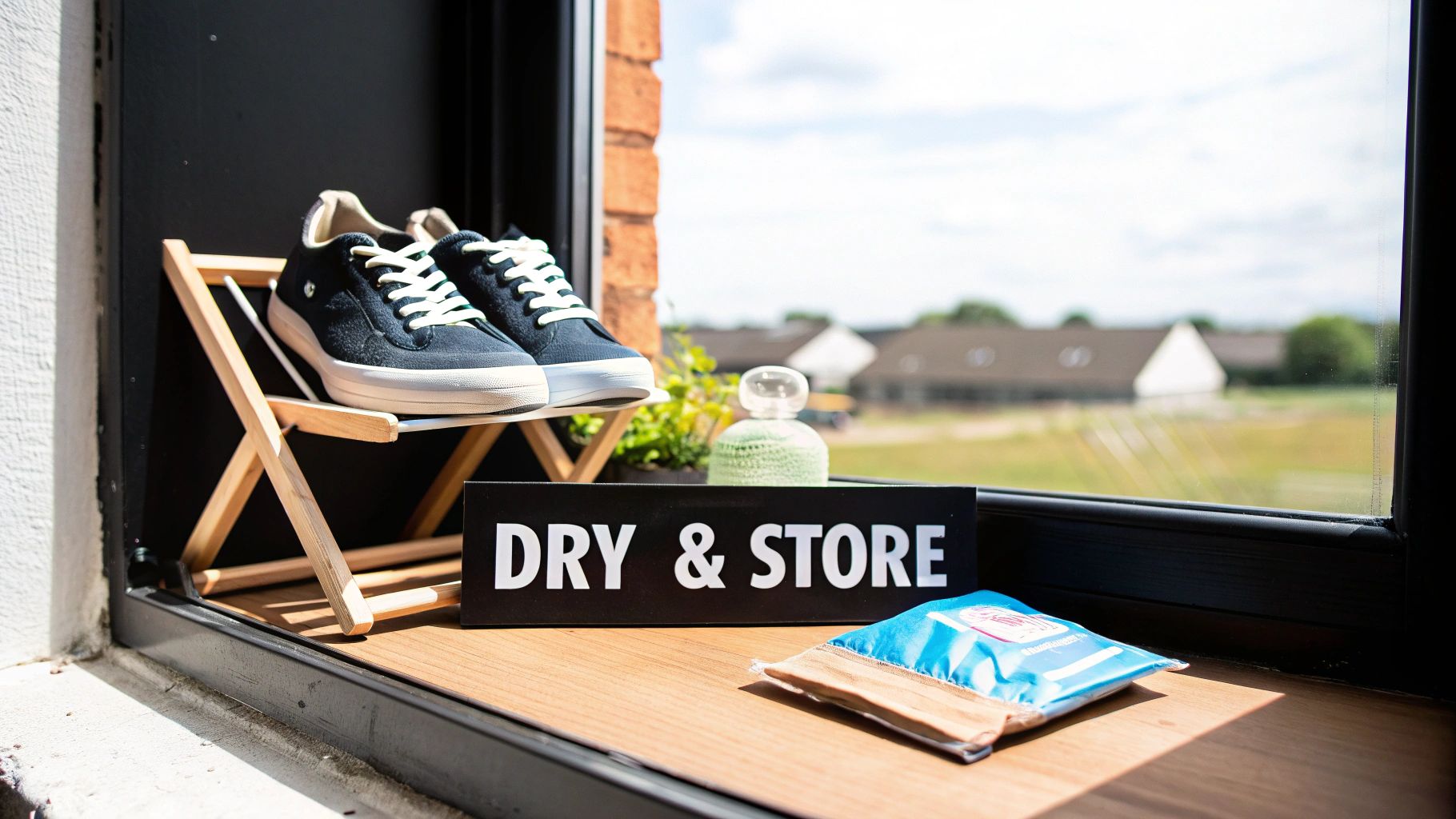
Selecting the right format—sprays, powders, odor balls, or inserts—depends on your routine. Here’s how ingredients, dwell time, and use-cases match up.
Understanding Foam Sprays
Foam sprays penetrate deep into mesh and knit layers to break down oils and neutralize bacteria. Most formulas dry in under 10 minutes, letting you step into fresh shoes the same day.
- Penetration: Reaches deep threads
- Dry Time: Under 10 minutes
- Ideal For: Daily commuters and trainers
Try the Gold Standard Natural Shoe Deodorizer Spray in Fresh Peppermint: Gold Standard Shoe Deodorizer Spray – Fresh Peppermint
Comparing Powder Blends
Powders use moisture-wicking minerals like baking soda or cornstarch. They absorb sweat over 30+ minutes, then shake out easily. Compact and budget-friendly, they’re ideal for travel.
- Apply evenly around toe box and midfoot
- Shake out excess after dwell time
- Store in airtight containers to preserve potency
“A simple powder can stop odor overnight,” notes a marathon runner.
| Format | Active Ingredient | Best For | Dwell Time |
|---|---|---|---|
| Foam Spray | Plant-based surfactants | Daily commuters | 5–10 minutes |
| Dusting Powder | Baking soda blend | Canvas or shallow mesh | 30+ minutes |
| Odor Ball | Activated charcoal pellets | Lockers and closets | Continuous |
| Insole Insert | Antimicrobial polymers | High-intensity workouts | 24+ hours |
When To Use Odor Balls
Odor balls harness activated charcoal to absorb smells from enclosed spaces. Tuck sachets into lockers, closets, or gym bags. Replace every 4–6 weeks for maximum efficiency.
Choosing Based On Scenario
- Short Workouts – Quick-dry foam spray
- Extended Travel – Powder blends or slim inserts
- At-Home Storage – Odor balls and sachets
Pair sprays, powders, and inserts for round-the-clock freshness.
Troubleshooting Common Odor Problems
Different smells point to different causes. Bacteria produce a sour stench, mildew gives a musty odor, and material degradation traps compounds deep in linings. Identifying the source lets you apply the right fix.
- Yellowed Midsoles from acid exposure or UV damage
- White Chalky Residue from vinegar acid burns
- Lingering Fragrance that masks rather than eliminates bacteria
Identifying Bacterial Odor
A greasy, sour smell near the heel signals bacteria. Air shoes for 24 hours, then smell inside. If the odor persists, bacteria have colonized the lining.
- Dry-tissue check: damp spots indicate mildew
- Tape lift on mesh seams to reveal mold flecks
- Sniff after a low-temp dryer cycle for bacterial hints
Fixing Yellowed Midsoles
Yellowing often means polymer breakdown or acid overexposure. Use a baking soda paste with a pH-safe cleaner and a soft toothbrush, working in small circles. Rinse gently and pat dry.
- Apply Gold Standard Whitening Foam with a low-absorbent pad
- Wipe residue before the paste fully dries to prevent chalking
- Finish with a UV-protectant spray to minimize future yellowing
Red Flags For Professional Intervention
Stop DIY if stitching unravels or glue peels during cleaning. Cracking midsole foam or stubborn odors after enzyme soaks indicate deeper damage. Professional restorers can replace foams, re-glue layers, and match dyes when color loss is extreme.
Case Study Example
Sneakerhead Aaron treated a soy-sauce stain in his midsole lining by alternating enzyme soaks with charcoal inserts over 48 hours. By air-drying between cycles, he removed the stain and neutralized odor without harming the rubber.
A dancer faced oily sweat smells in knit trainers. She applied enzyme foam, then ran a low-heat UV sanitizer twice. Her shoes smelled fresh and looked nearly new.
- Always spot-test enzyme products on a hidden seam
- Rotate charcoal sachets every 4–6 weeks for mildew control
- Keep a care journal to track treatments and results
Sneaker Odor Removal FAQ
Can I machine-wash every type of sneaker?
Canvas and mesh tolerate a gentle cold cycle in a protective laundry bag. Glued-on suede or leather panels may loosen. When in doubt, hand cleaning is safest.
How often should I deep-clean my sneakers?
Daily trainers benefit from a monthly soak. Occasional runners can extend intervals to 6–8 weeks—monitor odor and wear patterns.
Is baking soda safe on all materials?
Baking soda excels on canvas and rubber but can strip oils from leather or darken suede. Always spot-test first, then condition leather afterward.
Quick Drying Between Cleans
After a rainy run:
- Loosen laces for interior airflow
- Insert cedar shoe trees to absorb moisture
- Mist with Gold Standard Deodorizing Spray for immediate freshness
“Switching insoles cuts odor by up to 70% overnight,” says a city courier.
Preventing Future Odors
Regular maintenance beats sporadic deep cleans:
- Air out shoes after every wear—even 10 minutes helps
- Swap insoles weekly to reset moisture levels
- Deep clean monthly or at the first hint of odor
Simple habits prevent major odor issues and extend sneaker lifespan.
Ready to banish sneaker odors for good? Discover premium solutions at Gold Standard