

A professional sneaker cleaning kit is not merely a collection of products; it is an engineered system where each component is designed to work in concert to preserve your footwear. The best kits provide a material-safe cleaning solution, a set of specialized brushes for varied surfaces, and an essential high-quality microfiber towel. Understanding these components is the first step toward proper footwear care.
What Defines a Professional-Grade Sneaker Cleaning Kit
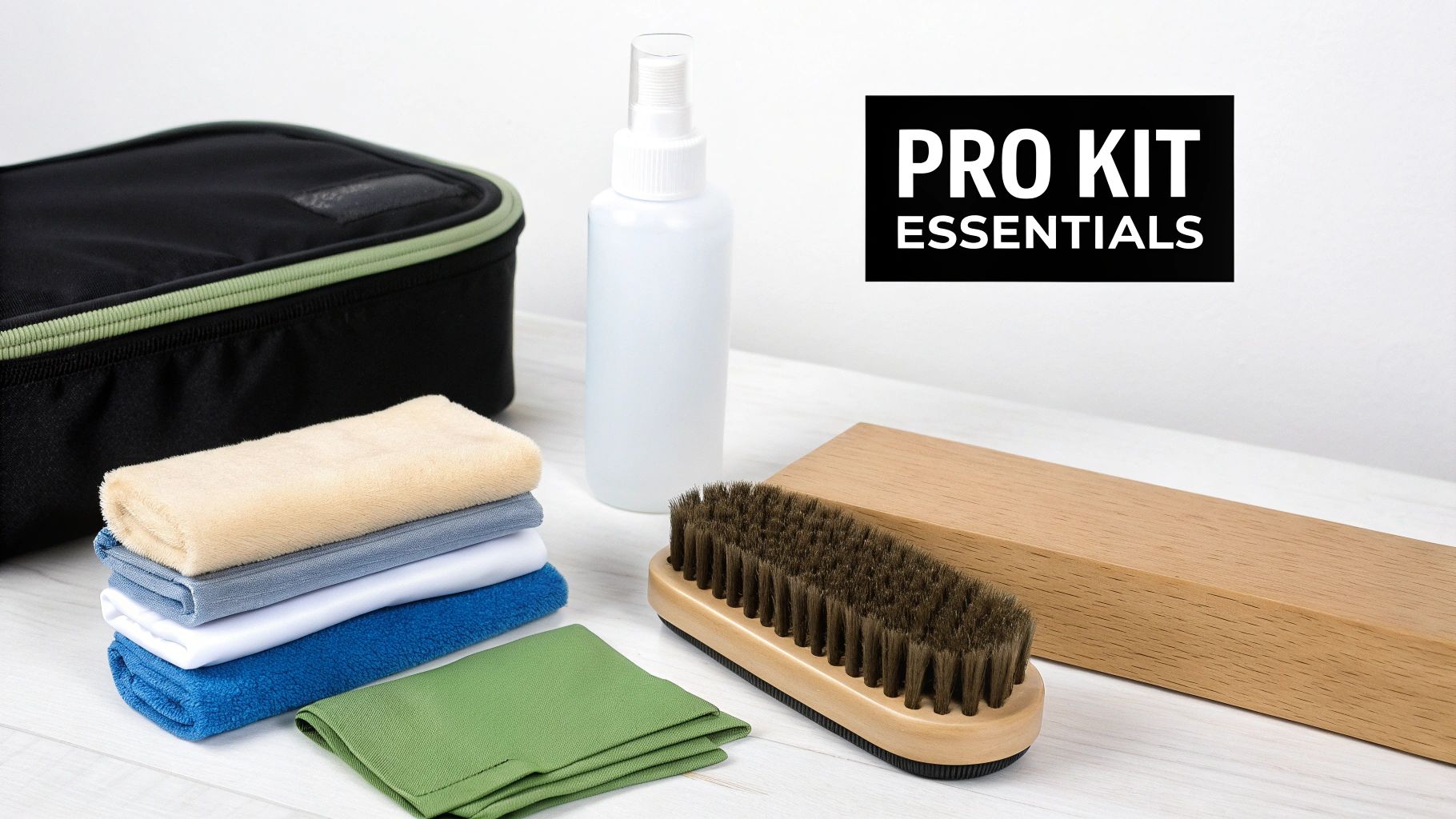
To select the right tools, one must first distinguish a premium kit from an inferior one that can cause more harm than good. The analogy of automotive care is apt: you would not use dish soap and a kitchen sponge on a high-performance vehicle. The same principle applies to your sneakers. The application of incorrect products can lead to irreversible damage, from color fading to the degradation of delicate materials like suede.
A superior kit is built upon three foundational pillars. Each element is designed for synergistic performance; any deviation compromises the integrity of your footwear.
The Three Pillars of a Professional Kit
An effective cleaning system is a curated arsenal, not a random assortment of items. Every component has a specific function, ensuring a safe and thorough clean every time.
- A Balanced Cleaning Solution: The formula must be potent enough to break down stubborn soil and grime, yet gentle enough to prevent color stripping, leather dehydration, or the deterioration of delicate textiles.
- A Versatile Brush Set: A single, all-purpose brush is a primary cause of material damage. A proper kit includes multiple brushes with varied bristle stiffness—soft for delicate uppers, medium for general use, and stiff for robust midsoles and outsoles.
- Essential Accessories: The minimum requirement is a highly absorbent, lint-free microfiber towel. This is a critical tool for lifting moisture and suspended dirt without leaving behind fibers or creating streaks.
To provide a clearer understanding, the following is a breakdown of the core components expected in any professional-grade kit.
Core Components of a Professional Sneaker Cleaning Kit
| Component | Primary Function | Why Quality Matters |
|---|---|---|
| Cleaning Solution | Breaks down dirt, stains, and grime | A well-balanced, non-toxic formula cleans effectively without harsh chemicals that can damage materials or cause discoloration. |
| Brush Set | Agitates and lifts dirt from various surfaces | Different bristle stiffness (soft, medium, stiff) is crucial for cleaning specific materials safely, from delicate uppers to durable soles. |
| Microfiber Towel | Absorbs excess solution and lifts loosened dirt | A high-quality towel is lint-free and super absorbent, preventing streaks and ensuring a polished, dry finish. |
The interplay of these three core elements is what distinguishes a superficial wipe-down from a true, restorative cleaning.
A well-curated kit is an investment in preservation. By extending the life of your sneakers, you're not just keeping them clean; you're protecting their value and the stories they carry.
The demand for high-quality care is expanding rapidly. The global shoe care market is projected to reach $7 billion by 2030, driven by a growing community of enthusiasts seeking the best tools. This is logical—proper maintenance can extend a sneaker's lifespan by up to 150%, saving collectors significant capital over time.
Ultimately, a complete kit provides everything required in one package, built on the philosophy of using specialized tools for specific tasks. This principle is not unique to footwear; guides detailing the components of an effective auto detailing starter kit share the same core concept of having the right tool for every part of the job.
Decoding the Science Behind a Superior Cleaning Solution
Not all cleaning formulas are created equal. The science behind a premium solution is fundamentally different from that of a low-quality, aggressive detergent. Using a harsh cleaner on premium footwear is akin to applying an abrasive compound to a vehicle's clear coat; it removes the dirt but also strips the finish, leaving the underlying material exposed and vulnerable.
The primary difference lies in chemistry. Aggressive detergents often possess a dangerously high pH, which can cause colors to bleed, dehydrate natural leather until it becomes brittle, and even induce cracking in rubber midsoles. They clean through brute force, and the footwear pays the price.
The Molecular Approach to Cleaning
A premium cleaning solution operates on a molecular level. Instead of stripping the surface, it utilizes surfactants—specialized molecules that reduce the surface tension of water. This allows the solution to penetrate deep into the weave of textiles and porous materials.
Once inside, these molecules attach to dirt and oil particles, breaking them down and lifting them away from the material’s fibers. The result is a deep clean that removes contaminants without causing collateral damage.
A truly advanced formula does more than just clean; it preserves. It should lift away grime while simultaneously conditioning the material, ensuring the shoe remains supple, vibrant, and structurally sound for years to come.
Ingredients That Nourish, Not Just Clean
Examining the ingredient list of the best sneaker cleaning kits reveals a focus on safe, effective, and often naturally derived components. These are selected not only for their cleaning efficacy but also for their ability to protect and nourish the materials they treat.
Commonly found ingredients include:
- Coconut Oil Derivatives: These act as gentle cleaning agents, creating a rich foam that lifts dirt without the need for harsh chemicals.
- Jojoba Oil: This is a natural conditioner that closely mimics the oils found in leather. It moisturizes and restores suppleness, preventing the cracking often seen after using inferior products.
This focus on conditioning distinguishes professional-grade products. Basic soaps may clean, but they also strip essential oils from materials like leather, leaving them dry and accelerating their decay. We developed our own Gold Standard Premium 8oz Shoe Cleaning Solution with this principle in mind, ensuring it removes grime while actively conditioning the footwear.
Ultimately, transparency in an ingredient list is key. Look for a focus on non-toxic, biodegradable components. A formula built on this foundation will clean deeply and safely, respecting the craftsmanship of your sneakers.
Why Brush Selection Is a Critical Decision
A premium cleaning solution is only half the equation. The brush is the most critical tool for executing a safe, deep clean. Using the wrong brush is the most common and fastest way individuals permanently damage their sneakers, turning a simple cleaning session into a costly error.
The analogy of automotive detailing holds true here as well. One would never use a stiff brush designed for tires on a vehicle's delicate paintwork. Different footwear materials possess vastly different tolerances, and your tools must respect those distinctions to avoid scuffs, scratches, or fraying.
The global sneaker care market is expanding as more enthusiasts recognize that proper maintenance is paramount. The shoe cleaning service market alone is projected to reach $4,115.8 million by 2025. This reflects a shift toward treating collections as the valuable assets they are. Investing in the right tools is a critical part of that shift. Discover more insights into the growing shoe care market.
Matching Bristle to Material
The core of a brush is its bristles; their material and stiffness dictate its application. A professional kit provides options because one brush cannot perform all tasks. In fact, using a single, generic brush on an entire shoe is a guaranteed method for causing damage.
The essential brush types are broken down as follows:
-
Soft Bristles (Hog Hair): This is your precision instrument, reserved for the most delicate surfaces. Natural hog hair is exceptionally gentle, making it the only appropriate choice for premium materials like suede, nubuck, and fragile knit uppers. Its purpose is to gently agitate the surface and lift dirt without snagging fibers or creating micro-scratches. For high-end footwear, a dedicated premium soft bristle shoe cleaning brush is not a luxury—it is a necessity.
-
Medium Bristles (Synthetic): This is your all-purpose workhorse. The bristles are firm enough to generate a robust lather and remove everyday grime, yet gentle enough for durable materials like standard leather, canvas, and mesh. This is the brush you will likely use most frequently for the main body of your sneakers.
-
Stiff Bristles (Synthetic/Nylon): This is the heavy-duty tool, reserved exclusively for the most resilient parts of your shoe. Its rigid bristles are engineered to remove stubborn, caked-on mud and grime from rubber midsoles and outsoles. Under no circumstances should a stiff brush be used on any part of the shoe’s upper. It will cause immediate scuffing and abrasion. There are no exceptions.
The rule is simple: always start with the softest brush capable of performing the task. You can escalate the bristle stiffness if necessary, but you can never reverse the damage caused by a brush that was too aggressive from the outset.
Mastering this hierarchy elevates your process from simple "washing" to strategic, material-first cleaning. This approach is the bedrock of professional footwear care.
Mastering Material-Specific Cleaning Techniques
Treating every sneaker identically is a common but damaging mistake. A single, aggressive cleaning method will destroy certain pairs. Each material—from robust leather to delicate modern knits—requires a specific approach to be cleaned without incurring damage.
A heavy-duty technique that restores a leather court shoe will ruin a pair of suede runners. Mastering these material-specific methods is the key to maintaining your entire rotation in pristine condition for years.
How To Clean Standard Leather
Leather is resilient but, as a natural skin, it can dry out and crack if cleaned improperly. The objective is to remove dirt without stripping the material of its essential oils.
Begin by using a medium-bristle brush to remove any loose surface debris. Next, apply a small amount of cleaning solution to the brush—not directly to the shoe—and work it into a light foam using small, circular motions. It is critical not to saturate the leather. Once clean, wipe away all residue with a microfiber towel and allow the shoes to air dry away from direct heat or sunlight.
- Common Mistake to Avoid: Never use harsh detergents or flood the leather with water. This combination strips the material of its oils, leaving it brittle and prone to cracking.
Suede and Nubuck Care
Suede and nubuck are notoriously sensitive due to their napped texture. The golden rule is to begin with a dry cleaning method whenever possible. A proper suede brush (or a soft hog hair brush) is your primary tool and can often handle light dust and minor marks without any liquid.
For more resistant stains, use a minimal amount of a gentle, water-based cleaner. Again, apply foam to a soft brush, not directly to the material. Lightly dab and agitate the affected area, then immediately blot with a microfiber towel to lift moisture and dirt. Once completely dry, use the brush again to gently restore the nap, brushing in a single direction.
With suede and nubuck, less is always more. Aggressive scrubbing or over-saturating the material will permanently flatten the nap and can result in water spots or discoloration.
Cleaning Canvas and Mesh
Canvas and mesh are prone to trapping dirt within their woven fibers. Forcing it out can cause pilling or fraying. The solution is to allow a quality cleaning formula to do the work.
After a preliminary dry brushing, apply your cleaner with a medium-bristle brush. Work the foam deep into the fabric to break down embedded grime. More pressure can be applied to stubborn areas, but always attempt to scrub in line with the fabric’s weave. This approach, especially with a quality kit, is essential. For footwear with special finishes, like the iridescent coating on a Fila Disruptor II Silver Iridescent Wedge Sneaker, a gentle yet effective formula is required to avoid stripping the unique finish.
Tackling Modern Knit Fabrics
Knit uppers are valued for their comfort and breathability but can easily stretch, lose their shape, or discolor if cleaned improperly. They must be treated with the same care as a fine sweater.
Always use a soft-bristle brush to avoid snagging or pulling the delicate threads. Use a minimal amount of cleaning solution and employ gentle, dabbing motions rather than aggressive scrubbing. When finished, blot gently with a microfiber towel to absorb excess moisture. To help them maintain their shape during drying, stuff the shoes with paper towels or, ideally, shoe trees. For a complete guide, review our detailed article on how to clean sneakers at home.
Choosing the correct brush is the most critical first step for any material. This decision tree simplifies the process.
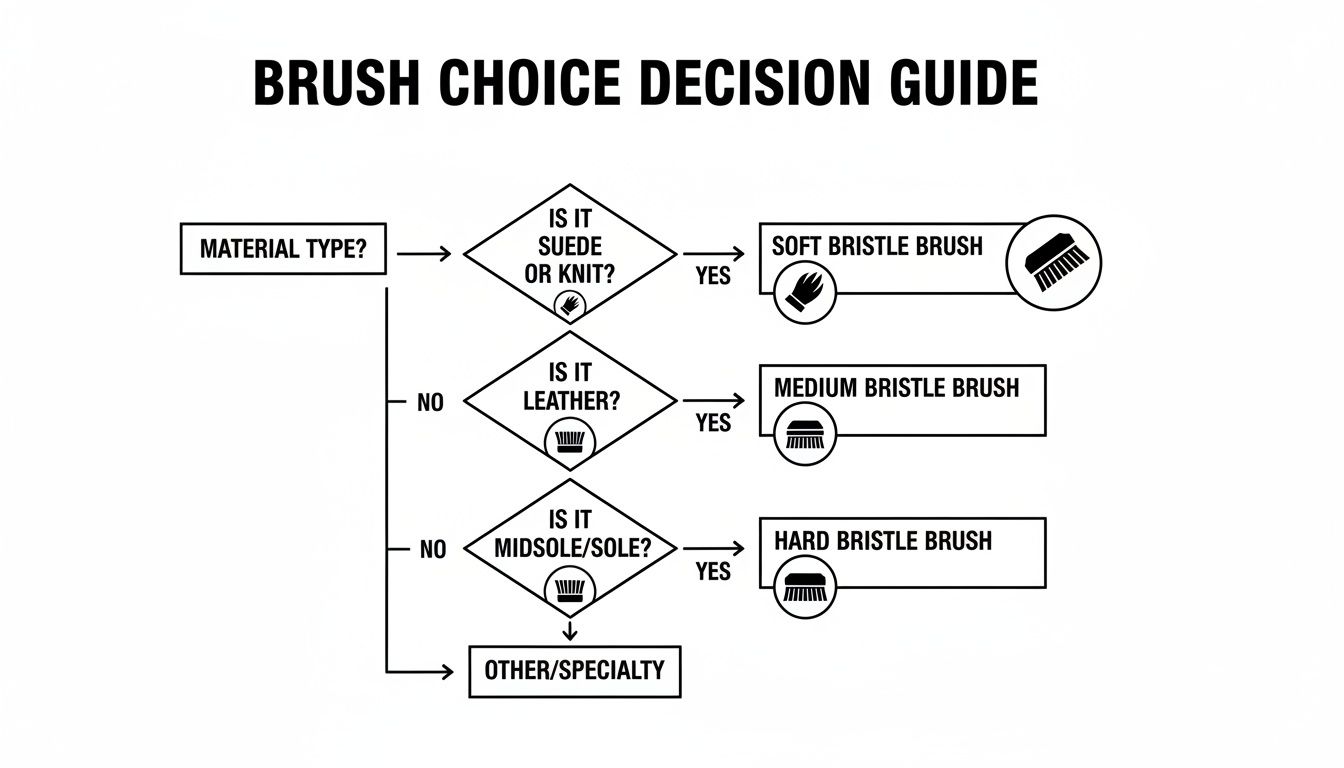
This chart reinforces the central principle: match the tool to the material. Executing this step correctly sets the foundation for a perfect, damage-free clean.
For easy reference, here is a concise guide for common materials.
Sneaker Material Cleaning Guide
| Material | Recommended Brush | Cleaning Method | Critical Precaution |
|---|---|---|---|
| Leather | Medium Bristle | Gentle circular motions with minimal foam. Wipe clean. | Avoid oversaturating with water or harsh detergents. |
| Suede | Soft/Suede Brush | Dry brush first. Use minimal foam and dab, then blot. | Never apply solution directly. Do not scrub aggressively. |
| Nubuck | Soft/Suede Brush | Dry brush first. Use minimal foam and dab, then blot. | Less is more; excess moisture causes spotting. |
| Canvas | Medium/Stiff Bristle | Work foam deep into the weave. | Scrub with the grain of the fabric to avoid fraying. |
| Mesh/Knit | Soft Bristle | Gentle dabbing motions. Blot dry. | Never scrub hard. Stuff to maintain shape when drying. |
| Soles | Stiff Bristle | Use firm pressure and scrub thoroughly. | Be careful to prevent the stiff brush from contacting the uppers. |
This table serves as your at-a-glance reference for correct procedure, helping you avoid the common errors that can ruin footwear.
The Professional Step-by-Step Cleaning Process
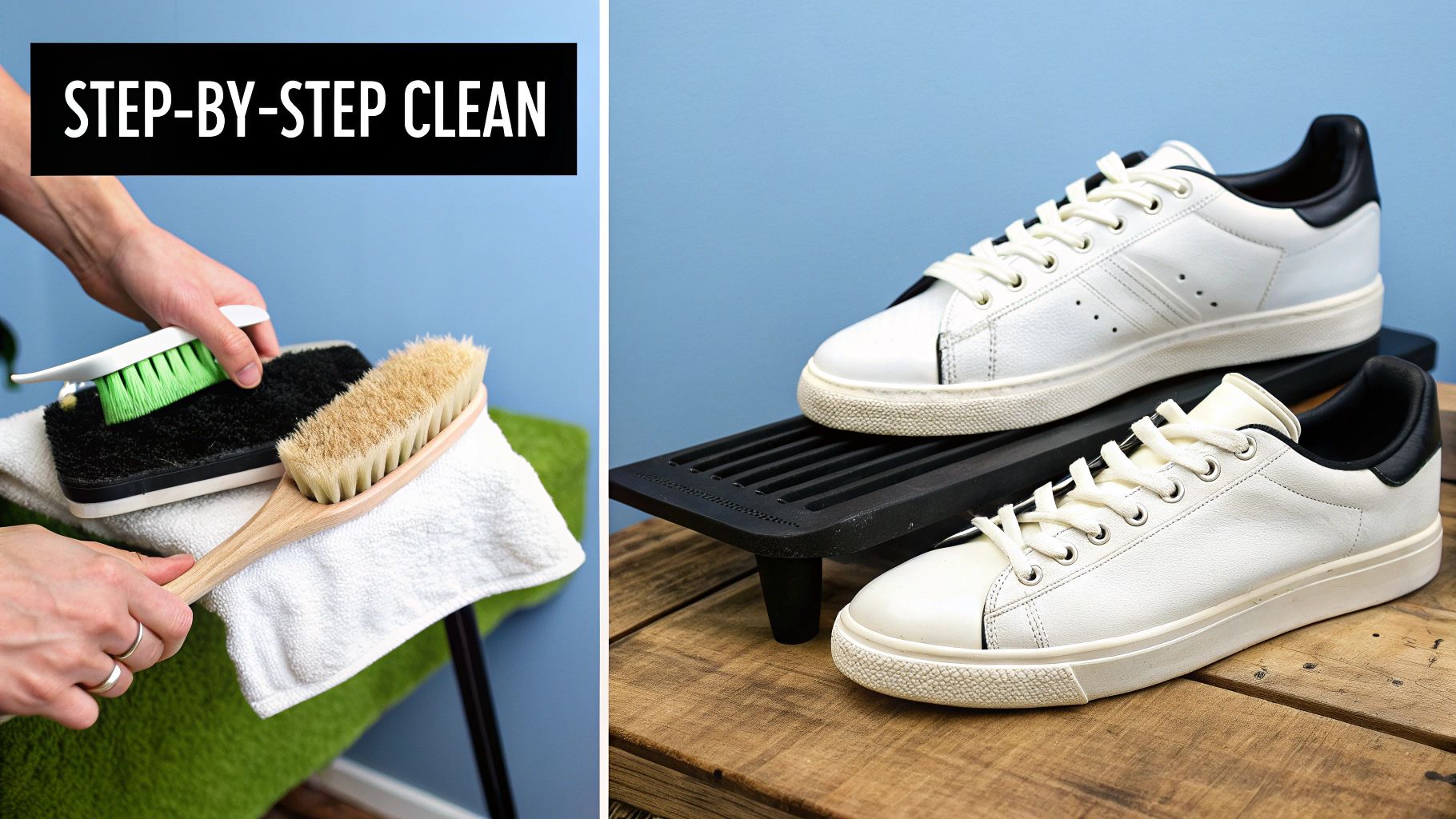
Knowledge of materials and tools is foundational, but a repeatable process is what distinguishes amateurs from professionals. A structured workflow guarantees consistent, high-quality results. This is the universal methodology we employ to eliminate guesswork and ensure a safe, deep clean for nearly any pair of sneakers.
Following these stages means adopting the same techniques experts use for a flawless finish. The process is broken down into three crucial stages. Skipping steps is the fastest way to achieve a mediocre clean—or worse, a damaged pair of shoes.
Stage 1: Preparation
Before any cleaning solution is applied, proper preparation is non-negotiable. This phase clears the surface and prevents grinding existing dirt deeper into the material.
- Remove Laces and Insoles: First, remove the laces and, if possible, the insoles. This allows for separate cleaning and provides complete access to all areas of the shoe, including the tongue and interior.
- Dry Brush Thoroughly: Using a medium or stiff-bristled brush, conduct a vigorous dry brushing of the entire shoe, focusing on the outsoles and midsoles. The objective is to dislodge all loose dirt, dust, and caked-on mud before introducing moisture, which can create a larger mess.
Stage 2: Application and Agitation
With surface debris removed, it's time to address the embedded grime. This is where your cleaning solution and the appropriate brush work together to lift stains from the material's fibers.
Mix a small amount of cleaning solution into a bowl of cool water. Dip your brush into the solution, tap off any excess, and begin to scrub the sneaker using small, circular motions. Start with the cleanest parts of the shoe and move toward the dirtiest to prevent spreading grime. Use a stiff brush for robust midsoles and switch to the correct brush for the uppers—soft for suede, medium for leather or canvas.
Stage 3: Wiping and Air Drying
The final stage involves removing the loosened dirt and allowing the sneaker to dry properly to prevent warping or material damage.
Using a clean microfiber towel, wipe away all foam and residue. The towel’s fibers are designed to lift and trap suspended dirt and moisture. Finally, insert shoe trees or paper towels into your sneakers to help them maintain their shape. Then, allow them to air dry naturally at room temperature.
Never place sneakers near a radiator, in front of a heater, or in direct sunlight. Intense heat can warp materials, crack leather, and weaken the adhesives holding the sole. Patience is the final, and perhaps most important, tool in your kit.
Common Questions About Sneaker Cleaning Kits Answered
Even with a detailed process, questions arise. As footwear care specialists, we have encountered nearly every query. Here are expert answers to the most common questions about sneaker care.
Can One Kit Be Used for All Types of Shoes?
Yes, provided it is a premium kit. A high-quality system is formulated to be safe across a wide range of materials—leather, canvas, rubber, and mesh. The key, however, lies not just in the cleaning solution, but in the tools and technique.
The principle is simple: for delicate materials like suede or nubuck, you must use a soft-bristled brush and a gentle touch. While the cleaner itself is safe, its application must be adapted to the material. When in doubt, always test on a small, inconspicuous area first.
How Often Should I Clean My Sneakers?
Frequency depends entirely on wear. A universal schedule is impractical.
- Daily Wearers: A light cleaning every one to two weeks is advisable. This prevents dirt from becoming deeply embedded.
- Collector's Items or Occasional Wear: It is best practice to clean these immediately after each use. This addresses fresh spots before they can set and become permanent stains.
- Deep Cleaning: Reserve this for significant soiling, such as contact with mud or a major spill.
Remember: regular, gentle maintenance is always superior to an aggressive, infrequent scrubbing session. Proactive care is more effective and far better for the longevity of your sneakers.
Are Expensive Sneaker Cleaning Kits Worth the Investment?
Absolutely. Investing in a premium kit is one of the most prudent decisions you can make for your footwear collection. Inexpensive kits often utilize harsh detergents that can dehydrate leather, fade colors, and include abrasive brushes that damage uppers.
A premium kit, conversely, provides a pH-balanced, conditioning formula and the appropriate tools designed to preserve your footwear, not just clean it. When you consider that a quality kit can add years to the life of a $150+ pair of sneakers, the initial cost is a clear value proposition.
What Is the Single Biggest Mistake in Sneaker Cleaning?
The most common and damaging error is using the wrong brush with excessive force. Applying a stiff midsole brush to a delicate suede or knit upper is a recipe for irreversible damage, including scuffs, snags, and pilling, which can occur in seconds.
Another critical error is improper drying. Placing sneakers near a heat source like a radiator, heater, or in direct sunlight can warp the shoe’s structure, crack leather, and degrade the adhesives. The guiding principles are simple: always use the correct brush for the material and always allow your sneakers to air dry naturally.
At Gold Standard, our mission is to provide the expert knowledge and professional-grade tools necessary to protect your investment. Elevate your footwear care with a system designed by specialists who understand that when it comes to quality, there are no shortcuts.