

A premium canvas sneaker protector spray does more than waterproof your footwear. It forms a breathable, hydrophobic barrier that actively repels water and prevents stains from setting, all without altering the fabric's original look or feel. It is the single most important preventative measure you can take to maintain the condition of your sneakers.
Why Protecting Your Canvas Sneakers is a Non-Negotiable Step
At Gold Standard, we see a pristine pair of canvas sneakers as an investment in personal style. However, the material itself—typically woven cotton fibers—is inherently absorbent, making it highly susceptible to dirt, liquid stains, and moisture damage.
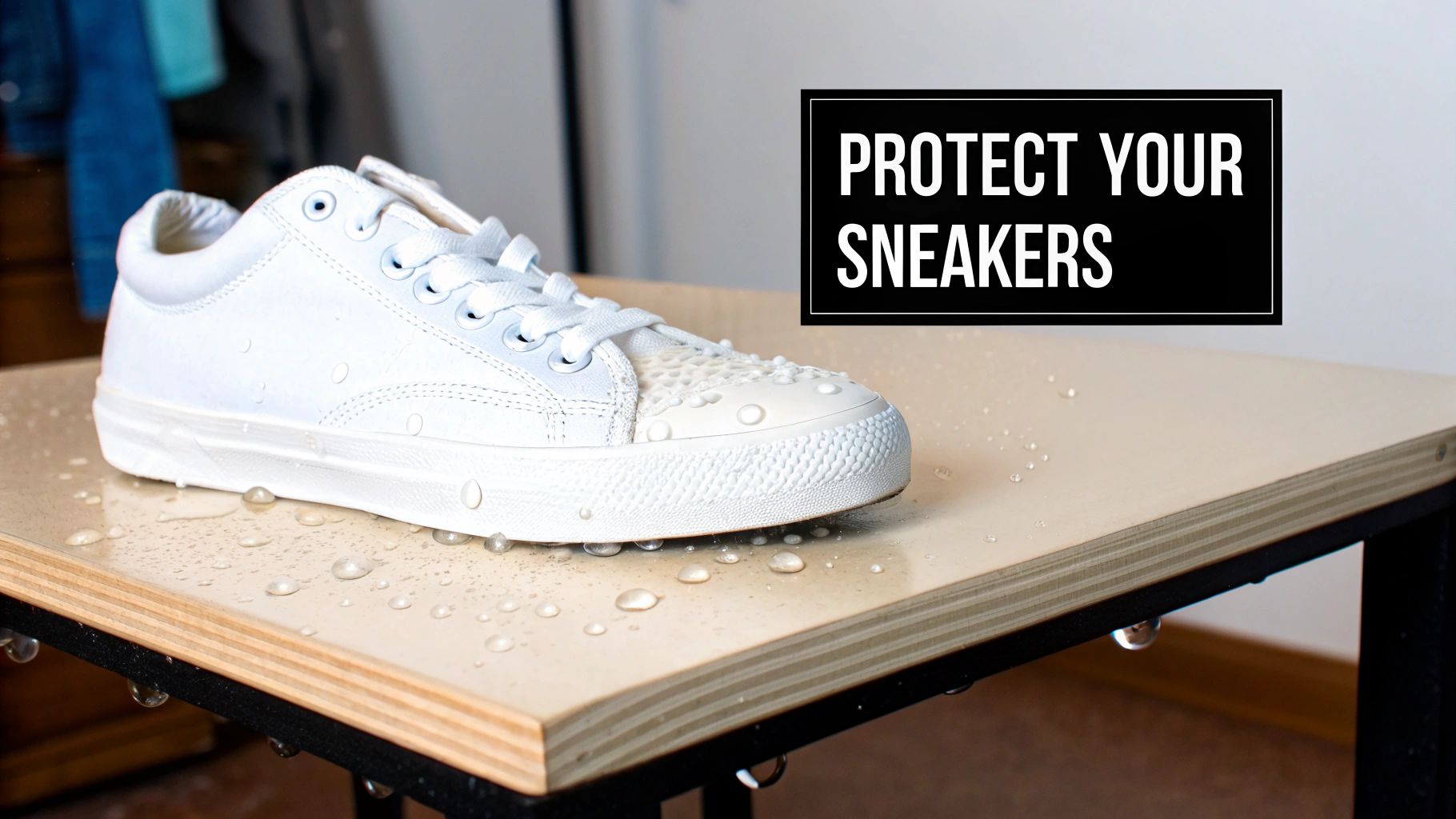
This guide provides our field-tested methodology for applying a protector spray correctly. We will break down the material science and best practices for anyone serious about footwear preservation.
The Science Behind the Shield
A high-quality protector spray creates an invisible shield around each individual fiber of the canvas. Unlike older wax-based solutions that seal and suffocate the fabric, modern formulations are engineered to allow air and water vapor to escape, maintaining the material’s natural breathability.
This molecular-level barrier provides three key benefits:
- Stain Blocking: It prevents liquids—coffee, soda, puddle splashes—from penetrating the weave. Spills can be blotted away before they become permanent stains.
- Water Repellency: Water beads up on contact and rolls off the surface. Inclement weather no longer guarantees saturated footwear.
- Enhanced Durability: By blocking moisture and grime, the spray helps prevent premature fabric degradation, yellowing, and fraying.
Protecting your investment is not just about cleanliness. It is about preserving the structural integrity of the material itself. Proactive application of a quality protector spray is the difference between sneakers looking new for weeks versus years.
A Foundational Practice in a Growing Market
Sneaker culture has expanded into a significant global market, driving demand for effective care products. The market for sneaker protector sprays was valued at $1,042.9 million and is projected to reach $2,500 million by 2035.
North America accounts for approximately 40% of this market, indicating a widespread understanding that proper protection is a fundamental aspect of ownership. You can read more about the growing sneaker care market for a deeper analysis.
Ultimately, using a protector spray is not a luxury step; it is foundational maintenance. It ensures every pair in your collection remains in pristine, ready-to-wear condition.
Pre-Application Protocol for Optimal Adhesion
Applying protector spray to a soiled surface is a critical error in footwear care. This action seals dirt, grime, and abrasive particles into the fabric, accelerating the material's degradation.
A durable, effective application always begins with a meticulously clean and completely dry surface.
The objective is to create a direct molecular bond between the protector and the canvas fibers. Any dust, debris, or moisture acts as an intervening layer, compromising the adhesion and effectiveness of the protective barrier. The result is a weak, patchy, and short-lived shield.
Preparing the Canvas Surface
Before reaching for the spray, the canvas must be properly prepared to receive the protective treatment. This involves more than a cursory wipe-down.
First, remove the laces. This provides complete access to the tongue and eyelets, areas where dirt commonly accumulates.
Next, use a soft-bristle brush—a horsehair or dedicated sneaker brush is ideal—to dry-brush the entire shoe. This initial pass removes all loose surface debris. Be thorough, paying close attention to seams and the junction between the canvas upper and the midsole.
A common mistake is using a stiff-bristled brush on canvas. This can fray the woven fibers and cause pilling, permanently damaging the texture of the material. Always use a soft brush.
Deep Cleaning and Drying Procedures
After removing loose dirt, address any set-in stains. This step is mandatory for achieving a flawless, uniform finish. The protector requires a completely clean substrate to function as intended.
For a detailed walkthrough on this process, refer to our comprehensive guide on how to clean sneakers at home using professional techniques that are safe for canvas.
Following the deep clean, the most critical phase of preparation is ensuring the sneakers are 100% dry. Trapped moisture is the primary antagonist to a successful protective coating. Applying a spray to even slightly damp fabric can result in a cloudy finish, prevent the formula from curing properly, and trap moisture within the fibers, creating an environment for mildew growth.
Allow the sneakers to air-dry in a well-ventilated area for a minimum of 24 hours. Avoid direct sunlight and artificial heat sources like heaters or hairdryers, as intense heat can cause yellowing or warp the canvas. Patience during this stage is essential for a professional-grade, long-lasting barrier.
Mastering the Spray Application Technique
The application process determines the efficacy of the protective barrier. Proper technique ensures an invisible, robust shield, whereas improper application results in a splotchy, ineffective coating.
Do not rush this stage. A poor application leads to drips, oversaturation, and a barrier that fails upon first exposure to moisture.
It is imperative to begin with a clean, dry pair of sneakers. Any dirt or moisture trapped beneath the spray will be sealed in permanently.
This diagram outlines the essential preparation steps.

Do not skip these steps. Preparing the canvas to bond with the protector is fundamental to the process.
Setting Up Your Workspace
Work in a well-ventilated area. Outdoors or in a garage with the door open is ideal; at a minimum, open several windows to ensure airflow. Protect surfaces from overspray by laying down newspaper or a drop cloth.
Before full application, conduct a patch test. Apply a light mist to an inconspicuous area, such as the interior of the tongue. Wait 10-15 minutes. If there is no discoloration or change in texture, you may proceed. This simple precautionary step can prevent irreversible damage.
The Art of the Even Coat
The objective is a perfectly uniform, lightweight layer. The optimal distance for application is 6-8 inches from the sneaker's surface. Spraying too close causes oversaturation and dripping. Spraying too far away allows the aerosolized particles to disperse before reaching the canvas.
Employ a smooth, continuous "sweep and release" motion. Begin spraying just before the shoe, move across the surface in a single pass, and release the nozzle just after passing the shoe. This technique feathers the spray's edges and prevents the formation of harsh lines.
The most significant application error is attempting to soak the shoe. A thick, wet coat does not offer superior protection. It suffocates the fabric, eliminates breathability, and can leave the canvas feeling stiff and unnatural.
Applying Multiple Thin Layers
Professional application relies on a key principle: two thin coats are superior to one thick coat. The first light coat acts as a primer, creating a surface for the second layer to adhere to, resulting in a stronger, more durable, and completely invisible shield.
The correct procedure is as follows:
- Apply the first light, even coat using the "sweep and release" technique.
- Allow the sneakers to sit for 10-15 minutes. This flash-off time permits the initial layer to begin bonding with the fabric.
- Apply a second light coat, focusing slightly more on high-wear areas like the seams and toe box.
This reference table summarizes the key dos and don'ts for a professional finish.
Application Best Practices At a Glance
| Action | The Gold Standard Method | Common Mistakes to Avoid |
|---|---|---|
| Distance | Hold can 6-8 inches from the sneaker for a fine mist. | Spraying too close (creates wet spots) or too far (wastes product). |
| Motion | Use a continuous "sweep and release" motion across the shoe. | Holding the spray in one spot, leading to oversaturation. |
| Coats | Apply two light, even coats for a durable, invisible barrier. | Applying one thick, heavy coat that suffocates the canvas. |
| Drying Time | Wait 10-15 minutes between coats to allow for proper bonding. | Spraying the second coat immediately, preventing the first from setting. |
| Testing | Always perform a quick patch test on a hidden area first. | Skipping the test and risking discoloration on the entire shoe. |
Adhering to these guidelines ensures maximum protection without altering the look or feel of your canvas sneakers.
This methodical approach is what creates an invisible protective barrier. It is also important to note that different materials require specific protocols. For example, our suede and leather waterproof spray has its own unique application requirements. Understanding how various treatments work, including similar textile care sprays, is key to protecting every type of footwear in your collection.
The Crucial Curing and Drying Process
The application is complete, but the process is not finished. The curing phase is where the liquid protector undergoes a chemical transformation, cross-linking to form the durable, invisible barrier you require.
Patience during this stage is not optional; it is the determining factor between a weak coating and maximum, hydrophobic repellency.
This waiting period allows the formula’s polymers to organize and bond cohesively to the canvas fibers. Rushing this process with a hairdryer or direct sunlight will disrupt this critical chemical reaction, resulting in a brittle, uneven finish that will fail under stress.
Creating the Ideal Curing Environment
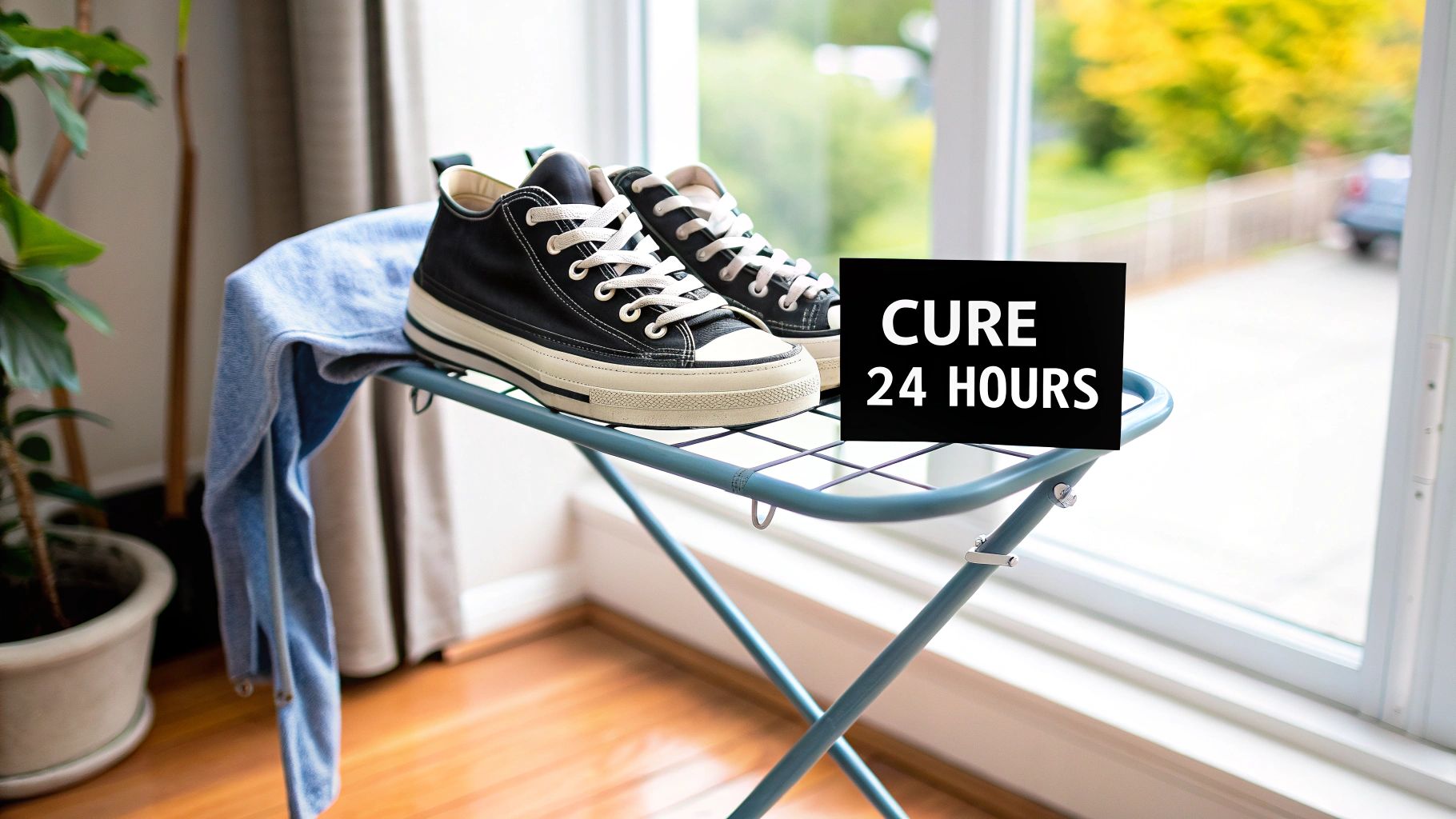
For the chemical bond to achieve maximum strength, the environment must be controlled. The professional standard is a full 24-hour curing period in a dry, temperate, well-ventilated location.
Avoid these common shortcuts, which sabotage performance:
- Using a hairdryer or heat gun: Forced, intense heat accelerates solvent evaporation, preventing the protective polymers from cross-linking correctly and compromising the barrier.
- Placing sneakers in direct sunlight: UV radiation can interfere with the curing chemistry and cause yellowing on light-colored canvas.
- Leaving them in a damp basement or garage: High humidity significantly slows the curing process and can trap moisture within the fabric.
The goal is simple: gentle, consistent air circulation at room temperature. For further expert guidance, review our article on the best way to dry wet sneakers.
The key distinction is that curing is a chemical process, not merely a drying process. The surface may feel dry to the touch within an hour, but the molecular structure continues to stabilize for up to 24 hours. Shortening this time means you are not achieving the full protective capabilities of the product.
Why This Process is Critical for Longevity
The global shoe care market is projected to reach $7.23 billion by 2032, driven by consumer desire to extend the life of their footwear.
Properly applying and curing a canvas sneaker protector spray can increase a sneaker's lifespan by up to 50%, making it one of the highest-return investments for your collection.
The principles of curing are universal across industries that use protective coatings. For comparison, it is informative to understand how long ceramic coating takes to cure on automotive paint. The same rules of patience and environment apply. Allow the full 24 hours for a guaranteed performance outcome.
Reapplication Schedule for Sustained Protection
A single application of canvas protector is not a permanent solution. The protective barrier degrades over time through abrasion, flexing of the fabric, and exposure to the elements.
Without consistent maintenance, this invisible shield will eventually fail, leaving the canvas vulnerable to stains and moisture damage. Proactive reapplication is the only way to ensure continuous protection and prevent the need for restorative cleaning.
Know When It's Time: The Water Bead Test
The most effective way to assess the integrity of the protective barrier is the water bead test.
When the protector is fully effective, water will form tight, distinct beads on the canvas surface and roll off. As the coating wears down, water will begin to "wet out"—spreading, darkening the fabric, and absorbing into the weave rather than beading.
This is the clear indicator that reapplication is necessary. Do not wait for catastrophic failure during a rainstorm. Once water beading diminishes, it is time to renew the protective layer.
Establishing a Reapplication Cadence
The optimal reapplication frequency depends on wear. Based on extensive testing, we recommend the following schedules.
- Daily Wear: For sneakers worn 3-4+ times per week, the constant flexing and abrasion will degrade the barrier more quickly. Reapply every 4-6 weeks.
- Regular Rotation: For footwear worn once or twice a week, reapplication every 8-10 weeks is sufficient to maintain protection.
- Occasional Use: For collection pieces worn infrequently, a quarterly treatment (every 3-4 months) is adequate to protect against environmental factors like dust and humidity during storage.
A critical note: Always perform a light cleaning before reapplication. A wipe-down with a damp cloth or a quick pass with a dry brush removes surface contaminants that can interfere with the new layer's bond. Ensure the sneaker is completely dry before spraying again.
Protection as Value Preservation
Maintaining the protective layer is about more than aesthetics; it is about protecting a tangible asset. The global sneaker protection market is projected to reach $2.7 billion by 2032 for this reason.
In the resale market, experts will confirm that evidence of water damage can decrease a sneaker's value by as much as 70%. You can dig into the sneaker protector market dynamics here for a quantitative look.
A consistent reapplication routine is an insurance policy. It is a simple, preventative habit that yields significant returns by keeping every pair in your collection in optimal condition.
Expert Answers to Common Canvas Protector Questions
Even with a clear protocol, specific questions often arise. As material specialists, we have addressed inquiries from seasoned collectors and new enthusiasts alike.
Here, we provide clear, field-tested answers to the most common questions regarding canvas sneaker protection.
Can I Use This on Suede or Leather?
The answer is unequivocally no.
Protector sprays are formulated for specific material structures. A spray engineered for the woven, breathable fibers of canvas is chemically incompatible with the delicate nap of suede or the unique pore structure of leather.
Attempting to cross-apply products will likely result in:
- Discoloration: An uneven, blotchy finish or permanent darkening of the material.
- Texture Damage: Suede can become stiff and crusty, losing its characteristic softness.
- Ineffective Protection: The spray will fail to bond correctly, leaving the material vulnerable while imparting an undesirable finish.
Always use a product specifically formulated for the material you are treating. This is why Gold Standard offers distinct protectors for different materials—to ensure optimal results without causing damage.
How Can I Tell if the Protector Is Actually Working?
The simplest verification method is the "water bead test." It provides immediate visual confirmation of the protective shield's efficacy.
After the spray has cured for a full 24 hours, apply a few drops of water to an inconspicuous area, such as the side of the heel. If the barrier is intact, the water will form distinct, spherical beads that sit on the surface or roll off without absorption.
If the water begins to "wet out"—spreading and darkening the canvas—the barrier has degraded. This is your signal to clean, dry, and re-apply the protector.
Does This Make My Sneakers Totally Waterproof?
It is important to distinguish between water-resistant and waterproof. A high-performance canvas protector spray renders your sneakers highly water-resistant. It will effectively repel an unexpected downpour, puddle splashes, or liquid spills.
However, it will not make them waterproof to the point of being submersible. The technology functions as a high-performance barrier against common environmental moisture, not as a seal for full immersion.
Will This Spray Inhibit the Breathability of My Sneakers?
No, provided you use a quality, modern formulation. A premium spray is engineered to be 100% breathable.
Our formula creates a microscopic network that coats individual canvas fibers rather than forming a solid, plastic-like film over the surface. This fiber-level protection allows air and water vapor (perspiration) to pass through the material unimpeded. The shoe breathes as it was originally designed to.
Lower-quality sprays often use cheaper polymers that clog the fabric's weave, trapping heat and moisture. This not only leads to discomfort but also creates an ideal environment for microbial growth. Using a properly formulated product ensures both protection and comfort.
Protecting your sneakers is a discipline. It is about preserving their value, integrity, and style. For a professional-grade barrier that repels stains and water without compromising breathability, trust the Gold Standard formulation. Our products are developed by material experts for enthusiasts who demand uncompromising quality.
Explore the Gold Standard collection and give your footwear the protection it deserves.