

The best sneaker cleaner is not about brute force or harsh chemicals. It is a precisely formulated, material-safe solution designed to lift grime from the complex assembly of leathers, suedes, knits, and rubbers that constitute modern footwear. Think of it as a restorative treatment, not a mere cleaning agent. Its efficacy relies on the synergy between a gentle yet powerful formula and the correct tools for each specific material.
Defining the Best Sneaker Cleaner: A Systems Approach
When you ask, "what is the best sneaker cleaner," you are fundamentally asking how to protect an asset. The difference between a premium, material-focused cleaner and a generic all-purpose spray is vast. It is analogous to comparing a professional detailer’s clay bar treatment to using a kitchen scouring pad on a car’s clear coat. One carefully restores and preserves the underlying surface; the other strips away everything, protective layers included.
A truly superior sneaker cleaning system is never just a bottle of liquid. It is a complete, thoughtfully engineered kit where the formula and tools work in concert. The objective is to gently lift dirt, oils, and stains while leaving the footwear’s original materials structurally and aesthetically uncompromised.
The Pillars of a Professional-Grade System
Any effective cleaning process is defined by its core components. To understand the distinction between systems, one must examine the details—much like how specialists evaluate products like Gyeon Q2 Cleanse for high-end automotive surfaces. For sneakers, these are the pillars of quality:
- pH-Neutral Formula: Harsh, alkaline cleaners are detrimental to footwear. They can desiccate leather, leading to cracking, or bleach the dyes in canvas and knit uppers. A properly balanced pH-neutral solution effectively cleans without stripping essential moisture or color.
- Material-Specific Brushes: A single-brush approach is a recipe for material damage. Stiff bristles will abrade smooth leather and shred delicate knits. Conversely, a brush that is too soft will lack the efficacy to remove ingrained dirt from durable rubber midsoles.
- Conditioning Agents: The best formulas offer more than just cleaning. They often include gentle, naturally derived conditioners that nourish the material, helping leather remain supple and preventing it from becoming brittle over time.
A superior cleaner is an investment in your collection’s longevity. It safeguards the condition, feel, and value of your footwear, rather than providing a temporary cosmetic fix.
Ultimately, selecting the right cleaner is the foundational step in a comprehensive sneaker care regimen. It prepares the footwear for all subsequent treatments, from conditioning to protecting. When you choose the best sneaker cleaning kit, you are not just buying a product; you are adopting a strategy for long-term preservation.
Why Professional Sneaker Care is a Sound Investment
Investing in professional-grade sneaker care is not an expense; it is a measure of asset protection. In a market where sneakers are collected, traded, and valued like financial instruments, their condition is paramount. A rare pair is a piece of design history with tangible value, and that value is directly correlated with its state of preservation.
Using a low-cost, generic cleaner on a high-value sneaker is equivalent to washing a luxury vehicle with dish soap. While it may remove superficial dirt, the aggressive chemicals inflict slow, irreversible damage. This includes color bleeding on suedes, delamination of bonded soles, and the structural decay of delicate textiles—all factors that significantly diminish a sneaker's resale value.
Protecting the Value of Your Collection
Consider professional care as insurance for your collection. Every scuff, stain, or instance of material degradation erodes a sneaker’s market worth. Discerning collectors understand this and have shifted their focus from simple "cleaning" to active "preservation."
This is no longer a niche concept; the industry has taken notice. The global sneaker care service market was valued at approximately $200 million in 2023 and is projected to reach $480 million by 2032, expanding at a CAGR of 10.1%. This growth signals a widespread recognition that footwear deserves meticulous care. You can read the full research on this market trend to understand the scale of this movement.
Professional care is not a cost; it's a strategy. It is the deliberate act of maintaining the integrity, appearance, and—critically—the value of your footwear for the long term.
The Long-Term Financial Rationale
While the initial outlay for a professional-grade cleaning kit may be higher than a budget alternative, the long-term savings are substantial. By preventing damage, you obviate the need for costly restoration services. More importantly, you preserve the maximum potential resale value of each pair.
The benefits are clear:
- Material Longevity: Professional-grade formulas are engineered to clean without stripping essential oils from leather or weakening the fibers in knit uppers. This extends the functional life of your shoes.
- Value Preservation: A pristine, box-fresh appearance can be the deciding factor between a sneaker that appreciates in value and one that depreciates significantly.
- Avoidance of Costly Errors: A single cleaning session with an improper product can permanently damage a shoe, rendering it worthless to a serious buyer.
The best sneaker cleaner is one that aligns with an investment mindset. By choosing professional-grade tools and solutions, you are not merely cleaning a shoe—you are actively curating and protecting a valuable collection designed to hold its worth.
Anatomy of a Sneaker Cleaner: Formula and Tools
The best sneaker cleaner is more than a liquid in a bottle; it is a complete, deliberately designed system. Each component, from the chemical formulation to the brush bristles, serves a specific, critical function.
To truly understand what separates an expert-level kit from a mass-market one, you must look beyond marketing claims. The difference lies in the ingredients, the tools, and a core philosophy of preservation over aggressive, brute-force cleaning.
The Science Inside the Bottle
Many generic cleaners rely on harsh surfactants and powerful solvents to dissolve dirt quickly. While effective at stain removal, they function like a sledgehammer, causing significant collateral damage to the footwear's materials.
These chemicals can strip the natural oils from smooth leather, leaving it brittle and prone to cracking. On modern knit uppers, they can weaken the delicate polymer fibers, leading to fraying and a loss of structural integrity. It is a short-term solution with permanent, negative consequences.
A professional, material-first approach is fundamentally different. It utilizes gentle, often biodegradable cleaning agents formulated to lift and suspend dirt without chemically attacking the shoe itself. The process is targeted and precise, preserving the integrity and value of your collection.
Why the Right Brush is Non-Negotiable
The cleaning solution is only half of the system. The application tool—the brush—is equally critical, and it is here that most kits compromise on quality to reduce cost.
The stiff, synthetic bristles common in budget kits are far too abrasive for most sneaker uppers. Using such a brush on premium leather is akin to scrubbing it with a fine-grit abrasive. While the damage may not be immediately visible, you are creating thousands of micro-scratches that will dull the finish and degrade the material over time.
A superior kit acknowledges that one brush does not fit all. Different materials demand different tools.
- Soft Bristles: Essential for delicate materials such as premium suede, nubuck, and fine-knit fabrics. They gently agitate the surface to lift dirt without snagging or damaging fragile fibers.
- Medium Bristles: The versatile workhorse for general cleaning on more robust materials like canvas, mesh, and most standard leathers. It provides sufficient scrubbing power without being overly harsh.
- Stiff Bristles: Reserved exclusively for cleaning durable rubber midsoles and outsoles. These bristles possess the rigidity needed to dislodge embedded grime and tough scuffs from the most resilient parts of a shoe.
Understanding this distinction is fundamental. Our detailed guide on selecting the best shoe cleaning brush ensures you will never damage a prized pair with the wrong tool again.
The objective is not just to clean; it is to preserve. A premium cleaner's formula and its corresponding tools are designed to work in harmony with your sneaker's materials, not against them.
Decoding Premium vs. Budget Cleaners
How does this difference manifest in practice? The table below contrasts the components of a professional-grade kit like Gold Standard with those of a typical budget alternative.
Professional vs. Budget Sneaker Cleaner Components
| Component | Gold Standard (Professional) | Typical Budget Cleaner | Impact on Sneakers |
|---|---|---|---|
| Cleaning Agents | Coconut & Jojoba Oil derivatives | Harsh surfactants, alcohols | Gentle agents lift dirt; harsh chemicals strip oils, causing drying and cracking. |
| Brush Bristles | 3 brushes: Soft, Medium, & Stiff Hog Hair | 1 all-purpose synthetic brush | Multiple brushes protect delicate materials; a single stiff brush causes abrasions. |
| Conditioners | Natural conditioning agents integrated | None, or silicone-based additives | Nourishes materials like leather; budget options offer no protection or can clog pores. |
| Additives | 100% biodegradable, no dyes or perfumes | Artificial dyes, heavy fragrances | Safe for all colors and materials; dyes can stain light-colored shoes. |
As illustrated, the "professional" designation is a commitment to material science.
When evaluating what makes the best sneaker cleaner, look for a formula free of harsh chemicals, dyes, and unnecessary additives. An effective solution does not require artificial coloring or fragrance. Its strength lies in a balanced blend of ingredients that are tough on dirt but gentle on your footwear. Using natural derivatives like coconut and jojoba oils as cleaning and conditioning agents exemplifies this philosophy. This approach does not just remove surface grime; it subtly nourishes the material with every application. For anyone who understands footwear care, this material-first methodology is the only logical choice for long-term collection protection.
A Material-Specific Guide to Sneaker Cleaning
Understanding how different materials react to cleaning is what distinguishes an amateur from an expert. An exceptional sneaker cleaner is not about owning a different formula for every shoe; it is about mastering the correct technique for each surface.
This is a matter of finesse over force. A single, high-quality solution can be used across an entire collection, provided the method is adapted for durable leather versus delicate suede. This approach ensures you have the control and confidence to care for any shoe.
This decision tree outlines the proper approach to cleaning based on your sneaker's material composition.
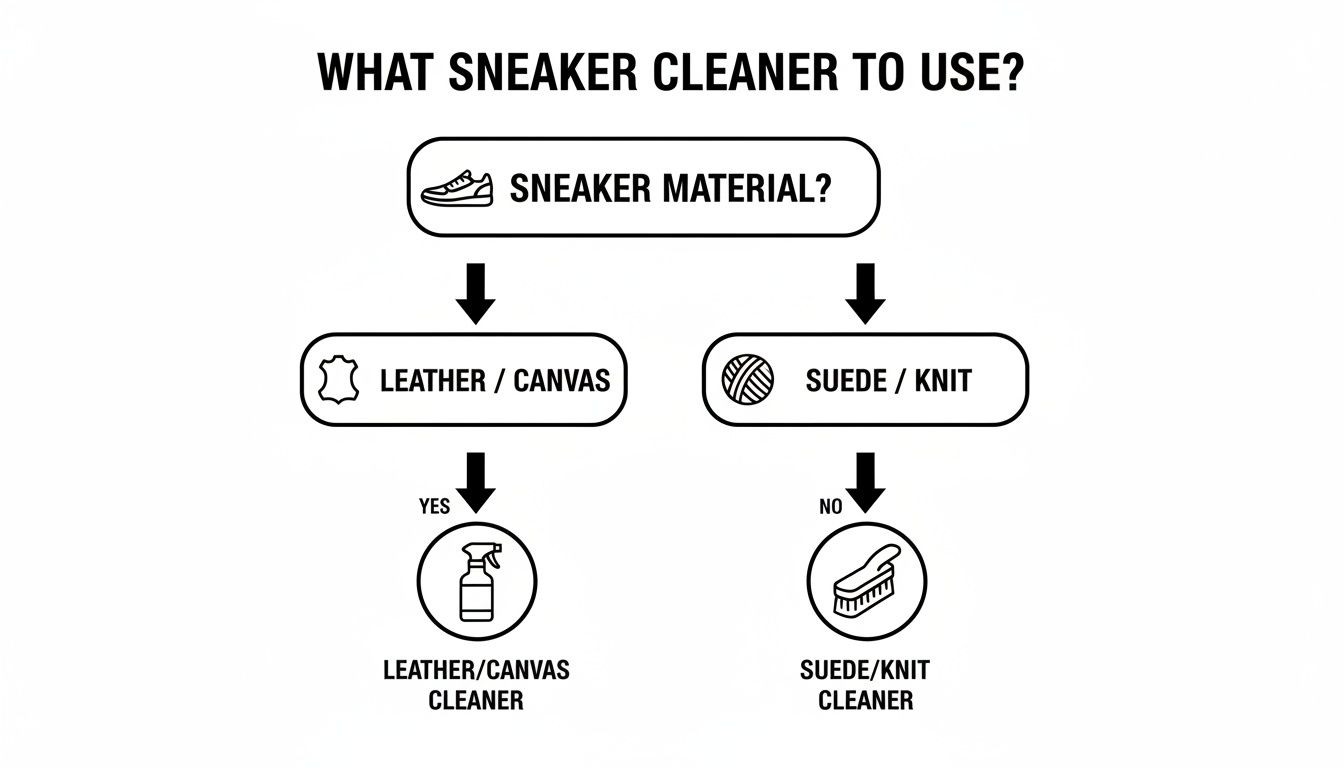
The primary takeaway is that different materials require different levels of care and specific tools, even when using the same cleaning solution.
For Smooth Leather and Canvas
These materials are the workhorses of footwear. They are resilient and can withstand a more thorough cleaning process. Leather's dense surface and canvas's tight weave allow for a more direct approach.
- Preparation: Use a dry, medium-bristle brush to remove all loose dirt and dust, paying attention to seams.
- Lather: Add a small amount of Gold Standard cleaner to a bowl of cool water. Dip the medium brush into the solution and begin scrubbing the leather or canvas in small, circular motions.
- Application: Work the solution into a thick lather. The foam is what lifts and suspends the deep-seated grime. For a deeper understanding of leather care, this guide to cleaning leather goods is a valuable resource.
- Finish: Wipe away all foam with a clean microfiber towel. Allow the sneakers to air dry completely, away from direct heat.
For Suede, Nubuck, and Delicate Knits
This is where technique is paramount. Materials like suede, nubuck, and modern knits (e.g., Primeknit, Flyknit) are highly absorbent and easily damaged. An overly aggressive approach can lead to permanent color bleeding, water spots, or frayed fibers.
The guiding principle is less is more. Avoid saturating these materials. Excess water can leave permanent stains on suede and cause delicate knits to stretch and lose their shape.
Expert Technique: Never apply cleaning solution directly onto suede or knit fabrics. Always apply it to the brush first. This provides maximum control and prevents over-saturation.
Follow these modified steps for sensitive materials:
- Select the Right Tool: A soft-bristle brush is non-negotiable. Its gentle action cleans without disturbing the delicate nap of suede or snagging the fine threads of a knit upper.
- Control the Moisture: Use significantly less water in your cleaning solution. After dipping the soft brush, tap it against the bowl to remove excess liquid before it touches the shoe.
- Apply a Gentle Touch: On suede and nubuck, brush in a single, consistent direction to maintain a uniform texture. For knits, use a light dabbing motion or very gentle circles to lift dirt.
This meticulous, material-first approach is what preserves a collection's value. For a more detailed walkthrough, including video tutorials, please see our complete guide on how to clean sneakers at home.
The Complete Sneaker Maintenance Regimen
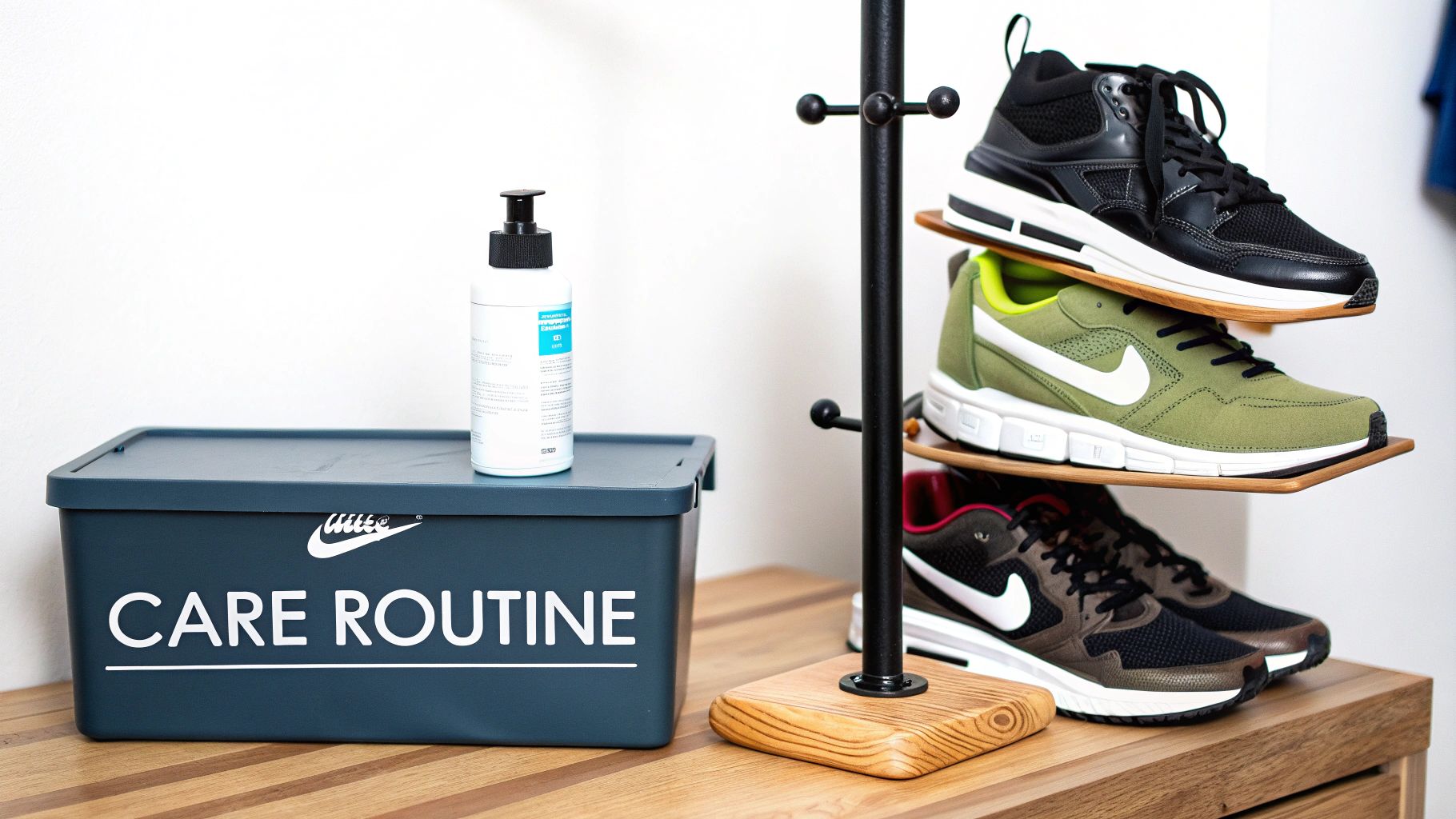
Cleaning is the first step, but comprehensive maintenance is what ensures long-term preservation. True sneaker care extends beyond mere dirt removal.
Think of a deep clean as phase one. The subsequent steps—conditioning, protecting, and proper storage—are what lock in the factory-fresh appearance and structural integrity for years. This transforms a simple cleaning task into a professional preservation ritual, moving from a reactive response to stains to a proactive defense of your collection's value.
Post-Cleaning Essentials: Conditioning and Protection
Once your sneakers are clean and have been allowed to air dry completely, the next phase begins. Skipping these steps can lead to premature aging, regardless of how well they were cleaned.
- Conditioning Leather: Cleaning can strip leather of its natural oils. A high-quality leather conditioner replenishes this moisture, keeping the material flexible and preventing it from drying out and cracking.
- Protecting Suede and Canvas: For porous materials like suede, nubuck, and canvas, a hydrophobic protective spray is essential. It creates an invisible barrier that repels water and stains, simplifying future cleanings.
- Maintaining Shape: Shoe trees are critical. They help maintain the sneaker's original shape, prevent creasing in the toe box, and absorb residual moisture that can lead to odor and material degradation.
The best sneaker cleaner is one component of a larger system. Its function is to safely prepare the shoe for the vital steps of conditioning and protection, ensuring the long-term health of your entire collection.
The Importance of Proper Drying and Storage
How you dry and store your sneakers is as crucial as how you clean them. Avoid direct heat at all costs. Hair dryers or radiators can warp materials, melt adhesives, and cause leather to shrink and crack. Always allow footwear to air dry naturally in a well-ventilated area.
For storage, keep them out of direct sunlight, which is known to fade colors and cause yellowing on rubber midsoles. A cool, dry closet or a set of drop-front storage boxes is the ideal environment. This systematic approach turns shoe care from a chore into a preservation discipline. As the market for shoe care grows, educated choices become more important. Learn more about the growing shoe care market to see why quality matters.
Frequently Asked Questions About Sneaker Cleaning
We receive questions from sneaker enthusiasts daily. You are passionate about maintaining your collection but often face conflicting information. Here, we address the most common inquiries with clear, field-tested advice focused on long-term preservation.
Can I use dish soap or other household cleaners on my sneakers?
This is one of the most common and damaging mistakes. Dish soap is an aggressive detergent formulated to strip grease from hard, non-porous surfaces like ceramic and metal. It is entirely unsuitable for the delicate materials used in footwear.
These harsh chemicals will leach the natural oils from leather, leaving it dry, brittle, and prone to cracking. They will fade the dyes in canvas and can degrade the adhesives that bond the sole to the upper. A proper sneaker cleaner is pH-balanced specifically to lift dirt and contaminants without harming the shoe's materials or construction.
How often should I clean my sneakers?
The ideal frequency depends on wear. While there is no single answer, these guidelines are effective:
- For daily wear sneakers: Perform a quick spot clean as soon as scuffs appear. Conduct a deeper, more thorough cleaning every few weeks to prevent dirt accumulation.
- For collectible pairs: For footwear worn only on special occasions, a detailed cleaning after every wear is non-negotiable before returning them to storage.
The strategy is preventative maintenance. It is far easier and safer for the shoe to address a minor scuff immediately than to attempt to restore a heavily soiled sneaker. This proactive approach is how you maintain a box-fresh appearance for years.
A significant error is waiting until shoes are visibly dirty to clean them. By that point, stains have had time to set deep into the fibers, making removal difficult without risking damage to the material.
Does the type of cleaning brush really matter?
Yes, absolutely. The brush is as important as the cleaning formula. Many kits include a single, stiff, all-purpose synthetic brush—a clear indicator of low quality. Such a brush is too abrasive for premium leather, suede, or knit uppers and will invariably leave micro-scratches and cause fraying.
A professional-grade kit provides options. You need a medium-bristle brush for durable midsoles and outsoles, but you also require a much softer brush to gently lift dirt from delicate uppers without causing harm. Using the right tool for the material is the difference between cleaning and damaging your footwear.
Is a more expensive sneaker cleaner worth the investment?
Yes, unequivocally. The higher price reflects superior ingredients, a more sophisticated formulation, and higher-quality tools. Budget cleaners reduce costs by using harsh, inexpensive chemicals that cause cumulative damage that may not be apparent after a single cleaning.
A premium cleaner is an investment in protecting a collection potentially worth hundreds or thousands of dollars. You save money in the long term by extending the life of your footwear and preserving its resale value. It is the choice of preservation over a temporary, and ultimately costly, fix.
Ready to provide your collection with the expert-level care it deserves? The Gold Standard Ultimate Sneaker Cleaning Kit was designed by material specialists for enthusiasts who refuse to compromise on quality. Protect your investment with the tools and formula trusted to preserve value and deliver pristine results. Explore the Gold Standard difference today.