

The foundation of any effective shoe care routine is not the cleaning solution—it's the brush. This is the primary tool that makes physical contact with your footwear. Using the wrong one can inflict irreversible damage on leather, suede, or knit uppers before a single drop of cleaner is applied.
An improperly selected brush can scuff premium leather, fray delicate knit fabrics, or permanently flatten the nap on suede. Understanding the mechanics of a brush—its bristle type, density, and construction—is the first and most critical step in preserving the value and appearance of your footwear collection. This guide provides the material-specific expertise necessary to select and use the right tool for the job, preventing common and costly mistakes.
Why a High-Quality Brush is a Foundational Tool
Many footwear owners mistakenly believe that more aggressive scrubbing yields a better clean. This is a fundamental misunderstanding of material science. Every material, from rugged rubber outsoles to delicate nubuck uppers, has a specific tolerance for abrasion. A generic, overly stiff brush can cause micro-scratches on leather or tear the fine fibers of a knit upper.
Think of it in terms of automotive care. You would never use a coarse deck brush on a car's clear coat; you would reserve that for cleaning tires. The same principle applies directly to footwear.
An Investment in Longevity
A premium brush is not a luxury accessory; it is a core component of a proper maintenance regimen. Experienced collectors and industry professionals understand that a "one-brush-fits-all" approach is inadequate. They curate a small, purpose-driven set of tools designed to protect their investments by respecting the unique properties of each material.
Your shoe cleaning brush is engineered to perform three critical tasks: physically dislodge dirt, work a cleaning solution into a lather, and restore a material's original texture. The wrong bristle type can fail at all three while actively damaging the shoe.
Establishing a Standard of Care
This guide is built on the principle of using the right tool for the right material. By mastering brush selection, your entire cleaning process becomes more efficient and effective. It transforms from a chore into a skilled practice.
Here is why prioritizing the brush is essential:
- Damage Prevention: It is your primary defense against scuffs, scratches, and the premature breakdown of materials.
- Cleaning Efficacy: The correct bristle stiffness and material will lift more dirt with less physical effort and less cleaning solution.
- Material Integrity: Specialized brushes are designed to clean while preserving the original texture and finish of sensitive materials like suede and full-grain leather.
Achieving a factory-fresh finish begins with the brush. Once your collection is properly maintained, you may consider professional storage solutions like display shoe racks to showcase it properly. The following sections will detail the specific brush types required for a comprehensive shoe care kit.
Decoding Brush Bristles for Every Shoe Material
Using the wrong shoe brush is an easily avoidable error that can cause irreparable damage to premium footwear. The bristles are the point of contact, and their material properties determine whether you are lifting dirt or abrading the surface. Selecting the correct bristle for the specific shoe material is the most important decision in the cleaning process.
The entire hierarchy of shoe care rests on this choice. Before considering cleaning agents or techniques, the brush you select dictates the outcome.
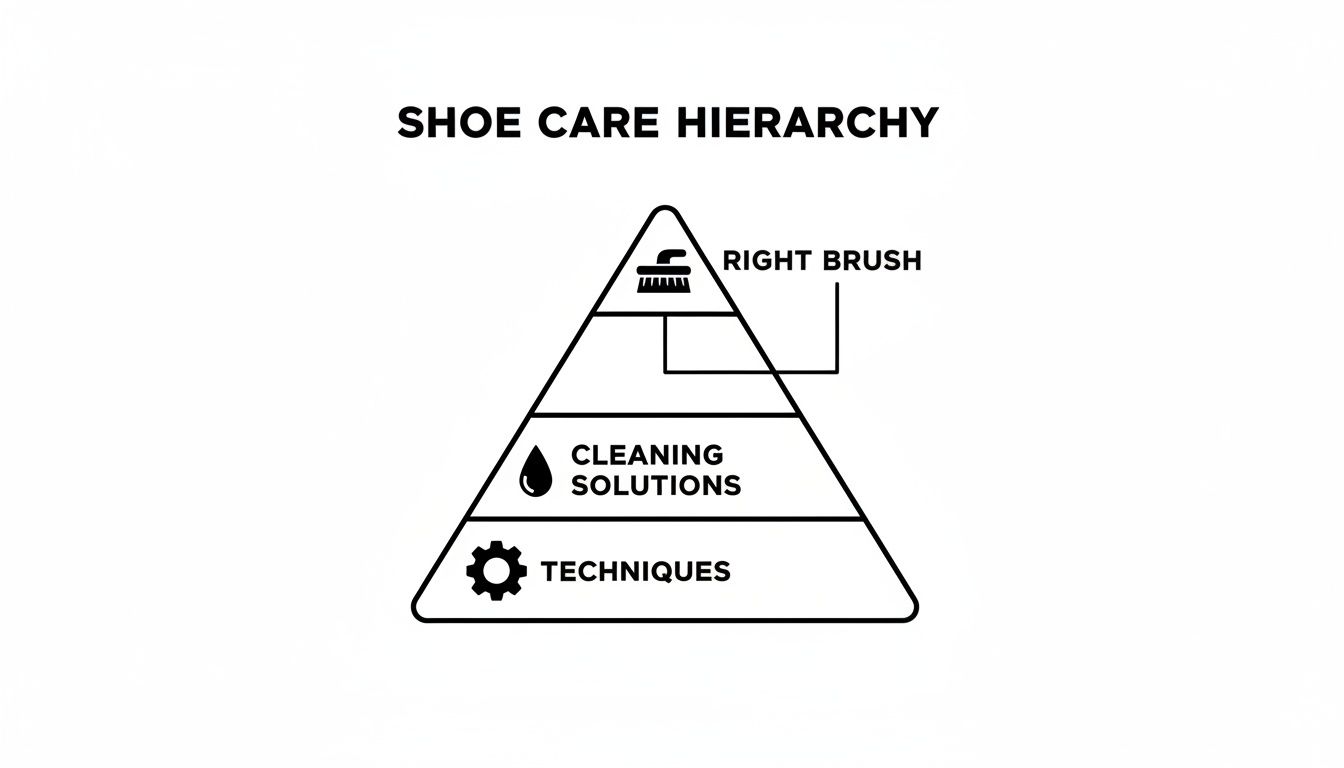
As the hierarchy illustrates, everything else is secondary. Proper brush selection is the foundation of effective care.
Hog Hair: The All-Purpose Standard
Hog hair is the benchmark in premium shoe care for good reason. Its natural bristles provide the ideal balance of stiffness and softness. They are robust enough to dislodge stubborn dirt from midsoles yet gentle enough to be safe for premium leather, canvas, and delicate mesh uppers.
Unlike common plastic bristles, the microscopic texture of hog hair effectively grips and lifts particulates away from the shoe's surface. It also excels at generating a dense, effective lather, allowing the cleaning solution to work more efficiently with less manual scrubbing. This versatility makes it the single most essential brush in any care kit. A well-constructed hog hair brush is the optimal tool for over 90% of cleaning tasks.
Synthetic Bristles: The Midsole and Outsole Scrubber
For heavily soiled, durable surfaces, a stiffer tool is required. Synthetic bristles, typically made from nylon, are engineered for rigidity and durability.
Their primary application is on rugged rubber outsoles and midsoles. They are highly effective for removing caked-on mud, heavy scuff marks, and stubborn grime from non-porous surfaces. However, this same abrasive quality makes them entirely unsuitable for use on any type of upper. Applying a stiff synthetic brush to leather, knit, or suede will inevitably cause micro-scratches and permanent damage.
Brass Bristles: The Suede and Nubuck Specialist
Brass bristles serve a highly specific function: reviving the texture of suede and nubuck. These fine, soft metal wires are designed to gently lift the material's flattened fibers—known as the nap—and remove embedded dirt and shiny spots caused by compression.
This tool functions like a comb for suede, carefully resetting the texture to restore its characteristic velvety finish. It must always be used dry and with minimal pressure. It is a finesse tool, not a scrub brush. Be advised: using a brass brush on smooth leather or any other material will result in immediate and severe scratching.
Expert Insight: The correct technique for using a brass brush is to move in a single, consistent direction. A back-and-forth motion will create an uneven texture and can damage the delicate fibers. A light, steady hand is crucial for proper restoration.
Crepe: The Gentle Surface Eraser
Crepe is not a bristle but a block of soft, tacky natural rubber. It is exceptionally effective at gently erasing surface-level dust and light scuffs from suede and nubuck. It functions by creating friction, which causes the crepe to grab and pull away loose particles from the nap without abrasion.
This is the ideal tool for routine maintenance or for a final touch-up after a deeper clean. While it is not intended for set-in stains, it is indispensable for quickly restoring texture and removing surface contaminants.
To ensure proper application, consult this reference chart for matching bristle type to material.
Shoe Brush Bristle and Material Compatibility Chart
| Bristle Type | Best For Materials | Avoid On | Primary Use Case |
|---|---|---|---|
| Hog Hair | Leather, Canvas, Mesh, Knit, Vinyl, General Use | Delicate Suede (if used aggressively) | All-purpose cleaning for uppers and midsoles |
| Synthetic | Rubber Midsoles & Outsoles | ALL Uppers (Leather, Suede, Knit, Canvas) | Aggressive scrubbing of tough, non-porous surfaces |
| Brass | Suede, Nubuck | ALL Other Materials (Leather, Rubber, etc.) | Reviving matted nap and removing embedded dirt |
| Crepe | Suede, Nubuck | Leather, Rubber, Canvas | Gentle surface cleaning and final texture finishing |
This chart removes the guesswork from brush selection and helps protect your footwear investment.
Of course, the brush is only half of the equation. Pairing it with the right cleaning solution is just as important. For a deeper dive into choosing the best cleaning agents for various materials, it's worth seeing what other cleaning pros have to say. It's clear that people are waking up to the importance of quality care; the shoe care market is projected to grow by USD 284.4 million between 2025-2029 as more and more people ditch ineffective synthetics for natural options that actually work.
Anatomy of a High-Performance Shoe Brush
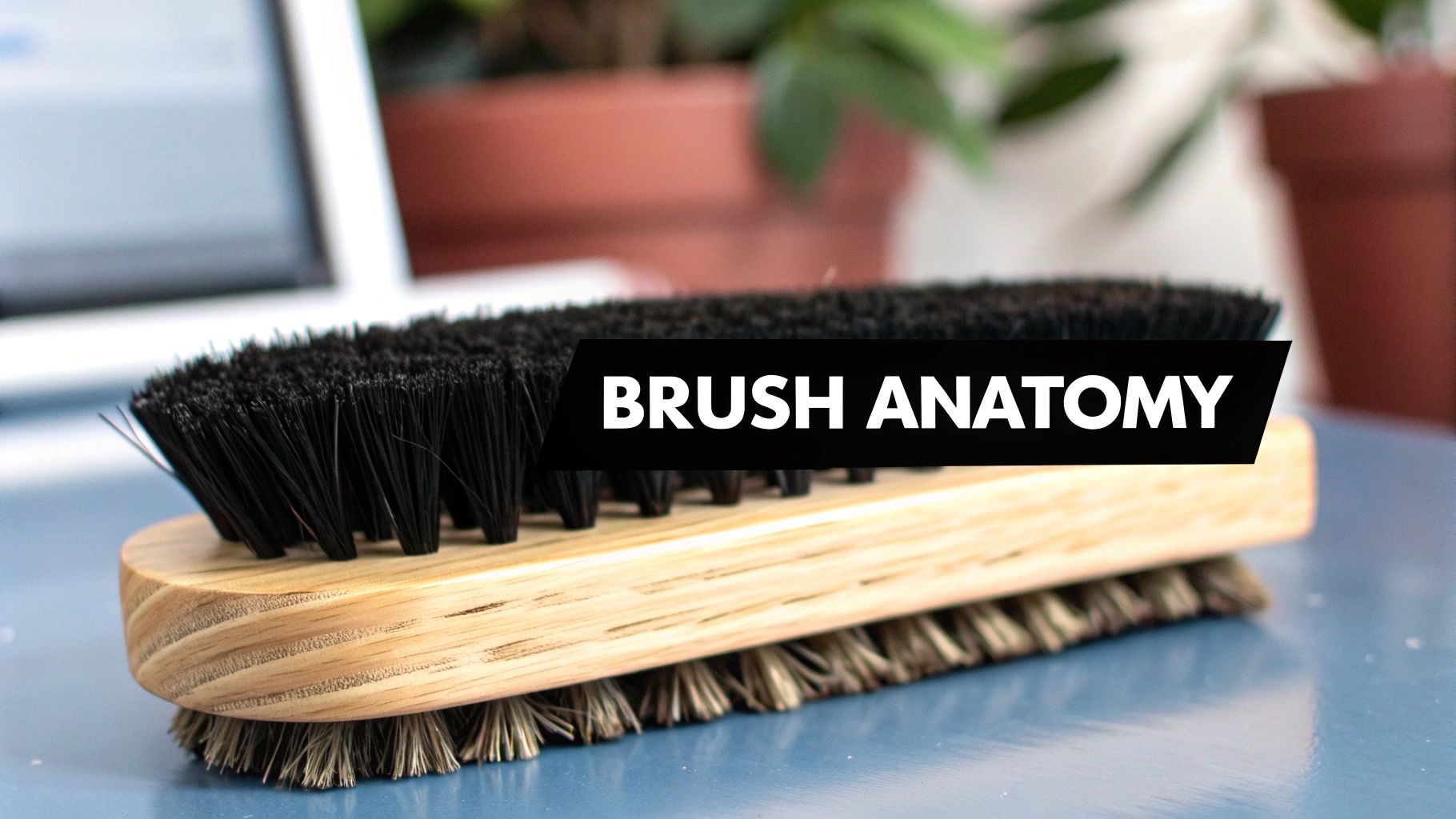
Understanding bristle types is the first step, but a truly effective shoe brush is a complete system. The handle's material, weight, and balance are as critical as the bristles themselves. A well-designed brush is the sum of its parts, combining ergonomic design with durable materials to deliver precision and control.
This is what distinguishes a purpose-built tool from a generic scrubber. When all components work in harmony, the brush becomes an extension of your hand, providing the tactile feedback needed to apply appropriate pressure across different materials.
The Handle: The Foundation of Control
The handle is the user's interface with the shoe, and its material directly affects the tool's longevity, grip, and overall performance. While mass-produced plastic handles are common, they lack the solid feel and tactile feedback of a well-crafted wooden handle.
- Plastic Handles: These are lightweight and inexpensive but often feel flimsy under pressure. They can also become slick when wet, compromising grip and leading to imprecise work that can damage footwear.
- Wooden Handles: A quality wooden handle offers superior ergonomics and durability. Wood provides a secure, natural grip that does not slip when wet, ensuring total control. It is also an indicator of superior craftsmanship.
We selected a warp-resistant, heat-stamped wood for our handles for functional reasons. This material is dimensionally stable, meaning the brush will retain its shape through repeated cycles of saturation and drying. It resists cracking and splitting, ensuring the tool remains reliable over time.
Bristle Density and Shape: Engineered for Performance
The effectiveness of a brush is determined not just by the bristle material, but by its arrangement. Bristle density and shape are engineered for specific tasks, transforming a simple brush into a specialized cleaning instrument.
A high-performance brush is not simply filled with bristles; it is engineered with purpose. Density provides scrubbing power, while shape ensures access to tight areas like seams and crevices without damaging surrounding materials.
For example, higher bristle density creates a more powerful and uniform cleaning surface. This helps generate a richer lather and provides more scrubbing force with less user effort—ideal for lifting stubborn dirt from midsoles or heavy canvas.
The shape of the bristle field is also critical. A brush with a slightly convex layout and defined corners is highly versatile. The wide, flat center is perfect for large surfaces like side panels, while the firmer edges are designed for detailed work along the welt, around eyelets, and in sole stitching. This dual-function design is a hallmark of a premium all-purpose brush.
The Gold Standard: A Case Study in Functional Design
Every detail in a brush influences its performance. The Gold Standard Premium Double-Sided Shoe Cleaning Brush, for example, was refined through extensive real-world testing. We selected densely packed hog hair bristles for their optimal balance of strength and softness, making them effective across a wide range of materials.
The ergonomic wooden handle is shaped for comfort during extended use. This focus on detail ensures you can clean with confidence, knowing you have a tool built to deliver professional results without compromise. Understanding this anatomy allows you to identify a superior brush and make an informed choice for your collection.
Mastering Correct Brushing Technique
Possessing a high-quality shoe cleaning brush is only the first step. Proper usage is what separates a superficial wipe-down from a true restoration. The key is not to scrub harder, but to work smarter by employing specific motions and pressures tailored to each material.
A methodical approach not only removes grime more effectively but also protects your footwear from the scuffs, water spots, and material damage caused by common errors. This is the practical knowledge that yields flawless results every time, and it begins with a critical step that is almost universally overlooked.
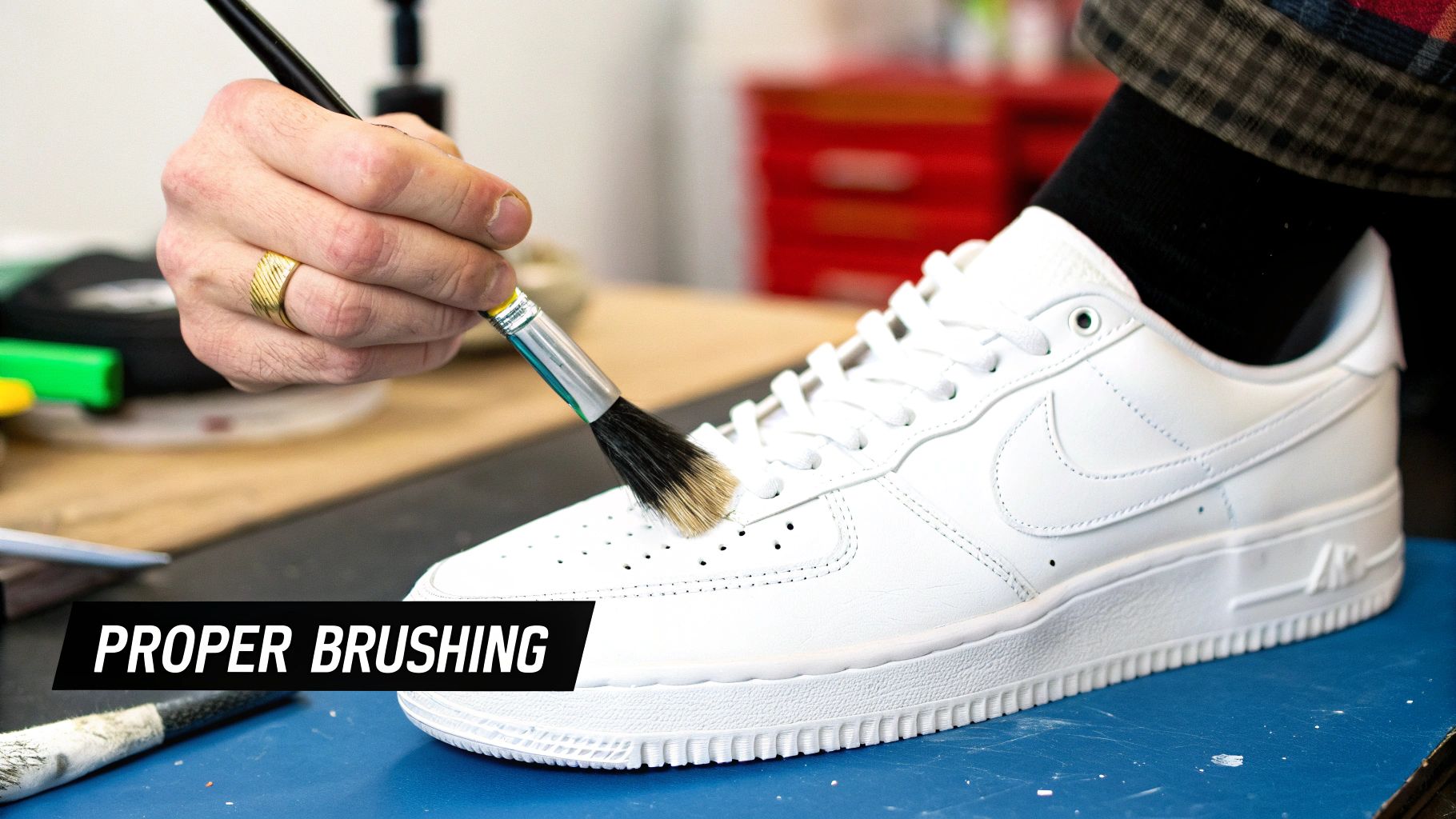
Begin with an Essential Dry Brush
Before introducing any liquid cleaner, a thorough dry brushing is mandatory. This preparatory step removes loose, abrasive surface debris such as dust, dried mud, and grit.
Skipping this step allows these sharp particles to become trapped in the cleaning solution, effectively turning it into an abrasive slurry. As you scrub, this mixture is ground into the shoe's fibers. This is precisely how micro-scratches form on leather and how knit uppers develop a frayed, pilled appearance.
Dry Brushing Protocol:
- Select the Right Brush: For most materials—leather, canvas, mesh—a medium-stiff brush like hog hair is ideal. For suede or nubuck, a dedicated suede brush is required.
- Use Light, Flicking Motions: The objective is to sweep, not scrub. Use quick, gentle flicks to dislodge debris away from the shoe.
- Address Seams and Crevices: Pay close attention to the welt, stitching lines, and areas around the eyelets. Use the corners of the brush to excavate trapped grime.
Executing a Controlled Wet Clean
Once loose debris has been removed, you can proceed to the wet clean. This step utilizes a high-quality cleaning solution to address set-in stains and embedded dirt. The guiding principle here is control—of liquid, pressure, and motion.
The goal is not to saturate the shoe. The objective is to create a rich, controlled lather that lifts dirt to the surface. Over-saturating a shoe can lead to water stains on leather and may weaken the adhesives bonding the sole.
The proper technique is to dip your brush in water, then apply a small amount of cleaning solution directly to the bristles. Begin gently scrubbing the shoe to generate a foam. This method provides far more control than applying cleaner directly to the shoe itself.
For a complete, step-by-step tutorial, refer to our comprehensive guide on how to clean sneakers at home.
Material-Specific Brushing Techniques
A single technique is not suitable for all materials. This is a common amateur mistake. Your approach must be adapted to the material you are cleaning.
- Leather, Canvas, and Mesh: Employ small, consistent circular motions with light to medium pressure. This technique works the lather deep into the material's texture, lifting dirt from all angles without being abrasive.
- Rubber Midsoles and Outsoles: These components are durable and can withstand more vigorous cleaning. Use firm, back-and-forth scrubbing motions to break down stubborn scuffs and caked-on mud. A stiffer brush is most effective here.
- Suede and Nubuck: This is a delicate procedure. After using a brass brush (on a dry shoe) to lift the nap, you must always brush in a single direction. A back-and-forth motion will ruin the texture, leaving it looking messy and uneven. Adhere to a gentle, consistent sweep.
By mastering these dry and wet techniques, you are no longer merely scrubbing shoes—you are practicing the craft of footwear care. This will not only produce a superior clean but will also extend the life of your collection, maintaining each pair in pristine condition.
Common Cleaning Mistakes That Ruin Footwear
Even with professional-grade tools, several common and avoidable mistakes can cause significant damage to footwear. Understanding what not to do is as crucial as mastering the correct techniques. Learning from the missteps of others is the most efficient way to develop an expert-level care regimen.
Using One Brush for All Tasks
This is the single most common and destructive error. Using the same stiff brush on a rubber outsole and then on a delicate leather upper is a recipe for disaster. This action grinds abrasive grit into the leather and cross-contaminates materials.
- The Damage: Stiff bristles designed for rubber will create thousands of micro-scratches on smooth leather, resulting in a dull, hazy finish. Furthermore, a brush previously used with shoe polish can transfer oils and waxes to suede, creating a permanent stain.
- The Solution: Dedicate specific brushes to specific tasks. The minimum requirement is one stiff brush for outsoles and a separate, softer all-purpose brush (such as hog hair) for uppers. For collectors, a dedicated suede brush is non-negotiable.
Cleaning With a Dirty Brush
Using a dirty brush is counterproductive. After a cleaning session, your brush is laden with dirt, grime, and residual cleaning solution. If not cleaned, this debris is reapplied to the next pair of shoes.
This not only complicates the cleaning process but can also re-stain the very footwear you are trying to restore.
Expert Takeaway: Clean tools produce clean results. A simple rinse with warm water after each use is sufficient to preserve your brush and protect your footwear from abrasive, recycled dirt. Integrate this into your routine.
Applying Excessive Pressure
More force does not result in a better clean. Aggressive, heavy-handed scrubbing is one of the quickest ways to damage footwear, especially modern materials like knit and mesh. These fabrics are engineered for breathability and performance, not for withstanding brute-force abrasion.
- The Damage: Excessive pressure shreds the fine fibers in knit and mesh uppers, causing irreversible pilling and fraying. On leather, it can strip the protective top coat, leading to discoloration and premature cracking.
- The Solution: Let the brush and the cleaning solution do the work. Use light, consistent circular motions and allow the bristles to gently lift the dirt. The objective is finesse, not force.
The demand for quality tools is growing as consumers recognize these risks. The global shoe brush market is projected to reach US$225 million by 2031, driven by a sneaker resale market where condition is paramount. Independent research has shown that low-quality nylon brushes can accelerate wear by up to 30% by scratching delicate materials. Conversely, premium natural bristles like hog hair have been found to be 40% more effective at deep cleaning without causing damage. You can read the full research on the shoe brush market to understand why knowledgeable collectors are investing in better tools.
How to Care for Your Shoe Cleaning Brush
Your shoe cleaning brush is a precision tool that requires proper maintenance. Neglecting it is akin to washing dishes with a soiled sponge—you are simply redistributing old grime.
Proper care is simple, quick, and essential for ensuring your brush performs optimally for years. This is not merely about cleanliness; it's about preserving the tool itself. When cleaning solution residue dries on the bristles, they become stiff, brittle, and ineffective. A brief care routine protects your investment and ensures your tools are always ready.
Post-Use Cleaning Routine
A quick rinse after every cleaning session is non-negotiable. This simple action prevents dirt and residual solution from hardening, which is the primary cause of bristle degradation.
-
Rinse Thoroughly: Hold the brush with bristles facing down under warm running water. Use your thumb to gently comb through the bristles, working out any trapped dirt and suds.
-
Remove Excess Water: Gently press the bristles against the side of the sink or squeeze them with your hand to expel as much moisture as possible. Never twist or wring the bristles, as this can damage their setting in the base.
-
Shake and Reshape: Give the brush several firm shakes to remove any remaining water. Then, use your fingers to gently guide the bristles back into their original shape.
Proper Drying Technique
The drying method is as important as the washing process, particularly for brushes with wooden handles. Improper drying is the fastest way to induce warping, cracking, or mildew growth.
The cardinal rule of brush drying: Never dry a brush with its bristles facing up. Water will inevitably seep into the wooden handle via capillary action, causing the wood to swell, crack the finish, and eventually split.
Always lay the brush on its side or, ideally, hang it with the bristles pointing down. This allows gravity to pull moisture away from the handle, facilitating complete drying. Ensure good air circulation by avoiding enclosed spaces. A well-ventilated spot is optimal. This single habit is the key to maximizing the lifespan of a quality, wooden-handled brush.
Frequently Asked Questions About Shoe Brushes
Even with detailed guidance, specific questions often arise. We have compiled the most common inquiries our shoe care experts receive to help you refine your cleaning regimen.
Can I use one brush for all my shoes?
We strongly advise against it. Using a single brush for all materials and tasks is a common cause of footwear damage. This practice leads to cross-contamination of both abrasive particles and cleaning agents.
A stiff brush effective on a rubber midsole can easily inflict permanent scratches on delicate leather. Similarly, a brush used with a conditioning cream can transfer that oily residue to suede, causing a permanent stain.
The professional standard is to maintain at least two dedicated brushes: a medium-stiff, all-purpose brush (like hog hair) for general cleaning of uppers, and a separate, stiffer brush used exclusively for outsoles.
This simple separation prevents abrasive grit from the outsole from ever touching the uppers and ensures each tool performs its intended function.
How often should I replace my shoe brush?
A high-quality shoe cleaning brush is a long-term investment, not a disposable item. A brush with a solid wood handle and natural bristles, such as hog hair, will last for many years with proper care.
Replacement is only necessary when you observe clear signs of wear that impede its performance.
Indicators It Is Time for a New Brush:
- Frayed or Deformed Bristles: If the bristles are permanently bent or splayed and no longer hold their shape, their cleaning effectiveness is compromised.
- Significant Bristle Loss: Excessive shedding indicates that the brush has lost its density and can no longer generate an effective lather.
- Cracked Handle: A cracked or warped wooden handle is not only uncomfortable but can also trap moisture and bacteria.
By adhering to a proper cleaning and drying routine, your brush will remain a reliable component of your care kit for the long term.
What is the difference between a dry brush and a wet clean?
These are two distinct but equally critical stages of a professional cleaning process. The "dry brush" is always step one; the "wet clean" is step two. Omitting the first step is a significant and common error.
A dry brush is the process of using a completely dry brush to remove all loose surface debris—dust, dirt, and grit. This is crucial because it prevents these abrasive particles from being mixed with water and cleaner to form a damaging slurry.
A wet clean follows. This is when a damp brush and cleaning solution are used to address deeper, set-in stains. Because the shoe was dry brushed first, the wet clean can focus on its intended purpose: lifting stains out of the material, rather than grinding more dirt into it.
Ready to build your professional-level care kit? The Gold Standard All-Purpose Hog Hair Brush is the foundational tool every enthusiast needs for superior, safe, and effective cleaning.