

If you've invested in quality leather footwear, treating it with a proper water repellent is the single most critical step in its long-term care. A high-performance repellent creates a microscopic, breathable barrier over the material, causing water to bead and roll off the surface rather than soaking into the leather's porous structure. This is not an optional add-on; it is fundamental preservation.
Why Your Leather Footwear Needs a Shield Against Water
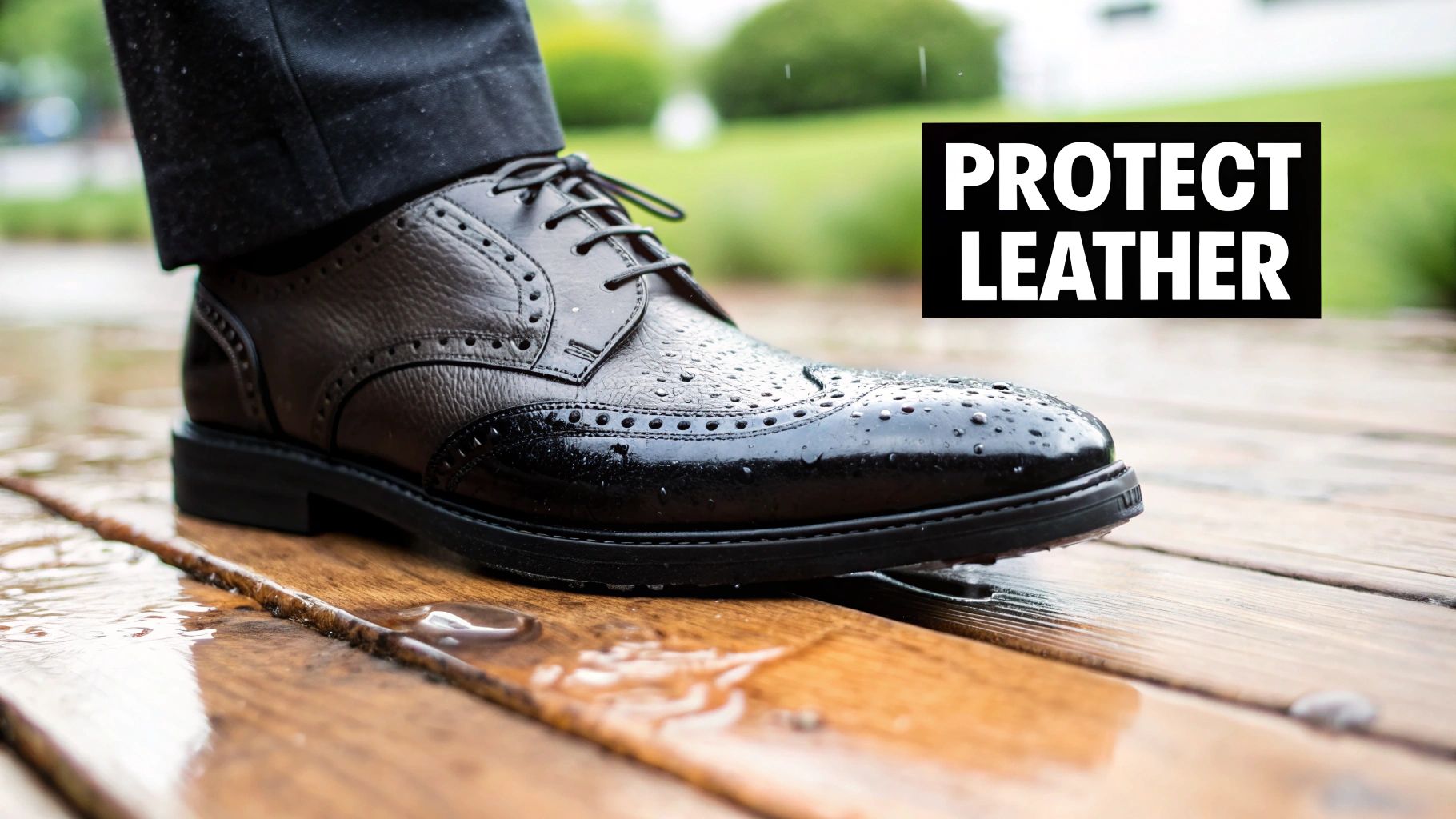
To understand the how, we must first establish the why. This is a non-negotiable component of any sound footwear care regimen. Leather is a natural, porous skin that must breathe. This inherent characteristic also makes it vulnerable to environmental damage.
When water penetrates untreated leather, it binds to the natural oils within the hide. As the water evaporates, it draws these essential oils out with it. The result is dry, brittle leather that is structurally compromised and prone to cracking. This is not a temporary cosmetic issue; it is cumulative, long-term damage that significantly shortens the lifespan of your footwear.
The Real Risks of Moisture Exposure
Intermittent rain may seem trivial, but unprotected leather faces serious threats with each exposure. This damage is often irreversible.
- Warping and Shape Loss: As leather becomes saturated and subsequently dries, it can shrink and stiffen. This process distorts the shoe's original last, compromising the fit and overall comfort.
- Salt Stains: Particularly prevalent in winter, water from treated roadways contains dissolved salts. As this moisture evaporates, it leaves behind white crystalline deposits, or tidemarks, which can permanently discolor and damage the leather.
- Mold and Mildew Growth: Storing damp footwear creates an ideal environment for fungal growth. Mold and mildew not only stain the material but also leave a persistent musty odor that is nearly impossible to eliminate.
The growing awareness of these risks is clear. The global waterproof sneakers market reached USD 232.3 million in 2023 and is projected to climb to USD 364.2 million by 2033. This growth is driven by discerning consumers who understand that protection is preservation. Properly treated leather can repel moisture far more effectively, safeguarding it from the damage that degrades countless untreated pairs annually. Discover more insights about the waterproof footwear market.
Setting Realistic Expectations
A critical distinction must be made between water-resistant and waterproof. A quality repellent spray renders your leather shoes water-resistant, which is sufficient for protection against rain, spills, and incidental puddle splashes.
Key Takeaway: The objective is not to make leather boots submersible for wading through streams. It is to create a breathable, protective barrier that preserves the material's integrity and appearance against everyday moisture exposure.
Choosing the Right Repellent for Different Leathers
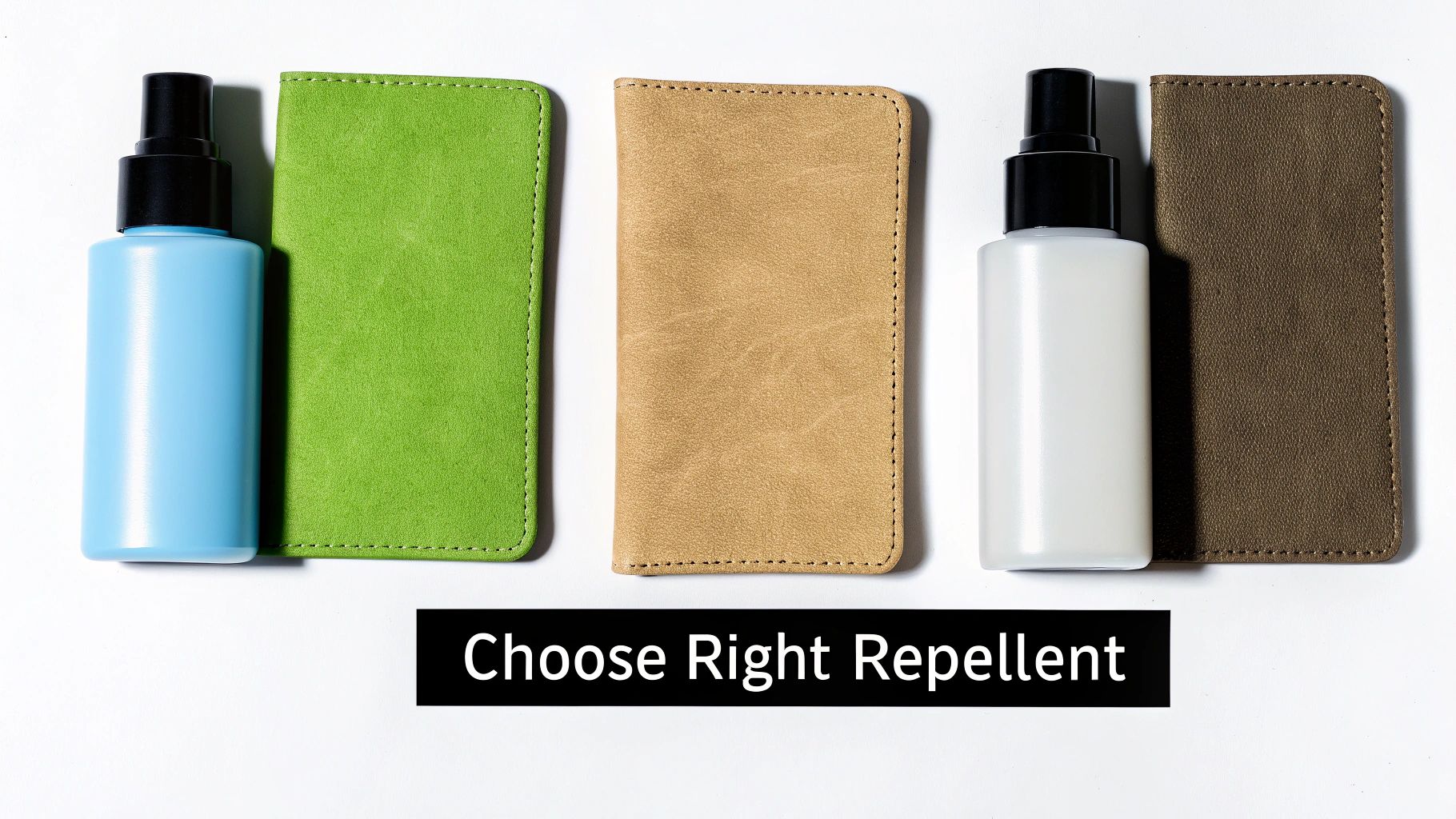
Selecting the first water repellent off the shelf is a common and costly mistake. The appropriate formula is not universal; a mismatched product can suffocate the leather, permanently alter its color, or fail under exposure.
The correct choice depends on a foundational understanding of both the material on your feet and the chemistry of the repellent.
It's All About Breathability
The single most important principle is breathability. Leather is a natural skin featuring thousands of microscopic pores. These pores are essential for allowing moisture vapor—perspiration—to escape.
Clogging these pores effectively encases the foot in a non-breathable barrier. While external water is blocked, internal moisture becomes trapped. This creates a damp, humid microclimate inside the shoe, leading to odor, bacterial growth, and, in severe cases, leather rot from within.
Many inexpensive, heavy-duty sprays utilize a thick, occlusive layer of silicone. This is a crude approach that compromises the leather's long-term health.
A truly effective repellent operates on a more advanced principle. It forms a microscopic network that is hydrophobic to liquid water droplets but remains permeable to smaller water vapor molecules. Your footwear stays dry from external moisture, while your feet remain comfortable.
Matching the Formula to the Leather
Different leather types have distinct structural properties and require specific care. A robust formula suitable for full-grain work boots can irreversibly damage delicate suede sneakers. You must identify the material you are treating.
- Full-Grain & Corrected-Grain Leather: These are classic, smooth, durable leathers. They are resilient and can be treated with a range of products, from wax-based conditioners for heavy outdoor use to modern polymer sprays for daily wear.
- Nubuck: Characterized by its fine, velvety texture, nubuck is more sensitive. While more durable than suede, it requires a gentle formula. A light, aerosol-based polymer spray is ideal. Heavy waxes or silicones will mat the fine fibers and cause dark, oily patches.
- Suede: As the soft, napped inner side of the hide, suede is the most delicate and absorbent leather. It requires a specialized water repellent for shoes leather formulated for its unique texture. An incorrect product will cause immediate and irreversible staining.
For a deeper analysis of protecting these more sensitive materials, our guide on choosing the right suede and leather waterproof spray provides specific, material-focused advice.
To clarify, here is how common repellent formulas compare.
Water Repellent Formula Comparison
| Formula Type | Best For | Pros | Cons |
|---|---|---|---|
| Wax-Based | Heavy-duty work boots, hiking boots (full-grain leather only) | Extremely durable and waterproof | Clogs pores, can darken leather, not for suede or nubuck |
| Silicone-Based | Budget-friendly option for smooth synthetic materials | Inexpensive and widely available | Severely limits breathability, can leave a greasy film |
| Polymer-Based | All premium leathers, including suede, nubuck, and high-end sneakers | Maintains 100% breathability, invisible finish, safe for delicate materials | Higher initial cost, may require more frequent reapplication |
Ultimately, performance is tied to quality. The most advanced repellents, such as the Gold Standard Premium Sneaker Protector, utilize advanced polymer technology that bonds to individual leather fibers without sealing the material's pores.
This technology provides superior water resistance while preserving the leather's natural breathability—the ideal balance for any high-quality footwear, from dress shoes to prized sneakers.
The Expert Application Method for Lasting Protection
Procuring a quality water repellent is only the first step. The difference between a perfectly shielded pair of shoes and a sticky, discolored failure lies in the application method.
This is not a simple spray-and-go task. It is a deliberate process that ensures comprehensive protection for every fiber of the leather without compromising its appearance, texture, or breathability.
The Foundation: A Clean and Prepped Surface
Before applying any protectant, the shoes must be impeccably clean. A primary user error is applying a repellent over dirt, dust, or residual polish. This action traps contaminants against the leather, impeding the repellent's ability to bond properly and making future cleaning more difficult.
First, remove the laces to ensure complete access to the tongue and eyelet areas. Next, use a quality horsehair brush to remove any loose dirt and debris. For stubborn scuffs or light stains, a slightly damp microfiber cloth is effective.
After cleaning, the leather may require conditioning to replenish its natural oils and ensure it is supple before being sealed. Allow any conditioner to fully absorb and the leather to air dry completely. Do not rush this stage.
The Non-Negotiable Patch Test
Every can of quality repellent includes a critical instruction: conduct a patch test. Do not skip this step. Leather is a natural material, and even the most advanced formulas can react unpredictably with certain dyes and finishes.
Select a discreet test area. The interior of the shoe's tongue or a small patch near the heel that is typically covered by trousers are excellent options.
Apply a small amount of the spray to the chosen spot and allow it to dry completely. Inspect the area for any discoloration or textural changes. If the appearance is unchanged, you may proceed. This simple two-minute check can prevent a permanent and costly error.
Mastering the Application Technique
Proper technique is defined by control and consistency. The objective is to apply a light, even mist that coats the entire surface without causing saturation or puddling.
-
Find a Well-Ventilated Spot: Work outdoors or in a well-ventilated space like an open garage. Proper airflow is essential for safety and helps ensure an even application by preventing the aerosol from settling too heavily in one area.
-
Keep Your Distance: Hold the canister approximately 6 to 8 inches from the shoe. Applying too closely is a common mistake that leads to oversaturation, which can cause dark spots and leave a tacky finish.
-
Use Swift, Even Strokes: Employ a steady, sweeping motion from side to side. The movement should be fluid and continuous, with a slight overlap on each pass to guarantee uniform coverage.
-
Hit the Vulnerable Areas: Pay special attention to seams, welt stitching, and the junction where the upper meets the sole. These are primary points of water ingress and benefit from thorough application.
The guiding principle is: less is more. A single, light, even coat is significantly more effective than one heavy, drenched application. If additional protection is desired, a second light coat may be applied after the first has dried completely. Soaking the leather is never the correct method.
For those seeking a product engineered to deliver this fine, controlled mist, our Gold Standard Premium Sneaker Protector is formulated specifically for this expert-level application, creating a breathable, invisible shield.
Mastering the Curing Process and Long-Term Care
The application is only half the process. The protective properties are fully realized during the curing process. This critical, and often rushed, phase is when the formula chemically bonds to the leather fibers to create a durable, breathable shield.
This is not merely air-drying; it is a molecular bonding reaction.
Patience is essential. After treatment, allow the footwear to cure for a full 24 to 48 hours in a well-ventilated area. Avoid direct sunlight and artificial heat sources like radiators. Forced heating can rapidly desiccate the leather, making it brittle and prone to cracking. This curing time is non-negotiable for achieving maximum water repellency.
Establishing a Maintenance Schedule
The initial protective barrier will degrade over time due to friction, abrasion, and environmental exposure. To maintain the integrity of your leather footwear, a regular reapplication schedule is necessary.
The frequency of reapplication depends on several factors:
- Wear Frequency: For daily-wear footwear, especially during wet seasons, a light recoat every 3-4 weeks is advisable.
- Climate: Environments with frequent rain or snow demand more vigilant reapplication to combat constant moisture and salt exposure.
- Occasional Use: For footwear worn infrequently, reapplying every 2-3 months is sufficient for maintaining protection.
The most reliable indicator for reapplication is observation. When you notice water beginning to absorb and darken the leather rather than beading and rolling off, the protective barrier has diminished. This is your cue to apply a fresh coat.
This simple workflow illustrates the critical steps for a successful application.
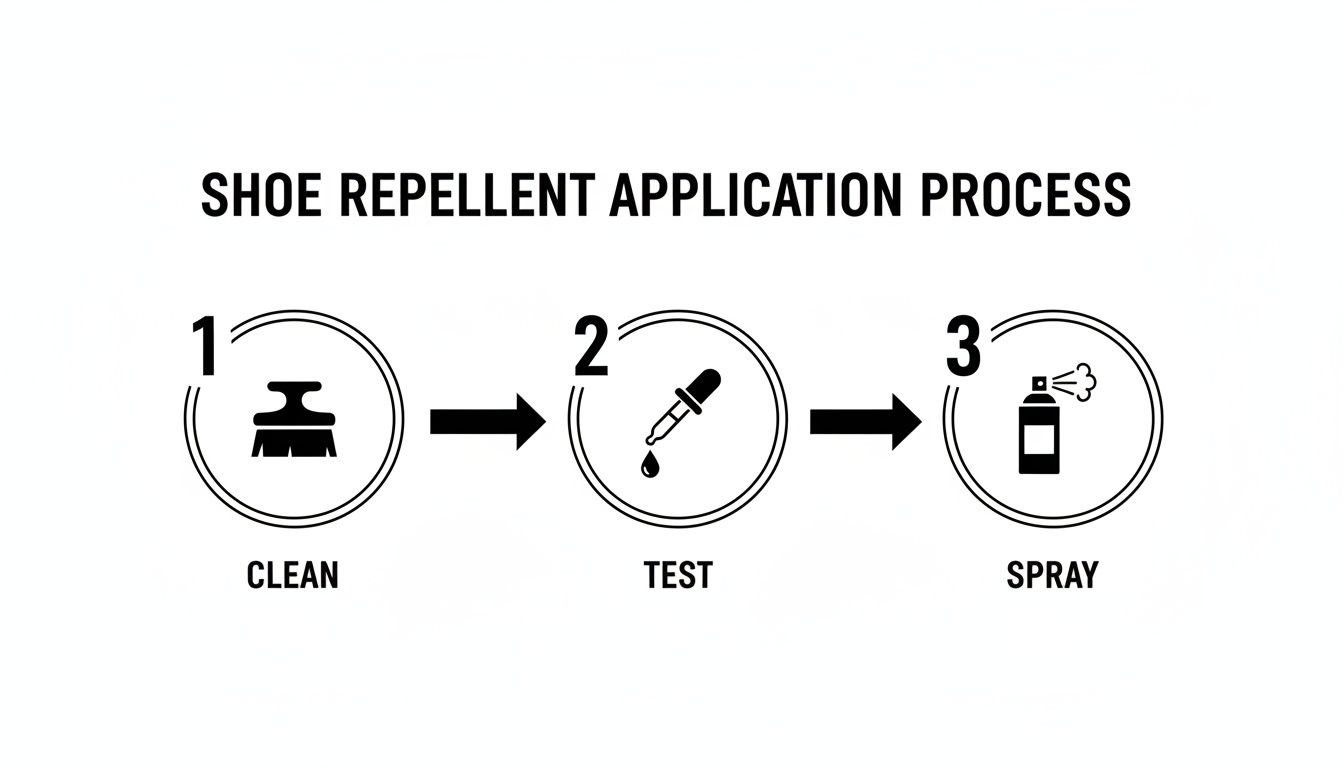
As shown, preparation is as vital as the application itself for achieving a lasting, professional-grade finish.
The Value of Proactive Care
Investing in a quality repellent provides a significant return. The global outdoor footwear market alone was valued at $42.13 billion in 2023. Effective water repellent sprays can reduce water-related damage by up to 90%, and independent observations show that properly treated footwear can last two to three times longer than unprotected counterparts.
Expert Insight: Proper care transcends mere stain prevention. It is about preserving the craftsmanship, structural integrity, and value of your investment. A well-maintained pair of leather shoes has a superior appearance and longevity.
Of course, comprehensive leather care involves a broad skillset. Knowing how to repair a rip in a leather sofa, for instance, builds overall expertise. However, for footwear, every care routine must begin with a clean foundation. Our guide on the best way to clean leather shoes establishes these fundamental principles.
Common Mistakes That Can Ruin Your Leather Footwear
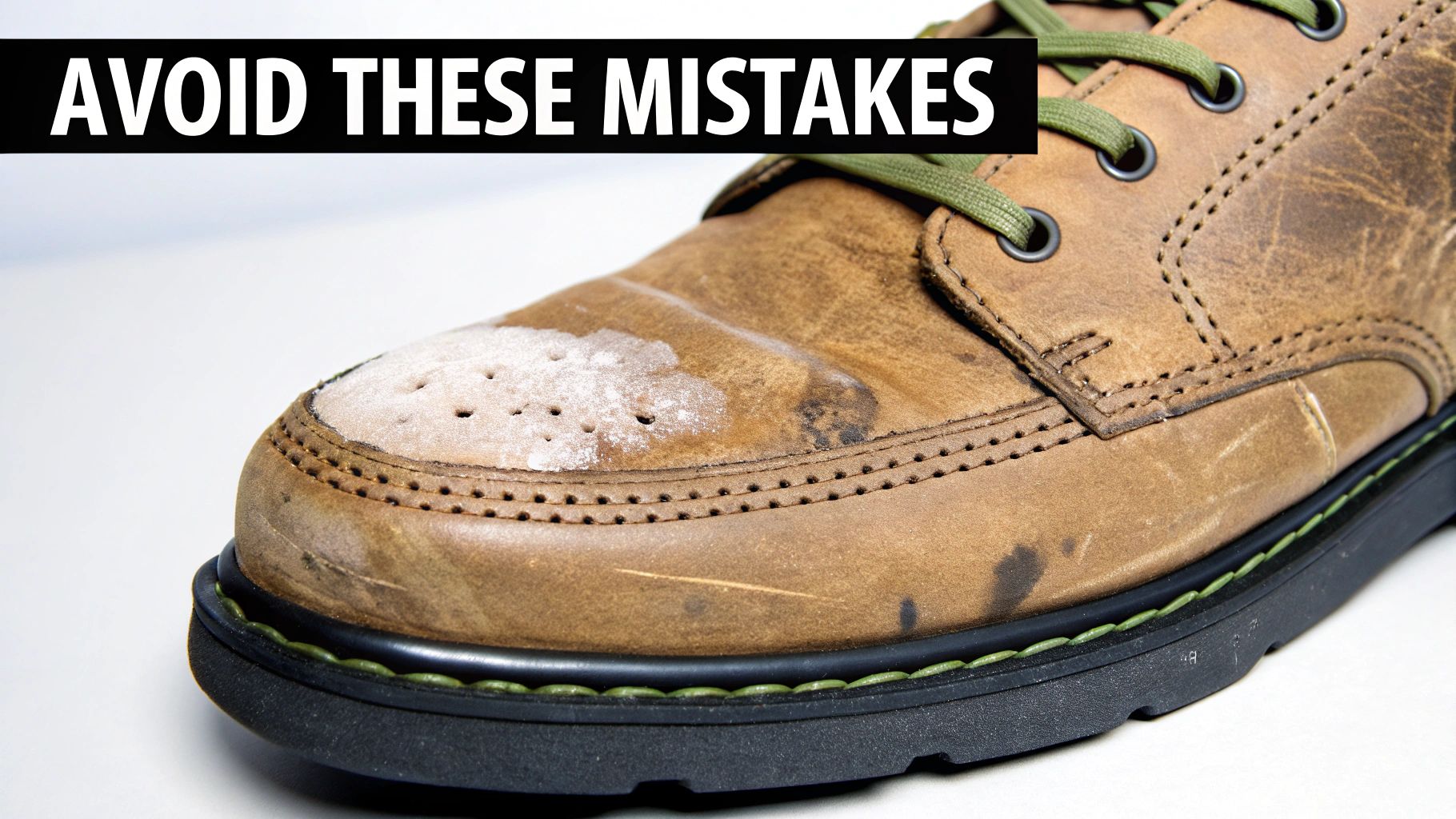
Even the highest quality water repellent will fail if applied incorrectly. I have witnessed countless instances where simple, avoidable errors have resulted in irreversible damage to premium footwear.
The most prevalent mistake is applying repellent to dirty leather. Spraying over dirt, dust, or grime does not protect the shoe; it entraps the contaminants against the surface. This prevents the repellent from bonding with the leather fibers, resulting in a patchy, ineffective, and unsightly finish.
Another critical error is oversaturation. The belief that "more is better" is false in this context. Drenching footwear does not enhance protection. It clogs the leather's pores, suffocates the material, and often leaves a sticky, blotchy residue that attracts more dirt.
Using the Wrong Products and Techniques
The material dictates the product. One would not use the same cleaning agent on white canvas sneakers as on suede boots. This same logic applies to protectants. Applying a heavy, wax-based formula designed for rugged work boots onto delicate suede will ruin the material. It will mat the nap, permanently darken the color, and destroy its unique texture.
Equally damaging is the use of household items as makeshift solutions. Products like hairspray or cooking oil contain chemicals, solvents, and lacquers that strip leather of its natural oils, cause severe discoloration, and leave a film that is often impossible for even a professional to remediate.
The core principle is straightforward: respect the material. A premium product's effectiveness is contingent upon the technique used to apply it. Taking the time to execute the process correctly prevents irreversible damage.
Protecting Your Investment
Premium leather footwear represents a significant investment. Daily exposure to moisture can warp, stain, and devalue these assets. It is for this reason the waterproof footwear market reached $17.09 billion in 2023 and is projected to grow toward $28.6 billion by 2032.
Collectors and daily wearers alike recognize that protection is non-negotiable. On major resale platforms, properly cared-for footwear consistently commands 15-25% higher prices. You can learn more about the growth of the waterproof footwear market on wiseguyreports.com.
Avoid these common mistakes, and your water repellent for shoes leather will perform as intended, preserving the appearance and value of your footwear.
Your Leather Protection Questions, Answered
Over years of professional practice, I have addressed nearly every question regarding leather footwear preservation. Whether you are a seasoned collector or simply an individual who values quality, the same fundamental concerns consistently arise.
Here are direct, field-tested answers to the most frequently asked questions.
How Often Should I Reapply Water Repellent To My Leather Shoes?
Reapplication frequency is dictated by your wear habits and local climate. For a pair worn daily during a rainy season, a light re-coat every few weeks is recommended. For footwear reserved for special occasions and fair weather, an application every 2-3 months is sufficient to maintain the protective barrier.
However, the most accurate guide is the footwear itself. Observe how water interacts with the surface. The moment a water droplet begins to absorb and darken the leather instead of beading up and rolling off, the barrier has been compromised. That is the definitive signal that it is time for a fresh application.
Will A Water Repellent Spray Change The Color Or Feel Of My Shoes?
This is a primary concern and the exact reason a spot test is non-negotiable. A high-quality, breathable formula is engineered to be invisible. Upon proper application and curing, it should leave the leather's original color, texture, and flexibility completely unchanged.
Problems arise with lower-quality products. Heavy silicone or wax-based sprays are known to darken lighter-colored leathers and leave a stiff or greasy film. Always test any new product on a hidden area first. The inside of the tongue serves this purpose well. This simple precaution can prevent significant regret.
Can I Use The Same Repellent On Suede And Smooth Leather?
This is strongly inadvisable. Suede and nubuck should be treated as distinct materials. Their delicate, napped texture can be permanently damaged by a formula designed for the sealed, durable surface of smooth leather. The wrong product will mat the fibers, cause blotchy discoloration, and alter the texture to feel stiff and unnatural.
While some "all-in-one" products exist, the most prudent approach is to use a repellent formulated specifically for suede and nubuck. For your smooth leather footwear, a formula that prioritizes breathability is the only correct choice for ensuring the long-term health of the material.
Does Water Repellent Make My Shoes Fully Waterproof?
It is crucial to differentiate between "water-resistant" and "waterproof." A quality repellent spray renders leather footwear water-resistant, not waterproof. It creates a high degree of surface tension that causes water to bead and roll off, which is highly effective for protection against rain and accidental spills.
It will not make the shoes submersible. Do not attempt to wade through deep puddles with the expectation of complete impermeability. The purpose of a premium water repellent for shoes leather is to protect the material from everyday moisture while—and this is the critical part—allowing the leather to breathe. This balance is what prevents the material from drying out and cracking over time.
You've invested in footwear you value—now invest in its preservation. The Gold Standard Premium Sneaker Protector provides an advanced, breathable shield that protects without compromising the look, feel, or integrity of your favorite leather footwear.