

The secret to maintaining pristine white sneakers isn't found in marathon cleaning sessions. It’s a matter of proactive material science. The methodology is twofold: establish a protective barrier before their first exposure to the elements, and then adhere to a disciplined, regular maintenance schedule. This shifts the approach from reactive damage control to preventative, intelligent care.
A Proactive Methodology for Preserving White Sneakers
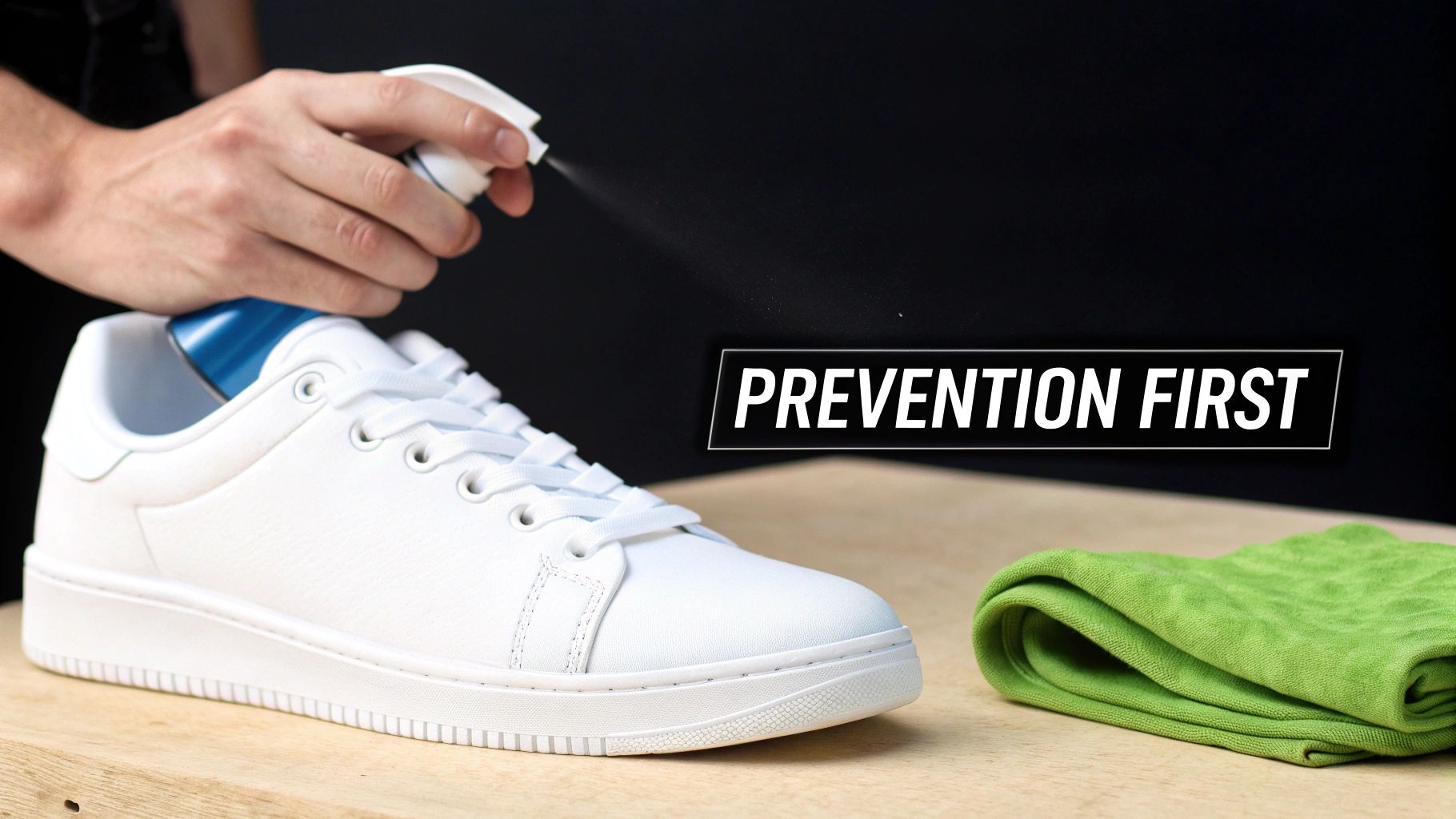
The moment you unbox a new pair of white sneakers presents a critical decision. You can wear them immediately and resign yourself to future deep cleaning, or you can invest a few minutes in a preventative protocol that will eliminate hours of restorative labor later.
At Gold Standard, our guiding principle is that prevention is superior to correction. The process of keeping white sneakers white begins long before they contact pavement. It is rooted in two foundational actions: creating a protective material shield and committing to a routine of light, consistent upkeep.
The Foundation of Lasting Whiteness
Your primary line of defense is a high-quality protective spray. Superior repellents create a hydrophobic barrier, causing liquids to bead and roll off the surface rather than being absorbed. This is not merely for deflecting large-scale spills; it is essential for preventing microscopic dirt and dust suspended in environmental moisture from embedding into the fibers of canvas, leather, or knit uppers.
Equally important is the non-negotiable habit of a quick wipe-down after each wear. This simple step removes surface-level particulates before they can bond with the material—the primary cause of the dull, grayish discoloration that develops over time.
The most significant damage to white sneakers is rarely a single catastrophic event. It is the slow, cumulative buildup of environmental grime that systematically degrades their brightness. A proactive maintenance strategy is your most effective tool.
For absolute clarity, here is a quick-start protocol for the moment your new footwear arrives.
Immediate Action Plan for New White Sneakers
| Action | When to Perform | Why It's Critical |
|---|---|---|
| Apply a Protective Spray | Immediately after unboxing, before the first wear. | Creates an invisible, breathable shield against water, dirt, and stains, preventing them from penetrating the material. |
| Perform a Quick Wipe-Down | After every wear, before storing. | Removes surface dust and fresh particulates before they set, which is fundamental to long-term whiteness. |
This isn't just about aesthetics; it's about an efficient care regimen that respects both your time and your investment in quality footwear.
Why a Preventative Strategy is Superior
Data validates this approach. A well-formulated water and stain repellent can reduce liquid absorption by 70–90% on common sneaker materials. When this initial treatment is paired with a consistent maintenance routine, you significantly extend the lifespan of your sneakers' original white finish.
Building these habits requires minimal effort but yields a substantial impact. It transforms sneaker care from a dreaded chore into a quick, satisfying ritual. Of course, possessing the correct tools from the outset is crucial. If you are unsure where to begin, our guide to the best sneaker cleaning kit provides a solid foundation for any footwear collection.
A Material-Specific Guide to Proper Cleaning
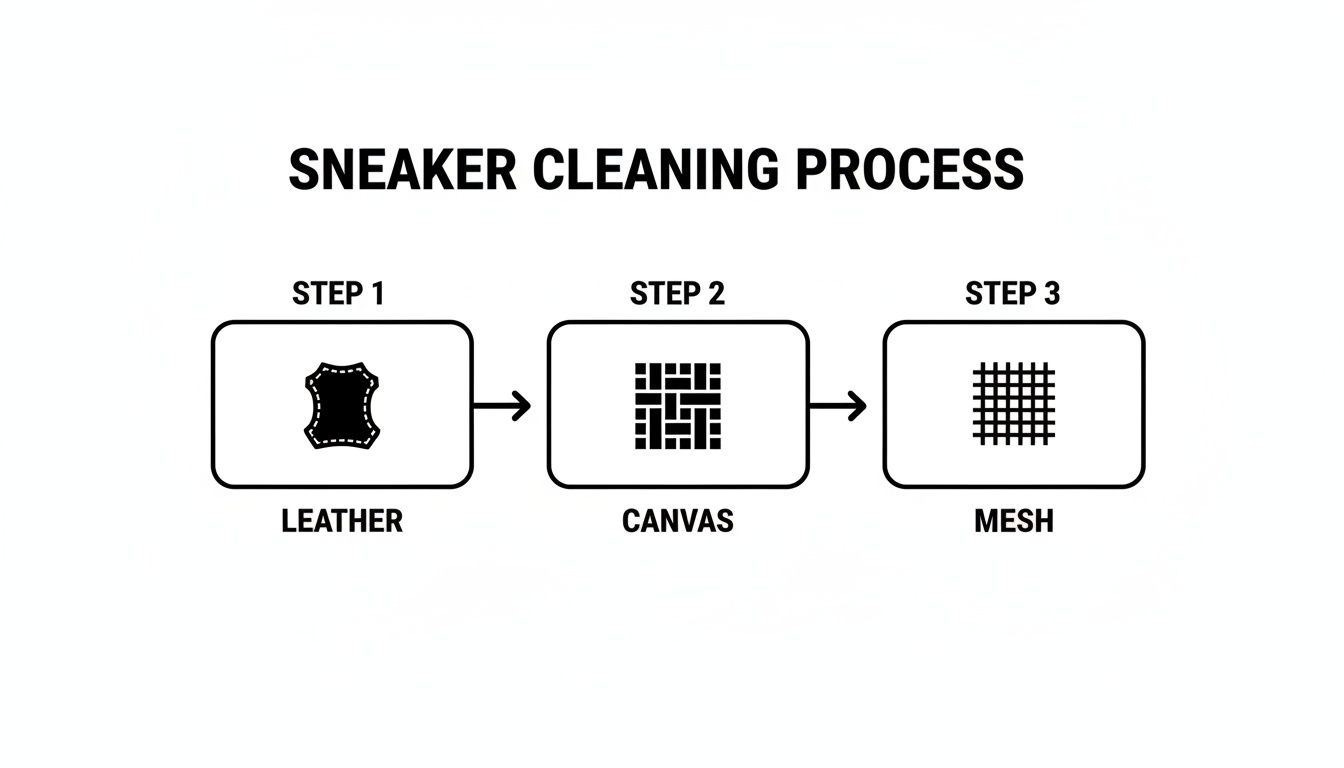
Treating all white sneakers with a single, uniform method is one of the most efficient ways to damage them. The technique that restores a leather sneaker can permanently harm the delicate structure of a modern knit upper. To achieve correct results, you must understand the materials you are working with.
This is not about becoming a chemist; it is about respecting material integrity. A harsh, all-purpose cleaner can strip the natural oils from full-grain leather, leaving it dull and susceptible to cracking. An overly aggressive brush will fray the fine fibers of a mesh upper. This is precisely why we invested significant research into developing our Gold Standard Sneaker Cleaner. Its pH-balanced formula is engineered to be effective on grime yet gentle enough for the diverse materials found in modern footwear.
Here is our field-tested breakdown for cleaning the most common white sneaker materials with the required precision.
Cleaning Full-Grain Leather
Full-grain leather is durable, but its porous surface readily absorbs stains if not addressed quickly. The objective is to clean the surface without desiccating the leather.
First, use a soft-bristle brush to remove any loose dirt. Next, apply a small amount of a pH-balanced cleaner to a damp microfiber towel—never apply cleaner directly to the shoe. Work the solution into the leather using small, circular motions. The microfiber is essential; its fine fibers lift dirt from the pores without creating the micro-scratches that dull the finish.
After cleaning, wipe away any residual solution with a clean, damp cloth. Allow the sneakers to air dry completely, away from direct sunlight or heat sources, which can cause the leather to shrink and crack.
Tackling Woven Canvas
Canvas is a robust fabric, but its woven texture is a natural trap for dirt. While it can handle more moisture than leather, complete saturation is a mistake. This risks weakening the adhesives bonding the upper to the sole.
Create a cleaning solution by mixing a small amount of sneaker cleaner with cool water. Dip a medium-bristle brush into the solution and gently scrub the canvas in a circular pattern to generate a light foam, which will lift dirt from the weave.
Work in sections, blotting each area with a clean towel as you go to absorb the soiled foam. Once the entire shoe is treated, let it air dry. For sneakers with nylon components, this guide on nylon material care offers additional expert advice.
Pro Tip: Patience is crucial when drying canvas. To help sneakers maintain their shape and dry more efficiently from the inside, stuff them with paper towels. This significantly reduces the risk of warping.
Caring for Synthetic Mesh and Knits
Many contemporary sneakers utilize lightweight mesh or knit uppers for breathability and comfort. These materials are delicate. Using a stiff brush will result in pilling and snagging.
A gentle approach is non-negotiable.
- Preparation is key: Use a very soft brush, such as a premium hog-hair brush, to gently sweep away surface dust. Avoid applying pressure, which can push dirt deeper into the fibers.
- The correct mixture: Add a few drops of a quality cleaner to cool water. Dip a soft cloth or sponge into the mixture and wring it out until it is merely damp.
- Blot, do not rub: Gently blot the affected areas. This dabbing motion introduces the cleaning solution and lifts the soil. Rubbing will only spread the stain and risk damaging the delicate weave.
After blotting, use a separate cloth dampened with plain water to "rinse" the area. Then, allow them to air dry. This gentle process is the only effective way to clean these materials without compromising their structure.
Maintaining Rubber Midsoles and Soles
The midsole is often the first component to show wear, collecting scuffs and grime that detract from the sneaker's overall appearance. Fortunately, most midsoles are made from durable rubber or foam, allowing for a more direct cleaning approach.
Apply your cleaning solution directly to a medium-bristle brush and scrub the midsole and outsole thoroughly. Apply firm pressure to work the solution into the various textures and crevices. Wipe the resulting dirty foam away with a towel to restore the crisp, clean line to your sneaker’s profile.
Advanced Techniques for Stubborn Stain Removal
Inevitably, accidents happen. A coffee spill, a curb scuff, or an encounter with wet grass can leave a mark that routine cleaning cannot resolve. This requires a more targeted, tactical approach.
Consider this your emergency response guide for stains. The key is to act quickly, but more importantly, to act correctly. The right technique can lift a stain completely, while the wrong one can set it permanently. A method that is effective on leather may be catastrophic on canvas.
This is where material-specific knowledge is paramount.
Targeting Specific Stain Types
Let's break down how to address common stains. The objective is always to lift the stain from the fibers, not to drive it deeper.
- Oil and Grease: These are particularly challenging. Water is counterproductive—it will only spread the stain. First, absorb as much oil as possible. Apply cornstarch or talcum powder to the spot and let it sit for at least one hour. After this absorption period, gently brush the powder away. Then, proceed with a cloth lightly dampened with a pH-balanced cleaner to address any residue.
- Coffee or Wine: On canvas or mesh, immediate action is your greatest advantage. Blot the spill with a clean, dry cloth. Do not rub; simply press to absorb the excess liquid. Next, mix a small amount of Gold Standard Sneaker Cleaner with cool water. Using a clean cloth, dab the stain, working from the outside edge toward the center to prevent the stain from spreading.
- Grass Stains: The chlorophyll in grass acts as a natural dye, making these stains notoriously difficult. If you frequently encounter grass, understanding some effective strategies for removing challenging grass stains is invaluable. For most sneakers, a gentle cleaning solution and a soft-bristle brush are sufficient. Work the solution into the stain to break down the pigments without abrading the fabric.
For a more comprehensive look at specific stain scenarios, we have assembled a full playbook on how to remove shoe stains that covers the topic in greater detail.
Reversing Yellowing on Rubber Soles
One of the most persistent issues for white sneaker owners is the gradual yellowing of rubber soles. This is not surface dirt; it is a chemical reaction known as oxidation, which is accelerated by exposure to UV light and heat.
Many turn to bleach, which is a significant error. While it may provide a temporary whitening effect, the harsh chemicals in bleach actually accelerate the oxidation process, leading to more severe, permanent yellowing.
The only effective method for combating yellowed soles is to use a dedicated sole brightening product designed specifically to reverse oxidation. These formulas work by safely drawing the yellow discoloration out of the rubber without degrading the material itself. The process requires patience and careful application, but the result is a factory-fresh white that bleach cannot achieve.
The Science of Sneaker Protection and Preservation
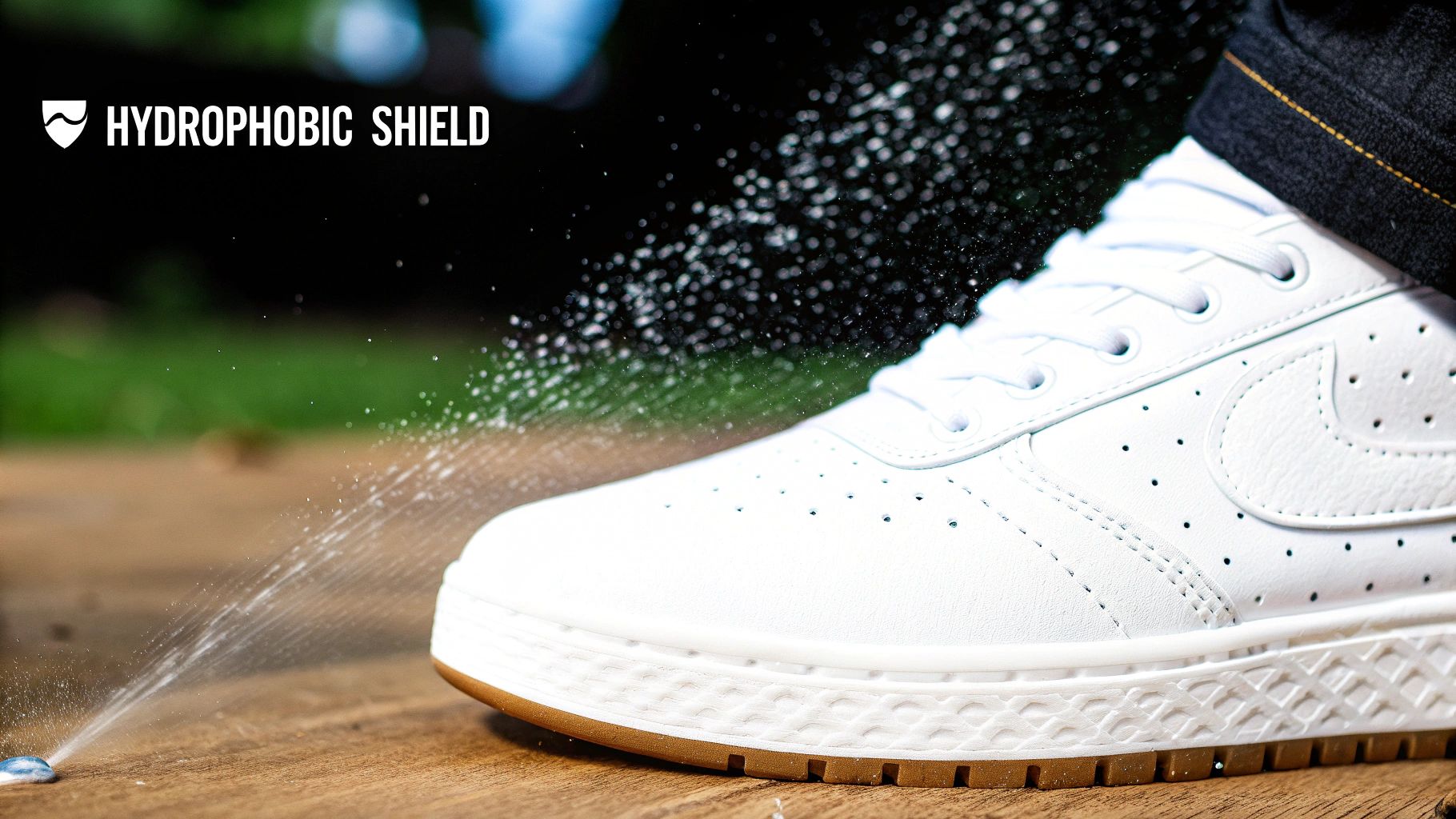
While cleaning is a corrective measure, true preservation is about defense. A premium protective spray is your most vital tool. Think of it as an invisible shield that prevents stains from ever forming. This goes beyond repelling a puddle splash—it's about protecting your footwear at a microscopic level.
At its core, a quality protector creates a hydrophobic barrier on the shoe's surface. This is not a suffocating plastic film. The best formulas are engineered to be fully breathable, preserving the hand-feel of delicate materials like suede or knit. Instead, the protector forms an invisible matrix over the fibers that causes liquids—from rain to coffee—to bead up and roll off, never getting the chance to be absorbed.
This proactive stance is more critical than ever. The global white sneaker market was valued at approximately USD 51.2 billion in 2024 and is projected to reach USD 66.29 billion by 2030. Consumers are making significant investments in their footwear, and it is logical to invest in preserving that value.
Mastering the Application Technique
Proper application is as important as the product itself. It is the difference between an impermeable shield and a weak, inconsistent defense. A common error is oversaturating the shoe, which wastes product and can result in an uneven finish.
For a flawless application, follow this professional protocol:
- Maintain Distance: Hold the canister approximately 6-8 inches from the sneaker. Closer application results in a stream rather than the desired fine, even mist.
- Sweep, Do Not Soak: Move the can in a steady, sweeping motion to cover the entire surface. The goal is a light, consistent layer, not a thick, dripping coat. Allow the first coat to dry for 15-20 minutes before applying a second for comprehensive coverage.
- Allow for Curing: This is the most frequently skipped step. After the final application, the protector must fully bond with the material's fibers. We recommend allowing the sneakers to cure for a full 24 hours in a well-ventilated area before wear.
Rushing the curing process is the primary reason protective sprays fail to perform. The barrier requires adequate time to set. A full day ensures maximum hydrophobic performance from the moment you step outside.
The ultimate goal is to simplify your maintenance routine. With proper protection, cleaning becomes a simple wipe-down rather than an intensive scrub. You will be dealing with surface-level dirt that was never able to penetrate the material. For those looking to establish a professional-grade defense, our Gold Standard Premium Sneaker Protector Spray is engineered to deliver this type of breathable, long-lasting protection.
Essential Dos and Don'ts for White Sneaker Care
Understanding correct cleaning methods is only half the equation. Knowing what to avoid is equally critical. Many so-called "cleaning hacks" can cause permanent, irreversible damage to your footwear.
At Gold Standard, we have witnessed the consequences of well-intentioned but misguided efforts. Expert guidance can mean the difference between a successful restoration and a ruined pair of sneakers. Consider this your definitive guide to the essential rules of white sneaker care, designed to help you avoid common pitfalls.
Common Mistakes to Avoid
Certain shortcuts are tempting but will degrade your sneakers over time. The most critical error is using a washing machine. The combination of high heat and mechanical tumbling action breaks down the adhesives bonding the sole to the upper, causing separation and warping the shoe's structure.
Another major misstep is using household cleaners like bleach. While it may seem logical for whitening, bleach is a harsh chemical that causes rubber and synthetic materials to yellow permanently. Furthermore, it degrades delicate fibers, weakening the material with each application.
A high-quality sneaker is a precisely engineered object. Subjecting it to aggressive, unintended cleaning methods is the fastest way to destroy its materials, adhesives, and overall structure. Always use methods and products specifically designed for footwear.
The Expert-Approved Method
Instead of risking damage with these shortcuts, adopt professional practices. For every "Don't," there is a corresponding "Do" that achieves superior results without causing harm. Adhering to these principles is fundamental to keeping white sneakers white for years.
White Sneaker Care Dos and Don'ts
Based on our extensive experience, these are the most common errors in white sneaker maintenance. This reference chart will help you stay on the correct path.
| Common Mistake (Don't) | Expert Method (Do) |
|---|---|
| Use a washing machine or dryer. | Hand clean with material-specific tools. Use a dedicated, pH-balanced sneaker cleaner and the appropriate brushes for each surface. |
| Apply harsh chemicals like bleach. | Use a formula designed for footwear. A specialized cleaner like Gold Standard's Premium Shoe Cleaning Solution lifts stains without causing chemical damage. |
| Scrub uppers with a wire brush. | Match the brush to the material. Use a stiff brush for durable rubber soles and a soft hog-hair brush for delicate uppers. |
| Dry sneakers in direct sunlight. | Air dry in a cool, shaded area. This prevents UV damage, which accelerates yellowing and makes materials brittle. |
| Ignore small scuffs and stains. | Address marks immediately. Spot-treat minor blemishes as soon as they appear to prevent them from setting deep into the fibers. |
By adhering to the "Do" column, you are not just cleaning your sneakers—you are preserving them. This is the difference between a temporary fix and a long-term strategy for maintaining your collection.
Got Questions? We've Got Answers.
Even the most experienced sneaker enthusiast encounters challenges. As material experts, we have addressed nearly every conceivable issue in footwear care. Here are our answers to some of the most frequently asked questions.
How Often Should I Deep Clean My White Sneakers?
This depends entirely on wear patterns. For daily-use white sneakers, a brief wipe-down after each wear is the most effective defense against grime accumulation. Consider this preventative maintenance.
A full, deep clean is only necessary when the shoes are visibly soiled and a simple wipe is insufficient. For most individuals, this translates to every 4-6 weeks of regular use. Over-cleaning can stress materials and weaken adhesives. Clean intelligently, not just frequently.
Can I Use Bleach or a Household Cleaner?
We strongly advise against this. Bleach is a powerful oxidant that will permanently—and irreversibly—yellow the rubber and synthetic components of your shoes by altering their chemical structure.
All-purpose household cleaners are often formulated with abrasives and solvents that will strip the factory finish from leather and degrade delicate materials like knit or suede. It is imperative to always use a pH-balanced cleaner specifically formulated for the complex materials used in modern footwear.
The impulse to use a familiar household product is understandable, but it almost always causes more harm than good. Sneakers are constructed from specialized materials that require equally specialized care to maintain their integrity and appearance.
What is the Best Way to Store White Sneakers to Prevent Yellowing?
Proper storage is a critical, often overlooked, step. To preserve their white finish, store sneakers in a cool, dry location away from direct sunlight. UV radiation is the primary catalyst for the oxidation process that causes soles to yellow.
Furthermore, avoid sealing them in airtight plastic containers. This traps moisture, creating an environment conducive to material breakdown. For optimal results, insert cedar shoe trees to help them maintain their shape and absorb residual moisture. Then, store them in their original box or a breathable shoe bag.
The global shoe-care market was valued at approximately USD 4.74 billion in 2023 and continues to grow. This trend indicates a rising awareness among consumers that premium sneakers are an investment worth protecting. You can explore this data further in the latest market research on shoe care.
Your sneakers are an investment. Entrust their care to a system built on material science and expert knowledge. Gold Standard provides the premium, material-safe solutions required to keep your entire collection in pristine condition. Discover our complete care system at https://gold-standard-approved.myshopify.com.