

The "best" shoe cleaner is not a single, magic-in-a-bottle solution. It is a calculated choice: the right chemistry for the right material. You would not use the same cleaning protocol on delicate suede as you would on a durable rubber outsole. The principle of expert-level sneaker care is matching the cleaning solution and tools to the specific material science of your footwear. This is how you achieve a forensic-level clean without causing material degradation.
What Defines a Superior Sneaker Cleaner?
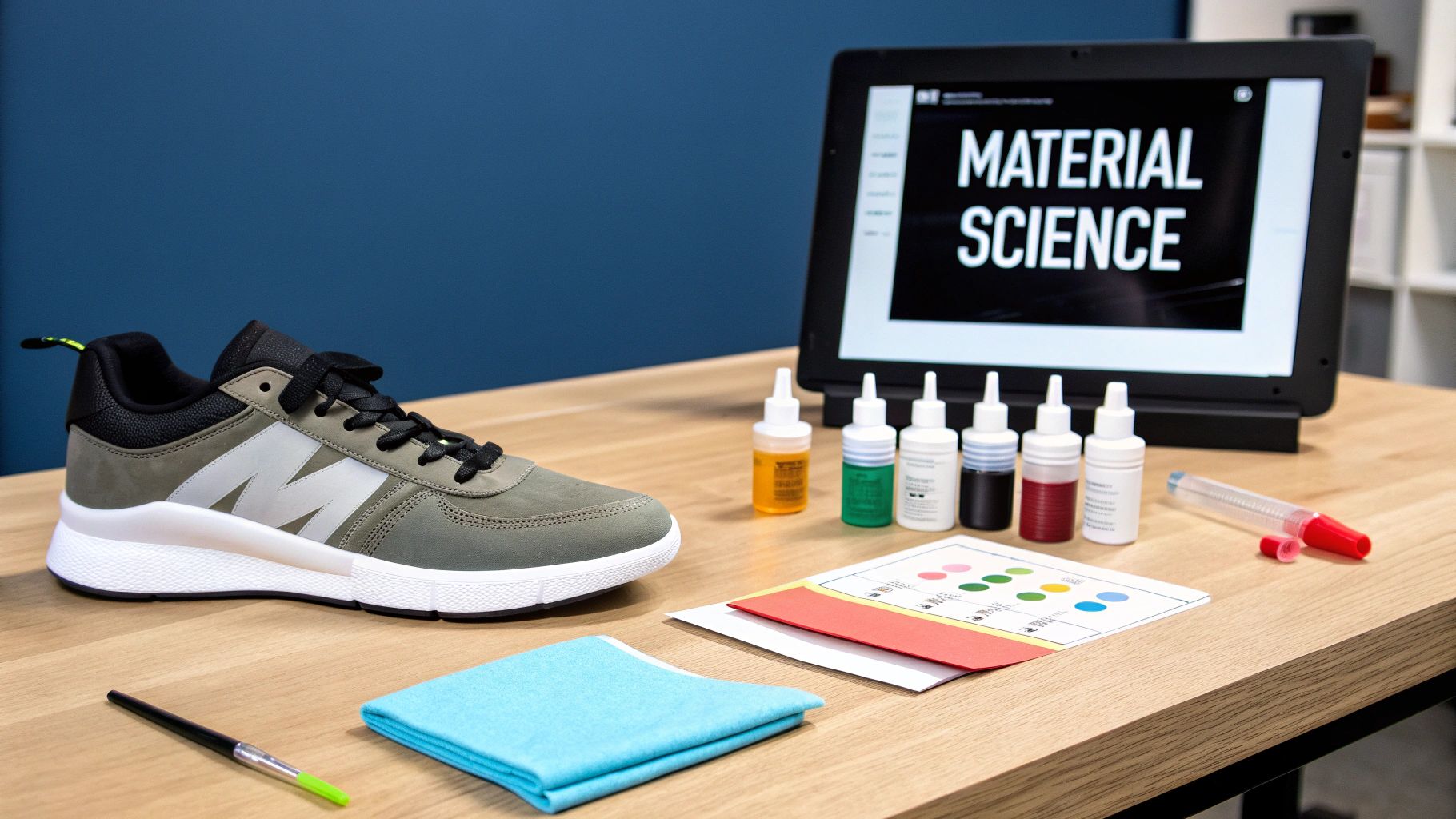
To move beyond marketing hype, one must understand the interaction between a cleaner and the shoe itself. Your sneakers are composed of complex materials—engineered textiles, natural leathers, and synthetic polymers—each reacting differently to chemical agents.
Consider the analogy of skincare. You would not use a harsh, high-alkaline body soap on your face; the skin is more delicate and requires a balanced formulation. The same logic applies directly to footwear. A premium leather upper contains natural oils that aggressive detergents will strip, leading to dryness and cracking. A modern knit upper is constructed from fine fibers that abrasive compounds can easily fray or discolor.
The Critical Role of Material-Specific Formulas
The foundation of effective sneaker care is the understanding that a universal cleaning solution is often a recipe for material damage. Most generic household cleaners contain harsh solvents, high-alkaline agents, or bleaching compounds that can permanently compromise your footwear.
These chemicals are formulated to remove grease from a countertop, not to gently lift soil from porous leather or woven fabric. Their use on sneakers can lead to a cascade of negative outcomes:
- Color Fading: Harsh chemicals can strip dyes from canvas and suede, resulting in a faded, worn appearance.
- Material Degradation: Aggressive solvents can weaken the adhesives bonding the sneaker's components, causing sole separation.
- Texture Damage: Abrasive formulas can destroy the soft nap of suede and nubuck or cause pilling on knit materials.
This is precisely why the specialized sneaker care industry is expanding. The global shoe-care market is projected to reach USD 7.2–7.3 billion by 2032, driven by consumers who demand premium, material-specific solutions. Enthusiasts are abandoning all-purpose detergents for products engineered for preservation. For a detailed market overview, see Sneakky's industry analysis.
The paradigm in sneaker care has shifted from simple "stain removal" to comprehensive "material preservation." An exceptional cleaner not only removes contaminants but also respects the integrity of the original material, extending its life and aesthetic.
How to Evaluate a Sneaker Cleaner
An informed decision requires looking past branding to evaluate the cleaner's formulation. A superior product is built on a foundation of gentle yet effective ingredients, such as pH-neutral soaps and naturally derived surfactants. These compounds work at a molecular level to lift dirt without harming the substrate.
A well-engineered cleaner accounts for the porosity of canvas, the protein structure of leather, and the synthetic composition of mesh. By achieving this balance, a formula can clean effectively while conditioning and protecting the sneaker.
To assist in this evaluation, we have developed a clear framework. Use this table to assess any cleaner and ensure you are selecting a product that will protect your investment.
Framework for Selecting Your Ideal Sneaker Cleaner
| Evaluation Criterion | Why It Is Critical | What to Look For |
|---|---|---|
| pH-Balanced Formula | A neutral pH (approximately 7) prevents the cleaner from being too acidic or alkaline, which can degrade sensitive materials like suede and leather. | Seek terms like "pH-neutral," "balanced formula," or explicit confirmation of safety for delicate materials. |
| Gentle Surfactants | These are the cleaning agents that lift soil. Gentle, often plant-derived, surfactants clean effectively without stripping natural oils or color. | Avoid products containing harsh sulfates or vague "detergents." Look for ingredients derived from sources like coconut. |
| Absence of Harsh Solvents | Solvents such as alcohol, acetone, and bleach can dissolve adhesives, cause yellowing on rubber, and permanently damage fabrics. | The label should explicitly state "alcohol-free," "bleach-free," and "solvent-free." A transparent ingredient list is a positive indicator. |
| Material-Specific Guidance | The product should provide clear instructions on which materials it is safe to use. A cleaner for rugged outsoles differs fundamentally from one for knit uppers. | Verify clear recommendations for use on leather, suede, canvas, knit, mesh, and rubber. |
By applying these criteria, you can confidently select a cleaner that not only performs its function but also preserves the longevity and appearance of your footwear.
Deconstructing the Formula: What’s Inside the Bottle
To identify the best shoe cleaner, one must look beyond marketing and understand the chemical principles at work. A superior cleaner is not simply soap and water; it is a balanced formula where each ingredient serves a specific purpose, working in concert to lift contaminants while preserving the material being treated. The approach is not one of brute force, but of precise, intelligent chemistry.
Think of a harsh, all-purpose cleaner as a sledgehammer. It may remove a stain, but it will likely cause collateral damage to the delicate structure of the sneaker. A premium, specialized cleaner is more akin to a set of surgical instruments, precisely targeting grime without harming the surrounding material.
The Science of Surfactants
The primary active ingredients in any quality cleaner are surfactants. These are molecules with a dual nature: one end is hydrophilic (attracted to water), and the other is hydrophobic (attracted to oils and dirt).
When the cleaner is agitated with water and a brush, the surfactants perform a two-step process:
- Lifting Contaminants: The hydrophobic ends attach to particles of dirt, oil, and grime embedded in the sneaker's fibers.
- Suspending Particles: Simultaneously, the hydrophilic ends pull these captured particles away from the material and suspend them within the cleaning foam, preventing them from redepositing elsewhere on the shoe.
This mechanism allows a gentle cleaner to effectively extract contaminants from materials like canvas or mesh without requiring aggressive, damaging chemicals. It is a targeted process that maintains the material's structural integrity.
The Necessity of Conditioning Agents
For natural materials like leather, suede, and nubuck, cleaning alone is insufficient. These materials contain natural oils that maintain their softness, flexibility, and strength. Harsh cleaning agents strip these essential oils, leaving the material dry, brittle, and susceptible to cracking.
This is why top-tier formulas incorporate conditioning agents. These ingredients, often derived from natural sources like coconut or jojoba oil, replenish the moisture lost during the cleaning process. This step is critical for maintaining the suppleness of the leather and dramatically extending its lifespan, preventing the premature aging seen in poorly maintained footwear.
A cleaner that only cleans is performing half its duty. True material preservation requires a formula that simultaneously cleans and conditions, respecting the biological needs of materials like leather and suede.
Why Household Solvents Are Detrimental to Footwear
While tempting in a moment of need, using a household cleaning product is one of the most destructive actions you can take against your sneakers. Many common cleaners contain aggressive solvents such as alcohol, acetone, or ammonia.
These chemicals are catastrophic for footwear for several reasons:
- They dissolve adhesives: Sneakers are constructed with specialized glues. Solvents can break down these chemical bonds, leading to sole separation and complete structural failure.
- They damage synthetic materials: Solvents can react negatively with modern uppers (like knit or mesh), causing discoloration, yellowing, and, in some cases, degradation of the fibers.
- They strip protective finishes: Many sneakers are treated with factory-applied protective coatings. Solvents will remove these layers, leaving the shoe vulnerable to future stains and damage.
With a fundamental understanding of these components, you can analyze any product label with confidence. A formula built on gentle surfactants and natural conditioners—while avoiding harsh solvents—is the foundation of a product that delivers a safe, effective, and professional-grade clean.
Selecting the Right Tools for an Expert-Level Clean
An effective cleaning solution is only part of the equation. To achieve a professional, restorative clean, the tools you employ are as critical as the formula itself. Using an improper brush or cloth will not only yield suboptimal results but can inflict irreversible damage on the very sneakers you aim to preserve.
A master chef does not use a butter knife for a fine dice; similarly, a footwear care specialist selects tools with intention, matching them to the specific material and task. The correct tools work in synergy with your cleaner, safely agitating and removing grime for a superior outcome.
Matching the Brush to the Material
Brushes perform the mechanical work of agitating and lifting dirt, but they are not interchangeable. Using a brush with bristles that are too stiff for a delicate upper is one of the fastest ways to cause irreparable damage, akin to using steel wool on a leather car seat.
A proper toolkit should contain brushes of varying bristle stiffness, each designed for a specific application.
-
Soft Bristle Brush: This is the specialized tool for delicate uppers, including premium suede, nubuck, mesh, and knit fabrics. These materials require a gentle touch to avoid snagging, pilling, or damaging their unique texture.
-
Medium Bristle Brush: This is the all-purpose workhorse. It provides the ideal balance for more robust materials like standard leather, canvas, and rubber midsoles. It is firm enough to scrub away stubborn dirt but not so aggressive as to cause scuffs or scratches.
-
Stiff Bristle Brush: This brush has a singular purpose: cleaning the outsole. Its durable bristles are engineered to penetrate deep treads and dislodge caked-on mud and debris. This brush should never be used on any part of the upper.
Mastering this hierarchy is fundamental. A complete system, such as that found in the Gold Standard All-Purpose Cleaning Kit, will always include these distinct brush types to ensure you are equipped for any material.
The Essential Role of a High-Quality Microfiber Towel
Once the scrubbing is complete, the final step is critical. Using an old t-shirt or paper towel is a common error that compromises the result. These materials deposit lint and their abrasive textures can create micro-scratches on smooth leather and plastic components.
A high-quality microfiber towel is therefore an essential component of your toolkit.
Microfiber towels are constructed with millions of ultra-fine fibers. This design creates an immense surface area, enabling them to absorb significantly more moisture and trap residual dirt particles more effectively than traditional cotton.
The functional difference is stark. Its superior absorbency accelerates drying time, reducing the risk of water spots or material warping. Furthermore, its soft, non-abrasive texture allows you to blot and buff sneakers to a perfect, lint-free finish without causing any damage.
This final touch is what distinguishes a cursory wipe-down from a true material restoration.
A Step-by-Step Protocol for Cleaning Any Sneaker Material
Theoretical knowledge is the foundation, but practical application is the test. Understanding the cleaner's composition and selecting the correct brush is essential, but the true skill lies in executing the proper technique. Different materials demand different protocols, and a single misstep can cause permanent damage.
This guide details our precise, field-tested cleaning methods for the most common sneaker materials. These are not generic tips but repeatable procedures designed to deliver professional-grade results. By mastering the correct approach for each material, you will gain the confidence to care for every pair in your collection, from daily wearers to high-value assets.
To aid in tool selection, this decision tree illustrates which brush to use for each part of your sneaker.
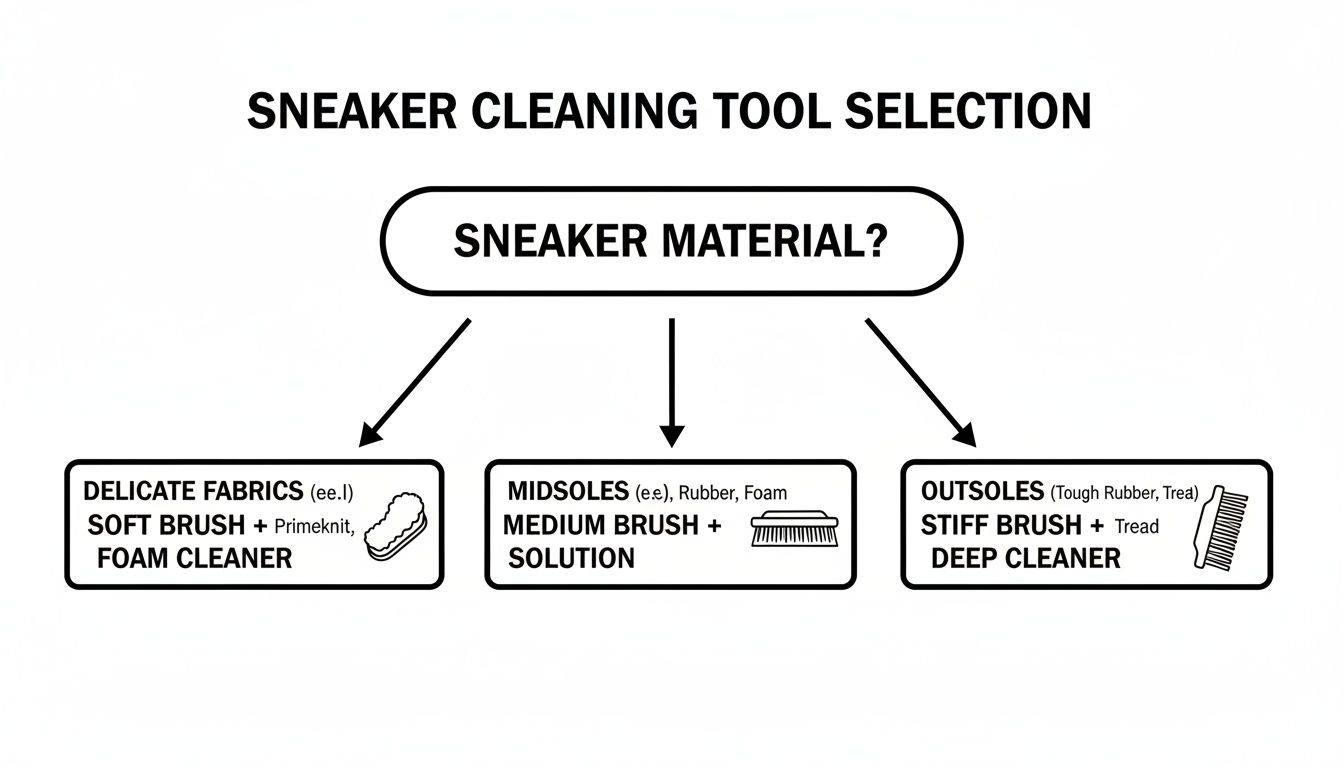
This visual guide reinforces a core principle: delicate materials require a soft touch, while more durable areas like midsoles and outsoles demand stiffer bristles to effectively remove heavy soiling.
We will now detail the process for each material type, covering what to use, how to apply it, and critical precautions.
Sneaker Material Cleaning Protocol
This quick-reference table outlines the optimal tools and techniques for the most common sneaker materials, enabling you to clean with confidence and avoid costly errors.
| Sneaker Material | Recommended Brush | Cleaning Technique | Key Precaution |
|---|---|---|---|
| Leather (Standard & Synthetic) | Medium Bristle Brush | Gentle circular scrubbing with minimal solution. | Avoid oversaturation to prevent drying and cracking. |
| Suede & Nubuck | Soft Bristle Brush / Suede Eraser | Begin with a dry brush; use minimal liquid for spot treatment only. | Water is the primary adversary. Never soak suede. |
| Canvas & Mesh | Soft Bristle Brush | Gentle dabbing and light scrubbing to prevent fraying. | Blot, do not rub, to avoid pilling and fabric damage. |
| Knit Uppers | Soft Bristle Brush | Light dabbing motion with solution, focusing on blotting. | Support interior with a shoe tree or towel during drying to maintain shape. |
This table serves as your quick guide. Now, let us explore the specific protocols for each material.
How to Clean Standard and Synthetic Leather
Leather is durable but is still a skin that requires proper care to prevent drying, cracking, or scuffing. The objective is to lift dirt without stripping its essential oils.
1. Preparation: Remove laces. Using a dry, medium-bristle brush, conduct a preliminary pass over the shoe to remove loose dirt and dust. This prevents grinding abrasive particles into the leather during wet cleaning.
2. Cleaning: Mix your cleaning solution with water as directed. Dip the medium brush into the solution and gently scrub the leather uppers using small, circular motions. A light foam will form as the surfactants lift dirt from the surface.
3. Wiping and Drying: Immediately use a clean, damp microfiber towel to wipe away all foam and residue. Follow with a dry section of the towel to absorb excess moisture. Never saturate leather footwear with water.
4. Conditioning (Recommended): For premium leather sneakers, applying a dedicated leather conditioner post-cleaning is a crucial step. It replenishes moisture, keeping the material soft and supple and dramatically extending its life.
How to Clean Suede and Nubuck
Suede and nubuck are notoriously sensitive. Their soft, napped texture is easily damaged by excess water or aggressive scrubbing. A gentle, methodical approach is non-negotiable.
The primary rule for suede care is to always begin with a dry cleaning method. Introducing liquid prematurely can embed surface dirt deeper into the material, creating a permanent stain. A thorough dry brushing is often sufficient for light maintenance.
The Suede Protocol:
- Dry Brush First: Use a soft-bristle brush (a dedicated suede brush is ideal) and gently brush the material in a single direction to lift the nap and remove surface dust.
- Target Stains: For stubborn marks, use a suede eraser, rubbing gently over the affected area. This often removes embedded grime without any liquid.
- Use Liquid Sparingly: If a deeper clean is required, apply a very small amount of cleaning solution to your soft brush, not directly onto the shoe. Lightly dab and scrub the stained area, working quickly to avoid soaking the material.
- Blot and Air Dry: Immediately press a microfiber towel onto the treated spot to absorb as much moisture as possible. Allow the sneakers to air dry completely, away from direct heat or sunlight. Once dry, use the soft brush again to restore the nap.
How to Clean Canvas, Mesh, and Knit Uppers
These woven materials are prone to collecting dirt but can also fray, snag, or stretch if handled improperly. The key is a gentle dabbing and scrubbing motion.
1. Remove Debris: Begin with a dry, soft-bristle brush to dislodge any loose surface dirt from the woven fibers.
2. Gentle Application: Dip your soft brush into the cleaning solution. Instead of aggressive scrubbing, use a gentle dabbing or light circular motion. This allows the cleaner to penetrate the weave without causing pilling or stretching the fabric.
3. Blot, Don't Rub: Press a clean microfiber towel firmly onto the upper to blot and lift the soiled foam. Avoid rubbing, especially on delicate knit materials, as this can damage the fibers.
4. Light Rinse: Dampen a separate microfiber towel with clean water and wipe down the upper to remove any residual cleaning solution.
5. Air Dry with Support: Insert shoe trees or stuff the sneakers with dry towels to help them maintain their shape as they air dry. This is especially important for unstructured knit shoes.
This level of care is becoming the standard as sneaker collections increase in value. The global sneaker-care service market is projected to grow from USD 200 million in 2023 to USD 480 million by 2032. This growth underscores a serious commitment to preserving high-value footwear with professional techniques—the same ones you can now execute at home.
For a more detailed walkthrough, particularly for challenging all-white sneakers, consult our comprehensive guide on how to clean white sneakers.
While this guide focuses on sneakers, cleaning methodologies vary significantly across different equipment. For example, the process and materials are entirely different for tasks like how to clean lacrosse balls, which involves a wholly different set of materials and construction.
By adhering to these material-specific protocols, you ensure that every component of your shoe receives the precise treatment required for optimal appearance and longevity. This is not just cleaning; it is preservation.
Common Cleaning Errors That Destroy Sneakers
In footwear care, understanding what not to do is as crucial as knowing the correct procedure. We have seen countless instances where an individual uses a premium shoe cleaner yet still ruins a pair of sneakers due to poor technique. Many well-intentioned cleaning attempts result in irreversible damage.
The fundamental error is treating complex, engineered footwear like a simple garment. Your sneakers are a composite of advanced textiles, specific polymers, and high-strength adhesives, each with its own tolerance limits. Let's examine the most common and destructive mistakes to ensure you avoid them.
The Myth of the Washing Machine
This is the most prevalent and damaging mistake in sneaker care. While seemingly convenient, subjecting sneakers to a washing machine cycle is one of the most effective ways to destroy them. The combination of high heat, total water immersion, and violent tumbling is a recipe for structural failure.
Here is a breakdown of the damage that occurs:
- Adhesive Breakdown: The high temperature of the water and, more severely, the dryer, will thermally degrade the adhesives holding the shoe together. The bond between the upper, midsole, and outsole weakens, leading to separation.
- Material Warping: Delicate materials such as knit, mesh, or certain synthetic leathers cannot withstand the heat. They will shrink, deform, and warp, permanently altering the shoe's shape and fit.
- Structural Damage: The repeated impact against the machine's drum can cause plastic eyelets to crack, stitching to fray, and internal support structures to bend or break, compromising the integrity of the shoe.
Why Household Cleaners Are a Sneaker’s Enemy
Reaching for an all-purpose spray, window cleaner, or bleach is a critical error. These products are formulated with harsh chemicals designed for non-porous, durable surfaces like countertops and ceramic, not the sophisticated materials used in footwear.
Using them on sneakers unleashes a chemical assault. Solvents like ammonia and alcohol will strip protective factory coatings and begin to dissolve the shoe's adhesives. Bleach does not merely whiten; it chemically degrades the material. On rubber and plastic, this results in permanent, irreversible yellowing. On fabrics, it weakens the fibers to the point of disintegration.
A household cleaner is a blunt instrument, applying brute chemical force indiscriminately. It cannot differentiate between a stain and the shoe's dye, or between dirt and the natural oils that maintain leather's health. The result is almost always discoloration, material degradation, and a drastically shortened lifespan for your sneakers.
Aggressive Scrubbing and Improper Tools
Even with the correct cleaning solution, improper tools or technique can lead to damage. A common mistake is using the stiffest brush available for the entire shoe, assuming that more force yields a better clean. This is incorrect.
As previously established, a stiff-bristled brush is designed exclusively for the durable rubber outsole. Applying this same brush to a delicate leather, suede, or knit upper is analogous to using sandpaper. It will create micro-scratches, destroy the nap of suede, and cause pilling and fraying on any woven fabric.
Always match the brush to the material. Allow the cleaning formula to perform the chemical work of lifting the dirt, rather than attempting to remove it through sheer mechanical force. Avoiding these common mistakes is essential to preserving your collection for years to come.
Beyond Cleaning: A Proactive Approach to Sneaker Protection
The secret to expert sneaker care is not just cleaning effectively, but cleaning less frequently. The most effective routines are proactive, not reactive. This involves shifting from a mindset of stain removal to one of long-term preservation, protecting your investment and maintaining the condition of your collection over time.
Your first line of defense should always be a high-quality protective spray. This product creates an invisible, hydrophobic barrier on the material's surface, causing liquids to bead up and roll off rather than being absorbed. This is particularly crucial for absorbent materials like suede, canvas, and knits, which are highly susceptible to staining.
A superior protector creates a breathable barrier, repelling external moisture while allowing water vapor from within the shoe to escape. This ensures comfort, maintains material flexibility, and prevents moisture buildup.
Developing a Sustainable Maintenance Routine
Proactive care extends beyond a single product; it is about cultivating sound habits. A consistent maintenance schedule is what separates footwear that lasts a single season from a pair that endures for years.
This shift toward preservation is reflected in market trends. The 'cleaning' and 'protection' segments are the fastest-growing within the shoe care industry, driven by consumer demand for formulas that are both effective and tailored to specific materials. The best sneaker cleaners are now evaluated on their ability to protect as much as their power to clean.
To build a complete maintenance plan, integrate these habits into your routine:
-
Rotate Your Footwear: Never wear the same pair on consecutive days. Allowing at least 24 hours of rest lets the materials fully dry, decompress, and return to their natural shape. This simple practice significantly reduces premature creasing and material fatigue.
-
Utilize Quality Shoe Trees: For any valued pair, cedar shoe trees are essential. They perform three critical functions: absorbing residual moisture, neutralizing odors, and maintaining the sneaker's structural shape. They smooth out creases in the toe box and heel, preserving the intended silhouette.
-
Implement Proper Storage: Store sneakers in a cool, dry, and dark environment. Direct sunlight is a primary cause of damage, leading to irreversible UV fading and causing rubber midsoles to become brittle and yellow. Just as one uses proper storage techniques for delicate items like cashmere, valuable footwear deserves the same consideration.
The mark of an expert is not how well they clean a stain, but how effectively they prevent the stain from occurring in the first place. Preservation is the final and most critical phase of sneaker care.
Adopting this proactive strategy ensures your sneakers remain in pristine condition. This includes maintaining the interior, which is vital for overall preservation. For expert guidance on that topic, consult our guide on how to remove odor from sneakers.
Frequently Asked Questions
Even with a detailed protocol, specific questions can arise. Here are our expert answers to some of the most common inquiries to help you refine your sneaker care regimen.
How Often Should I Clean My Sneakers?
There is no single answer; frequency depends entirely on use.
For daily-wear sneakers, a quick wipe-down of the uppers and midsoles after every few wears is highly effective at preventing dirt buildup. A full, deep clean should be performed when they appear soiled, or approximately every 1-2 months with regular use.
For collector-grade pairs worn infrequently, the approach is different. A light dusting before and after wear is often sufficient. A deep clean should only be performed when absolutely necessary to preserve their condition.
Can I Use One Cleaner for All Parts of My Sneakers?
A high-quality, pH-balanced formula is engineered to be safe for most sneaker materials, but the critical variable is your technique and your tools. The cleaner is versatile; its application must be specific.
A premium cleaner is universal, but the application is specific. The same solution that requires a firm scrub on a rubber outsole needs a gentle dab on a knit upper. It’s the user’s technique that prevents damage.
You would not use a stiff brush on a suede upper. Delicate materials like suede and knit require a soft-bristle brush and a light touch. Conversely, durable rubber midsoles and outsoles can withstand more pressure to remove heavy soiling. Always adapt your tools and technique to the specific material.
Is It Safe to Clean the Inside of My Sneakers?
Yes, and it is a crucial step. A clean exterior is only half the task. Cleaning the interior is essential for eliminating odor and maintaining hygiene.
First, remove the laces and insoles. The insoles can be cleaned separately with your solution and a soft brush. For the shoe's interior, apply a small amount of cleaner to a microfiber towel, gently scrub the lining, and then wipe out any residue with a clean, damp cloth.
The most critical part of this process is allowing the insoles and the shoe's interior to air dry completely before reassembly. Inadequate drying traps moisture, which leads to mildew and the return of odor.
Your sneakers are an investment. Provide them with the professional-grade care they deserve. The Gold Standard premium cleaning kit is engineered to protect and preserve every material in your collection. Find your ideal solution at gold-standard-approved.myshopify.com.