

Your sneakers are an investment. They are meticulously designed objects, crafted from a complex combination of leathers, textiles, and polymers. When they accumulate the grime of daily wear, the impulse to use common household cleaners or—worse—the washing machine is a critical error.
This approach is the fastest way to cause irreversible damage.
The best way to clean sneakers at home is a manual, material-specific process. It requires a foundational understanding of what you're working with, the right tools—like a soft-bristled brush and a pH-neutral cleaning solution—and a methodical technique. This hands-on approach is the only way to preserve the structural integrity, color, and texture of the materials that make up your footwear.
Protecting Your Investment: A Methodical Approach
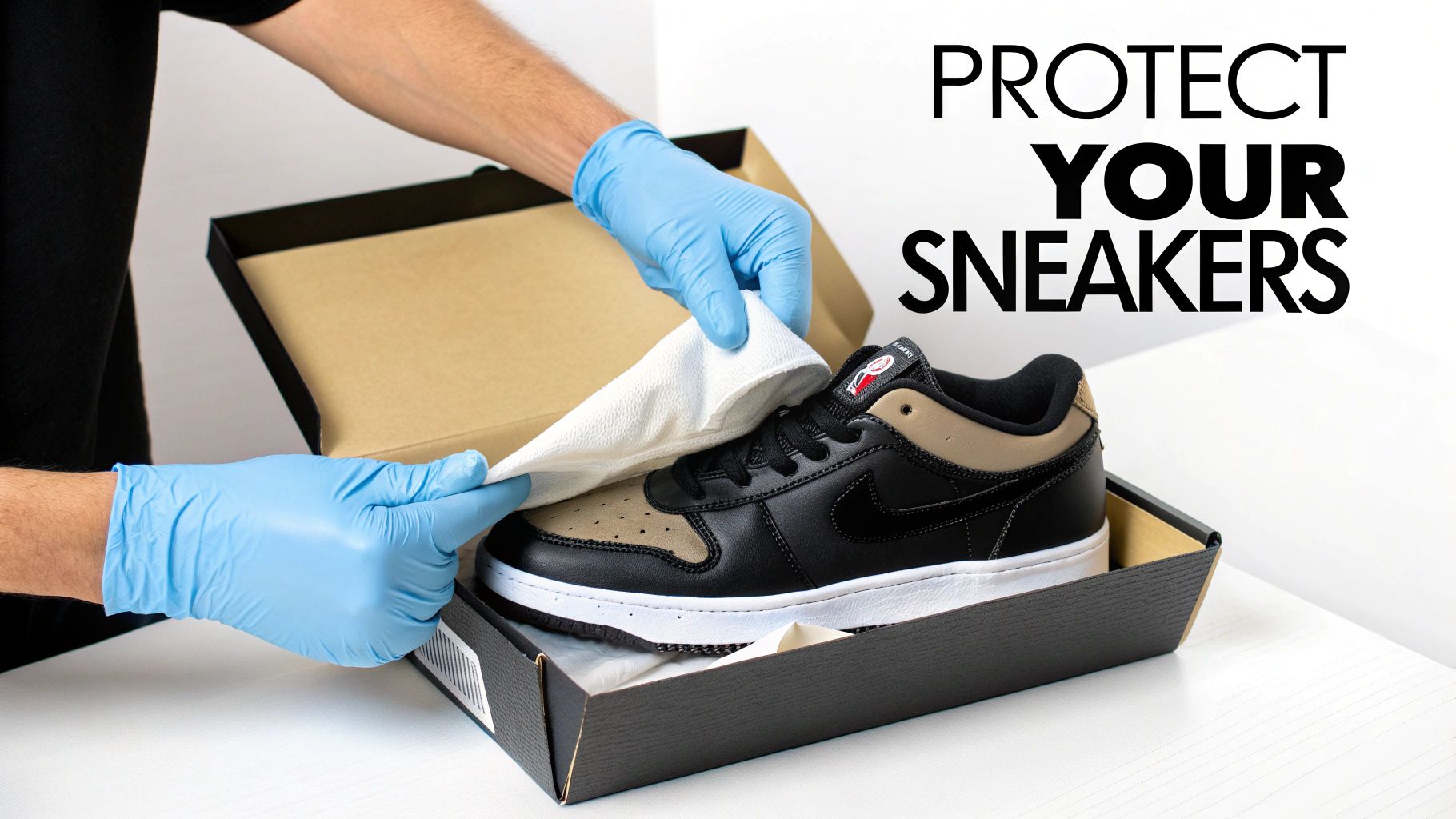
Consider the chemistry of household products: bleach, all-purpose sprays, or even DIY remedies like toothpaste contain aggressive surfactants and alkaline agents. These are formulated to strip grease from hard, non-porous surfaces, not to gently lift soil from the delicate fibers, porous leathers, and sensitive adhesives in modern footwear. Their use leads directly to discoloration, material degradation, and adhesive failure.
Why Material-Specific Knowledge is Non-Negotiable
Every pair of sneakers in your rotation is an assembly of different materials, each with unique properties and vulnerabilities. A universal cleaning method is a recipe for failure.
- Leather: Requires a cleaner that removes dirt without stripping its natural oils, which leads to drying, cracking, and premature aging.
- Suede & Nubuck: These napped leathers have an open-pore structure that is highly susceptible to water damage. Saturation will stiffen the material, ruin the texture, and often cause permanent discoloration.
- Knit & Mesh: These engineered textiles can easily be snagged, stretched, or abraded by overly aggressive brushing, permanently altering the shoe’s structure and fit.
- Canvas: While durable, this woven fabric is porous and can trap soap residue. Improper rinsing and drying lead to oxidation and yellowing.
This guide provides the field-tested methods necessary to clean your sneakers effectively while preserving their value and longevity.
At Gold Standard, our philosophy is that footwear care is a technical discipline. The correct tools and techniques do more than clean; they preserve the materials, extend the lifespan of the footwear, and maintain its intended aesthetic for years to come.
Understanding the fundamentals of proper sneaker care is what separates a casual owner from a true enthusiast. When you respect the materials and apply professional techniques, cleaning becomes an act of preservation—a way to protect your investment.
Assembling Your Professional Sneaker Care Kit
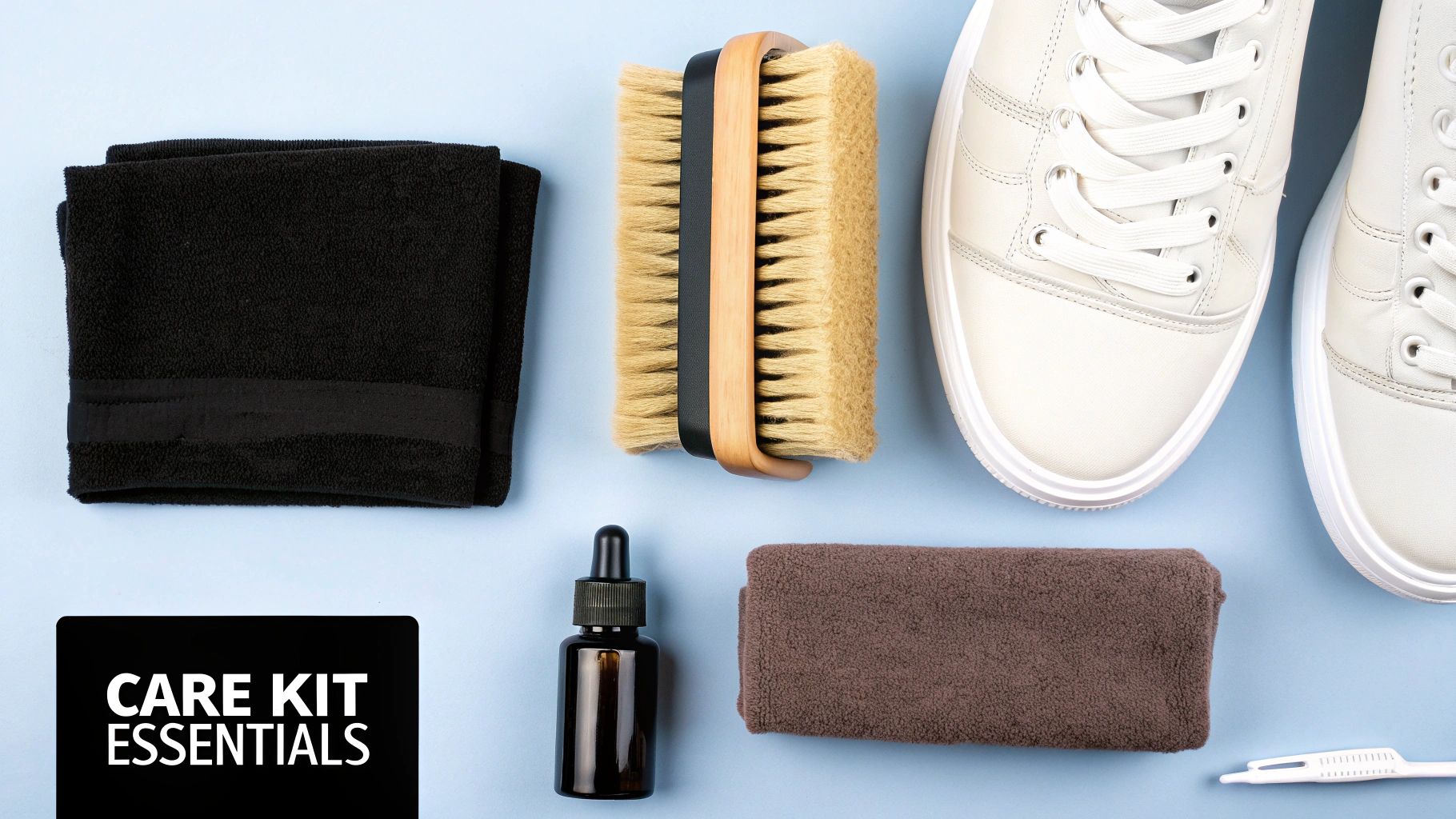
A proper cleaning session begins not with the act of scrubbing, but with the selection of appropriate tools. This isn’t about acquiring gadgets; it’s about understanding the specific function of each tool and why professional-grade equipment yields superior results while preventing damage.
The best way to clean sneakers at home is contingent on having the correct equipment. A well-curated kit enables you to confidently address any material—from robust leather to delicate knit—without risking its integrity. You are not just cleaning; you are performing essential maintenance.
The Essential Tools for Any Sneaker Collection
Your toolkit should be concise but correct. Each component has a specific role in preserving the material integrity of your footwear. Avoid all-in-one "miracle" products and build your kit on these three non-negotiable fundamentals.
-
A Natural Bristle Brush: Standard nylon brushes have stiff, synthetic bristles that are too abrasive for most uppers, causing micro-scratches on leather and snagging knit fabrics. The professional standard is a premium brush made with natural hog hair. Its bristles possess the ideal balance of firmness to dislodge embedded dirt and softness to avoid damaging the surface. This single tool elevates the entire cleaning process.
-
A pH-Neutral Cleaning Solution: The adhesives, dyes, and composite materials in modern sneakers are chemically sensitive. Harsh, alkaline household detergents can break down the bonds holding your soles together and cause colors to bleed or fade. A scientifically formulated, pH-balanced foam cleaner is engineered to be tough on grime but inert to the sneaker's construction.
-
A High-Quality Microfiber Towel: The drying and wiping phase is critical. Standard cotton towels are surprisingly abrasive and leave behind lint, especially on napped materials like suede. A high-GSM (grams per square meter) microfiber towel has a higher pile and softer texture, allowing it to absorb moisture and dirt efficiently without causing surface abrasion.
Why Tool Quality Directly Impacts Sneaker Longevity
The quality of your equipment has a measurable impact on the lifespan and value of your sneakers. The footwear care market is expanding precisely because consumers are recognizing that proper maintenance is a sound investment. Uncleaned or poorly maintained sneakers can lose up to 50% of their resale value. Quality tools are therefore a preventative measure against depreciation.
Using a pH-balanced foam, for example, preserves the critical adhesives that bond the sole to the upper, potentially adding years to the shoe's wearable life.
Choosing professional-grade tools is the difference between a routine cleaning and a proper restoration. A natural hog-hair brush, for instance, can lift significantly more embedded particulate than a synthetic alternative without causing abrasion. This is not a minor detail; it is fundamental to material preservation.
Ultimately, assembling the right kit is the first practical step toward mastering footwear care. Proper tools and a foundational knowledge of their use ensure you are prepared to handle any material and any level of soil.
The Foundational Method: A Universal Cleaning Process
Before addressing material-specific nuances, you must master a universal cleaning method that serves as the foundation for nearly any pair of sneakers. This is the core process, refined over years of professional footwear care.
Mastering this foundational technique is the key to cleaning sneakers at home effectively. It helps you avoid the common mistakes that lead to faded colors, warped uppers, or an incomplete clean. This process is your starting point for everything, from a durable leather court shoe to a delicate knit runner. It is methodical, safe, and effective.
Essential Preparation: The First Step to a Flawless Clean
Impatience is the enemy of a good result. Proper preparation is non-negotiable for achieving a deep, even clean without causing unforeseen damage.
First, remove the laces and insoles. Laces must be cleaned separately to avoid leaving soiled areas around the eyelets. Insoles trap moisture and odor; removing them allows the shoe’s interior to dry completely, preventing microbial growth.
Next, insert shoe trees or stuff the sneakers tightly with clean paper or cloth. This step is critical. It creates a firm, stable surface for scrubbing and, more importantly, ensures the sneaker maintains its original shape during the cleaning and drying process.
A common failure point in at-home cleaning is neglecting the shoe's structure. Without internal support from a shoe tree, the pressure from scrubbing can stretch or deform the upper, permanently altering the sneaker's fit and appearance.
The Dry Brush: A Crucial First Pass
With the sneakers prepped, the first active step is a thorough dry brushing. Using a medium-bristle brush, systematically dislodge all loose, caked-on dirt and debris from the uppers, midsole, and outsole.
Work methodically, paying close attention to seams and crevices where grit accumulates. This is not a cursory dusting—a proper dry brush can remove up to 80% of surface-level dirt. This step makes the wet-cleaning phase significantly more effective and prevents you from turning dry dirt into mud that gets worked deeper into the material.
Solution Application and Agitation
Now for the wet work. If using a concentrated formula like the Gold Standard Premium Shoe Cleaner, mix a small amount into a bowl of cool water. The goal is not a dilute, soapy bath, but a dense, active foam capable of lifting dirt.
Dip your brush into the solution and tap off any excess liquid; the brush should be damp, not dripping.
The key is to work in small, manageable sections. Begin scrubbing the sneaker using gentle but firm circular motions. This technique is designed to lift dirt out of the material's fibers, rather than pushing it further in. You will see the foam discolor as it draws the grime to the surface.
As you work, wipe away the soiled foam with a clean microfiber towel. This is a vital step. It removes the suspended dirt before it can be re-deposited onto the shoe. Repeat the process—dip, scrub, wipe—until the entire sneaker is uniformly clean.
While we focus on footwear, the general principles of home item care for other high-value items share this same meticulous, step-by-step philosophy. Whether preserving a timepiece or restoring a pair of sneakers, the methodology for quality care is universal.
A Material-Specific Deep Dive
A one-size-fits-all approach is ineffective. The expertise in sneaker care lies in understanding that different materials demand different techniques. You would not treat delicate suede with the same methods used for a rubber sole; doing so causes irreversible damage. Here, we move from foundational skills to professional, material-specific techniques.
Knowing how to adapt your methodology is paramount. While the professional shoe care market is projected to reach $770 million by 2033, a significant 68% of consumers still prefer to care for their own footwear. When executed correctly, proper maintenance can extend a sneaker's lifespan by as much as 300%. Yet, mistakes are common—an estimated 55% of people admit to damaging suede with improper chemicals. This is precisely why using the right tool, like a natural hog-hair brush that lifts dirt 50% more effectively than a basic nylon one, is critical for protecting your collection. You can see more stats on the shoe care market on datainsightsmarket.com.
This image illustrates the non-negotiable first steps for cleaning any sneaker, regardless of material.
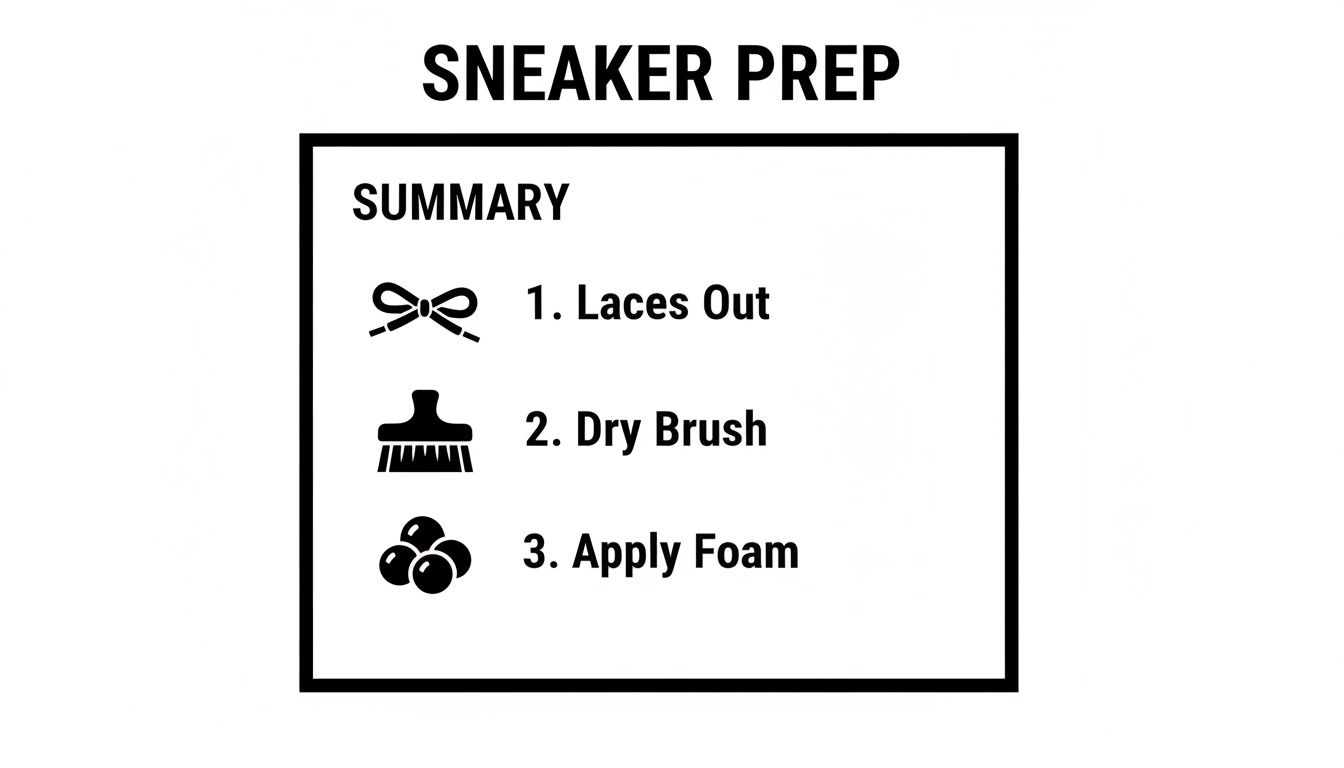
Removing laces, performing a thorough dry brush, and then applying a cleaning foam—these are the three universal constants.
The following reference guide provides a starting point for selecting the right tools and avoiding common errors for the most prevalent sneaker materials.
Sneaker Material Cleaning Quick Reference Guide
| Material Type | Recommended Brush | Key Technique | Critical Precaution |
|---|---|---|---|
| Smooth Leather | Soft Bristle (Hog Hair) | Gentle, circular motions | Do not strip natural oils; condition after cleaning |
| Suede & Nubuck | Suede Eraser & Brush | Dry brushing; one-direction strokes | Avoid water at all costs; never apply cleaner directly |
| Canvas | Medium-Stiff Bristle | Firm scrubbing to lift dirt from the weave | Rinse thoroughly to prevent yellowing |
| Knit Uppers | Very Soft Bristle | Light dabbing or patting motions | Never scrub aggressively to avoid snagging fibers |
| Rubber/Foam | Stiff Bristle | Firm, back-and-forth scrubbing | Apply consistent pressure to get into textures |
This table is your baseline. Now, let's examine the specific protocols for each material.
How To Handle Smooth Leather
Smooth leather is durable but requires maintenance to prevent its natural oils from being depleted. Once these oils are gone, the leather becomes dry, brittle, and prone to cracking.
The objective is to clean without stripping these essential oils. Use a soft-bristled brush (hog hair is ideal) and a pH-neutral foam cleaner. Apply the foam and gently work it into the surface with small, circular motions. For stubborn scuffs, localized pressure can be increased, but aggressive scrubbing should be avoided.
Immediately after agitating an area, wipe the soiled foam away with a clean microfiber towel. Allowing cleaning agents to dwell on leather can lead to discoloration. Once the shoe is clean and fully dry, apply a dedicated leather conditioner to replenish moisture and add a layer of protection.
Dealing with Delicate Suede and Nubuck
Suede and nubuck are among the most misunderstood materials in footwear. Their soft, napped texture is a result of an abraded grain, which makes them highly porous and susceptible to staining.
Water is the primary adversary. Always begin with a dry-cleaning method. Use a dedicated suede brush—one with soft bristles for general cleaning and a brass-bristled side for resetting the nap. Brush gently in a single direction to lift surface dust. For localized stains, a suede eraser works by gently abrading the stained fibers.
If a liquid cleaner is unavoidable, exercise extreme caution. Apply a minimal amount of a suede-specific solution to your brush—never directly to the shoe. Lightly dab the affected area, then immediately blot with a dry microfiber towel. To prevent water spots, it is often necessary to clean the entire panel for a uniform finish.
Taking Care of Absorbent Canvas
Canvas is a robust woven textile, but its texture readily traps dirt. It is also prone to yellowing if soap residue is not completely removed.
For canvas, you can be more liberal with your cleaning solution. Use a medium-stiff brush to work the foam deep into the fabric's weave. A circular scrubbing motion is highly effective here, helping to dislodge embedded grime.
The most critical step in cleaning canvas is the rinse. After scrubbing, take a microfiber towel dampened with clean water and wipe down the entire shoe. The goal is to remove all traces of the cleaning solution that could oxidize and cause yellowing upon drying. Repeat this wipe-down process until no foam residue remains.
Cleaning Modern Knit Uppers
Engineered textiles like Primeknit and Flyknit offer unparalleled comfort and breathability but are structurally delicate. They can snag, pill, or stretch if handled improperly.
The #1 mistake with knit uppers is excessive abrasion. A stiff brush will pull and fray the delicate threads, permanently damaging the fabric's structure and fit. Patience is essential.
Use a very soft-bristled brush. Apply a small amount of foam cleaner and use a light, dabbing motion or an extremely gentle circular scrub. Focus on soiled areas. It is beneficial to support the material from inside the shoe with your hand to prevent stretching during cleaning.
Restoring Rubber and Foam Midsoles
Midsoles, particularly those made of open-cell foams like Boost or React, are magnets for dirt and stains. Their porous surfaces absorb grime, making the entire shoe appear worn even if the uppers are clean.
This is the one area where a stiffer brush is appropriate. Apply your cleaning solution directly to the brush and scrub with firm, back-and-forth motions. Consistent pressure is key to working the cleaner deep into the midsole's texture.
For stubborn stains, multiple applications may be necessary. Clean, wipe, assess, and repeat the process until the midsole is restored to its original brightness. This detail is often the difference between a quick wipe-down and a true restoration.
The Art of Drying and Protecting Your Sneakers
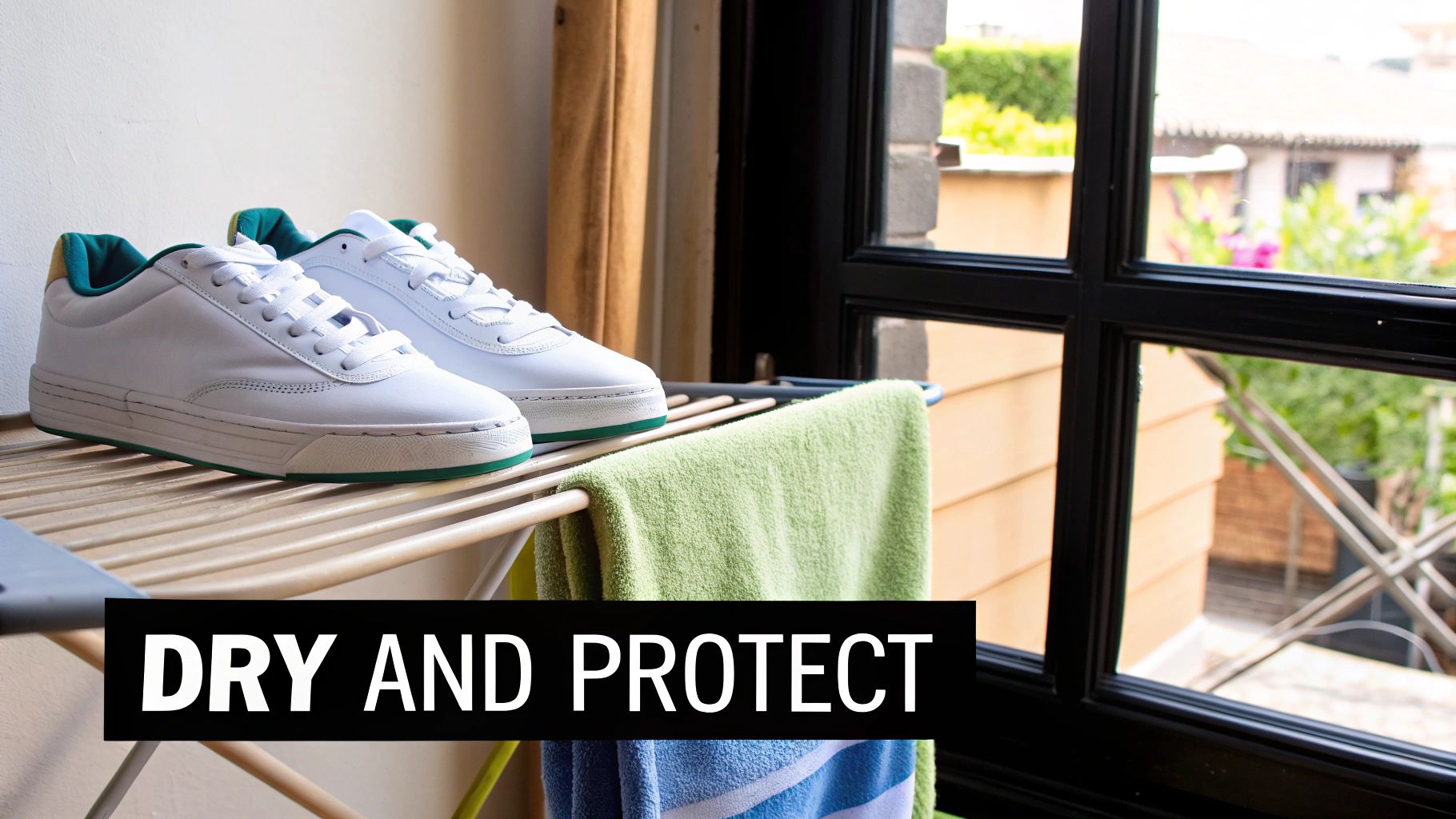
An impeccable cleaning job can be completely undone by an improper drying process. Drying is not a passive final step; it is an active and critical phase that determines the final shape, fit, and longevity of your sneakers. The temptation to accelerate drying with heat is the single most common and destructive mistake, leading to warped uppers, adhesive failure, and ruined footwear.
Patience is the governing principle here. A slow, ambient-temperature air-dry is the only method that preserves the integrity of the materials and the craftsmanship of the shoe.
The Only Safe Method for Air-Drying Sneakers
A direct quote from our workshop: avoid direct heat at all costs. This includes tumble dryers, radiators, hair dryers, and direct sunlight. High temperatures will melt the thermoplastic adhesives used in sneaker construction and can shrink or deform sensitive materials beyond repair.
Instead, select a well-ventilated, indoor location away from direct sunlight. A utility room with a fan or a shaded area is ideal. This allows moisture to evaporate slowly and evenly.
To safely accelerate the process while maintaining the sneaker’s shape, follow this protocol:
- Stuff the Interior: Pack the inside of each shoe with absorbent material like unprinted newspaper or paper towels. This wicks moisture from the interior and provides crucial structural support.
- Use Shoe Trees: For optimal results, cedar shoe trees are unparalleled. They absorb moisture, neutralize odor, and perfectly maintain the sneaker's intended form as it dries.
- Allow Adequate Time: Depending on the material and ambient humidity, a complete air-dry can take anywhere from 8 to 24 hours. Do not rush this process.
A sobering statistic: an estimated 80% of sneakers put through a washing machine suffer some form of shrinkage or damage, primarily due to the high-heat drying cycle. Proper air-drying is the only method that guarantees the preservation of fit and form. For a more detailed analysis, see our complete guide on the best way to dry wet sneakers.
Creating a Barrier Against Future Contaminants
Once your sneakers are completely dry, the final step is proactive protection. This locks in the clean aesthetic and makes future cleaning sessions far more efficient.
A high-quality protective spray creates an invisible, hydrophobic barrier over the material, repelling water and preventing stains from setting into the fibers. For porous materials like suede, canvas, and knit, this step is non-negotiable.
When applying, hold the canister approximately six to eight inches from the shoe and apply a light, even coat over the entire surface. The goal is a consistent layer, not saturation. Allow the treatment to cure for several hours before wear.
Proper Storage for Long-Term Preservation
How you store your sneakers between wears is as critical as how you clean them. Piling them in a closet exposes them to dust, scuffs, and the UV light that causes sole yellowing.
For optimal preservation, store sneakers in a cool, dry place away from direct sunlight, which accelerates the oxidation that yellows soles. Using the original box or clear, stackable shoe boxes protects them from dust while keeping your collection organized.
This complete cycle—clean, dry, protect, and store—is the key to long-term preservation. An alarming 70% of sneaker owners have used damaging household products like bleach, which leads to material degradation in 62% of cases. Professional methods, including proper drying and protection, not only prevent this but can reduce resale value loss by up to 40%. A pristine, well-maintained pair will always command a higher value.
Your Questions Answered by Our Sneaker Care Experts
Over years of professional practice, we've encountered every conceivable footwear issue and answered thousands of questions. The sneaker community is passionate, but it is also rife with misinformation. Here, we address the most common queries with clear, field-tested answers.
This is direct, practical advice from our workshop to you. We aim to debunk myths and provide the technical knowledge you need to care for your collection with professional confidence.
Is It Ever Safe to Put Sneakers in a Washing Machine?
Let's be unequivocal: No, you should never put sneakers in a washing machine. While it may seem like an efficient solution for heavy soiling, it is one of the most destructive things you can do to your footwear. The combination of mechanical agitation, prolonged water saturation, and harsh detergents is catastrophic.
Here is a technical breakdown of what occurs in a wash cycle:
- Adhesive Breakdown: The heat and chemical agents degrade the polyurethane-based adhesives that bond the upper to the midsole, leading to separation.
- Material Warping: Leather, suede, and engineered knits will shrink, stretch, or deform when oversaturated and subjected to heat, permanently altering the shoe's fit.
- Structural Damage: The tumbling action places extreme stress on seams and compromises the shoe's entire structural integrity.
Manual cleaning is the only acceptable method. It provides the control necessary to treat each material according to its specific needs.
What Is the Best Way to Fix Yellowing Soles?
The yellowing of rubber and foam soles is oxidation, a natural chemical reaction caused by exposure to UV light and oxygen. It is particularly noticeable on translucent ("icy") outsoles. While this process cannot be stopped entirely, its effects can be mitigated and, to an extent, reversed.
For significant yellowing, reversal requires a dedicated sole deoxidizing agent and a controlled UV light source—a restoration process rather than a simple cleaning. However, for minor discoloration, a thorough cleaning with a stiff-bristled brush and a quality cleaning solution can often remove surface oxidation and restore much of the original color.
Expert Insight: Prevention is far more effective than reversal. The single best preventative measure is proper storage. Keep your sneakers in their box or in a cool, dark environment to dramatically slow the oxidation process.
How Often Should I Be Cleaning My Daily Rotation?
Frequency depends entirely on wear and environmental conditions. There is no fixed schedule. We adhere to a simple principle: "spot clean as needed, deep clean as required."
For sneakers in your daily rotation, a quick spot clean or dry brush once a week is a highly effective habit. It removes surface dirt before it can become deeply embedded, which makes subsequent deep cleanings far less labor-intensive. A full, top-to-bottom cleaning should be performed only when they are visibly soiled or after significant exposure to contaminants, such as a rainstorm or muddy conditions.
The key is consistency. Proactive, regular maintenance is far superior to infrequent, intensive restoration projects. This approach maintains the appearance of your daily-wear sneakers and significantly extends their lifespan.
At Gold Standard, we believe caring for your footwear is an investment in quality and style. Our premium shoe care products are engineered to deliver professional-grade results at home, ensuring your entire collection remains in pristine condition. Equip yourself with the correct tools by exploring our complete range of cleaning solutions. Find your ideal kit at https://gold-standard-approved.myshopify.com.