

The question seems simple: “What is the best shoe cleaner?” Yet, the market is saturated with products promising a universal, one-bottle solution. This approach is fundamentally flawed. The best shoe cleaner is not a single product; it is a system engineered for the specific material of your footwear.
This is the foundational principle of professional-grade shoe care. Applying a cleaner formulated for durable leather to delicate suede can cause irreversible damage. Similarly, a solution designed for canvas can strip the essential oils from premium dress shoes, leading to cracking and premature aging. Understanding this distinction is the first step toward true footwear preservation.
The Real Answer: It's About Material Science, Not a "Magic" Formula
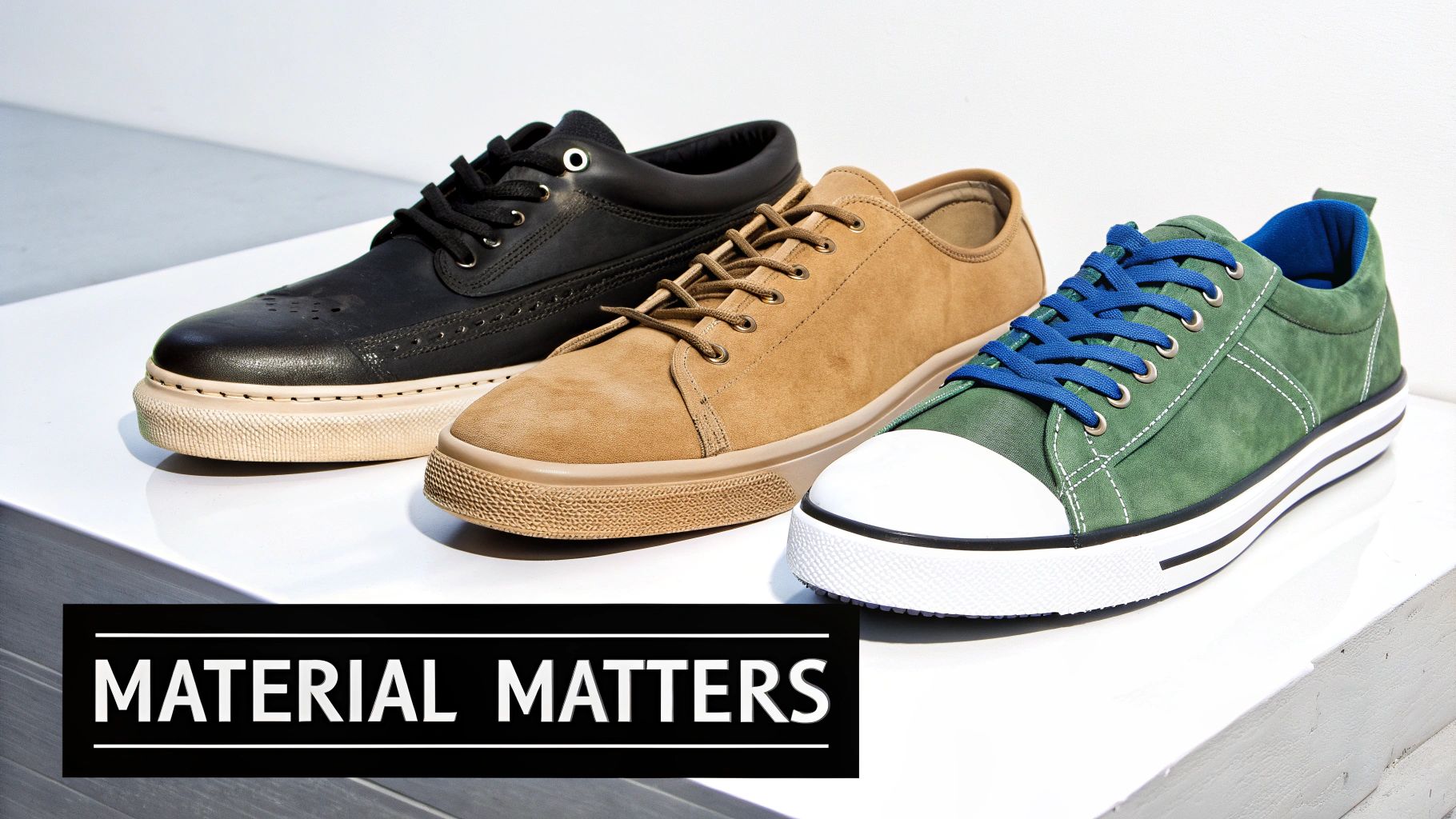
The search for the "best shoe cleaner" often leads to a shelf of all-in-one products. However, this one-size-fits-all methodology is precisely why so many high-quality shoes are inadvertently ruined.
Every material, from porous suede to non-porous rubber, possesses a unique chemical structure and reacts differently to cleaning agents. The logic is simple: you would not use a harsh floor cleaner on a finished wood table. The same principle applies directly to footwear. A cleaner formulated to remove heavy grime from a rubber outsole contains surfactants and solvents far too aggressive for the delicate fibers of a knit upper or the tanned surface of fine leather.
Why Material-Specific Formulas Are Non-Negotiable
Using an incorrect formula is not merely ineffective; it is actively destructive. Common household products like dish soap, generic surface cleaners, or even poorly formulated "all-purpose" shoe cleaners can introduce problems far worse than the original stain.
Consider the material-specific consequences:
- Leather: Harsh chemicals strip essential oils, leaving the material dry, brittle, and prone to cracking. The result is a dull, lifeless finish.
- Suede & Nubuck: Water-based or overly aggressive cleaners will flatten the delicate nap, create permanent water spots, and cause discoloration.
- Knit & Mesh: Improper solutions can weaken synthetic fibers, leading to stretching, pilling, and a loss of the shoe's original shape and structural integrity.
- White Soles: Cleaners containing bleach or high-alkaline ingredients can trigger oxidation in rubber and foam compounds, causing the stubborn, irreversible yellowing that plagues so many sneakers.
The core principle of expert-level shoe care is to match the tool to the material. The "best" cleaner is the one that respects the integrity of the substrate it is treating, removing contaminants without causing collateral damage.
A Quick Reference to Cleaner Types by Shoe Material
To prevent these common errors, use this chart as a starting point for matching the correct cleaner to your footwear. This is the most effective way to prevent damage and achieve professional results.
| Shoe Material | Recommended Cleaner Type | Common Mistake to Avoid |
|---|---|---|
| Smooth Leather | pH-balanced foam or cream cleaner | Using dish soap, which strips natural oils. |
| Suede & Nubuck | Dry kit (eraser and brush) or specialized non-aqueous foam | Applying water directly, causing spots and discoloration. |
| Canvas & Fabric | Gentle, water-based solution with a medium brush | Scrubbing too aggressively, which can fray the fabric. |
| Knit & Mesh | Mild foaming cleaner with a soft bristle brush | Using harsh chemicals that weaken or stretch fibers. |
| Rubber & Soles | All-purpose cleaner with a stiff brush | Using bleach, which can cause permanent yellowing. |
Mastering this pairing is the foundation of proper shoe care. When you respect the material, you preserve the footwear.
Moving Beyond the Quick Fix
The appeal of a single, all-in-one product is understandable. However, it contradicts the basic science of material care. A truly premium cleaning system is built on the reality that different materials require different pH levels, cleaning agents, and application tools.
Investing in material-specific cleaners is not an upsell; it is a prerequisite for preserving the value, appearance, and lifespan of your footwear. With this understanding, you transition from merely cleaning your shoes to actively caring for them—a critical shift in mindset.
What's Really Inside a Premium Shoe Cleaner?
The difference between a top-tier shoe cleaner and a low-quality alternative is not marketing—it is chemistry. A high-quality formula functions like premium skincare: it is engineered to gently remove contaminants without stripping or damaging the underlying material.
Consider the analogy: you would not wash your face with harsh dish soap, as it would strip natural oils and damage your skin. Your footwear, particularly delicate materials like leather and suede, requires the same considered approach. Many mass-market cleaners rely on aggressive detergents that cause more long-term harm than good.
Gentle Surfactants vs. Harsh Detergents
The active ingredient in any cleaner is a surfactant—a compound that reduces the surface tension of water, allowing it to bind with and lift away dirt. However, not all surfactants are created equal. This is where premium formulas distinguish themselves.
- Premium Cleaners: These utilize gentle, often plant-derived foaming agents. They produce a stable, rich foam that encapsulates dirt particles and lifts them from the surface. This provides an effective clean without relying on chemical force, thereby preserving the material's integrity.
- Low-Quality Cleaners: These are often formulated with harsh chemical detergents similar to those found in household cleaning products. Such agents can strip natural oils from leather, fade dyes in canvas, and even weaken the adhesives used in shoe construction.
The global shoe care market is projected to grow significantly, having reached USD 4.74 billion in 2023. Consumers are recognizing the importance of proper maintenance. With 78% of sneaker collectors using dedicated cleaning products, the demand for quality is clear. This is not just about aesthetics; it is about protecting an asset. Premium sneakers can lose 30-50% of their resale value from improper care. You can explore more research on the growing shoe care market to understand the industry's trajectory.
Why pH Balance is a Critical Factor
The pH balance of a cleaner is a crucial, yet often overlooked, detail. Leather, for example, has a naturally acidic pH of approximately 4.5 to 5.5.
Using a cleaner with a high, alkaline pH (like most soaps) induces a chemical shock that disrupts leather's natural balance. This causes the material to become stiff, brittle, and eventually crack, effectively shortening the lifespan of the shoes.
A true premium formula is pH-balanced, engineered to clean without altering the material's natural state. This ensures leather remains soft and supple, while colors on canvas and knit footwear stay vibrant.
The Right Tools Complete the System
Finally, the best cleaner is more than just the solution; it is the entire system. A premium formula is designed to work in concert with the right tools. A soft-bristled brush, for example, is essential. It generates the optimal foam and gently dislodges dirt without scratching or fraying the surface.
Using a stiff, synthetic brush with a superior cleaner is counterproductive; you will not achieve the desired results. The brush is not an accessory; it is an integral component for a professional, damage-free clean. Understanding how gentle agents, pH balance, and the correct tools work synergistically allows you to see past marketing hype and select a system that truly protects your footwear.
A Material-By-Material Guide to Flawless Cleaning
Understanding the science of a good cleaner is the first step. Applying it correctly is the next. To determine the best shoe cleaner for your collection, you must master the proper technique for each material. This is where theory translates into professional-level results.
Every material requires a distinct approach. Applying a single method to leather, canvas, and suede is a fast path to ruining a valued pair of shoes. Let's break down the field-tested methods for the most common materials.
The entire process depends on three variables: a quality formula, the right tool, and the proper method.
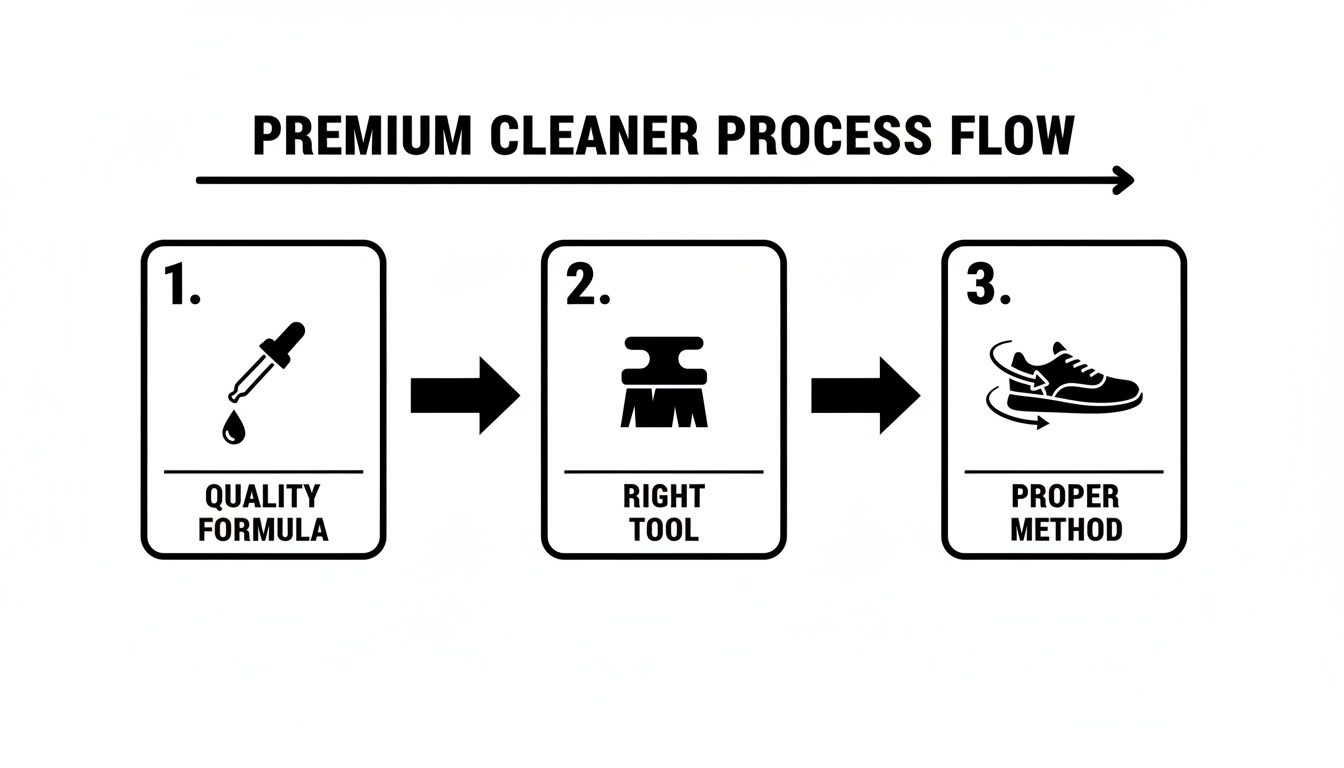
A premium cleaner is only as effective as the brush and technique used with it.
For Smooth Leather
Leather care is about balance. The objective is to remove surface grime without stripping the natural oils that maintain its suppleness and rich finish.
- Prep the Surface: First, use a soft, dry horsehair brush to remove loose dirt and dust. This prevents abrasives from being ground into the leather during wet cleaning.
- Apply Cleaner: Apply a small amount of a pH-balanced foaming cleaner, such as the Gold Standard Premium Shoe Cleaner, onto a damp, soft-bristled brush. Never apply cleaning solution directly to the leather.
- Clean Gently: Work the foam into the leather using small, circular motions. The foam will lift dirt from the grain. Be methodical and allow the cleaner to do the work; do not use excessive force.
- Wipe and Dry: Immediately wipe away all foam and residue with a clean microfiber towel. Allow the shoes to air dry completely, away from direct heat or sunlight.
After cleaning, always apply a quality leather conditioner to replenish moisture, followed by a protectant spray to guard against future contaminants.
For Suede and Nubuck
This is where most mistakes are made. Suede and nubuck are extremely sensitive to moisture. The correct approach is to begin with a dry cleaning method. Reaching for a liquid cleaner first is the single most common error.
- Step 1: Dry Brush. This is the most critical step. Use a dedicated suede brush to gently brush the nap in a single direction. This action removes most surface dirt and revitalizes the texture.
- Step 2: Erase Stains. For isolated, stubborn marks, use a suede eraser. Rub it over the spot as you would a pencil eraser; its friction creates particles that lift embedded grime without liquid.
- Step 3: Targeted Cleaning (If Necessary). For deep-set stains, and only as a last resort, use a specialized suede cleaner. Apply it sparingly to a brush, wipe away immediately, and let it dry completely before brushing the nap again to restore its texture.
For suede, 90% of cleaning should be dry. Water is the final option, not the first. This discipline distinguishes professional results from amateur mistakes—and a saved pair of shoes from a ruined one.
For Canvas and Knit
Materials like canvas, Primeknit, and Flyknit are highly absorbent. Improper handling can lead to fraying, stretching, or loss of shape. The technique must be thorough enough to remove dirt yet gentle enough to preserve the fabric's integrity.
- Dry Brush and Prep: As with leather, begin by brushing off loose debris. For knit shoes, striking the soles together can help dislodge dirt from within the weave.
- Create a Lather: Apply a gentle foaming cleaner to a soft-bristled brush dampened with cool water. Work the brush in circles to generate a rich foam.
- Scrub with Care: Gently scrub the entire upper, focusing on stained areas. The soft bristles will penetrate the fabric's weave without causing pilling or snags.
- Wipe and Air Dry: Use a microfiber towel to blot and wipe away the soiled foam. To facilitate drying and maintain shape, stuff the shoes with paper towels to absorb internal moisture. Allow them to air dry.
For Rubber Soles and Midsoles
Soles require a more robust approach, but that does not mean using harsh chemicals, which can cause yellowing or make the rubber brittle.
A quality all-purpose cleaner paired with a medium-to-stiff bristle brush is the ideal combination. The stiffer bristles provide the necessary friction to remove scuffs and ground-in dirt from treads and textured sidewalls. Work the cleaner into the sole, scrub thoroughly, and wipe clean for a crisp finish that enhances the entire shoe's appearance.
Moving Beyond Cleaning to Odor and Preservation
Achieving a clean appearance is only half the task. Expert-level care addresses the invisible factors that degrade footwear from the inside out: odor-causing bacteria and the slow decomposition of materials. Masking odor with fragrance fails to address the root cause.
The true source of persistent odor is bacteria. As it proliferates inside footwear, it produces odors that are difficult to eliminate. This is a significant issue for athletes, as intense activity creates an ideal breeding ground for microbes. The shoe deodorizer market has grown to USD 437.67 million because this is a prevalent problem. Over 60% of athletes cite odor as a primary reason for retiring performance footwear, and bacteria is responsible for 70% of these odors.
The only effective solution is to eliminate the source. Products formulated with natural, antimicrobial ingredients are far more effective at neutralizing the problem permanently. To understand the market forces at play, you can explore the full research on shoe deodorizer market dynamics.
The Science of Lasting Freshness
To restore a neutral, out-of-the-box scent, you must eliminate bacteria, not just mask its byproduct. This is where a formula's science is critical. Instead of adding heavy perfumes, a premium deodorizing spray uses plant-based antimicrobials to safely destroy odor-causing microbes on contact.
This approach provides genuine, long-lasting freshness because the source of the smell has been eradicated. It is the difference between spraying air freshener in a stale room and opening a window to let in fresh air. One temporarily covers the problem; the other solves it.
Preservation Strategies for Longevity
Beyond odor control, long-term preservation depends on creating the right environment for your shoes when not in use. Small, consistent habits significantly impact the lifespan and appearance of your footwear collection.
True footwear longevity is not achieved through occasional deep cleans. It is built through a disciplined routine of post-wear care that protects materials from moisture, maintains shape, and defends against future damage.
Adhere to these fundamental preservation steps to add years to the life of your collection:
- Proper Air-Drying: Never place wet or damp shoes near a heater, radiator, or in direct sunlight. This can warp materials, melt adhesives, and cause leather to crack. Allow footwear to air dry naturally in a well-ventilated area.
- Use Quality Shoe Trees: Cedar shoe trees are essential. They serve two functions: absorbing residual moisture and odors from the lining, and helping the shoe maintain its original shape, preventing creasing and collapse.
- Apply a Protective Barrier: After your shoes are clean and dry, apply a quality protective spray. This creates an invisible shield that repels water and prevents future stains from setting, simplifying subsequent cleanings.
Common Cleaning Mistakes That Ruin Footwear
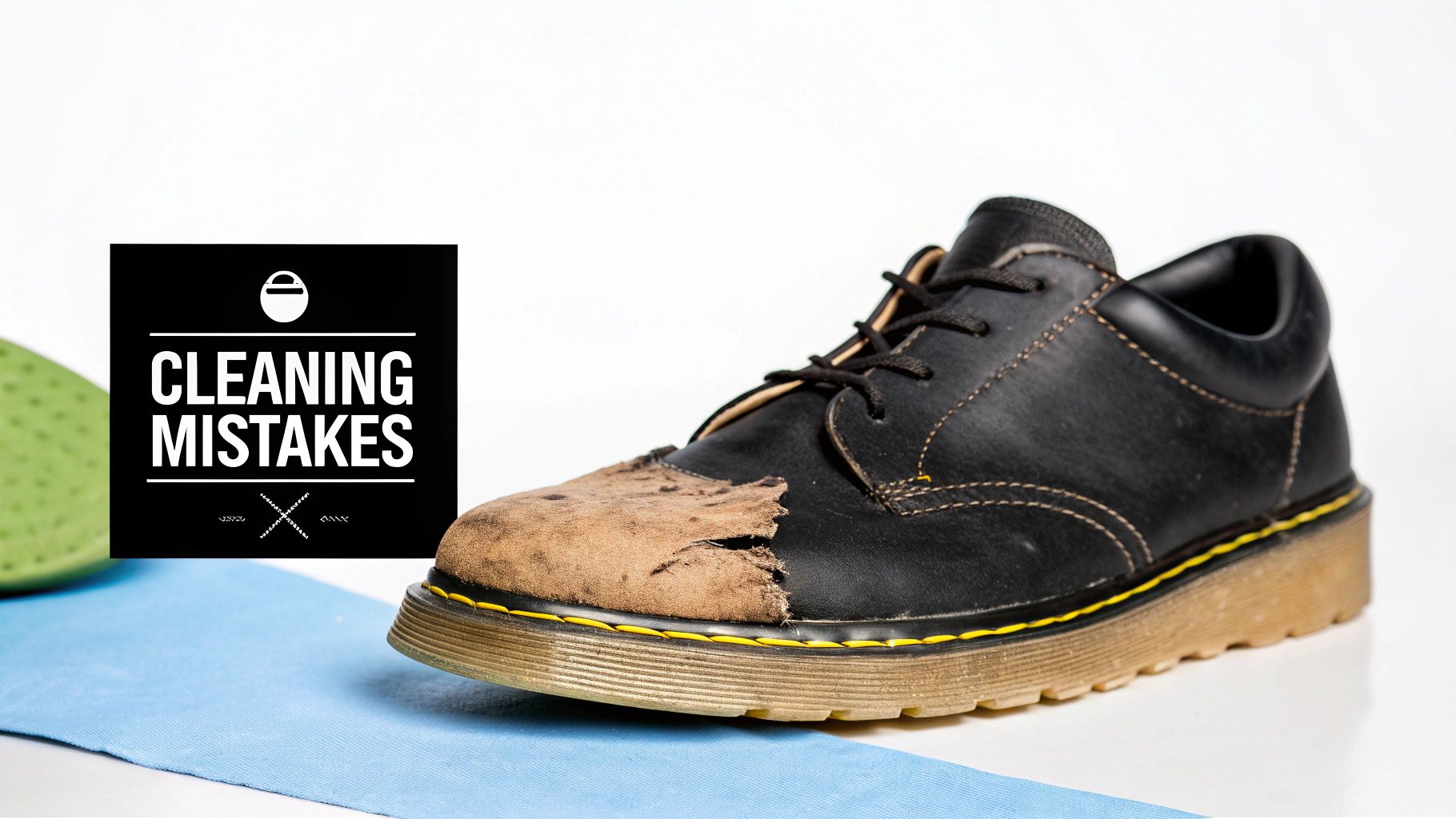
Knowing the correct methods is only half the equation. Knowing what to avoid is equally critical. More shoes are destroyed by well-intentioned but misguided "hacks" than by normal wear and tear. These common mistakes can cause irreversible damage, turning a simple cleaning session into a costly error.
The desire for a quick fix often leads to poor decisions. The internet is filled with DIY tips that ignore the material science of modern footwear. Avoiding these blunders is the first step in protecting your investment.
The Danger of Household Chemicals
The convenience of using an all-purpose cleaner or bleach from under the sink is a dangerous temptation. These products are formulated for hard, non-porous surfaces, not the complex leathers, suedes, and knits used in footwear.
- Bleach on White Soles: This is a classic mistake. While bleach may provide a temporary whitening effect, it initiates an oxidation process in the rubber. The result is permanent, unsightly yellowing that no amount of cleaning can reverse.
- Abrasive Household Cleaners: Products containing grit or harsh solvents will strip the protective finish from smooth leather, leaving it dull and susceptible to cracking. On canvas or mesh, these same cleaners will fray and weaken the fibers.
The Washing Machine Myth
Placing shoes in a washing machine is a high-risk gamble. The combination of water submersion, high temperatures, and mechanical tumbling is a recipe for catastrophic failure.
A washing machine subjects shoes to extreme stress. The heat can melt the adhesives bonding the upper to the midsole, causing separation. The tumbling action can warp the shape of structured materials, particularly synthetics and delicate knits.
The professional shoe cleaning market is expanding rapidly because botched home cleanings are common. Data indicates 72% of sneaker owners have damaged shoes through improper cleaning methods. A professionally cleaned pair of sneakers can also command a 15-30% higher price on the resale market. Getting it right the first time is a sound investment. You can learn more about the shoe care service industry trends to see the data behind this growth.
Rushing the Drying Process
Even with a perfect cleaning technique, you can ruin your shoes in the final step. Many people place wet shoes near a radiator, in direct sunlight, or use a hairdryer to speed up the process. This intense, direct heat is destructive.
It will shrink and crack leather, melt adhesives, and make rubber soles brittle. The only safe method is to allow footwear to air dry naturally at room temperature, away from direct heat sources. Patience in this final stage is crucial for preserving your shoes.
How to Choose the Right Shoe Cleaner
Armed with the principles of professional shoe care, you can now evaluate any cleaner with an expert eye. The search for the "best shoe cleaner" concludes when you realize you are not looking for a single product, but a complete care system founded on material science.
This is not a sales pitch. It is a framework for investing wisely in the longevity of your footwear. By applying these standards, you can confidently select a system that delivers professional results and protects your collection.
Your Four-Point Inspection Checklist
When evaluating a product, use this checklist. A premium system will meet every one of these criteria. This is how you distinguish a product that merely cleans from one that truly cares for your footwear.
- 1. Material Compatibility: First, does the product specify which materials it is safe for? A vague "for all shoes" label is a significant red flag. Reputable brands are specific about applications for leather, suede, nubuck, canvas, and knits, demonstrating they have conducted the necessary material research.
- 2. High-Quality, Gentle Ingredients: Look beyond the marketing to the formulation. Does the brand use gentle, naturally derived ingredients and pH-balanced formulas? Or is it a harsh detergent in disguise? This is the primary distinction between a cleaner that preserves your shoes and one that degrades them over time.
- 3. The Right Tools are Included: The solution is only one part of the equation. A top-tier kit must include the appropriate tools, such as a soft-bristled brush for general cleaning and perhaps a specialized brush for suede. The tools are not an afterthought; they are a critical component of the system.
- 4. Clear Educational Support: Does the brand provide clear instructions on how to use its products effectively? A company confident in its system will offer expert guidance on techniques for different materials. This demonstrates authority in shoe care, not just a desire to sell products.
When you prioritize these four pillars—compatibility, quality ingredients, proper tools, and expert support—you transition from buying a product to investing in a proven system designed to maintain your footwear for the long term.
Choosing the right cleaner eliminates the guesswork and risk of accidental damage, allowing you to enjoy your collection with confidence. It is the final piece of the puzzle in mastering the art of shoe care.
Ready to invest in a system that meets every one of these professional standards? The Gold Standard Premium Shoe Cleaner Kit was developed for enthusiasts who refuse to compromise on quality. It's time to get the results your collection deserves.