

Protecting your footwear investment begins long before you step outside. It starts with establishing a defensive barrier against the elements. A high-performance stain and water repellent for shoes is the cornerstone of any effective care regimen, creating an invisible shield that forces liquids to bead and roll away before they can cause lasting damage. This isn't about aesthetics alone; it's about preserving the structural integrity, color, and texture of the materials.
The Foundation of Footwear Preservation
Whether you've invested in premium leather dress shoes or sought-after sneakers, proactive protection is a non-negotiable first step. Consider it essential maintenance, not an optional add-on. A few minutes spent applying a repellent can prevent hours of corrective cleaning and mitigate irreversible damage, extending the life and appearance of your footwear for years.
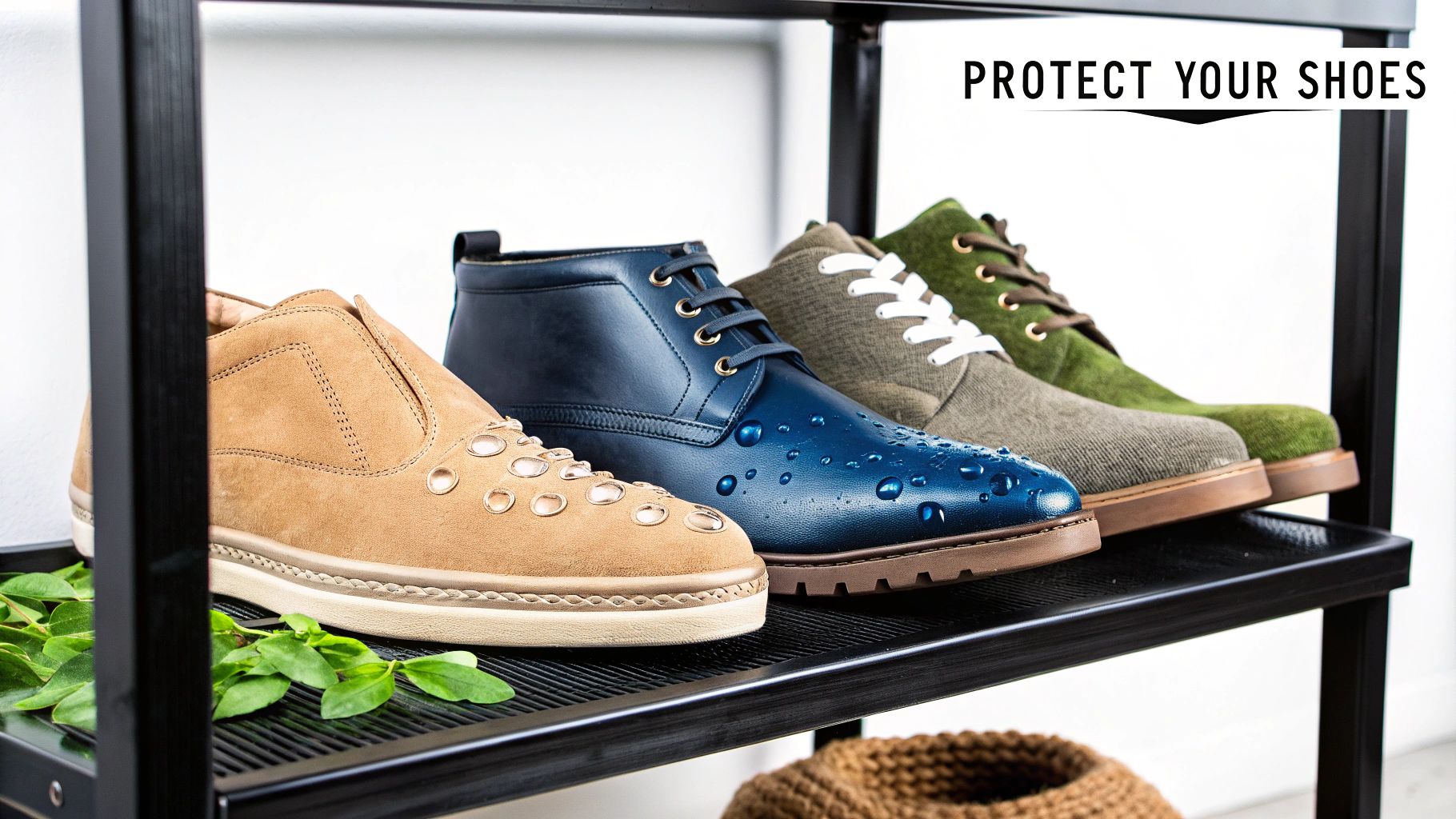
The Science of Repellency: How It Works
A quality repellent forms a hydrophobic layer on the shoe's surface. This microscopic barrier is engineered to be breathable. It effectively blocks water, coffee, or mud from penetrating and saturating the material's fibers while allowing air and internal moisture vapor to escape. This is a critical function for materials like leather, suede, and modern performance knits, which require airflow to maintain their intended structure, flexibility, and comfort.
Without this shield, you are in a constant state of damage control. A single liquid spill on unprotected suede can result in a permanent stain. Repeated exposure to moisture will degrade adhesives, warp leather, and create an environment for discoloration.
The Growing Demand for Superior Protection
The footwear industry and educated consumers alike recognize the importance of this foundational step. Protective sprays and water-repellent treatments represent a significant and growing segment of the global shoe care market as more individuals seek to safeguard their investments. This is particularly true among collectors of high-end sneakers and owners of fine leather footwear. You can explore further analysis from the global shoe care market.
Expert Takeaway: The function of a repellent is not to make footwear impervious to submersion. Its purpose is to provide superior resistance to accidental spills and environmental moisture, affording you critical time to address contaminants before they set. This preserves both the aesthetic and the breathability of the original material.
Using a stain and water repellent for shoes is your first and most effective line of defense, ensuring your footwear is prepared for daily wear.
Matching Repellent Technology to Shoe Material
Applying an inappropriate formula to a specific material is one of the most common and damaging mistakes in footwear care. Using a heavy-duty proofer designed for work boots on delicate suede will mat the nap and compromise its texture. Conversely, a lightweight suede spray will offer insufficient protection for smooth, full-grain leather.
This is not a search for a single, universal solution. It is a matter of understanding material science and pairing it with the correct protective chemistry.
Absorbent vs. Non-Porous Materials: A Critical Distinction
The primary factor in selecting a repellent is the material's porosity—its natural tendency to absorb liquid. This divides footwear into two main categories.
-
For Absorbent Materials (Suede, Nubuck, Canvas, Knit, Mesh): These materials have a high rate of absorption. The ideal repellent penetrates the fibers without oversaturating them or creating a stiff, unnatural coating. A fine-mist aerosol is often superior for this application, delivering a light, even coat that protects individual fibers while maintaining the material's natural texture and flexibility.
-
For Non-Porous & Less Absorbent Materials (Smooth Leather, Synthetics): Materials like full-grain leather or synthetic panels require a formula that bonds effectively to the surface, creating a durable film. Because they absorb very little, the repellent must adhere without leaving a greasy residue or an artificial-looking gloss.
Incorrectly matching the formula to the material has direct consequences. Applying a heavy, film-forming repellent to performance knit sneakers seals the weave, trapping moisture and defeating the material's primary design feature: breathability.
The Evolution of Specialized Formulations
The era of one-size-fits-all shoe sprays is over. Discerning consumers and footwear enthusiasts now demand products specifically formulated for their gear, often with an emphasis on performance without harsh chemicals. This trend toward specialized care is well-documented within the industry. For a deeper analysis, see this in-depth shoe care market analysis.
Field Note: Do not neglect the midsoles. White rubber and foam midsoles require a non-yellowing formula. Certain chemical propellants and active ingredients in lesser repellents can oxidize over time when exposed to UV light, causing a permanent, unsightly yellow tint.
The Gold Standard Water & Stain Repellent was developed to address this need for versatile, material-safe protection. It is engineered to form a durable, fully breathable shield suitable for a wide range of materials, from delicate suedes to advanced synthetics, without altering the color or hand-feel.
Proper material identification is the foundation of effective protection.
Repellent Compatibility by Shoe Material
| Shoe Material | Recommended Repellent Type | Application Notes & Considerations |
|---|---|---|
| Suede & Nubuck | Fine Mist Aerosol (Breathable) | Apply light, even coats from 6-8 inches away. Avoid oversaturation to prevent darkening or stiffening the nap. |
| Canvas & Cotton | Pump or Aerosol Spray | These materials are highly absorbent. Two light coats provide better coverage and absorption than one heavy coat. Ensure full drying between coats. |
| Full-Grain/Smooth Leather | Pump Spray, Cream, or Wax | The objective is to create a durable surface barrier. Test on an inconspicuous area first. Buff lightly after application if required to restore luster. |
| Knit & Mesh | Fine Mist Aerosol (Breathable) | The primary goal is protecting fibers without clogging the open weave. A non-yellowing formula is critical for light-colored materials. |
| Synthetics & Faux Leather | Pump or Aerosol Spray | These non-porous materials require a repellent that bonds to the surface. Avoid oil-based products which can degrade some synthetic compounds. |
Selecting the correct repellent is the most critical step. Once the formula is matched to the material, you can proceed with a professional-grade application.
Professional Application Technique for Complete Protection
The performance of any repellent is directly tied to the quality of its application. This is a technical process where precision and patience yield superior results. We have refined a field-tested method that ensures a flawless, durable, and invisible barrier.
The process begins with an immaculate surface. Applying a repellent over dirt, dust, or oils is ineffective. The formula must bond directly to the shoe's fibers; any surface contamination creates a weak point in the protective barrier and effectively seals in the grime.
Before application, ensure the footwear is not just clean, but completely dry. Trapping moisture beneath a repellent layer can lead to material degradation and discoloration. For new shoes, a thorough wipe with a clean microfiber cloth is sufficient to remove any factory residues.
Mastering the Two-Coat System
The objective is total, even coverage, not saturation. Drenching footwear in a single, heavy coat is counterproductive and often results in dark spots, material stiffness, or a chalky residue upon drying. A two-coat system is the professional standard for achieving comprehensive protection without oversaturation.
-
Maintain Correct Distance: Hold the aerosol can or spray bottle upright, approximately 6 to 8 inches from the shoe's surface. Too close, and the material becomes saturated. Too distant, and the repellent atomizes and evaporates before it can bond effectively.
-
Employ a Sweeping Motion: Apply the repellent using a steady, continuous sweeping motion. This ensures a light, uniform mist rather than a concentrated application in one area.
-
Address All Vulnerable Points: Pay meticulous attention to seams, welts, tongues, and the area around the eyelets. These are common points of moisture ingress.
The Crucial Curing Phase
Following the first light coat, allow the repellent to cure. This is a chemical process where the carrier solvents evaporate, leaving the active protective polymers to bond with the shoe's fibers.
Expert Insight: The most frequent error is expediting the drying process. Applying artificial heat from a hairdryer or radiator can melt adhesives, warp materials, and compromise the shoe's construction. Patience is paramount.
Allow the first coat to dry for at least 20-30 minutes in a well-ventilated space, away from direct heat or sunlight. Once it is dry to the touch, apply a second light coat using the same technique to ensure complete coverage.
After the second coat, the full curing process begins. We recommend allowing the footwear to cure for a full 24 hours before wear. This allows the protective barrier to achieve maximum strength and durability. Our Gold Standard Water & Stain Repellent is formulated for this professional method, creating a resilient, breathable barrier without altering the material's original properties.
Maintaining the Protective Barrier
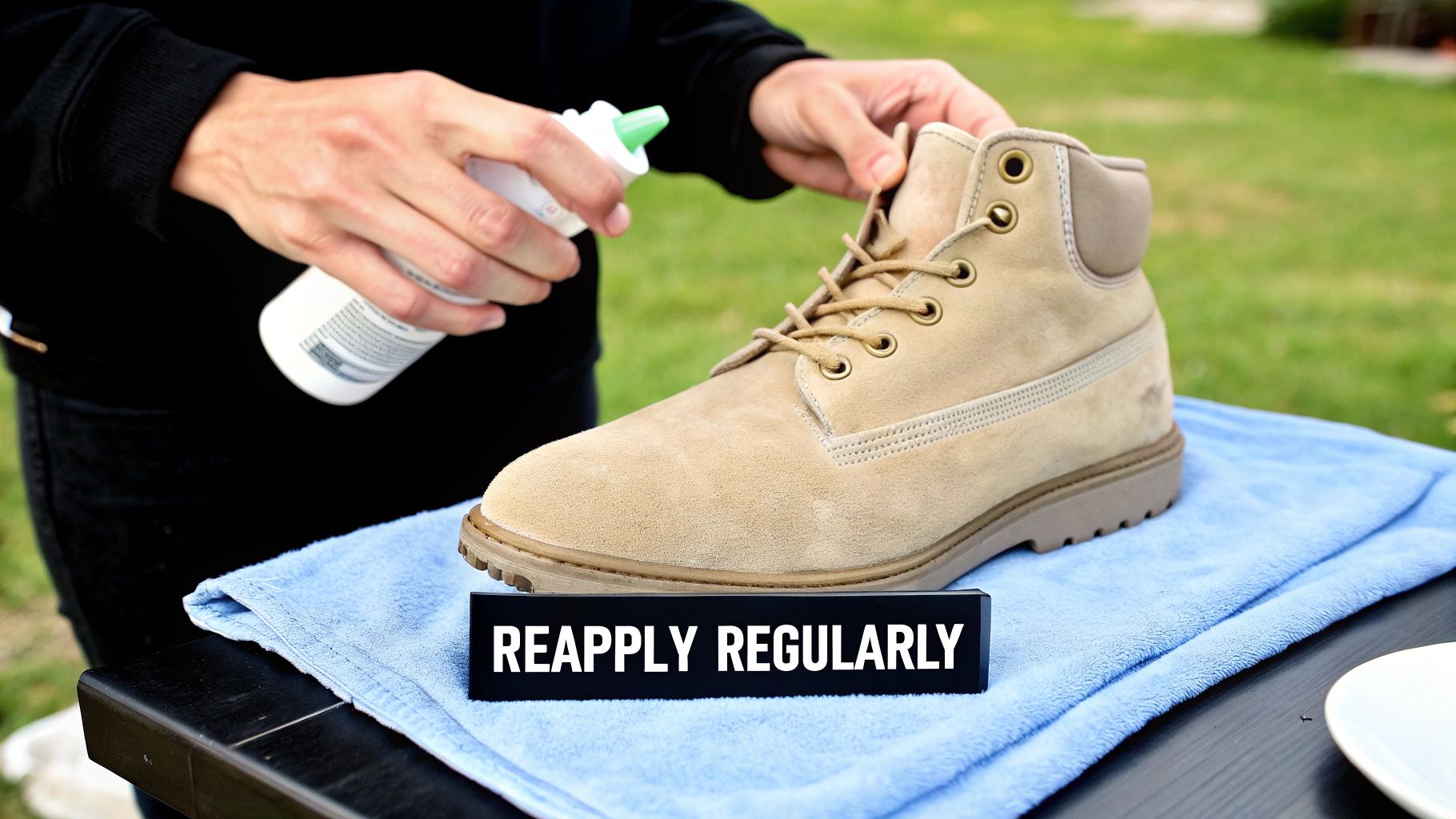
Applying a repellent is not a one-time event; it is a crucial component of a regular maintenance schedule. The longevity of the protective barrier depends on frequency of wear, environmental conditions, and the surfaces encountered. The key is to reapply before the barrier fails.
A pair of suede boots worn daily in inclement weather will require more frequent retreatment than leather dress shoes worn occasionally indoors. Abrasion from walking, exposure to moisture, and general wear all contribute to the gradual degradation of the protective layer.
How to Identify a Failing Barrier
Your footwear will provide clear indicators when retreatment is necessary. The primary sign is how it interacts with water.
When the repellent is fully effective, water will bead into distinct, tight spheres on the surface and roll off. As the protection degrades, beading will become less pronounced. Water may begin to "sheet" or flatten out before slowly absorbing. If liquid darkens the material on contact, the barrier is gone.
The Water Test: To verify the integrity of the repellent, apply a single drop of water to an inconspicuous area, such as the side of the heel. If it beads and rolls away, protection is active. If it begins to absorb, it is time to clean and re-treat the shoes.
This proactive mindset is driving significant growth in the footwear aftercare market. The global shoe care market continues to expand as consumers recognize maintenance as essential to protecting their investments. You can learn more about this growing trend in footwear preservation.
The Correct Reapplication Process
Simply spraying a new layer over a worn, dirty one is ineffective. To ensure a strong bond and restore full protection, you must start with a clean surface.
-
Perform a Light Cleaning: Remove surface-level dirt, dust, and grime. A quality cleaner like the Gold Standard All-Purpose Shoe Cleaner used with a soft brush will refresh the surface without aggressively stripping the remaining protective layer.
-
Ensure the Surface is Completely Dry: As with the initial application, the shoes must be 100% dry before reapplying repellent. Trapping moisture will inhibit the curing process and can lead to discoloration.
-
Apply a Single Maintenance Coat: Once clean and dry, apply one light, even coat of your stain and water repellent for shoes. A full two-coat application is generally unnecessary unless a deep cleaning has fully stripped the original barrier. Allow a full 24-hour cure time.
Adhering to this maintenance cycle—typically every 4-6 weeks for frequently worn shoes, or as indicated by the water test—will keep your footwear in a constant state of readiness.
Troubleshooting Common Application Errors
Even with careful application, issues can arise. Most common mishaps are easily correctable and serve as valuable lessons in refining your technique. These problems almost always stem from errors in application distance, volume, or surface preparation.
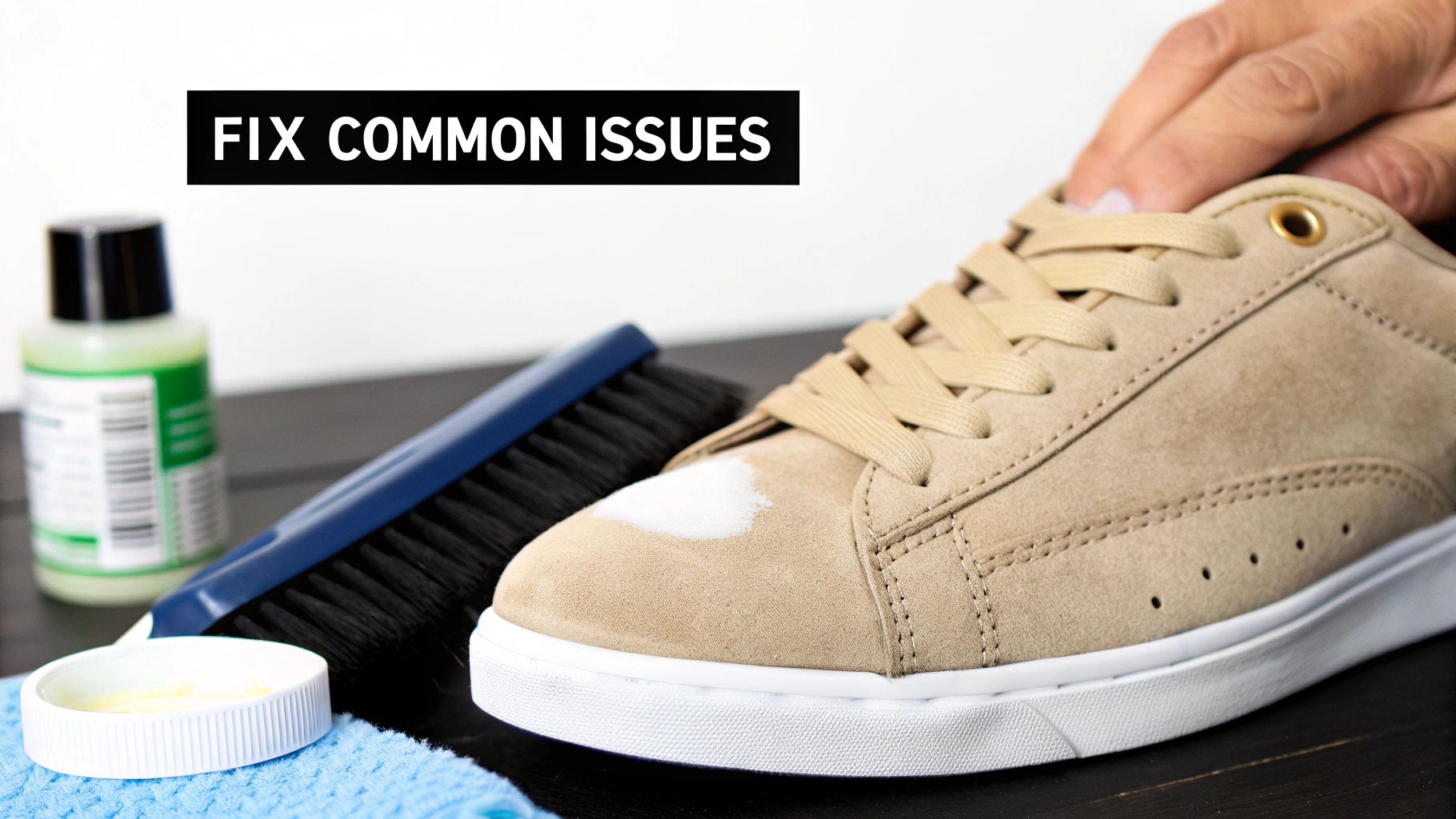
Correcting White Residue or a Powdery Haze
This is the most frequent issue. A chalky, white film on the shoe's surface after drying is a clear sign of oversaturation. The repellent was applied too heavily or from too close a distance, causing it to pool and dry on the surface instead of bonding with the fibers.
Solution: Use a clean, soft-bristled brush (a horsehair brush is ideal) to gently buff the affected areas. This action will break up and remove the excess, dried product without abrading the material. For stubborn spots, a microfiber cloth lightly dampened with water can be used to lift the final traces.
Addressing Dark Spots or Uneven Finish
Dark patches, particularly on light-colored suede or nubuck, occur when the spray is applied unevenly, causing the solvents to saturate one area more than another.
Solution: Patience. Do not attempt to fix it while wet. Allow the shoes to dry for the full 24-hour curing period. In most cases, the dark spots will disappear as the carrier solvents fully evaporate. If a spot remains, use a suede eraser and a nap brush to gently lift the fibers and restore a uniform color and texture.
Field Note: Prevention is the best strategy. Two light, even coats will always outperform one heavy, saturated application. This is the key to achieving the invisible, high-performance shield you expect from a premium stain and water repellent for shoes.
What to Do if Shoes Feel Stiff After Treatment
If the material feels stiff or rigid after drying, it is another symptom of over-application. The excess product has created a hard film on the surface, reducing the material's natural flexibility.
Solution: Wear the shoes. The natural flexing and articulation of the material during a few hours of normal wear is typically all that is needed to break up the excess repellent and restore the shoe's original feel. This is particularly effective for canvas, knits, and most leathers. With this knowledge, you can protect your entire collection with confidence.
Frequently Asked Questions from an Expert
As footwear care specialists, we address numerous questions regarding material protection. Here are clear, concise answers to the most common inquiries.
Can I use one repellent for all my shoes?
We strongly advise against it. Different materials possess vastly different physical and chemical properties. A heavy, silicone-based formula designed for durable work boots can ruin delicate materials. On suede, it can mat the nap; on performance knits, it can clog the weave, trapping moisture and defeating breathability—the exact opposite of the intended outcome.
The Bottom Line: Always match the repellent to the specific material. This ensures the protective barrier works in harmony with the shoe's construction, preserving its intended performance and aesthetic.
How do I know if the repellent is still effective?
A simple water test provides a definitive answer.
Apply a few drops of water to an inconspicuous area of the shoe, such as the side of the heel.
- Effective Protection: The water will form distinct, tight beads that roll off the surface without leaving a trace of moisture.
- Failed Protection: The water will flatten out, darken the material, and begin to absorb. This indicates the barrier has degraded and it is time to clean and re-treat the footwear.
Will a repellent make my shoes completely waterproof?
No. This is a critical distinction. A quality repellent provides powerful water resistance, not waterproofing.
The technology is designed to create a breathable, hydrophobic surface. This barrier causes liquids to bead up and roll off, protecting against rain, puddles, and spills. It is fundamentally different from a non-breathable waterproof membrane, which seals the foot inside and traps moisture vapor. A good repellent protects footwear from daily hazards while allowing materials like leather, suede, and mesh to breathe, which is essential for long-term condition and comfort.
For professional-grade, breathable protection suitable for a wide range of materials, trust the Gold Standard Water & Stain Repellent. It provides a durable shield without altering the color, texture, or feel of your favorite footwear. Protect your collection today.