

A premium sneaker deodorizer is not a fragrance. It is an essential preservation tool, engineered to neutralize the core causes of odor—bacteria and moisture—before they compromise the integrity of your footwear. It is a critical component of any systematic care regimen, protecting your investment from the inside out.
Why Your Sneakers Need More Than Just Airing Out
If you've invested in quality footwear, your primary goal is preservation. A common but critical error is treating shoe odor as a minor inconvenience solvable by ventilation. The reality is that a persistent smell is a clear indicator of a deeper issue: an active microbial environment that can permanently degrade the valuable materials constructing your favorite pairs.
Consider the interior of your sneaker as a micro-ecosystem. Each wear introduces two key elements: warmth from your body and moisture from perspiration. This combination creates an ideal breeding ground for bacteria, which flourish in the dark, damp confines of a shoe.
The Science of Sneaker Degradation
What is that odor? It is the metabolic byproduct of bacteria consuming the sweat and skin cells left behind in your footwear. Simply airing out a pair may temporarily reduce the scent, but it does nothing to address the root cause. The bacteria remain, dormant, waiting for the reintroduction of warmth and moisture to resume proliferation.
This persistent microbial activity causes more than just an unpleasant smell. Over time, it leads to tangible damage:
- Material Breakdown: The acidic waste produced by bacteria can slowly degrade delicate materials like premium leather, suede, and advanced technical knits. This weakens the materials, making them brittle and prone to cracking.
- Adhesive Failure: Trapped moisture can compromise the integrity of the cements and adhesives bonding the components of your sneaker. This can lead to sole separation and other structural failures.
- Permanent Odor Saturation: Once bacteria have penetrated deeply into porous materials like foam insoles and fabric liners, the resulting odor can become nearly impossible to fully eradicate.
A high-quality sneaker deodorizer is not a fragrance or a mask. It is a maintenance tool designed to neutralize this harmful ecosystem, protecting the structural integrity and longevity of your footwear investment.
Moving Beyond Surface-Level Fixes
Any true footwear care specialist understands that protecting a collection requires a proactive, scientific approach. A purpose-built sneaker deodorizer is engineered to disrupt this destructive cycle. Instead of merely masking the scent, it works to neutralize odor-causing bacteria at their source.
In this guide, we provide the expert, field-tested advice required to protect your footwear from the inside out. We will analyze the science behind shoe odor, break down the different types of deodorizers available, and provide a professional framework for maintaining your collection in prime condition. It is time to stop reacting to odor and start actively preserving your investment.
Understanding What Causes Shoe Odor
To eliminate an odor, you must first understand its origin. Most people attribute it to sweat, but this is an incomplete picture. The truth is, the perspiration from the approximately 250,000 sweat glands in your feet is virtually odorless on its own. The problem begins when that moisture becomes trapped inside your footwear.
The interior of a sneaker functions as an ideal incubator: it is dark, warm, and damp—the precise conditions bacteria require to thrive. These microbes are the true source of odor. They metabolize the fats and proteins present in your sweat, breaking them down and releasing volatile organic compounds as waste. That is the distinct malodor of a well-worn shoe, not the sweat itself.
This is precisely why simply "airing out" shoes is an ineffective long-term strategy. While it may dry the interior temporarily, it does not eliminate the established bacterial colony. The moment you re-insert your foot, you reintroduce the necessary elements to restart the odor-producing cycle.
How Different Materials Affect Odor
Not all sneakers manage odor equally. The materials used in their construction play a significant role in how much moisture is trapped and, consequently, how much odor is produced. A universal approach to deodorization is insufficient, as the needs of a classic leather court shoe are entirely different from those of a modern knit runner.
Understanding your materials is the foundation of proper sneaker care. Here is a brief analysis of how common sneaker materials influence odor retention:
- Synthetic Knits and Mesh: Materials like polyester and nylon are lightweight and flexible, but their synthetic fibers are oleophilic—meaning they readily absorb oils from your skin. These oils serve as a nutrient source for bacteria, making these materials notorious for retaining odors.
- Canvas and Cotton: These natural fibers are highly absorbent. While they may feel breathable initially, they soak up perspiration and retain it for extended periods. This creates a persistently damp environment where bacteria can multiply, and their slow drying time provides an ample window for this to occur.
- Leather and Suede: Genuine leather is naturally porous, allowing some moisture to escape. However, many modern leather sneakers are lined with synthetic materials that trap perspiration against the foot. Suede, with its textured surface, can hold moisture and is challenging to clean, making it a potential hotspot for bacteria if not managed correctly.
The core principle of footwear preservation is managing the internal environment. Odor is a direct indicator that the balance has tipped in favor of material-degrading microbes.
Consumer awareness of this is growing, and the demand for effective solutions is increasing. The global shoe deodorizer market was valued at USD 436.8 million in 2023 and is projected to reach USD 601.1 million by 2030. This growth is driven by discerning consumers and athletes who understand that protecting their investment means controlling the internal environment of their footwear. You can find more insights on the shoe deodorizer market growth and trends on researchandmarkets.com.
Ultimately, eliminating sneaker odor is not about masking a scent. It is about arresting the biological process that creates it. Once you understand the interplay between sweat, bacteria, and your sneaker's materials, you can shift from a reactive approach to one of proactive preservation.
Choosing the Right Deodorizer for Your Sneakers
Selecting the appropriate sneaker deodorizer is a strategic decision based on the material composition of your collection. You would not use the same cleaning agent on delicate suede as you would on a durable rubber sole; the same logic applies to internal care. The deodorizer's mechanism of action must be matched to the specific requirements of your footwear.
The challenge comes down to understanding how different products work. Some materials are prone to bacterial colonization and require direct neutralization, while others primarily need moisture management. An incorrect choice will not only fail to resolve the odor but could potentially damage your footwear.
At the core of the issue is the combination of perspiration and bacteria. It is a simple but potent formula that any effective deodorizer must disrupt.
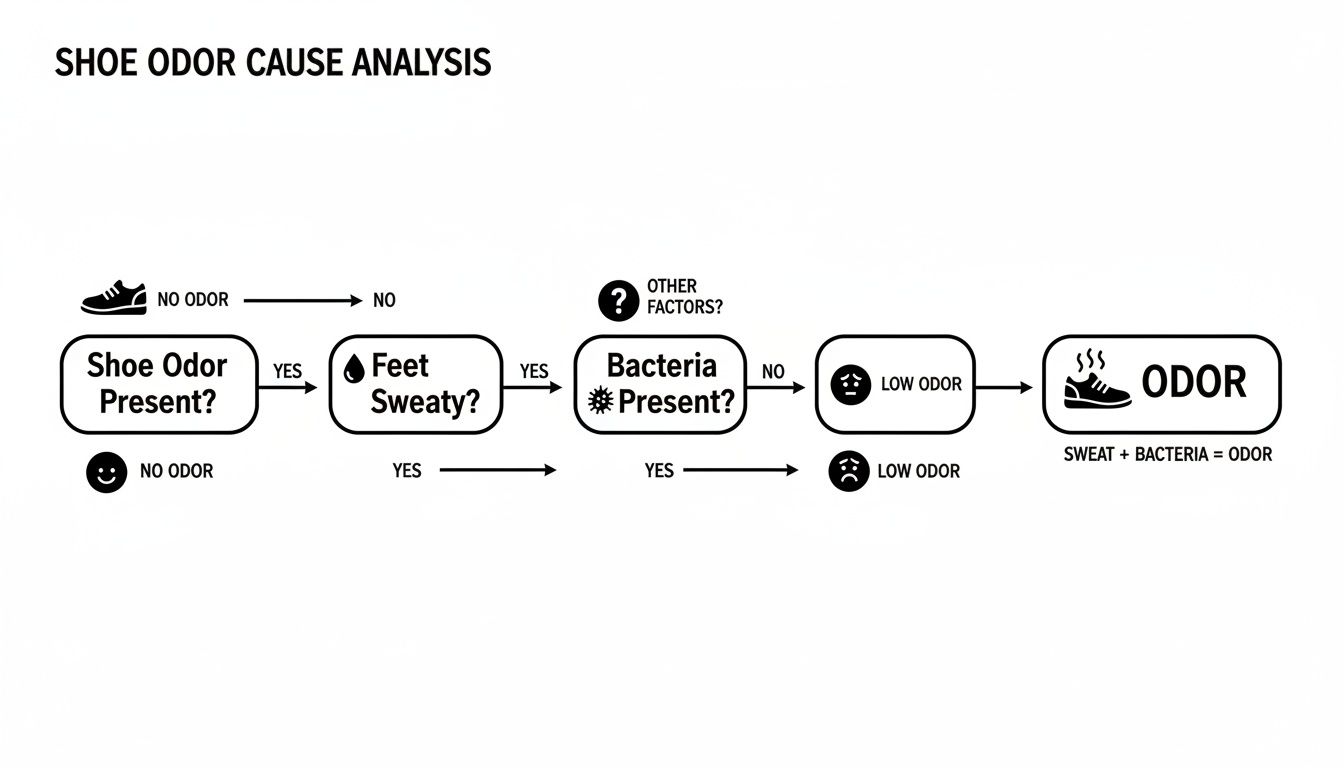
As illustrated, perspiration itself is largely inert. However, it creates the ideal damp, dark environment for bacteria to proliferate, and their metabolic waste is what causes malodor. The most effective deodorizers interrupt this cycle by either neutralizing the bacteria or removing the moisture necessary for their survival.
To help you make an informed decision for your collection, we have analyzed how different deodorizer types perform against common sneaker materials.
Sneaker Deodorizer Effectiveness by Type and Material
Choosing the correct tool is paramount. This table compares the performance of different deodorizer types across various materials, enabling you to protect your investment and maintain the freshness of your rotation.
| Deodorizer Type | Mechanism | Best For Materials | Use Case | Potential Drawbacks |
|---|---|---|---|---|
| Sprays | Chemical Neutralization | Synthetics, mesh, canvas, insoles | Quick refresh, post-wear treatment, deep cleaning | Can damage delicate materials if not formulated correctly; requires drying time. |
| Charcoal Inserts | Adsorption (traps moisture/odor) | Suede, nubuck, leather, knits | Daily moisture control, long-term storage, preventing mustiness | Passive and slower acting; less effective for immediate, strong odors. |
| Cedar Inserts | Moisture Absorption & Natural Oils | Leather, suede, canvas | Shape retention, moisture wicking, pleasant natural scent | Scent can fade over time; less potent than targeted sprays. |
| Powders | High-Level Moisture Absorption | Athletic shoes (canvas, synthetics) | Intense workouts, heavy perspiration, extreme humidity | Can be messy, leave residue on dark materials, may cake up. |
| UV Sanitizers | UV-C Light Sterilization | Most materials (non-chemical) | Persistent, severe odor; sanitizing second-hand finds | Requires power source, higher upfront cost, doesn't remove moisture. |
Ultimately, a multi-pronged approach is most effective. A quality spray addresses the immediate bacterial threat, while inserts work passively to manage moisture. This combination ensures your sneakers are maintained in optimal condition.
Deodorizing Sprays: The Versatile Solution
A well-formulated deodorizing spray is the most versatile tool in a footwear care arsenal. It allows for a direct, targeted application to neutralize odor at its source. A truly premium spray does not mask malodor with fragrance; it contains active ingredients that neutralize odor-causing bacteria on contact. This makes it highly effective for treating the interior lining and insoles, where the problem is most concentrated.
For materials like technical knits, mesh, and classic canvas, which tend to trap bacteria deep within their fibers, a spray offers a level of penetration that other methods cannot achieve. It can be applied precisely where needed for comprehensive coverage without over-saturating the materials.
Of course, not all sprays are of equal quality. A top-tier formula like the Gold Standard Deodorizing Spray is engineered to be non-staining and safe for a wide range of materials, including delicate suedes and leathers when applied correctly. This broad compatibility makes a high-quality spray the essential first line of defense against odor.
Absorbent Inserts: Charcoal and Cedar
For consistent, passive moisture control, absorbent inserts are indispensable. These devices, typically filled with activated charcoal or crafted from aromatic cedar, function by drawing moisture and odor molecules from the air inside the shoe.
Activated charcoal can be thought of as a microscopic sponge with an exceptionally large surface area. It traps moisture and volatile compounds through a process known as adsorption. This makes charcoal inserts ideal for:
- Post-Wear Maintenance: Placing them in footwear immediately after removal absorbs perspiration before bacteria can proliferate.
- Humid Climates: They are effective for managing ambient moisture that can lead to mustiness.
- Delicate Materials: As a completely dry solution, inserts are 100% safe for moisture-sensitive materials like suede and nubuck.
Cedar inserts function similarly, absorbing moisture while also releasing natural oils that have a pleasant scent and freshening properties. Additionally, they help footwear retain its proper shape, providing a dual benefit for true preservationists.
Deodorizing Powders: For Intense Moisture
Deodorizing powders are designed for a single, specific purpose: maximum moisture absorption. They are best reserved for high-intensity situations, such as post-workout application or for individuals with hyperhidrosis. Powders work by absorbing perspiration upon contact, creating a dry internal environment where bacteria cannot thrive.
Their fine particle size allows for complete coverage of the insole, creating a barrier against moisture. This makes them a viable option for athletic footwear made from canvas or synthetic mesh. However, they can be messy and may leave a residue, making them unsuitable for dark linings or premium leathers where clean-up is difficult.
The most effective shoe care routine often involves a combination of methods. Using a neutralizing spray for immediate odor control after wear, followed by absorbent inserts for ongoing moisture management, creates a comprehensive system for keeping footwear fresh.
UV Sanitizers: A Modern Approach
For those seeking a technological solution, UV sanitizers represent a modern approach to footwear care. These devices utilize UV-C light to destroy bacteria, fungi, and other microbes at a DNA level, effectively sterilizing the shoe's interior without chemicals. It is a clean, powerful method for eliminating the root cause of odor.
UV sanitizers are an excellent tool, particularly for persistent odors that resist other treatments. The footwear care market is responding to this innovation. The shoe deodorizer market is projected to grow from USD 455 million in 2023 to USD 762.21 million by 2032, with much of this growth fueled by demand for smarter, tech-forward solutions like UV that neutralize microbes without harsh chemicals. This focus on effective, premium solutions is the core of the Gold Standard philosophy. You can discover more market trends and analysis about shoe deodorizers on prnewswire.com to see where the industry is heading.
Ultimately, the best sneaker deodorizer is one that is appropriate for your collection, your lifestyle, and your standards of care.
A Step-by-Step Method for Deodorizing Sneakers
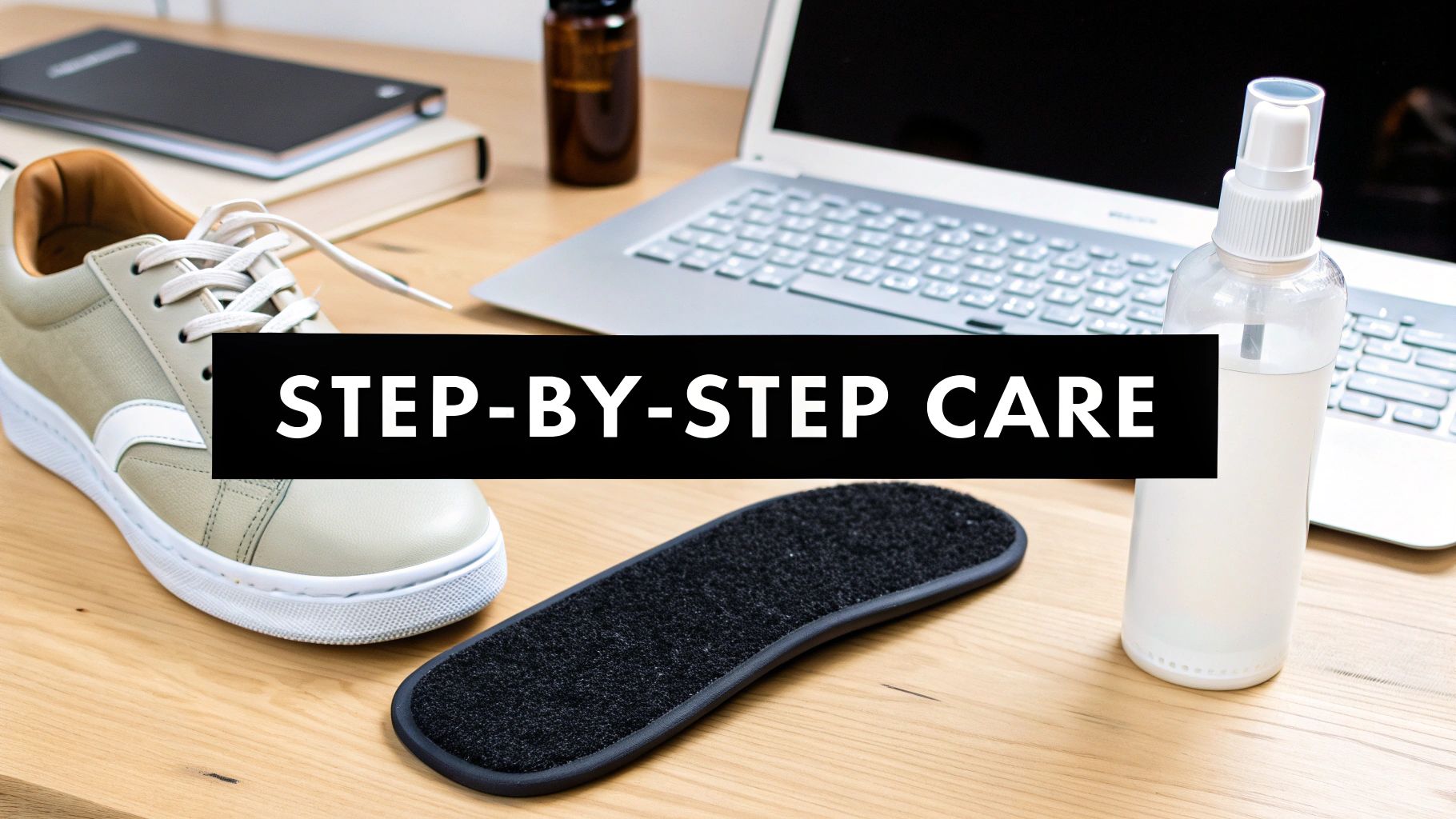
Many assume that a quick spray into their footwear is sufficient. This is a flawed approach. When addressing significant odor, you are not merely masking a scent; you are combating a microbial ecosystem fueled by moisture. A reactive approach, applied after odor has become established, is ineffective.
The key is a consistent, systematic process that addresses the problem at its source before it can proliferate throughout your collection. What follows is not a "quick tip," but the professional framework we adhere to. This is the proper method for deodorizing sneakers to achieve maximum efficacy without damaging the materials you have invested in.
Step 1: Prepare the Sneaker for Treatment
First, you must create access to the shoe's interior. A simple spray into the opening is inadequate, as bacteria colonize the entire lining, underneath the insole, and along the seams where it is dark and damp.
Begin by removing the shoelaces completely. This step is not optional. It allows you to open the shoe's upper, promoting airflow and ensuring your deodorizing agent can reach the tongue and eyelet areas—two primary locations for moisture accumulation.
Next, and most critically, remove the insoles. The insole is the epicenter of odor, absorbing the majority of perspiration and pressure from your foot. Setting them aside allows for direct treatment and, more importantly, exposes the footbed beneath. This is the dark, damp environment where bacteria truly flourish.
By disassembling the shoe in this manner, you convert a closed, stagnant environment into an open system that can be effectively cleaned and dried. Omitting this step is the single most common mistake and virtually guarantees the odor will return.
Step 2: Create a Dry Environment
Before applying any sneaker deodorizer, the interior of the shoe must be completely dry. Applying a liquid solution into a damp sneaker is counterproductive; it traps existing moisture and can exacerbate the problem.
The objective here is to eliminate the bacteria's life support by removing the moisture they require to multiply.
- Air-Drying Is Essential: Place the sneakers and insoles in a well-ventilated area. Keep them out of direct sunlight and away from high-heat sources like radiators or hairdryers. Intense heat can crack leather, melt adhesives, and cause colors to fade.
- Use Absorbent Materials: For canvas or knit footwear, you can expedite the drying process by stuffing them with a microfiber towel. This wicks moisture from the interior while helping the sneaker maintain its shape.
Patience is a fundamental aspect of proper shoe care. Ensure the shoe's interior and both insoles are completely dry to the touch before proceeding. This may take several hours or overnight, but it is a non-negotiable step for effective odor elimination.
Step 3: Apply a Premium Deodorizing Spray
With the sneaker prepped and dry, it is time to neutralize the source of the odor. For this task, a high-quality liquid deodorizer provides the most effective and direct coverage. Powders can be messy, and inserts are better suited for maintenance. A spray allows you to target every interior surface.
However, technique is critical. The goal is to apply a fine mist, not to saturate the materials, which can lead to staining or damage, particularly on sensitive materials like suede or nubuck.
- Treat the Insoles First: Apply a light mist to both sides of the insoles. They are designed for durability, so ensure good coverage. Set them aside to air dry.
- Spray the Shoe Interior: Hold the bottle approximately 6-8 inches from the opening. You are aiming for a fine mist, not a direct stream. Apply two to three short bursts into the main cavity of each shoe.
- Target Key Areas: Add one additional small spray directly into the toe box, a primary area for sweat and bacteria accumulation.
- Allow for Full Evaporation: Let the sneakers rest for at least one hour. The formula requires time to work and for the carrier agent to evaporate completely.
For this process, our preferred tool is the Gold Standard Deodorizing Spray. Its formula was developed to be effective against bacteria while remaining safe for the premium materials found in modern collections. It eliminates odor at a molecular level rather than masking it with a heavy fragrance, leaving no sticky residue or causing material damage.
Step 4: Implement a Long-Term Maintenance Routine
Achieving a fresh state is one objective; maintaining it is another. Deodorizing is not a one-time fix but an integral part of a regular care routine. Once the odor is eliminated, your focus should shift to prevention.
The single most effective strategy is shoe rotation. Never wear the same pair on consecutive days. Allowing footwear a full 24-48 hours to air out completely is the most effective way to prevent moisture buildup.
In addition, incorporate these habits into your routine:
- Proper Storage: Store your sneakers in a cool, dry place with adequate airflow. Do not store them in a pile, as this traps moisture and encourages odor recurrence.
- Use Absorbent Inserts: On the days you are not wearing a pair, place moisture-absorbing inserts, such as cedar or charcoal, inside them. They work continuously to remove any residual moisture, maintaining an inhospitable environment for bacteria.
By following this four-step process—Prepare, Dry, Apply, and Maintain—you are doing more than combating an odor. You are actively preserving the materials, structure, and value of your footwear from the inside out.
Common Shoe Care Mistakes That Cause Odor
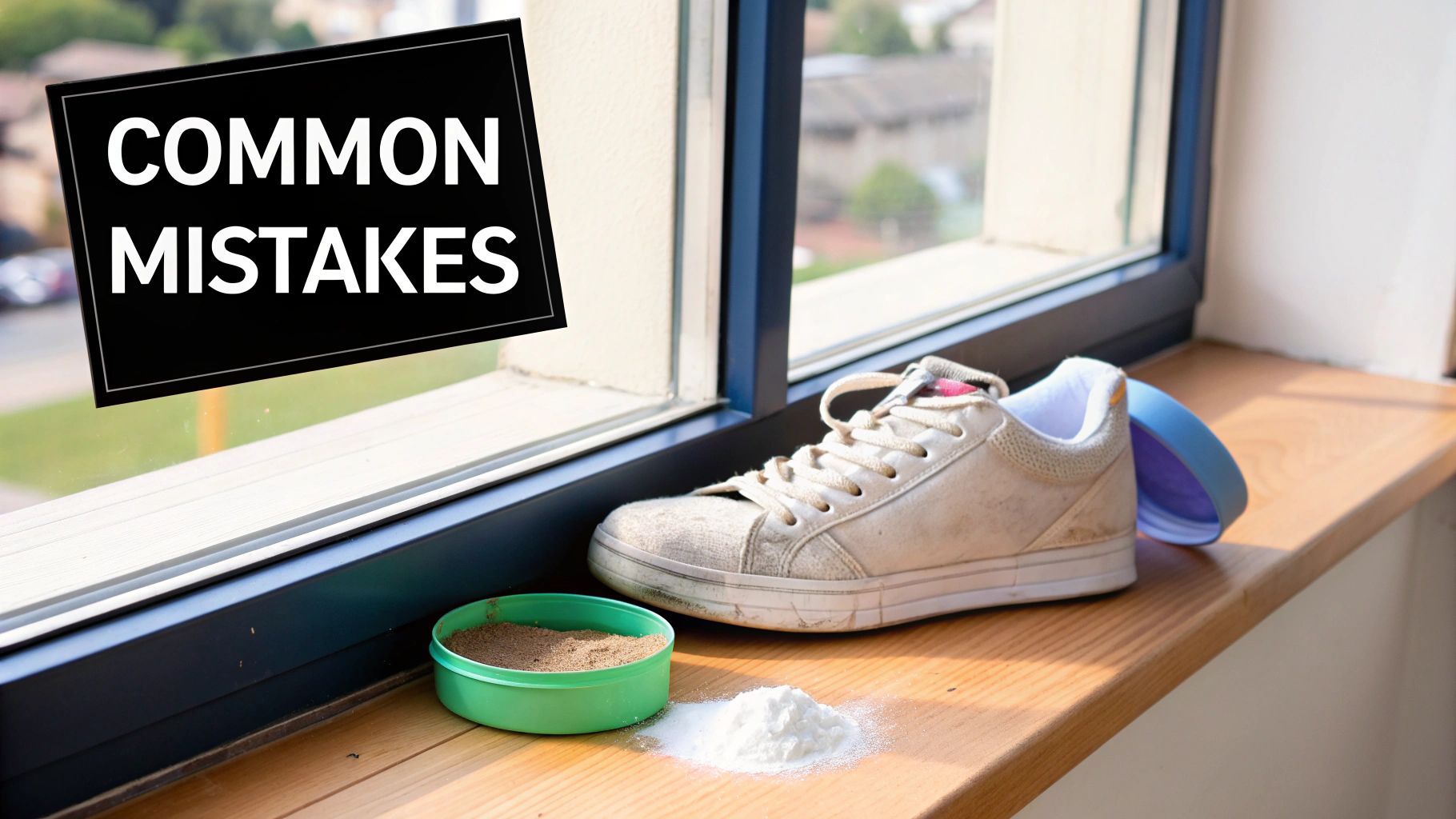
Effective footwear care is as much about avoiding incorrect practices as it is about applying correct ones. The internet is replete with DIY "hacks" that, while appealing in their simplicity, can cause irreversible damage to your footwear and often exacerbate the original odor problem.
These shortcuts may seem tempting, but they fail to account for the complex material science of a modern sneaker. As professionals dedicated to footwear preservation, we regularly see the negative consequences of these mistakes. Understanding why these methods fail is the first step toward a proper care regimen that protects your investment.
The Problem with Baking Soda
The use of baking soda is one of the most widespread—and damaging—DIY recommendations. While it can absorb some moisture and odor, its abrasive nature and high alkalinity pose a significant threat to premium materials.
Leather maintains a naturally acidic pH. When you introduce a highly alkaline substance like baking soda (with a pH of approximately 9), you disrupt this delicate balance. This chemical reaction strips the leather of its natural oils, leaving it dry, brittle, and susceptible to cracking. Furthermore, its crystalline structure acts as a fine abrasive, scratching smooth leathers and damaging the delicate nap of suede.
Why Fabric Softener Sheets Do More Harm Than Good
Placing a fabric softener sheet inside a shoe appears to be a simple solution for a fresh scent. However, this is a classic example of masking a symptom rather than treating the cause. These sheets are coated with a waxy, chemical residue designed to adhere to fabric.
When placed in a sneaker, this waxy film transfers to the interior lining. Not only does it fail to neutralize the odor-causing bacteria, but it also creates a sticky surface that traps more dirt, debris, and skin cells. This accumulated buildup provides an abundant food source for bacteria, leading to a more severe odor problem once the artificial fragrance dissipates. It is a temporary fix that creates a larger long-term issue.
True footwear preservation requires methods that respect material integrity. DIY solutions often introduce variables—like pH imbalance and chemical residues—that can lead to permanent damage and degrade the value of your sneakers.
The Dangers of Direct Heat and Sunlight
When footwear becomes damp, the immediate impulse is to dry it quickly. However, placing shoes on a radiator, using a hairdryer, or leaving them in direct sunlight are among the fastest ways to cause catastrophic damage.
This approach is destructive for several reasons:
- Adhesive Failure: The industrial-strength adhesives bonding your midsoles and outsoles are heat-sensitive. High temperatures can weaken these bonds, leading to sole separation—a repair that is both costly and often structurally unsound.
- Material Degradation: Direct sunlight is particularly damaging. UV radiation breaks down the chemical bonds in fabrics and dyes, causing vibrant colors to fade and whites to yellow. For leather, intense heat rapidly extracts essential moisture, leaving it stiff and cracked.
- Warping and Shrinking: Synthetic materials like technical knits or mesh can shrink or warp when exposed to extreme heat, permanently altering the sneaker's shape and fit.
Properly caring for your collection means avoiding these common pitfalls. A professional-grade sneaker deodorizer combined with patience will always yield superior, safer results than any shortcut.
What to Look For in a Premium Sneaker Deodorizer
A survey of any footwear care aisle reveals a significant disparity between low-cost products that merely mask odor and professional tools designed for preservation. A premium sneaker deodorizer is not a simple purchase; it is an investment in the longevity of your collection. One must look beyond aggressive marketing and overpowering scents to identify what truly matters.
The difference lies in the formulation's science and a genuine commitment to preserving footwear, not simply dousing it in perfume.
Many commercial deodorizers are essentially air fresheners for shoes. They employ heavy fragrances to cover malodor, which is a temporary solution. This approach does nothing to address the underlying bacterial cause. Worse, the chemical residue can stain delicate materials or even attract more dirt. A superior product reverses this paradigm: the focus is on neutralization, not masking.
Prioritize Material-Safe Formulations
The first question to ask is, "Is this product safe for my entire collection?" A truly premium formula is engineered from the ground up to be safe on a wide spectrum of materials, from durable canvas and technical knits to the finest suede.
Hallmarks of a quality, safe formula include:
- Non-Staining Properties: The product must perform its function and then evaporate completely, leaving no trace. It should not cause discoloration or leave a residue, which is non-negotiable for light-colored linings and premium leathers.
- Adhesive-Safe Ingredients: Caution is advised. Harsh chemicals and certain aerosol propellants can degrade the adhesives holding your sneakers together, leading to catastrophic sole separation. A quality formula is gentle on all the components that maintain the shoe's structural integrity.
The purpose of a premium sneaker deodorizer is to deliver powerful performance without compromise. It must be potent enough to neutralize odor at its source yet gentle enough to protect the diverse and sensitive materials that constitute a modern sneaker collection.
Insist on True Odor Neutralization
A top-tier deodorizer operates at a molecular level. It is not about layering a new scent over an existing malodor. It is about utilizing active ingredients that target and break down the volatile compounds that cause bad smells. This is the only method to eliminate odor permanently, rather than masking it for a few hours.
This focus on neutralization is what distinguishes a professional-grade tool from a simple fragrance spray. It is a more intelligent, scientific approach to footwear care that delivers lasting results and protects your investment from the inside out. When you select a product like the Gold Standard Deodorizing Spray, you are choosing a formula built on this principle—a true commitment to preservation and performance.
Got Questions About Sneaker Deodorizers? We've Got Answers.
When it comes to maintaining your footwear collection, several questions consistently arise. As professionals who are deeply immersed in footwear care, we have addressed nearly every concern. Here are direct, field-tested answers to the most common questions, enabling you to protect your collection with confidence.
Can I Use a Deodorizer on Suede and Nubuck?
Yes, provided you use the correct product and application technique. Suede and nubuck are notoriously sensitive to moisture and chemicals, which can easily cause stains, discoloration, or textural damage. The first rule is to avoid powders entirely; they become entrapped in the delicate nap and are nearly impossible to remove completely.
The optimal solution is a fine-mist spray specifically formulated to be non-staining and safe for delicate materials, such as our Gold Standard Deodorizing Spray. Hold the canister at least 8-10 inches away and apply a light, even mist. The key is to avoid saturating the material. Afterward, allow them to air dry completely, away from direct sunlight or heat sources.
How Often Should I Deodorize My Sneakers?
Frequency depends entirely on usage. There is no single correct answer, but a proactive approach is always superior, particularly for daily-wear or athletic footwear.
- For High-Use Pairs: Develop the habit of applying a light spray after each wear. This prevents odor-causing bacteria from establishing a foothold.
- For Rotational Wear: If you maintain a proper rotation and allow your sneakers 24-48 hours to air out between wears, applying a deodorizer every 2-3 wears is sufficient.
- For Long-Term Storage: Before placing a pair in storage for the season, perform a thorough treatment of the interior. This is crucial for preventing the development of musty, stale odors while they are boxed away.
Will a Sneaker Deodorizer Actually Kill Strong, Existing Odors?
Yes, but it is a process, not an instantaneous event. A premium deodorizer is engineered to neutralize the bacteria that cause malodor, not just mask it with fragrance. However, for a pair with a deeply entrenched odor, a single application may be insufficient.
To address this properly, begin by removing the insoles and treating them separately, as they harbor the highest concentration of bacteria. Ensure the shoe's interior is completely dry before spraying. You may need to repeat the treatment 2-3 times over several days, allowing the shoe to dry fully between each application. This systematic approach is what effectively breaks down established bacterial colonies and eliminates the odor permanently.
Your sneakers are more than footwear; they are an investment. Utilizing a scientifically formulated, material-safe solution is the only valid method for maintaining their freshness without compromising the materials you have invested in.
Protect your grails with Gold Standard. Explore our premium sneaker deodorizer today.