

Sneaker cleaner wipes are the first line of defense for your footwear. They are an essential tool for addressing immediate, on-the-go scuffs and spills before they set in and become permanent issues. For anyone serious about footwear preservation, a premium, material-safe wipe is a non-negotiable component of a complete care regimen.
Why Material-Safe Wipes Are a Necessity
Maintaining the condition of well-made footwear is critical to preserving its value, appearance, and longevity. While a generic household wipe might remove superficial dirt, the chemical composition of its formula often does more harm than good over time. A dedicated sneaker cleaner wipe is engineered specifically for the complex materials used in modern footwear.
Using an inappropriate cleaning product is a common and costly mistake. Aggressive household cleaners often contain high concentrations of alcohol, solvents, or surfactants that can compromise the integrity of your sneakers. These chemicals can dehydrate premium leathers, strip protective factory finishes, fade dyes, and even weaken the adhesives bonding the upper to the midsole.
The Science of Footwear Preservation
An expertly formulated sneaker wipe must be both effective and gentle. The primary goal is preservation.
- Material Integrity: The solution must be safe for use across a wide range of materials, from full-grain leather and delicate suede to technical knits and canvas, without altering color or texture.
- Preventing Accumulation: Regular, quick cleaning prevents the buildup of dirt and grime, which can embed into materials and lead to abrasion or permanent staining.
- Value Retention: For collectors and enthusiasts, condition is paramount. A pristine pair will always hold its value far better than one showing signs of wear, neglect, or damage from improper cleaning methods.
The global market for sneaker cleaning products has expanded in lockstep with footwear innovation, with some projections estimating it will reach $750 million by 2025. This growth is driven by consumers who understand the necessity of protecting their investment. Industry data indicates that over 70% of sneaker enthusiasts purchase specialized products to combat material degradation, such as sole yellowing and color fading. You can discover more insights on the expanding sneaker care market.
A premium sneaker wipe is more than a convenience—it's an essential maintenance tool. It ensures every pair, from daily drivers to collector's items, receives the correct, material-specific care it requires.
Matching the Wipe to Your Sneaker Material
Effective use of a sneaker wipe is contingent on material knowledge. The technique that restores a leather court shoe could irreversibly damage a suede runner. Understanding how to properly clean different materials is what separates a successful touch-up from a costly error.
Footwear construction is diverse; a one-size-fits-all cleaning approach will inevitably lead to faded colors, damaged textures, or compromised structural bonds. Proper sneaker care requires a technical understanding of how different surfaces react to cleaning solutions and friction.
This guide clarifies the appropriate use of wipes for various materials, a critical consideration for any footwear owner.
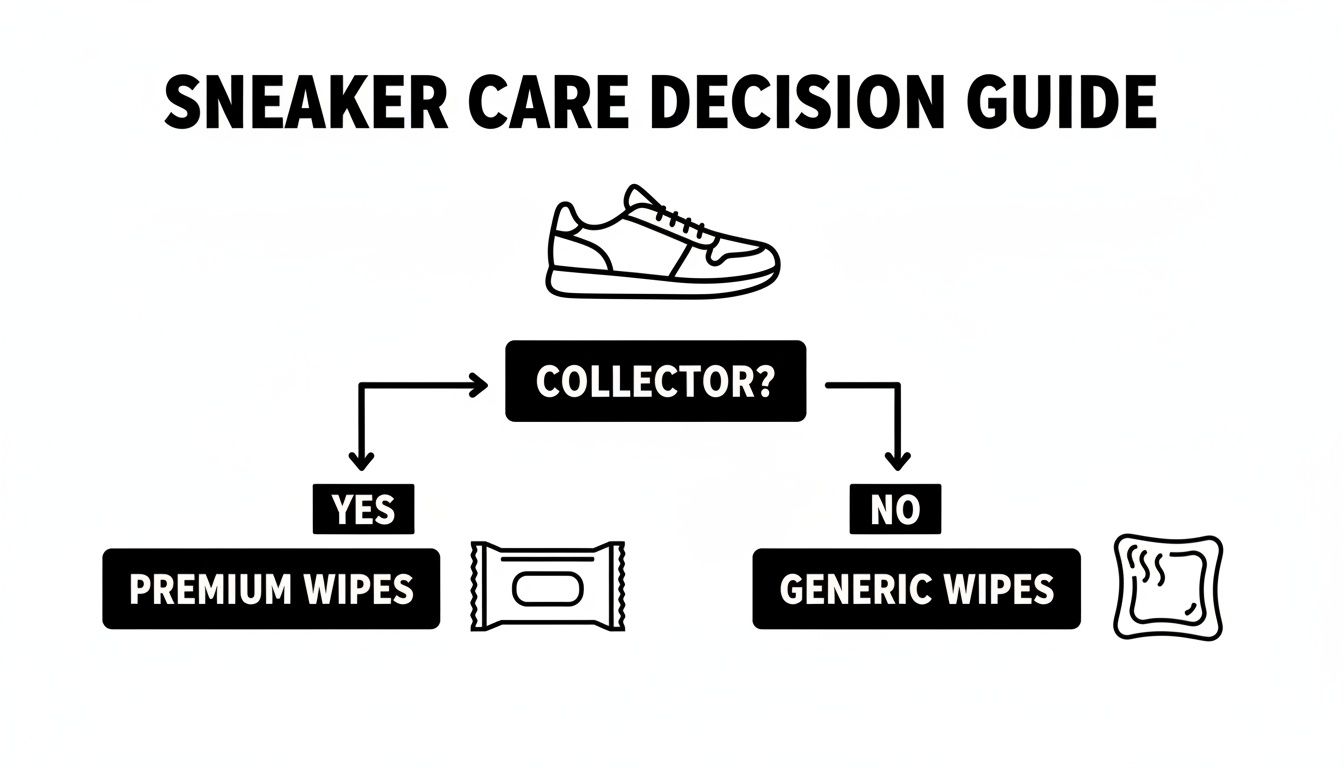
For valuable or delicate footwear, a specialized, material-safe wipe is not optional; it is essential for maintaining pristine condition.
This reference guide provides clear, field-tested instructions for common footwear materials.
Sneaker Wipe Suitability By Material
This table outlines the appropriate use of wipes for the most common materials found in sneaker construction.
| Material | Wipe Suitability | Key Precaution |
|---|---|---|
| Smooth/Synthetic Leather | Excellent | Avoid overly saturated wipes that can leave moisture marks or compromise adhesives. |
| Suede/Nubuck | Emergency Use Only | Use a gentle dabbing or blotting motion. Never scrub. |
| Canvas/Woven Textiles | Good | Test on an inconspicuous area first to ensure colorfastness. |
| Mesh/Modern Knits | Good | Pat gently to lift stains without snagging or fraying delicate fibers. |
| Rubber/Foam Midsoles | Excellent | Dual-textured wipes are highly effective; firm pressure can be applied. |
Adhering to these principles will enable you to handle most immediate cleaning needs without causing damage. Let's examine the specific techniques for each material.
Smooth and Synthetic Leathers
This is the most forgiving material category. Smooth leathers are durable and well-suited for wipe cleaning. Use a gentle, circular motion to lift surface scuffs and dirt without abrading the finish.
The primary precaution is to avoid excessive moisture. A wipe that is dripping wet can introduce too much liquid, which can penetrate seams or pores, potentially leading to water spots or weakening the adhesives over time. The goal is a controlled clean, not a soak.
Suede and Nubuck
Proceed with extreme caution. Suede and nubuck have a delicate, open-pored texture (nap) that absorbs liquids readily. One improper cleaning attempt can be permanent. Never use a saturated wipe on these materials, as this will result in water stains and a flattened, damaged nap.
For emergency spot removal, the correct technique is a light, quick dab-and-blot. Address the stain immediately and gently, working from the outside in to prevent it from spreading. Once dry, use a proper suede brush to restore the nap.
On suede, a wipe is for emergency surface intervention only. The sole objective is to lift the contaminant with minimal moisture. Rubbing or scrubbing will only grind the stain deeper into the fibers.
Canvas and Woven Textiles
Canvas is more durable than suede but still requires a careful approach. For general grime, a gentle scrubbing motion with a textured wipe can effectively lift dirt from the fabric's weave.
The primary risk with colored canvas is dye bleeding. Low-quality wipes containing harsh chemicals can strip color. Always test the wipe on an inconspicuous area first, such as the interior of the tongue, to confirm colorfastness before cleaning a visible area.
Mesh and Modern Knits
Modern athletic footwear often features engineered materials like Flyknit or Primeknit. While lightweight and breathable, these delicate uppers can snag easily and trap dirt deep within their complex fiber structures.
Scrubbing is contraindicated for these materials. The friction can fray the fine threads, resulting in a fuzzy, worn appearance. Instead, use a gentle patting or dabbing motion. This lifts the stain from the surface without forcing it deeper into the weave or damaging the knit structure.
- Action: Gently pat the wipe onto the soiled area.
- Pressure: Keep it light to avoid damaging the fibers.
- Direction: Always work from the stain's outer edge inward to contain it.
This precise approach cleans effectively while preserving the integrity of high-performance materials.
Rubber Midsoles and Outsoles
These components are built for durability and can withstand more aggressive cleaning. This is where a dual-textured wipe, like those from Gold Standard, excels. The textured side provides the necessary abrasion to remove stubborn scuffs, grass stains, and ground-in dirt from rubber and foam compounds.
Feel free to apply firm pressure here, working in a circular motion to break down grime. This is often the most satisfying part of a quick clean and is key to restoring the "box-fresh" aesthetic. After cleaning, it is good practice to wipe away any residual solution with a clean, dry cloth.
The Art of the On-The-Go Clean
The primary advantage of a premium sneaker wipe is its immediate utility in the field. A coffee spill during a commute, a scuff mark from public transit, or grass stains from an impromptu walk in the park can all be managed effectively if addressed immediately. Wipes are the ideal first response tool, allowing you to treat a potential stain before it has a chance to set.
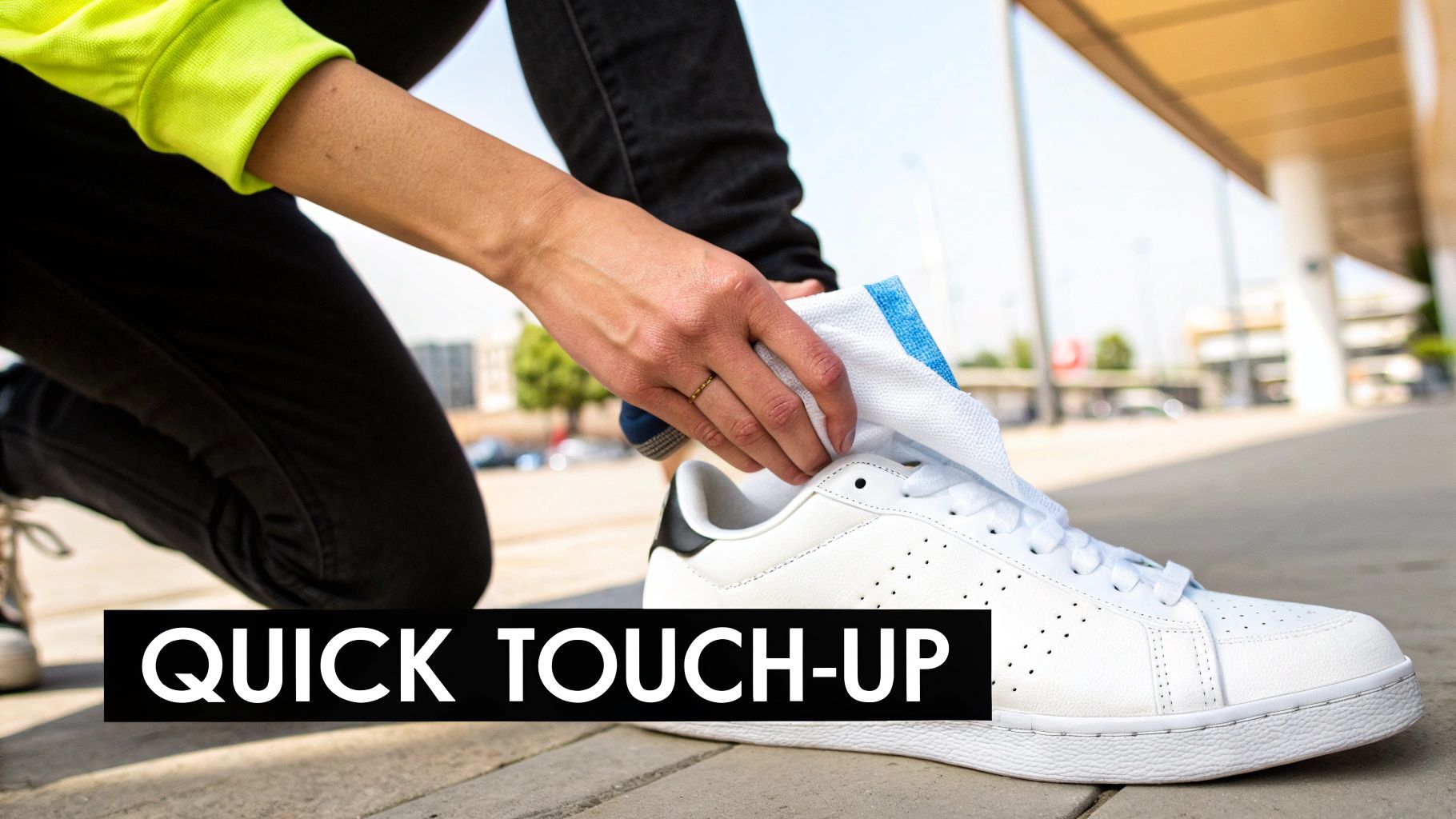
This demand for portable, effective care solutions is driving market growth. The shoe cleaning wipe industry was valued at $450 million in 2024 and is projected to reach $850 million by 2033. This is unsurprising, as modern lifestyles expose footwear to a constant barrage of urban grime and accidental spills. Data shows that 65% of consumers now seek portable hygiene solutions, a significant increase from 40% prior to 2020. You can review the full analysis of the shoe wipe market.
Immediate Stain Response Techniques
Your actions in the first few seconds after a spill are critical. The instinct to scrub furiously is incorrect and counterproductive. Aggressive rubbing only drives the staining agent deeper into the material's fibers, particularly with porous materials like canvas or knit.
A strategic approach is far more effective.
- For liquid spills (coffee, soda): Before cleaning, blot the area. Use a dry napkin or a clean corner of the wipe to absorb as much excess liquid as possible.
- For scuffs and dirt: Always begin at the outer edge of the mark and work inward. This technique prevents you from spreading the soil and enlarging the affected area.
Professional Tip: A controlled, deliberate hand is paramount. Rushed, aggressive wiping can spread the stain and cause physical damage—such as fraying or discoloration—to delicate materials like premium suede or engineered mesh.
Preserving Your Wipes for Maximum Effect
A dried-out wipe is useless. Proper storage is simple but essential. The resealable opening on the packaging is designed to maintain moisture.
Develop the habit of ensuring the pack is fully resealed after each use. For those in hot or dry climates, storing the wipe package inside a secondary ziplock bag provides an additional moisture barrier. This simple step guarantees that every wipe is ready for immediate, effective use, providing expert-level care wherever you are.
Decoding the Ingredients in Your Sneaker Wipes
The fundamental difference between a premium sneaker wipe and a generic alternative lies in the chemical formulation. Understanding the ingredients in your cleaning products allows you to make informed decisions to protect the materials, adhesives, and dyes of your footwear.
Many mass-market wipes contain harsh chemicals that cause cumulative, irreversible damage. Ingredients like alcohol and acetone are known to strip natural oils from leather, leading to dryness and cracking. Furthermore, these aggressive agents can degrade the adhesives used in footwear construction, leading to sole separation.
The objective is to clean sneakers without causing harm. This requires a more sophisticated and thoughtful approach to formulation.
What to Look For in a Premium Formula
An expertly engineered wipe is formulated with gentle yet effective ingredients. Mild surfactants are essential; these cleaning agents work at a molecular level to lift dirt from the shoe's surface, reducing the need for excessive physical scrubbing.
A high-quality formula will also be free of harsh solvents and bleaches that can alter colors, which is particularly critical for vibrant or all-white colorways. The shoe cleaning wipe market is competitive, as seen in analyses like this one on Market Research Intellect, but premium brands differentiate themselves by prioritizing natural, material-safe ingredients over chemicals known to degrade dyes and glues.
A superior wipe does more than clean—it conditions and protects. It should not leave behind a sticky residue and must be pH-balanced to be safe across a collection of varied materials, from leather to canvas.
Ingredients That Damage Your Sneakers
It is imperative to read ingredient labels. Before using a new product on your valued footwear, check the packaging for these destructive agents.
- High Concentrations of Alcohol: Dehydrates leather and can make synthetic materials brittle over time.
- Acetone or Nail Polish Remover: A powerful solvent that will strip paint, fade dyes, and can dissolve certain plastics and adhesives.
- Bleach (Sodium Hypochlorite): A primary cause of irreversible yellowing on white soles and uppers. It will also strip color from textiles.
- Ammonia: A harsh chemical that can break down the protective finishes on both leather and synthetic materials.
Choosing a wipe formulated without these damaging ingredients—like the ones we’ve developed at Gold Standard—is fundamental to proper footwear care. It is an investment in the long-term preservation of your entire collection.
When Wipes Aren't Enough for a Deep Clean
To be an authority on footwear care, one must be transparent about a product's limitations. Sneaker cleaner wipes are indispensable for on-the-spot maintenance and surface-level cleaning, but they are not a solution for every problem. Understanding their optimal application—and when to escalate to a more powerful method—is the key to a truly effective care routine.
Wipes are the first responders in a complete sneaker care system. They are highly effective for managing fresh spills, light scuffs, and daily grime before it becomes deeply embedded. For a full restoration or heavily soiled footwear, however, a more robust solution is required.
Scenarios That Demand a Deeper Clean
Certain situations are beyond the capability of a single wipe. Attempting to use a wipe in these cases is often ineffective and can worsen the problem by pushing dirt deeper into the material's fibers. It's time to use a full cleaning kit when facing these challenges:
- Set-In Stains: A stain that has been left for days has had time to chemically bond with the material's fibers. A wipe may lighten its appearance, but it lacks the chemical strength to break down and lift a deeply set stain.
- Deeply Ingrained Dirt: After wearing mesh or knit runners on a trail, fine particles of dust and dirt become trapped deep within the weave. A wipe can clean the surface, but it cannot extract the embedded grit that causes abrasion and dulls the material over time.
- Heavily Soiled Materials: Footwear caked in mud or grime after a music festival or rainstorm requires a comprehensive wash with a brush and cleaning solution to penetrate every layer and lift the heavy soil.
- Persistent Odors: While wipes can provide a surface refresh, they cannot eliminate deep-seated odors caused by bacteria inside the shoe. This requires a dedicated interior cleaning and deodorizing treatment.
A wipe is for spot treatment, not restoration. It is an essential first step that manages minor incidents and prevents them from becoming major problems.
By understanding when a sneaker cleaner wipe has reached its limit, you can transition to the appropriate tools for a true deep clean. The goal is to build a complete shoe care system. Wipes handle daily maintenance, while a comprehensive kit, such as the Gold Standard Ultimate Sneaker Cleaning Kit, tackles significant restoration tasks. This integrated approach ensures every pair in your collection receives the precise level of care it needs to remain in impeccable condition.
Your Top Sneaker Wipe Questions, Answered
Even with a solid understanding of the fundamentals, specific questions often arise. As footwear care specialists, we have addressed nearly every conceivable scenario. Here, we provide expert answers to the most common inquiries to ensure you can care for your collection with confidence.
These details are what separate standard upkeep from professional-level preservation.
Can I Use the Same Wipe on the Uppers and the Sole?
Technically you can, but it is poor practice. The outsole is in direct contact with the ground and accumulates a significant amount of abrasive grit and contaminants. Using the same wipe surface on the sole and then on a delicate leather or mesh upper will transfer this dirt, defeating the purpose of cleaning.
Adopt this professional methodology:
- Always begin with the uppers, using a clean section of the wipe.
- Once the uppers are clean, use a different, unused section of the wipe—or a fresh wipe entirely—for the midsole and outsole.
This simple discipline prevents cross-contamination and ensures a truly clean result.
How Often Should I Use Wipes on My Sneakers?
Frequency depends on wear. For footwear in your daily or weekly rotation, a quick cleaning after every one or two wears is an excellent preventative measure. This stops the gradual accumulation of grime that becomes much more difficult to remove later.
For collector's items or special-occasion pairs, the protocol is different. Clean them thoroughly with a wipe immediately after wearing them, before returning them to storage. This removes any surface oils or dust that could set in and cause long-term damage. Wipes are for active maintenance, not a substitute for a deep clean, which should be performed every 1-2 months for regularly worn footwear.
Will Wipes Make My White Leather Sneakers Turn Yellow?
This is a valid and critical concern. The answer is yes, low-quality wipes can cause yellowing on white footwear. The culprits are typically harsh chemicals like bleach or high concentrations of alcohol. These agents can react with the shoe's materials and with UV light, causing oxidation—the chemical process that results in a yellow tint.
This is precisely why a premium, pH-balanced formula is non-negotiable for white sneakers. A properly formulated wipe is made without these aggressive agents. It cleans effectively without leaving behind the chemical residue that leads to discoloration, thereby preserving the crisp, original white.
Are Sneaker Wipes Safe for Waterproof or GORE-TEX Materials?
Yes, provided you use the correct type of wipe. A high-quality, water-based sneaker cleaner wipe is safe for technical materials like GORE-TEX. The critical factor is ensuring the formula is completely free of oils, waxes, or heavy conditioners.
Such ingredients are detrimental to performance fabrics. They can clog the microscopic pores in waterproof-breathable membranes, which negates their functionality. Use a simple cleaning wipe, and after cleaning, gently pat the area dry with a microfiber towel. Do not rub the material aggressively.
For a cleaning solution engineered with all materials in mind, trust Gold Standard. Our premium wipes are formulated to deliver a safe, effective clean for your entire collection, from daily drivers to prized grails. Explore our shoe care products at https://gold-standard-approved.myshopify.com.