

You’ve invested in your footwear collection. The next step is preservation. The best sneaker cleaner is not a generic household soap; it's a solution engineered specifically for the complex and often delicate materials that constitute modern sneakers. This guide moves beyond quick fixes to establish a professional methodology for proper footwear maintenance.
The Professional Approach to Sneaker Preservation
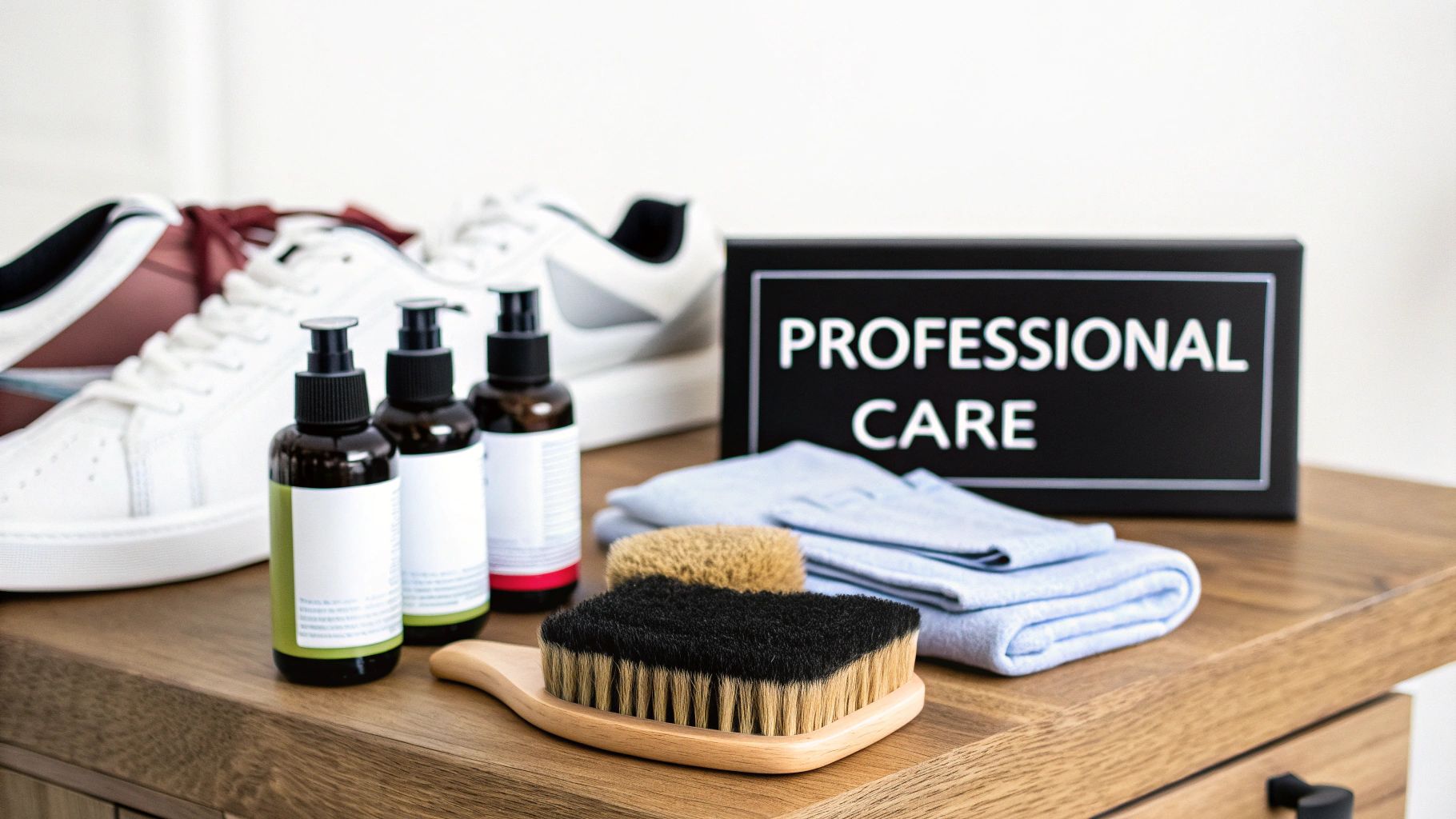
A common and costly mistake is using the wrong product to clean premium footwear. Generic detergents, harsh household chemicals, and overly abrasive brushes can inflict irreversible damage—color bleed on suede, weakened adhesives, and frayed textiles. True sneaker care is not a chore; it is a discipline.
This shift in consumer behavior from "cleaning" to "preservation" reflects a broader market trend. The global shoe care market was valued at USD 4.7 billion in 2023 and continues to expand. This indicates a growing recognition that footwear collections are assets deserving of specialized tools. You can discover more insights about this trend on gminsights.com.
Why a Specialized Sneaker Cleaner Is Essential
The fundamental difference between a professional-grade sneaker cleaner and a generic soap lies in its chemical formulation. A premium cleaner is engineered to be effective against contaminants yet gentle on the substrates of modern footwear.
- Material Safety: A quality cleaner is pH-neutral, preventing discoloration, material degradation, or the desiccation of natural materials like leather and nubuck.
- Cleaning Efficacy: The formula should contain surfactants that safely lift dirt and grime from the surface without requiring aggressive mechanical action that can damage delicate knits or mesh.
- Residue-Free Finish: A superior solution rinses completely, leaving no sticky or tacky residue that can attract future contaminants.
At Gold Standard, we frequently consult on footwear damage caused by inappropriate products—bleach on white soles, dish soap on leather, wire brushes on canvas. Adopting the correct methodology from the outset preserves your sneakers and prevents costly replacements.
Building Your Expertise
Our objective is to equip you with the knowledge to care for your footwear with professional confidence. This requires understanding not just the how, but the why behind each step.
Utilizing a purpose-built, natural sneaker cleaner is the foundational element of a proper care regimen. For a flawless result that respects the craftsmanship of your footwear, the correct chemistry and tools are non-negotiable.
Preparing Your Workspace for a Flawless Clean
Before introducing any liquid, a proper setup is critical for achieving professional results. Consider it akin to a surgeon preparing an operating room—every tool has a designated place, and every step is deliberate. This methodical approach is designed to prevent the common errors that can compromise a pair of sneakers.
The most prevalent mistake is proceeding directly to wet cleaning.
Failing to perform a thorough dry brush grinds surface dirt and abrasive grit into the fabric. This is analogous to mopping an unswept floor. The result is micro-abrasions and weakened materials—precisely what you want to avoid.
The Initial Breakdown
First, disassemble the shoe. Remove the laces and, if applicable, the insoles. These components will be cleaned separately to ensure a comprehensive clean and prevent moisture from being trapped internally, which can lead to microbial growth.
Next, using a medium-stiff brush—a quality hog-hair brush is ideal—perform a thorough dry brushing of the entire sneaker. The objective is to dislodge loose dirt, dust, and grime from the uppers, midsoles, and outsole grooves. Pay particular attention to stitched seams where debris accumulates. This single step significantly enhances the efficacy of the entire process.
Maintaining Structural Integrity
Once the surface is prepped, the sneaker must be given internal structure. Attempting to scrub a collapsed, empty shoe is inefficient and risks creasing or permanently warping the toe box.
- Shoe Trees are the Professional Standard: Cedar or plastic shoe trees provide a firm, consistent shape that facilitates effective and even scrubbing. Cedar, in particular, offers the added benefit of absorbing moisture and deodorizing.
- Alternative Methods: In the absence of shoe trees, stuffing the shoes tightly with paper towels or clean rags will suffice. The goal is to create firm internal resistance, simulating the presence of a foot.
An often-overlooked detail: a stable cleaning surface is paramount. Attempting to clean a soft knit or canvas upper without internal support is like trying to write on a loose sheet of paper. A shoe tree provides the necessary resistance for effective scrubbing without deforming the sneaker.
Finally, organize your station. Lay down a towel and arrange your tools: a bowl of cool water, your Gold Standard Sneaker Cleaner, and the appropriate brushes for each material. A methodical setup protects your footwear and elevates the task from a chore to a craft.
A Material-Specific Guide to Sneaker Cleaning
Treating suede the same as leather is the fastest way to damage your collection. A universal approach is inadequate. Each material possesses unique properties: leather requires conditioning, suede is intolerant of excess water, and delicate knits are susceptible to abrasion.
Mastering material-specific techniques is what distinguishes amateur cleaning from professional-level care. It involves respecting the sneaker's construction and deploying the right tools with the correct level of force. A versatile sneaker cleaner like Gold Standard is formulated for this, but the best solution cannot compensate for poor technique.
Before any liquid is applied, proper preparation is non-negotiable.
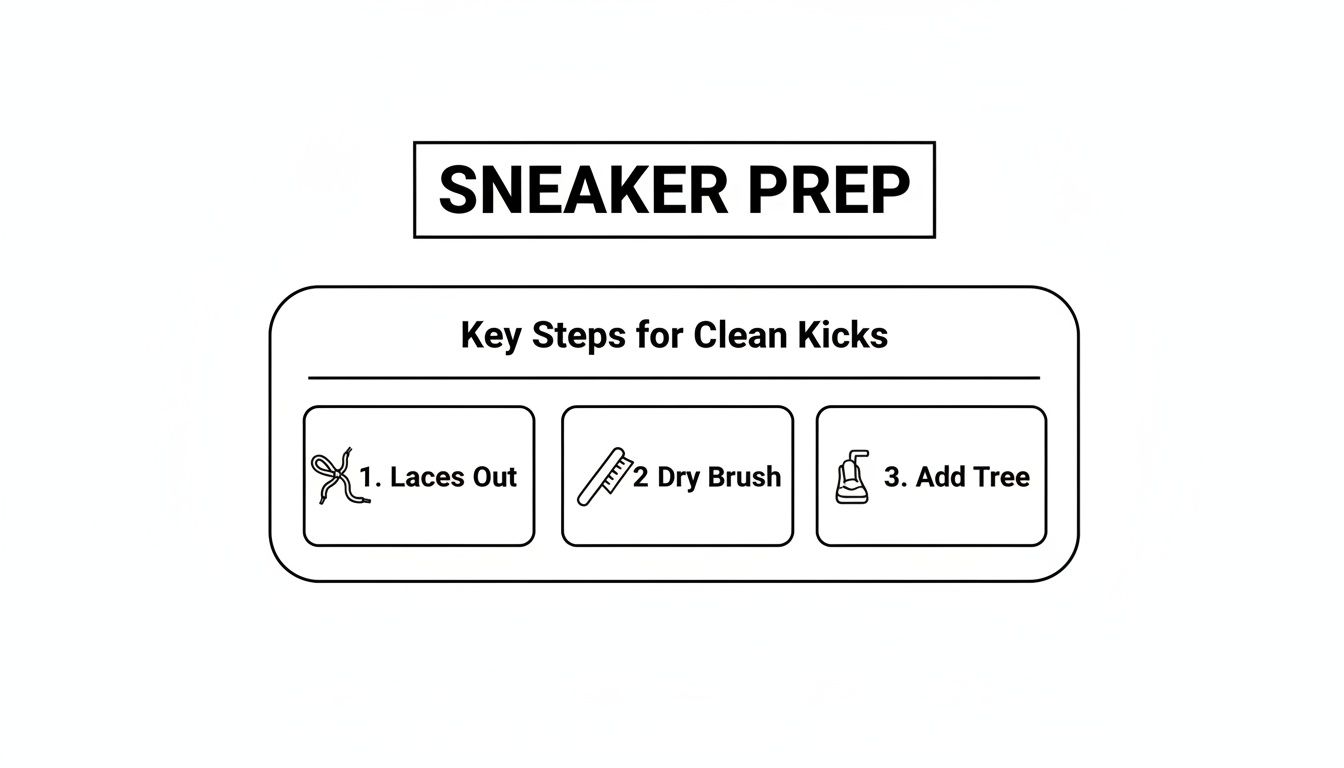
These three steps are foundational: remove laces, perform a thorough dry brush, and insert a shoe tree for support. Adhering to this protocol consistently sets the stage for a flawless result.
To assist, we've developed a quick reference table breaking down the essential parameters for each material, helping you avoid common and costly errors.
Quick Reference Cleaning Guide by Material
| Material Type | Recommended Brush | Water Level | Cleaning Motion | Key Precaution |
|---|---|---|---|---|
| Leather | Soft Brush | Minimal | Small, gentle circles | Wipe residue immediately; must condition after drying |
| Suede/Nubuck | Suede Brush & Eraser | Extremely low (foam only) | Light, quick agitation | Never apply liquid directly; brush the nap when dry |
| Canvas/Cotton | Medium-Stiff Brush | Moderate | Firm, circular scrubbing | Rinse thoroughly to prevent yellowing soap stains |
| Knit/Mesh | Soft Brush | Low (foam only) | Gentle dabbing or sweeping | Use a shoe tree for support; never scrub aggressively |
| Rubber/Soles | Stiff Brush | Generous | Vigorous, multi-directional scrubbing | Avoid harsh chemicals that cause yellowing over time |
Consider this table your standard operating procedure. Following these guidelines will protect your investment. Now, let's detail the specifics for each material.
Handling Smooth and Tumbled Leather
Leather is durable but is fundamentally a natural skin. Oversaturating it with water or using harsh chemicals will lead to drying, cracking, and discoloration. The objective is to gently cleanse the surface without stripping its essential oils.
For smooth or tumbled leather, use water sparingly. Excess moisture will cause the leather to stiffen as it dries. Add a few drops of Gold Standard Sneaker Cleaner to a bowl of cool water, dip a soft-bristled brush, and lightly work the solution into the surface using small, circular motions. You are aiming for a light foam to lift contaminants from the grain.
Immediately upon completion, use a microfiber towel to wipe away all traces of foam and moisture. Residual soap on leather dulls the finish and attracts more dirt. The final, critical step is conditioning. Once the shoe is completely dry, apply a quality leather conditioner to restore moisture and luster.
The Delicate Touch for Suede and Nubuck
Suede and nubuck are notoriously sensitive materials. Their soft, napped texture is easily damaged. Excess water is the primary adversary, leading to stains, matting, and a hardened texture.
Always begin with a dry cleaning method. Always.
A quality suede eraser can lift most surface scuffs. For deeper grime, use a suede brush to gently work the nap back and forth, dislodging dirt particles from the fibers. Only after these dry methods have been exhausted should a liquid cleaner be considered.
The key to using a liquid cleaner on suede is control. Never apply the solution directly. Instead, dip a soft brush into the foamed solution, tap off all excess liquid, and lightly agitate the stained area. Work quickly and blot immediately with a microfiber towel to absorb as much moisture as possible.
Once the area is dry, finish by brushing the nap to a uniform direction to restore its velvety finish. Rushing this process or using excessive water will permanently damage suede. Patience is essential.
Cleaning Durable Canvas and Cotton
Classic canvas and cotton sneakers are designed for durability. These woven fabrics are highly absorbent, meaning they stain easily but can also be cleaned effectively with the correct procedure.
You can be more generous with your water and cleaning solution here. Employ a medium-stiff brush and scrub in firm, circular motions to work the bristles deep into the weave and dislodge set-in dirt. For stubborn stains, apply a drop of cleaner directly to the spot, let it sit for a minute, and then resume scrubbing.
The most common mistake with canvas is improper rinsing. The fabric can retain soap, which leaves a stiff, yellowish residue upon drying. To prevent this, use a clean microfiber towel dampened with fresh water to wipe down the entire shoe until no foam is visible.
The global demand for quality shoe care is accelerating. The Asia-Pacific market, for instance, is projected to grow at a compound annual rate of 12.56 percent from 2025 to 2032. This reflects a worldwide movement toward more informed consumer habits. You can review the full analysis of this global shoe care market expansion for further data.
Navigating Knits and Performance Mesh
Modern sneakers with knit and mesh uppers are engineered for breathability, but their delicate construction requires a careful cleaning approach. The synthetic weaves can easily snag, fray, or stretch if handled aggressively.
For these materials, a soft-bristled brush is the only acceptable tool. A stiffer brush will catch on the fibers and cause irreversible damage. The cleaning motion must also be adapted. Avoid hard circular scrubbing in favor of gentle dabbing or light, sweeping strokes that follow the direction of the weave.
- Work with Foam, Not Water: Agitate your cleaner into a light foam and apply only the foam to your brush. This prevents the material from becoming saturated and heavy.
- Provide Internal Support: Insert a shoe tree or your hand inside the shoe to create a firm cleaning surface. This prevents the material from stretching.
- Blot, Don't Rub, to Dry: Press a microfiber towel against the surface to absorb moisture. Rubbing will cause pilling and fray the delicate fibers.
By tailoring your approach to each material, you are not just cleaning your shoes—you are preserving their integrity. This expert-level care ensures every pair in your collection maintains its value and appearance for years.
Cleaning Midsoles, Laces, and Tough Stains
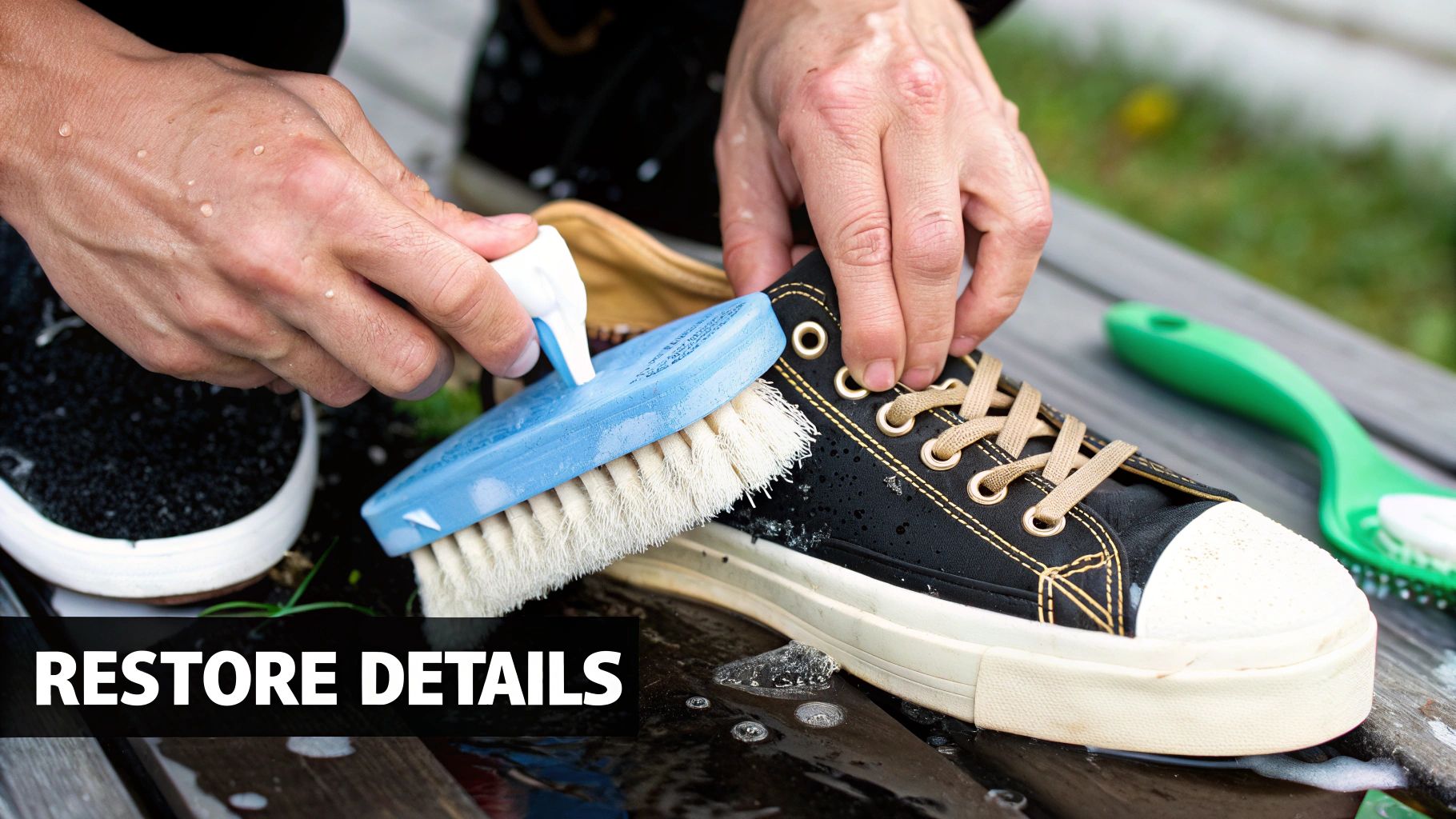
Pristine uppers are only part of the equation. Transitioning from a standard clean to a full restoration requires mastering the details: midsoles, laces, and stubborn localized stains. These areas endure the most contact with contaminants and require specific techniques to achieve a truly flawless, "box-fresh" finish.
This is where a high-quality, gentle sneaker cleaner demonstrates its value, allowing you to lift tough stains without resorting to harsh chemicals that can permanently damage your footwear.
Reviving Your Midsoles and Outsoles
Midsoles are the primary impact zone for scuffs, dirt, and discoloration. Whether constructed from durable rubber or modern foam compounds, they require a more aggressive approach than the uppers.
A stiff-bristled brush is the correct tool for this task. It allows for sufficient pressure to clean textured surfaces and crevices where dirt becomes trapped. Be generous with your Gold Standard solution and water to create a rich foam capable of breaking down caked-on grime.
Scrub vigorously and in multiple directions to dislodge dirt from all angles. For stubborn scuffs on rubber or polyurethane, apply a concentrated drop of cleaner directly onto the brush. After scrubbing, wipe the entire sole with a microfiber towel to reveal the restored surface.
The Overlooked Impact of Clean Laces
Soiled laces detract from the appearance of an otherwise clean pair of sneakers. This detail makes a significant difference. Fortunately, cleaning them is a straightforward process that can be done while the shoes are drying.
The most effective method is as follows:
- Remove the laces from the sneakers.
- Submerge them in a small bowl of warm water with a few drops of a quality sneaker cleaner.
- Allow them to soak for at least 30 minutes to an hour. This will loosen embedded dirt.
- After soaking, rub the laces against each other between your hands to work out any remaining grime.
- Rinse them under cool water until all suds are gone, squeeze out excess water, and hang them to air dry.
Avoid the temptation to use a washing machine or dryer for your laces. The high heat and aggressive tumbling can fray the fabric and damage the plastic aglets. A simple hand wash is safer and more effective.
Tackling Stubborn and Specific Stains
Inevitably, you will encounter challenging stains from grass, oil, or coffee. The key is to act quickly and treat the spot directly to prevent it from setting or spreading. This is where spot-treating is the appropriate technique.
For an oil or grease stain, first blot the area with a dry cloth to absorb as much of the substance as possible. Then, apply a single drop of sneaker cleaner directly onto the stain. Allow it to penetrate for a few minutes before gently working it in with a soft brush and minimal water.
Grass stains require a similar approach. Apply the cleaner to the spot and use a soft brush in a small, circular motion. Continually blot the area with a clean, damp microfiber towel to lift the stain out of the fabric rather than pushing it deeper. For all spot treatments, patience is critical. Work in small, gentle increments until the stain is removed.
The specialized sneaker care industry has become a significant market segment. The sneaker care service market was valued at USD 2.1 billion in 2023, with cleaning services alone projected to reach USD 628 million in 2024. This data illustrates the high demand for expert-level footwear preservation. You can explore the full sneaker care service market report for a comprehensive analysis.
How to Properly Dry and Store Your Sneakers
The cleaning process is not complete once the last of the foam has been wiped away. The drying and storage phases are as critical as the cleaning itself. Mishandling this final step can negate your efforts, leading to warped materials, weakened adhesives, and permanent structural damage.
Impatience is the enemy here. Rushing the drying process is the most common way to ruin a perfectly clean pair of sneakers. Proper procedure ensures your shoes not only look clean but also retain their original shape and structural integrity.
The Problem with Direct Heat
It is a common temptation to place damp sneakers near a radiator or use a hairdryer for a quick result. Do not do this. Concentrated, high heat is detrimental to modern footwear.
Intense heat can cause rubber and foam midsoles to warp, permanently altering the fit and cushioning of the shoe. More critically, it degrades the adhesives that bond the shoe together, weakening the sole's attachment to the upper and drastically reducing the footwear's lifespan.
Mastering the Air-Dry
The only safe and effective method for drying sneakers is air-drying. This allows moisture to evaporate naturally without subjecting the materials to thermal shock.
For optimal results, follow this procedure:
- Absorb Internal Moisture: Immediately after cleaning, stuff the inside of each shoe with clean paper towels or unprinted newspaper. This is crucial for drawing moisture out of the interior lining. For the first day, replace the damp paper every few hours to accelerate the process.
- Select the Right Environment: Place your sneakers in a well-ventilated area at room temperature. Good airflow is essential, but keep them out of direct sunlight. UV radiation can fade colors and cause premature yellowing of white rubber soles.
- Exercise Patience: Depending on the material and level of saturation, sneakers can take 24 to 48 hours to dry completely. Do not rush this stage. Wearing them while still internally damp promotes microbial growth and material degradation.
Professional Tip: Always remove the insoles and allow them to dry separately. This simple step significantly improves air circulation inside the shoe and reduces overall drying time.
Smart Storage for a Lasting Collection
Proper storage is about long-term preservation. Piling footwear in a closet leads to dust accumulation, deformation of the uppers, and a crushed appearance.
Avoid long-term storage in original cardboard boxes, as the acid content can contribute to yellowing. The professional standard is clear, drop-front sneaker boxes, which protect from dust and UV light while allowing for easy inventory.
For ideal shape retention, always insert a pair of quality cedar shoe trees into your sneakers when they are not in use. Cedar absorbs residual moisture and helps maintain the intended shape of the shoe.
Got Questions? We’ve Got Answers.
Even with a detailed methodology, questions will arise. We've addressed the most common inquiries to provide you with the confidence to handle any cleaning challenge.
This section serves as a reference for real-world scenarios, offering field-tested answers.
How Often Should I Actually Clean My Sneakers?
Frequency depends on usage, but a structured approach is best:
- After Each Wear: Perform a quick dry brush. This takes less than a minute and prevents loose surface dirt from becoming embedded, simplifying future deep cleans.
- Spot Treatment: Address scuffs or spills immediately. A quick spot clean with a quality solution prevents a minor issue from becoming a permanent stain.
- Deep Cleaning: For daily wear sneakers, a full deep clean every 2-3 weeks is a good cadence. For collection pieces worn infrequently, clean them as needed or before placing them into storage.
Can I Just Use Dish Soap or Bleach?
This is the most common and damaging mistake. Household cleaners are formulated for hard, non-porous surfaces, not the specialized materials in your footwear.
Dish soap contains degreasers that strip essential oils from leather and can leave a tacky residue that attracts more dirt. Bleach is a harsh corrosive that will cause irreversible yellowing on soles and degrade fabric fibers. A pH-neutral, specially formulated sneaker cleaner is the only way to clean effectively without causing damage.
You invested in your sneakers; invest in their care. Using an inappropriate cleaner from under the sink is a shortcut that almost always results in permanent damage.
Is It Okay to Throw My Sneakers in the Washing Machine?
We strongly advise against it. A machine wash cycle is far too aggressive for the construction of most sneakers.
The combination of high heat, prolonged submersion, and tumbling action can warp the shoe's shape, dissolve adhesives, and shred delicate materials like performance knits or premium suede. Hand cleaning provides total control, allowing you to apply the correct pressure and technique to each specific part of the shoe.
What’s the Best Way to Kill Bad Odors?
Odor is the result of bacteria thriving in a moist environment. Therefore, prevention is the first line of defense. Always allow your sneakers to air out completely after each wear. Never store them in an enclosed space like a closet or gym bag while damp.
If odor is already present, remove and clean the insoles separately, as they absorb the most perspiration. After a full deep clean, ensure the sneakers are 100% dry before wearing them. For persistent odors, cedar shoe trees are the professional solution. Cedar is naturally hygroscopic (absorbs moisture) and possesses antimicrobial properties that neutralize odor at its source.
Ready to provide your footwear with the expert care it deserves? The Gold Standard Premium Shoe Cleaner Kit contains everything you need to restore your collection.