

Shoe wipes are your first line of defense in footwear maintenance. Consider them a precision tool for immediate response—addressing fresh scuffs, drips, and surface-level dirt before they can set and cause permanent staining.
However, a wipe is a maintenance tool, not a substitute for a comprehensive, deep clean. Understanding this distinction is fundamental to proper footwear care.
The Role of Shoe Wipes in a Care Regimen
Shoe wipes are the tactical component of a complete footwear care system. They are engineered for speed and precision, designed to manage minor incidents on the spot. Their primary function is not restoration but the proactive management of daily grime, which extends the interval between deep cleanings and preserves the original condition of your footwear.
Misunderstanding their application is a common error. Expecting a wipe to restore heavily soiled shoes will lead to unsatisfactory results and can cause material damage, particularly on delicate surfaces like suede or open-weave knits.
When to Deploy a Shoe Wipe
The effectiveness of a shoe wipe is maximized in specific, time-sensitive scenarios. Having them readily available allows for immediate action, which is often the critical factor in preventing a minor spill from becoming a permanent stain.
Prime scenarios for using a shoe wipe include:
- Immediate Spill Response: Food drips, coffee splashes, or contact with contaminated water. A wipe is the optimal tool for blotting and lifting the contaminant before it penetrates the material fibers.
- Post-Wear Maintenance: A routine pass over the midsoles and uppers after each wear removes the daily accumulation of dust and surface grime. This simple habit prevents buildup that can degrade materials over time.
- Fresh Scuff Removal: Minor scuffs on smooth leather or rubber midsoles can often be buffed out with a wipe before they abrade the surface permanently.
- Pre-Storage Preparation: Before placing footwear into storage, a gentle wipe-down removes surface contaminants that could otherwise set and cause discoloration or material degradation over time.
When to Escalate to a Full Cleaning Kit
Equally important is knowing when a wipe is insufficient. Attempting a heavy-duty cleaning task with a wipe is both inefficient and counterproductive; it often results in smearing dirt rather than removing it.
A wipe is for maintenance, not restoration. For set-in stains, caked-on mud, or deep material conditioning, you must escalate to a full cleaning kit containing the appropriate brushes and solutions. This is the professional standard for preserving footwear longevity.
A full cleaning kit is necessary for the following situations:
- Set-in Stains: Stains that have had time to bond with the material's fibers require a dedicated cleaning solution to break them down chemically and lift them from within the material.
- Heavy Soil and Grime: Footwear caked in mud or thick dirt requires a stiff-bristled brush to physically dislodge the heavy debris before any cleaning solution is applied. A wipe will only create a slurry.
- Deep Conditioning: Materials like leather require the replenishment of oils and conditioners to maintain suppleness and prevent cracking. A surface wipe cannot provide this essential treatment.
- Suede or Nubuck Care: These napped leathers demand specialized tools, such as a suede eraser and a nap-restoring brush, to clean effectively without damaging their delicate texture. A wet wipe is contraindicated for these materials.
Shoe Wipes Field Guide: Application Matrix
Deciding whether to use a wipe depends on the material and the nature of the soil. This matrix provides a field-tested reference to guide your immediate response.
| Scenario | Use a Wipe? | Expert Rationale |
|---|---|---|
| Fresh coffee drip on a leather sneaker | Yes, immediately. | The non-porous surface of finished leather is ideal for a quick wipe. Swift action prevents the liquid from penetrating seams or un-finished edges. |
| Mud caked onto mesh running shoes | No. | A wipe will push mud deeper into the mesh fibers. This requires a brush to remove dry debris, followed by a proper cleaning solution. |
| Light dust on rubber midsoles | Yes, absolutely. | This is a perfect application for a wipe. It is fast and effective for removing surface-level dust and dirt from non-porous materials like rubber or vinyl. |
| An oil stain on a suede or nubuck shoe | No. | Water-based wipes will create water spots and can permanently damage the delicate nap of suede. A specialized dry-cleaning suede kit is required. |
| Scuff mark on a white sole | Yes. | Many professional-grade wipes have a textured side designed for this purpose. Moderate pressure can effectively lift scuffs from non-porous sole materials. |
| Prepping shoes for long-term storage | Yes, as a first step. | A gentle wipe-down is an excellent way to remove surface dirt before storage. For leather, this should be followed by a conditioning treatment. |
The objective is not merely to clean footwear, but to do so with the correct methodology to ensure its preservation and longevity.
A Material-by-Material Guide to Using Wipes Safely
Not all footwear materials are created equal. The most common and damaging mistake we observe is the application of a universal cleaning method across different materials, such as treating a delicate knit with the same technique as a durable leather upper. A material-specific approach is non-negotiable in professional footwear care.
To use shoe wipes effectively and without causing damage, you must adapt your technique to the specific material. This is the field-tested protocol used by material experts. Mastering these nuances is what separates a successful touch-up from an irreversible error.
Smooth Leather and Synthetics
These materials are generally the most forgiving due to their non-porous surfaces, which resist immediate absorption of most liquids. This makes them ideal candidates for cleaning with a wipe.
The correct technique is a gentle, circular motion. Aggressive scrubbing is to be avoided, as it can dull the finish or strip the protective top coat on certain leathers. The goal is to lift contaminants from the surface, allowing the wipe's cleaning solution to do the work. For tougher scuffs, moderate pressure can be applied, but the primary cleaning action should come from the formula, not from brute force.
Canvas and Mesh
Woven materials like canvas and mesh present a different challenge. Their texture traps dirt within the fibers. The most common error is aggressive scrubbing, which frays the weave and drives the stain deeper, often making it permanent.
The correct method is a gentle dabbing or blotting technique.
- First, fold the wipe to a clean section to avoid re-depositing dirt.
- Press the wipe firmly onto the soiled area.
- Lift the wipe directly upward—do not drag it across the surface.
- Observe the dirt transfer onto the wipe.
- Repeat with a clean section of the wipe until the spot is lifted.
This technique extracts the soil from the fibers rather than smearing it. This is especially critical for delicate mesh, where snagging the fibers is a significant risk.
Expert Takeaway: Technique is paramount. The difference between a clean sneaker and a damaged one often comes down to how the wipe is used. Blot on canvas; use gentle circles on leather. These are foundational principles.
Rubber Midsoles and Outsoles
Midsoles are consistently exposed to scuffs and grime. Fortunately, rubber and similar sole compounds are durable and can withstand more direct cleaning pressure.
This is the one area where more force is permissible. Use the textured side of a quality shoe wipe and apply firm, back-and-forth motions to scrub scuffed areas. The combination of the textured surface and the cleaning solution is highly effective against dirt and scuff marks. Conclude by wiping the entire midsole with a clean section of the wipe to remove any residual solution.
Here is a simplified visualization of the correct process.
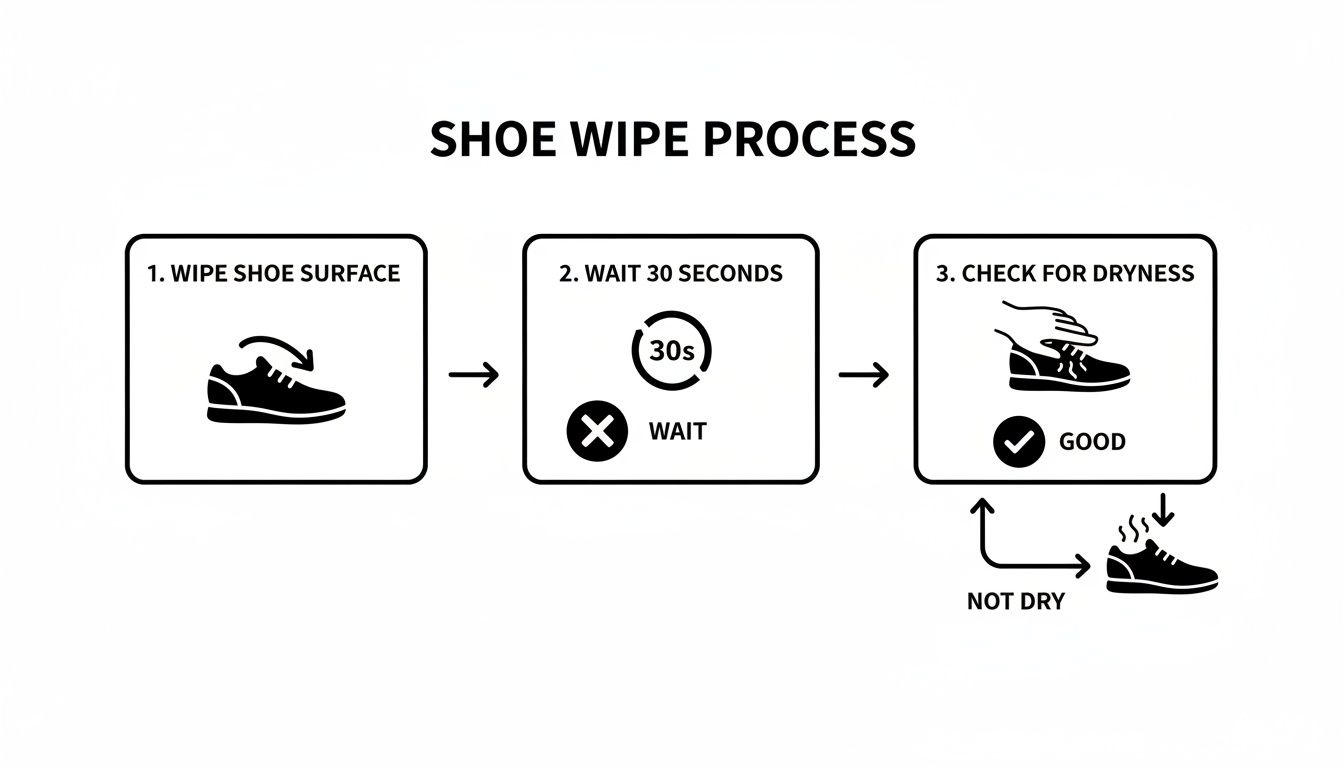
This flowchart illustrates the core steps: a controlled application, a brief dwell time for the solution to act, and a final inspection. This ensures effective cleaning without oversaturating the material.
Suede and Nubuck: A Word of Caution
These napped leathers require a specialized approach. As a standing rule, we advise against using any water-based cleaner on suede or nubuck, including most shoe wipes. Moisture can cause staining, stiffen the material, and permanently ruin its soft, velvety texture.
In an emergency—such as a single, fresh drop of liquid—a wipe may be used with extreme caution and a specific technique that emphasizes minimal moisture.
- First, blot the wipe on a dry paper towel to remove excess solution.
- Gently press the now merely damp wipe onto the spot for a brief moment. Do not rub.
- Immediately follow by dabbing the area with a clean, dry cloth to absorb residual moisture.
- Once the area is completely dry, a suede brush must be used to restore the nap.
This is a last-resort measure. The safest and most effective method for cleaning these materials remains a dedicated dry-cleaning kit featuring a suede eraser and brush. For any significant cleaning task, wipes should be avoided entirely.
The Full Routine: What to Do Before and After You Wipe
Effective use of a shoe wipe extends beyond the wiping action itself. The preparatory and follow-up steps are what elevate a simple touch-up to a professional-level maintenance routine. Omitting these steps is a primary cause of unsatisfactory results.
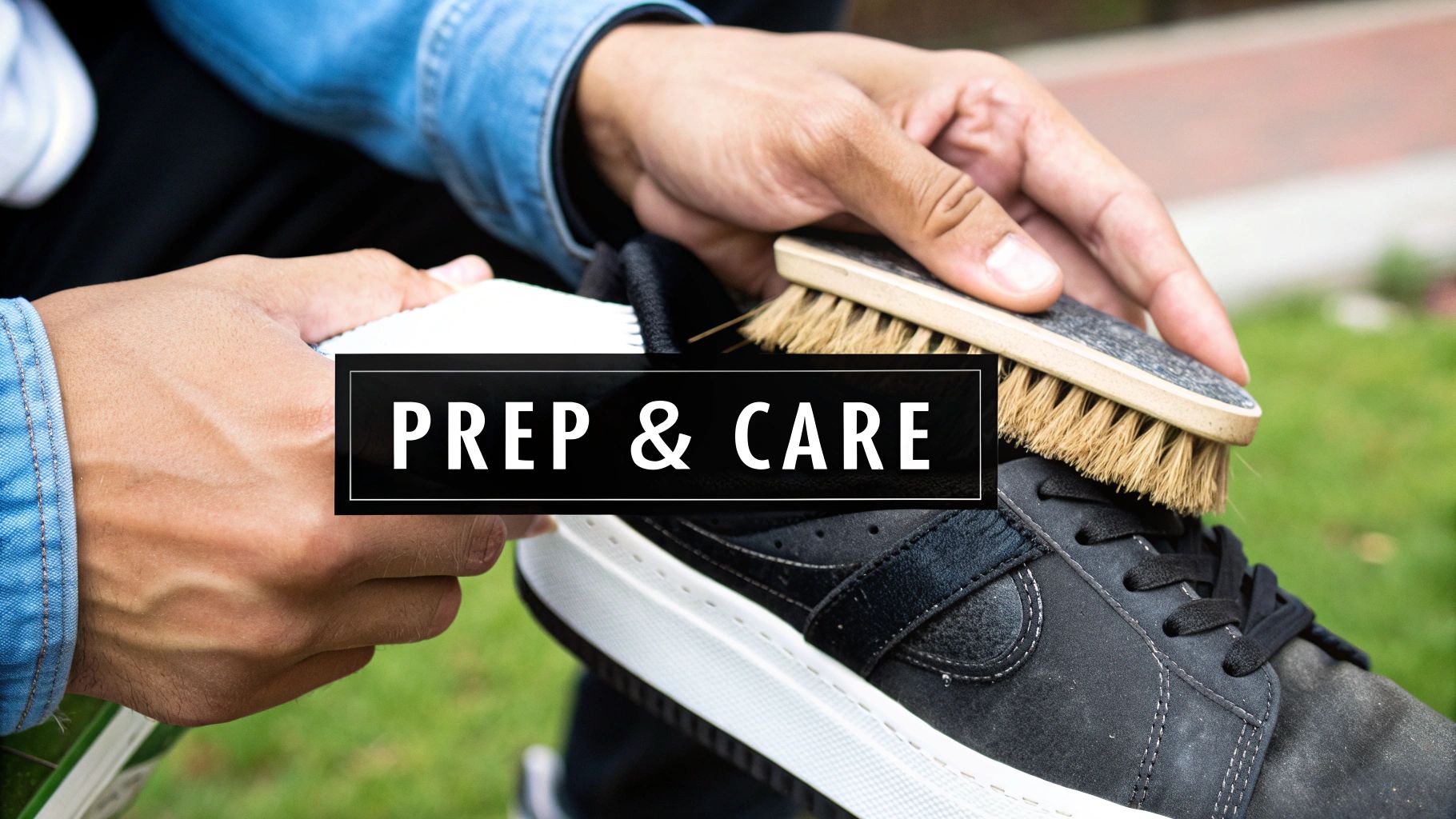
Prep Work Is Non-Negotiable
Before a wipe touches your footwear, loose surface debris must be removed. This is analogous to sweeping a floor before mopping.
Use a soft-bristled shoe brush to give the entire shoe a thorough pass. This action dislodges loose dust, dirt, and grit. If this step is skipped, the wipe will simply grind this abrasive debris into the material, potentially causing micro-scratches on leather or pushing dirt deeper into the weave of canvas or mesh.
This preparatory step takes less than a minute but is essential for allowing the wipe’s cleaning solution to work directly on the stain itself, rather than on the superficial layer of dust covering it.
The Post-Wipe Protocol
Once the surface is clean, the process is not complete. The subsequent steps ensure the footwear dries correctly and retains its original shape and texture.
-
Allow for Air Circulation. Never place a damp shoe directly into a box or an enclosed closet. Trapped moisture promotes mildew growth and can compromise the integrity of the shoe's adhesives. Allow the footwear to air dry completely in a well-ventilated area, away from direct sunlight or heat sources.
-
Restore Material Texture. For an emergency spot-clean on suede or nubuck, wait until the area is 100% dry. Then, use a proper suede brush to gently work the nap back into a uniform direction. This step is critical for reviving the material's soft, velvety finish.
-
Final Inspection. Once dry, inspect the shoes under good lighting. If any residue from the cleaning solution is visible, a quick buff with a clean, dry microfiber cloth will remove it.
This complete process—prep, wipe, and follow-up—is the cornerstone of effective footwear maintenance. It transforms a simple task into a systematic method for protecting your investment.
The growing consumer understanding of proper care is reflected in market trends. The global shoe care market was valued at USD 4.47 billion in 2024 and is projected to reach USD 7.23 billion by 2032. For collectors and resellers, well-maintained footwear can command prices up to 25% higher, underscoring the financial value of a meticulous cleaning process. You can find more data on the shoe care industry's expansion in market reports.
Common Mistakes That Can Ruin Your Sneakers
Even with the best intentions, a shoe wipe can cause significant damage if used improperly. Understanding common pitfalls is essential to providing proper care rather than inadvertently causing harm.
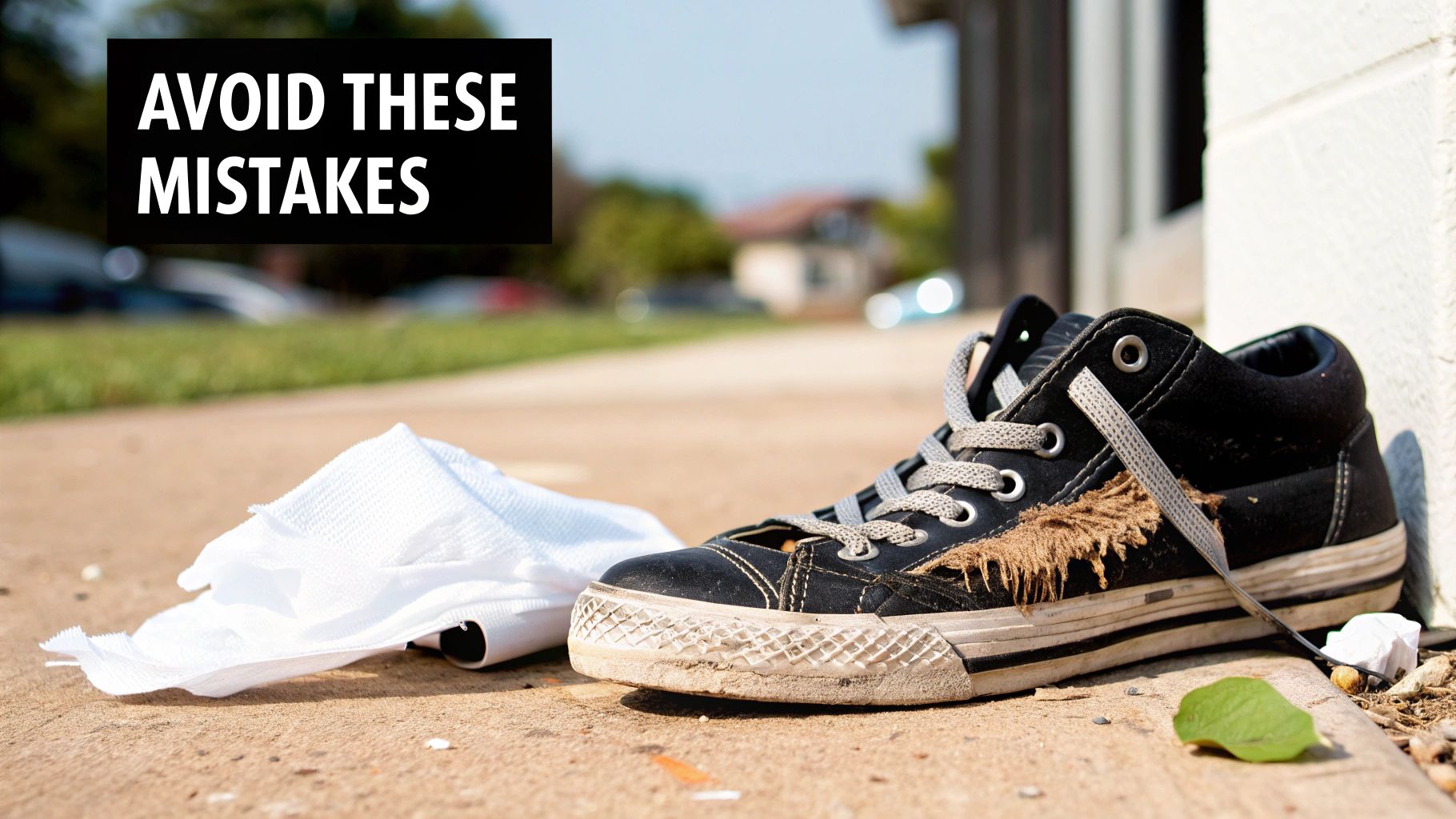
The most critical error is using the wrong tool for the job. Household disinfectant wipes or baby wipes are not suitable substitutes for dedicated shoe wipes. Their formulations contain harsh chemicals and alcohols that are detrimental to footwear materials.
These chemicals are designed for sanitation or skin care, not for preserving the complex materials used in modern footwear. They can:
- Dehydrate and crack leather by stripping its essential natural oils.
- Cause discoloration or yellowing, particularly on white midsoles and uppers.
- Weaken the adhesives that bond the shoe's components together.
Always use wipes specifically formulated for footwear. Any other product introduces the risk of an irreversible chemical reaction.
Aggressive Scrubbing on Delicate Materials
Applying excessive force is another frequent mistake. While a durable rubber midsole can tolerate vigorous cleaning, materials like suede, nubuck, or knit uppers cannot. Aggressive scrubbing on these surfaces causes physical damage, including fraying fibers, pilling on knits, and permanent destruction of the delicate nap of suede.
Adhere to the guiding principles: blot and dab on absorbent textiles like canvas and mesh. On suede, exercise extreme caution and use minimal moisture. Attempting to force a stain out with pressure will only embed it deeper into the material.
A shoe wipe is a tool of finesse, not brute force. The objective is to lift the stain from the surface, not drive it further into the fibers. Patience prevents permanent damage.
The Dangers of Cross-Contamination
Using a single wipe for multiple pairs of shoes is a critical error in cleaning protocol. Once a wipe has absorbed dirt and grime from one shoe, it becomes a vector for contamination.
Applying that same soiled wipe to another pair, especially one of a lighter color, is counterproductive. It smears existing dirt and can even transfer dye between shoes, creating new stains. When a wipe appears visibly soiled, it has reached its capacity. Discard it and use a fresh one.
The growth of the sneaker care market is a testament to the increasing demand for specialized tools. This market was valued at approximately USD 450 million in 2024, with the shoe cleaning wipes segment alone projected to reach USD 850 million by 2033. This reflects a broader understanding that proper care requires purpose-built products. You can read more about the industry's growth in this market analysis.
Beyond the Wipe: When to Break Out the Full Cleaning Kit
Understanding the limitations of your tools is a mark of expertise. Shoe wipes are indispensable for daily maintenance and immediate incident response, but they are not designed for deep restoration. The skill lies in recognizing when to escalate from a wipe to a comprehensive cleaning kit to ensure the long-term health of your footwear.
A wipe addresses surface-level issues. A proper cleaning kit, equipped with specialized brushes and solutions, is required to penetrate the material, remove deep-seated grime, and replenish the essential conditioners that prevent materials from drying and cracking.
Clear Triggers for a Deep Clean
Certain conditions unequivocally demand a deep clean, rendering a simple wipe insufficient. These are the scenarios that require a full, restorative cleaning session.
-
Heavily Soiled Footwear: If your shoes are caked in mud or other heavy debris, a wipe will only smear the soil. A stiff brush is needed to remove the bulk of the material first, followed by a powerful cleaning solution to address the underlying grime.
-
Deeply Embedded Stains: Grass stains on canvas or salt lines on winter boots become chemically bonded with the fabric. These require a specialized cleaning solution formulated to penetrate the material, break down the stain at a molecular level, and lift it out from within—a task beyond the capability of a surface wipe.
-
Restoring Aged Leather: Over time, leather loses its natural oils, leading to a dry, faded appearance and eventual cracking. While a wipe can clean the surface, only a full kit with a dedicated conditioner can properly re-moisturize the material, restoring its flexibility and finish.
A wipe is your daily defender against new threats. A full kit is your specialized toolkit for serious restoration and preservation. Using the right tool for the job is the foundation of professional-grade care.
The convenience of wipes has driven significant market growth. The global wipes industry is projected to reach USD 39.5 billion by 2034. More specifically, the shoe-specific wipe market is on track to grow to $2.48 billion by 2033.
However, this convenience does not replace the necessity of thorough, restorative care when your footwear requires more than a surface treatment. You can find more details on this sector in this detailed analysis of the expanding wipes market.
Got Questions About Shoe Wipes? We've Got Answers.
Even with precise technique, questions arise. Here, we address the most common inquiries we receive from serious collectors and daily wearers about the correct use of shoe wipes.
How Often Should I Actually Use Shoe Wipes?
Shoe wipes are intended for spot cleaning and immediate response, not as a daily ritual for every pair of footwear. Their purpose is to address a minor issue before it sets and becomes a significant stain.
For frequently worn shoes, a quick wipe-down of the midsoles and uppers at the end of the day is a sound preventative practice. This removes the daily accumulation of surface grime. For less frequently worn or high-value pairs, use a wipe only as needed to address any scuffs or marks incurred during wear, immediately before returning them to storage.
Overuse, especially on delicate materials like suede or knit, introduces unnecessary moisture and friction and should be avoided.
Can I Use One Wipe for the Whole Shoe?
While technically possible, it is not recommended for a proper clean. The professional method involves using different sections of the wipe for different areas of the shoe to prevent cross-contamination. You should not transfer dirt from the outsole onto the clean upper.
A systematic approach is best:
- Begin with the uppers (toe box, side panels, heel).
- Proceed to the midsole.
- Finish with the most soiled area: the outsole.
If the footwear is heavily soiled, use a second wipe. It is far better than attempting to clean with an already saturated and dirty wipe.
Expert Insight: A dirty wipe does not clean; it redistributes soil. Once a wipe is visibly soiled, its useful life for that cleaning session is over. Use a fresh one to complete the job correctly.
Are Your Wipes Safe for All Colors?
Our formula is developed with high-quality, pH-balanced cleaning agents that are safe for common footwear materials: finished leather, synthetics, vinyl, and rubber. They undergo rigorous testing to be color-safe, meaning they will not cause color bleeding or fading on properly finished materials.
That said, we always advocate for a cautious approach with any new material. For sensitive materials like certain dyed canvases, suede, or nubuck, perform a patch test. Apply the wipe to a small, inconspicuous area, such as the inside of the heel or under the tongue. This simple step takes only a few seconds and provides complete confidence before proceeding.
What’s the Real Difference in a “Premium” Shoe Wipe?
The distinction lies in two key components: the cleaning formula and the wipe material itself. A premium wipe employs a sophisticated blend of cleaning agents designed to lift and trap dirt without using harsh alcohols or solvents that can dehydrate, crack, or yellow footwear materials over time.
The physical wipe is equally important. It is constructed from a durable, non-abrasive fabric that will not disintegrate, tear, or leave behind lint residue, even when used on textured surfaces like a midsole. Lower-quality wipes compromise on both formulation and material, resulting in a product that can cause more harm than good.
For a cleaning solution engineered by footwear material experts committed to protecting your investment, trust Gold Standard. Our products are formulated to deliver a superior clean without compromising the integrity of your favorite footwear. Explore the complete shoe care system at our official Gold Standard shop.