

An effective shoe odor eliminator does not mask a smell; it neutralizes its source. The correct strategy is a three-part process: methodical cleaning to remove existing bacteria, proper drying to eliminate moisture, and a high-quality deodorizing spray to neutralize any remaining odor molecules. This is the professional approach to solving the problem permanently, not temporarily.
The Science of Shoe Odor: Material, Moisture, and Microbiology
To properly treat shoe odor, one must first understand its origin. The interior of a shoe is a prime environment for microbiological growth: it is warm, dark, and frequently damp. This combination of factors creates an incubator for bacteria.
The process begins with perspiration. The foot sweats to regulate temperature, and that moisture is absorbed by the sock, the shoe's lining, and the insole. Sweat itself is largely odorless. The odor is the byproduct of naturally occurring bacteria on the skin, which metabolize the lipids and proteins in sweat. These bacteria produce organic acids as waste, which are responsible for the distinct, unpleasant smell associated with foot odor.
How Shoe Materials Influence Odor Retention
The material composition of a shoe dictates how it manages moisture and airflow, which directly impacts how quickly and intensely odors develop. Each material presents a unique challenge.
- Leather and Suede: As natural hides, these materials are porous and highly absorbent. They trap moisture deep within their fibrous structure, making complete evaporation difficult. Over time, odor becomes embedded in the material itself.
- Synthetic Knits and Mesh: Common in athletic footwear for their breathability, the tight weave of these materials is highly effective at trapping bacteria and exfoliated skin cells, particularly after strenuous use.
- Canvas: Similar to cotton, canvas absorbs moisture readily. If not allowed to dry completely after wear or cleaning, it can quickly develop a musty, mildew-like odor.
- Rubber and Foam: These materials, often used for midsoles and insoles, are highly porous and act like sponges, absorbing sweat and providing a persistent habitat for bacteria. This is a critical area that is often overlooked during cleaning.
This diagram illustrates the relationship between sweat, bacteria, and the enclosed shoe environment.
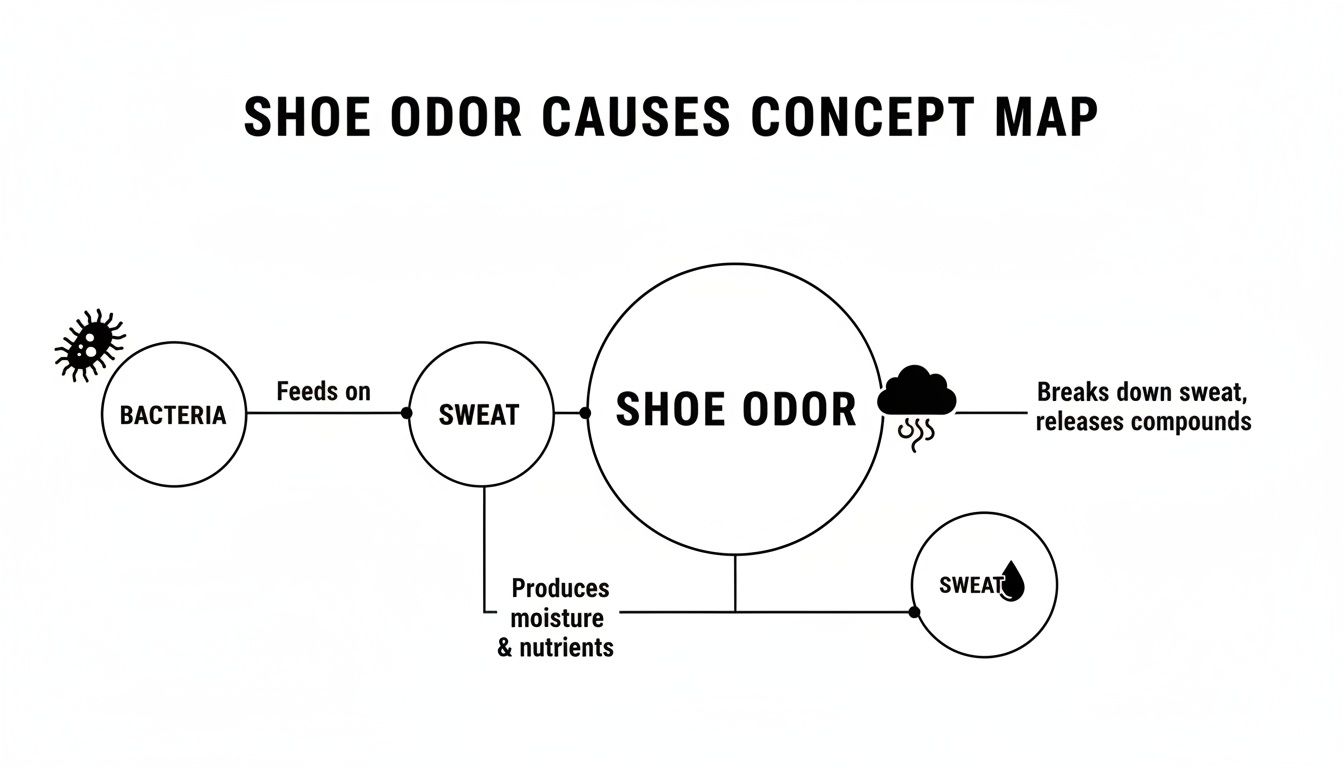
The image clarifies a key principle: bacteria metabolizing sweat is the fundamental cause of shoe odor. This is why masking fragrances are an insufficient, short-term tactic.
A proactive approach is superior to a reactive one. Understanding how a specific footwear material interacts with moisture is the first step toward preventing odor before it starts.
The demand for effective shoe odor eliminator solutions has created a significant market. In 2023, the industry was valued at $452 million and is projected to grow as consumer focus on hygiene and footwear longevity increases. This is unsurprising, as a high percentage of daily shoe wearers report issues with odor. For a deeper analysis, you can read the full research about the shoe deodorizer market for a complete breakdown.
Understanding your materials allows you to move beyond generic advice and implement a targeted care regimen that is genuinely effective.
Odor Hotspots By Shoe Material
Different materials have inherent weaknesses where odor tends to concentrate. Identifying these is critical for effective treatment.
| Material Type | Primary Odor Cause | Common Care Mistake |
|---|---|---|
| Leather & Suede | Deeply absorbed perspiration trapped in porous fibers. | Using harsh chemical cleaners that strip natural oils or failing to allow a 24-hour rest period between wears. |
| Synthetics & Mesh | Bacteria and skin cells trapped within the tight weave of the fabric. | Machine washing without first treating the insoles and lining, where the majority of organic matter accumulates. |
| Canvas | High moisture absorption leading to mildew growth. | Insufficient drying time after cleaning, which allows musty odors to set into the fabric. |
| Rubber & Foam | The insole and midsole absorbing sweat like a sponge. | Neglecting to remove and separately clean or treat the insoles, which are the primary source of the odor. |
By recognizing the unique properties of each material, you can develop a cleaning and deodorizing routine that preserves both the aesthetic and freshness of your footwear collection.
The Foundational Cleaning Process for Odor Removal
A quality shoes odor eliminator is only effective on a clean surface. Applying a deodorizer to a soiled shoe is analogous to using an air freshener in a room with an open waste bin; it temporarily masks the issue without addressing the underlying cause.
Lasting freshness begins with a methodical, deep clean. This is not simply scrubbing; it is a targeted removal of the bacteria and organic matter causing the odor, executed in a way that protects the shoe's materials. Skipping this step is the most common mistake in footwear care.
Preparing Footwear for a Deep Clean
Proper preparation ensures the cleaning process is even and effective, preventing the redistribution of dirt.
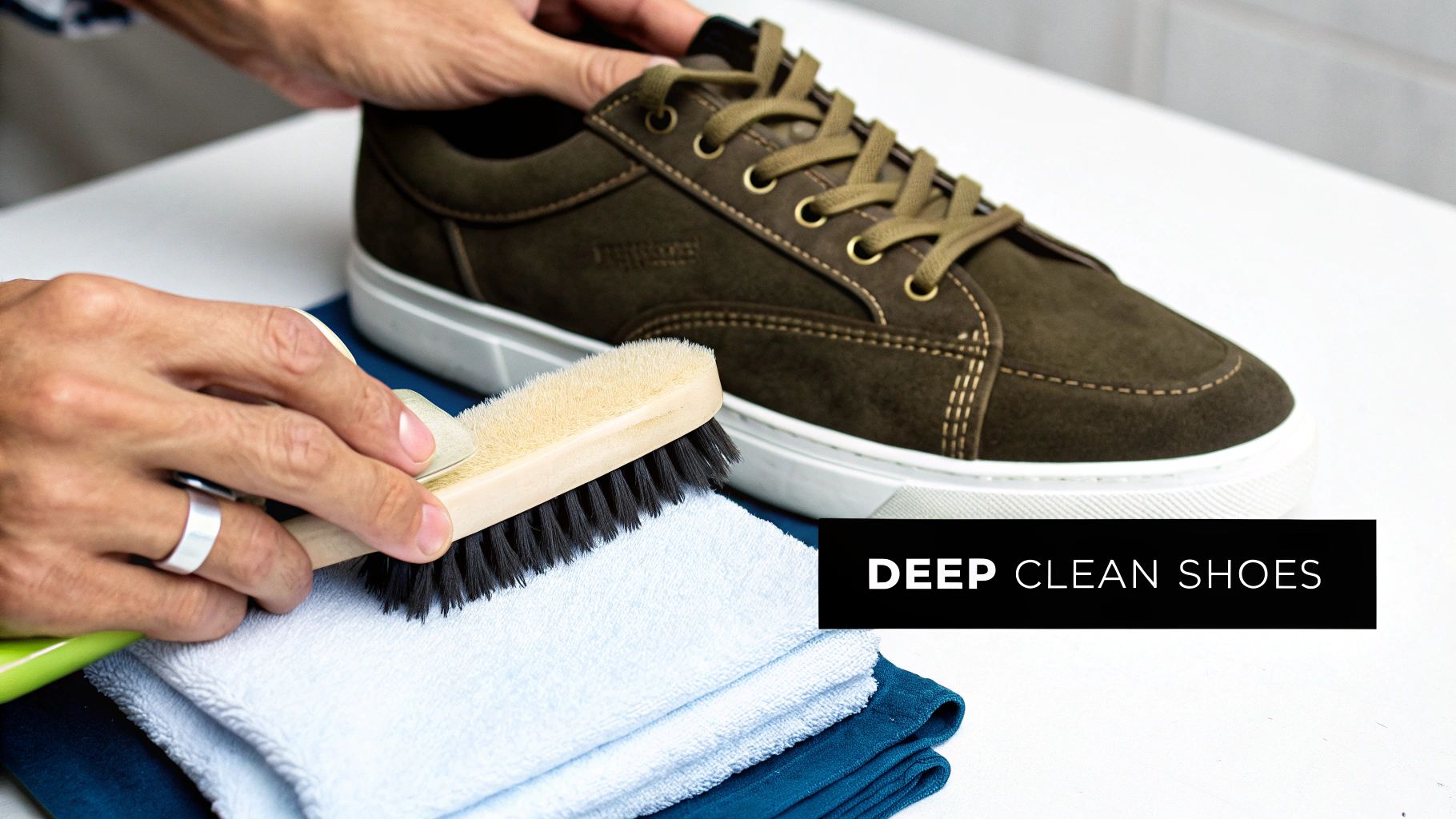
First, remove the laces and insoles. These components are magnets for odor, trapping perspiration and dirt deep within their fibers. Laces can be hand-washed in a small bowl with a gentle cleaning solution. Set the insoles aside for separate, focused treatment.
Next, use a dry brush—the Gold Standard Hog Hair Brush is ideal for this purpose—to remove all loose surface dirt and dust. Pay close attention to seams, the welt, and around the eyelets where debris collects. This dry-brushing step is critical; it prevents turning dry particulate into a muddy paste when a liquid cleaner is introduced.
Material-Specific Cleaning Protocols
Different materials require different cleaning methodologies. Applying an incorrect technique can cause irreversible damage, from water stains on suede to color bleeding on canvas.
- Suede and Nubuck: These delicate materials require a controlled approach. Apply a small amount of our Gold Standard All-Natural Shoe Cleaner to a soft brush and work it into the material using small, circular motions to generate a light foam. The key is to avoid saturating the surface. Immediately wipe the foam and lifted dirt away with a clean microfiber towel.
- Leather: For smooth leather, never apply cleaner directly to the shoe. Instead, apply the solution to a microfiber towel and then gently wipe the entire surface. This provides total control over moisture application, preventing streaks and protecting the finish.
- Canvas, Knits, and Mesh: These durable fabrics can withstand a more vigorous cleaning. The cleaner can be applied directly to a medium-stiff brush and scrubbed to create a lather that lifts out deep-set dirt. Additional pressure can be applied to stubborn stains before wiping clean.
- Rubber Midsoles and Outsoles: These components are built for durability and can be cleaned aggressively. Use a stiff brush and firm pressure to scrub away scuffs and ground-in dirt.
The insole is often the single most significant source of shoe odor. It must be cleaned separately and thoroughly. A quick wipe-down is insufficient; use a brush and our All-Natural Shoe Cleaner to scrub away the layer of absorbed sweat and bacteria.
By following this material-specific process, you are performing a technical restoration, not just a simple cleaning. This foundational work eliminates the bacterial breeding ground, making subsequent drying and deodorizing steps substantially more effective. It is the difference between a temporary fix and a permanent solution.
The Critical Role of Proper Drying Techniques
After a meticulous cleaning, the drying stage is where many well-intentioned efforts fail. This step is non-negotiable. Rushing the process will not only leave you with damp footwear but will also create the ideal environment for a new generation of odor-causing bacteria to flourish, negating all previous work.
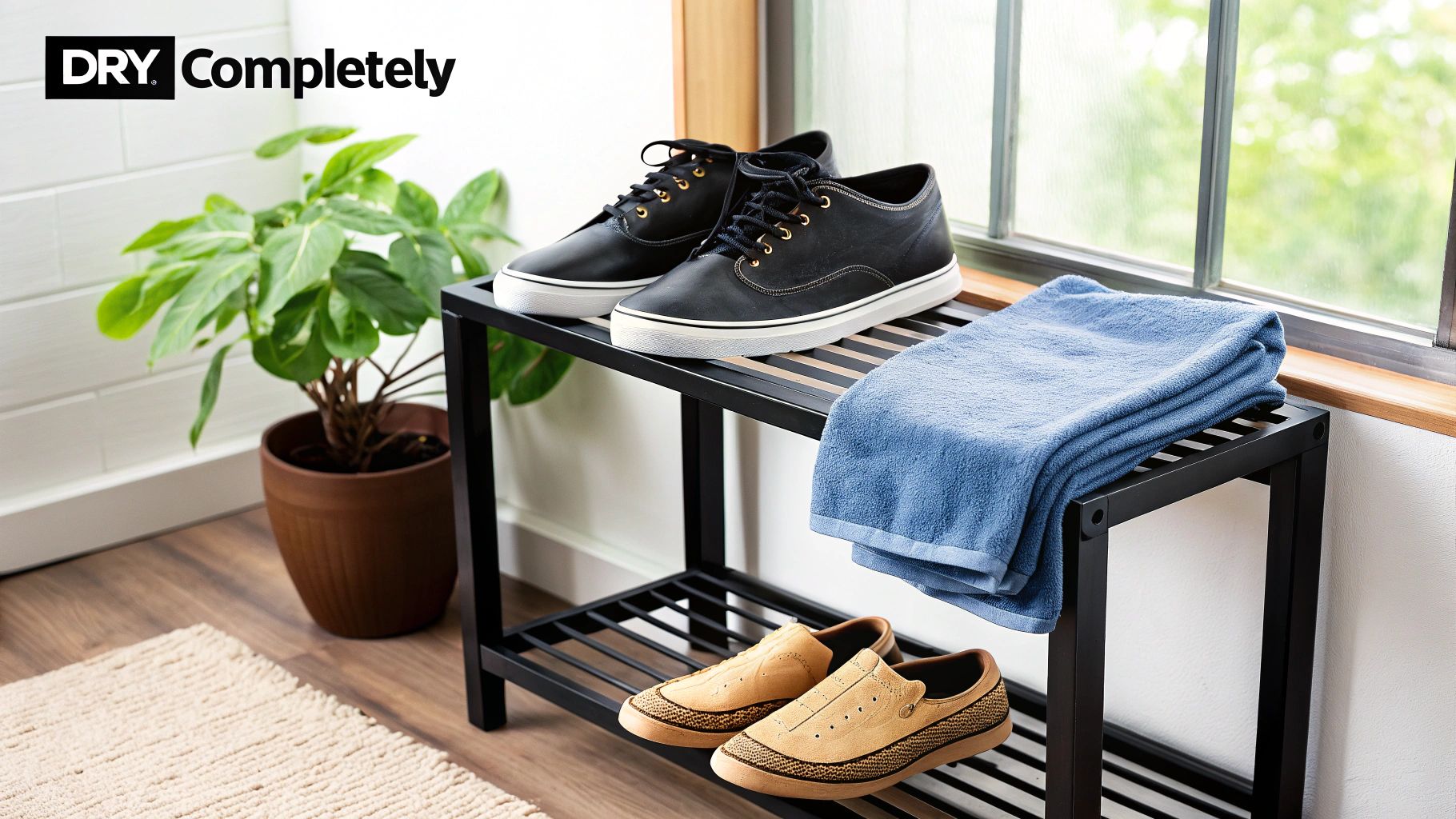
The objective is to remove all moisture from the shoe's interior and materials safely and completely. Patience is paramount.
Why You Must Avoid Direct Heat
The temptation to use a hair dryer or place shoes near a heat source is a catastrophic error that can cause irreversible damage to premium footwear. Direct, high heat is the enemy of shoe construction.
It causes several forms of damage:
- Warping Materials: Intense heat can shrink and distort synthetic fabrics, knits, and the shoe's internal structure, permanently altering the fit.
- Weakening Adhesives: The adhesives bonding the upper to the sole are heat-sensitive. High temperatures can cause delamination—a costly and complex repair.
- Cracking Leather: Leather requires natural oils to remain supple. Direct heat strips these oils, leaving the material brittle, cracked, and prone to discoloration.
Rushing the drying process with heat is the fastest way to destroy the structural integrity and aesthetic of your footwear. Patience preserves your investment.
The professional method prioritizes safety and efficacy over speed.
The Professional Method for Safe, Thorough Drying
The correct drying technique relies on absorption and airflow, not direct heat.
After cleaning, use a clean microfiber towel to pat down the shoe's exterior and interior, removing excess surface water.
Next, stuff the shoes tightly with a highly absorbent material like unprinted newspaper or paper towels. This wicks moisture from deep within the lining and insole. For the first several hours, check the stuffing and replace it as it becomes saturated.
For superior results, adjustable cedar shoe trees are the professional standard. They not only absorb residual moisture and odor naturally but also maintain the shoe's intended shape as it dries, preventing creasing and collapse. This is essential for leather dress shoes and high-value sneakers.
Finally, place the footwear in a cool, dry area with good ventilation for at least 24-48 hours. They must be completely dry to the touch before proceeding to the final deodorizing step. This ensures maximum efficacy of the shoes odor eliminator and confirms the odor is eliminated, not just suppressed.
After meticulous cleaning and thorough drying, the final step addresses any persistent, deep-set odors. This is where the transition from a temporary fix to a lasting restoration occurs, reclaiming the footwear's original freshness.
The market offers a range of deodorizers—sprays, powders, and inserts—each with a different mechanism of action. Selecting the correct tool is key to achieving results without damaging your footwear.
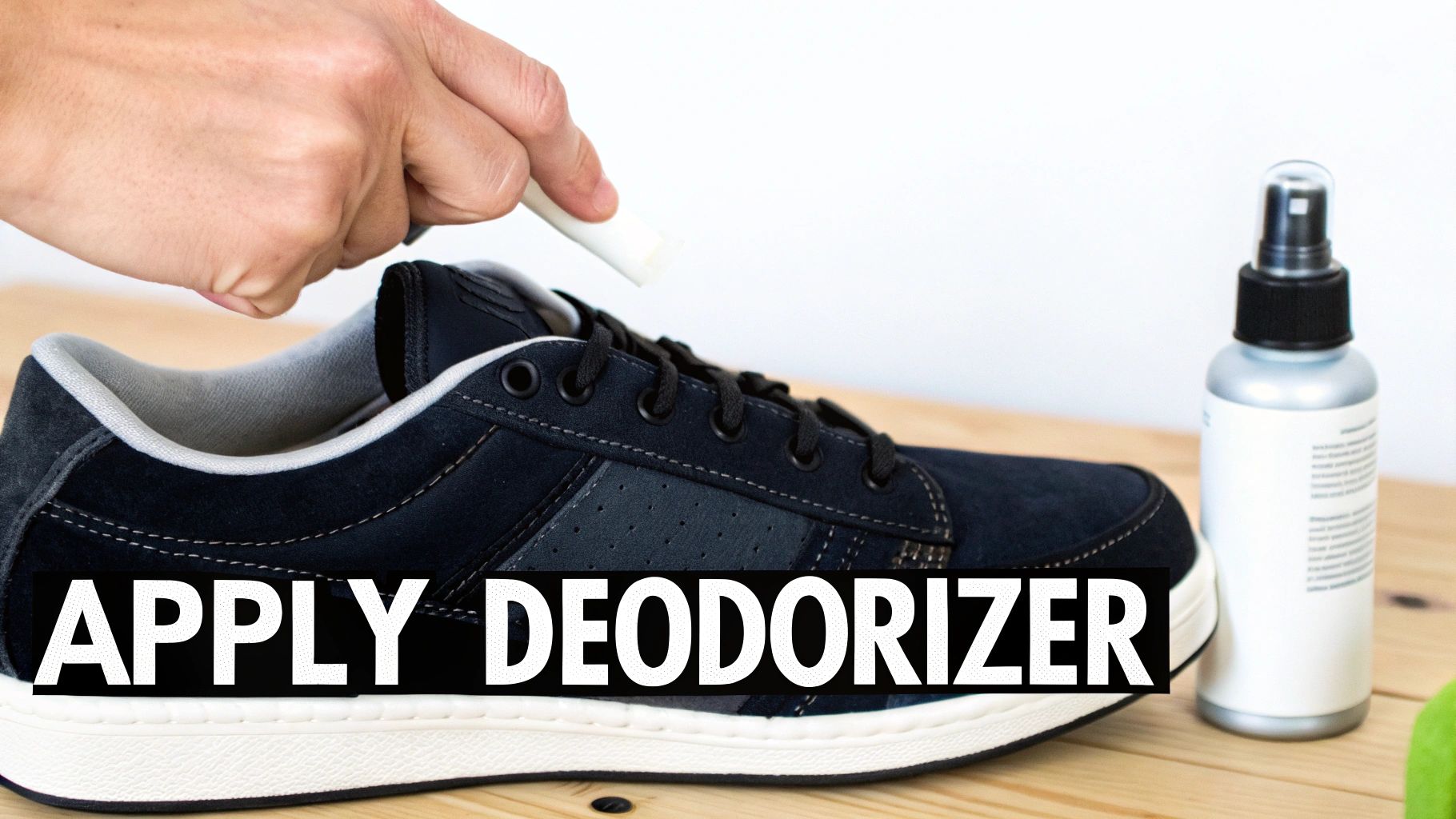
Sprays, Powders, and Inserts: A Technical Comparison
Understanding how each type of odor eliminator functions allows for an informed decision based on your specific needs and materials.
- Powders: Primarily function by absorbing moisture. While effective at absorbing sweat, they are often messy, leaving a chalky residue that can alter the shoe's interior feel and is difficult to fully remove. For delicate materials like suede or premium leather linings, powders can be overly abrasive.
- Inserts: Typically made from activated charcoal or cedar, these are passive maintenance tools. They absorb moisture and odors over time between wears but lack the immediate impact required to neutralize a significant, pre-existing odor after a deep clean.
- Sprays: A high-quality spray is the most direct and effective tool. As a liquid, it can penetrate the porous interior surfaces to reach the source of the malodor. A well-formulated spray actively neutralizes odor molecules on contact, rather than passively absorbing them.
Sprays are the preferred method for most footwear professionals and consumers. The shoe deodorizer market is projected to grow from $463 million in 2024 to $737.96 million by 2032, with sprays commanding a dominant 46.8% market share. This growth is driven by consumer demand for effective, easy-to-use solutions. For more data, you can discover more insights about the global shoe deodorizer market on databridgemarketresearch.com.
This is precisely why our protocol involves a premium, natural-ingredient spray. The Gold Standard Shoe Deodorizer is engineered to neutralize odors at a molecular level, breaking them down entirely without harsh chemicals or heavy perfumes that merely mask the problem and risk damaging sensitive materials.
A superior spray does not cover an odor; it chemically neutralizes it. This distinction is critical for achieving a true state of freshness and preventing recurrence.
The Gold Standard Application Method
Application technique is as important as the product itself. A careless spritz is insufficient. For complete and lasting freshness, the application must be strategic.
Begin with the insole still removed from the shoe. Hold the spray bottle approximately 6-8 inches from the shoe's interior.
Apply a light, even mist to the entire lining, paying special attention to the tongue and toe box—these are primary odor hotspots. Two to three sprays per shoe are typically sufficient. The goal is to dampen the lining, not saturate it.
Next, treat the insoles separately with a light spray on both sides.
Allow the shoes and insoles to air out in a well-ventilated area until they are completely dry again. This is a non-negotiable step. It allows the active ingredients to fully penetrate the materials and complete the neutralization process. Wearing them while damp will trap moisture and undermine the entire effort.
Building a Proactive Footwear Maintenance Routine
Eliminating existing odor is one challenge; preventing its return is the long-term objective. After completing the cleaning, drying, and deodorizing process, the focus must shift from reactive treatment to proactive prevention. This involves incorporating small, consistent habits that preserve the condition and value of your footwear.
A sound proactive routine is designed to prevent the warm, damp environment where odor-causing bacteria thrive. By integrating a few simple actions into your daily habits, you create a system that maintains freshness and extends the lifespan of your collection.
The Power of Rotation and Recovery
The single most impactful habit is shoe rotation. Never wear the same pair of shoes on consecutive days. This simple rule provides each pair with a full 24-48 hours to completely air out and release any moisture absorbed during wear.
This downtime allows all the shoe's materials, from the upper to the insole, to return to a neutral, dry state. This effectively deprives any new bacteria of the moisture required to multiply.
Essential Tools for Daily Maintenance
Beyond rotation, two key tools will elevate your maintenance regimen. Their use adds less than a minute to your day, but the long-term benefits are substantial.
- Cedar Shoe Trees: These are a non-negotiable component of serious footwear care. Quality cedar shoe trees actively draw out residual moisture and odor while maintaining the shoe's intended shape, preventing creasing and collapse.
- A Post-Wear Deodorizing Spray: A light mist of a quality shoes odor eliminator immediately after removing your shoes is the final preventative measure. The Gold Standard Shoe Deodorizer is ideal for this, neutralizing any new odor molecules before they can embed themselves into the shoe's lining.
The objective is to make this process automatic. Upon arriving home, remove shoes, insert cedar trees, apply a light spray, and set them aside to rest. This simple sequence is the foundation of long-term freshness.
The market for these products reflects their importance. The global shoe odor eliminator market reached $2.1 billion in 2024 and is projected to climb to $4.3 billion by 2033. For collectors and resellers, this is critical; a persistent odor can decrease a shoe's resale value by 30-50%. You can explore these market trends and their impact on shoe care for a complete analysis.
Sample Maintenance Schedules
The structure of your routine should adapt to your lifestyle. Consistency is the key.
The Daily Commuter (Leather Loafers, Casual Sneakers):
- Daily: Rotate between a minimum of two pairs. Insert cedar shoe trees immediately upon removal.
- Weekly: Inspect insoles for any signs of dampness. If present, remove them to air dry separately. Wipe down the exterior.
The Athlete (Running Shoes, Gym Trainers):
- Post-Workout: Always remove shoes immediately. Remove the insoles to allow them to dry independently. Apply a light deodorizing spray to the interior and insoles.
- Weekly: Spot-clean any new scuffs or stains and ensure the entire shoe is completely dry before its next use.
This proactive approach transforms shoe care from a reactive chore into a seamless part of your daily routine, guaranteeing every pair in your collection remains in pristine condition.
Common Questions About Shoe Odor Removal
Over years of professional practice, we have addressed nearly every question regarding footwear care. While the specifics of odor removal can seem complex, they are manageable with the correct knowledge and techniques.
Here are our answers to the most common challenges.
Can I Use Household Products Like Baking Soda On My Shoes?
While this is a common suggestion found online, we strongly advise against it, particularly for premium footwear. Household products are not formulated for this application.
Baking soda is an abrasive alkali that can desiccate delicate materials like leather and suede, causing them to become brittle and crack. Acidic substances like vinegar can discolor fabrics and, more critically, degrade the adhesives used in shoe construction. A professional shoe odor eliminator is pH-balanced to neutralize odor without causing such collateral damage.
How Often Should I Deodorize My Shoes?
The frequency depends on whether you are performing preventative maintenance or reactive treatment. For proactive care, a light misting after each wear is the gold standard, especially for athletic shoes or daily-wear pairs. This habit prevents odor-causing bacteria from establishing a foothold.
If you are addressing a pre-existing odor, you must first complete the full cleaning and drying process. Afterward, apply the deodorizer thoroughly and allow it to dry completely. The ultimate goal is to transition from intensive, reactive treatments to a consistent, light maintenance routine.
A common mistake is waiting until an odor is noticeable. By that point, a significant bacterial colony has already formed. Proactive, light, and frequent application is the superior strategy.
Is It Safe To Use Odor Eliminators On Suede And Nubuck?
This is a critical question, as these napped leathers are easily damaged. The answer depends entirely on the product's formulation. Only use a spray specifically engineered to be safe for these sensitive materials.
Always perform a spot test on a small, inconspicuous area first. The Gold Standard Shoe Deodorizer is formulated to be safe for both suede and nubuck, but application technique is equally important. Apply a fine, even mist—never saturate the material. Allow the shoes to air dry completely to prevent water spots or discoloration.
Ready to build a proactive care routine that protects your investment? Gold Standard provides the premium, material-safe products you need to keep your entire collection fresh. It's time to experience the difference professional-grade care makes.