

The faint odor from your footwear isn't just an inconvenience—it's a clear signal of microbial activity. Bacteria are actively colonizing the interior, feeding on organic materials and moisture, and degrading the very structure of your shoes.
A high-quality shoes freshener spray is not a cosmetic cover-up. It is a critical maintenance tool for neutralizing odor at its source, thereby preserving the materials and extending the life of your footwear collection.
Why Shoe Odor Is a Material Integrity Problem
The smell emanating from your footwear is the byproduct of a bacterial ecosystem thriving in a warm, damp environment. This microbial action actively breaks down the materials from the inside out, a process that a simple air freshener is not equipped to handle. Generic scented sprays merely mask the odor, allowing the underlying degradation to continue unchecked.
Understanding how different materials react to this microbial assault is the first step toward effective shoe care.
The Impact on Specific Footwear Materials
Each material in your shoe's construction is vulnerable in a unique way. Masking the odor with a superficial fragrance does nothing to mitigate this damage.
- Leather and Suede: As natural hides, these materials contain proteins and fats that are a primary food source for bacteria. This process leaches essential oils, leaving the leather brittle, prone to cracking, and susceptible to discoloration from trapped moisture.
- Performance Knits and Mesh: The complex weave of modern synthetic fabrics, while breathable, can trap bacteria deep within the fibers. Over time, this weakens the material's tensile strength and can lead to persistent discoloration that surface cleaning cannot remedy.
- Adhesives and Foams: The polyurethane and EVA foams in your midsoles, as well as the adhesives bonding the shoe together, are also susceptible. Bacterial enzymes can break down these polymers, accelerating sole separation and the collapse of cushioning structures.
A shoe freshener spray should be considered a fundamental component of your maintenance protocol. Its function is not just deodorizing but neutralizing the agents actively degrading your investment.
Neglecting the interior of your shoes is a common oversight that significantly shortens their lifespan. A formula designed to address the root cause is the difference between a temporary fix and a sound preservation strategy.
Selecting the Right Freshener for Your Materials
Not all shoe fresheners are suitable for all materials. Applying an aggressive, alcohol-based formula to delicate suede, for example, can result in permanent discoloration and a hardened texture. The objective is to use a shoes freshener spray that is effective against microbes but inert to the shoe's materials.
Harsh chemicals and propellants found in many aerosol products can strip natural oils from leather, weaken synthetic fibers, and cause discoloration in canvas. The key is material compatibility.
How to Read a Product Label
When evaluating a shoe freshener, the ingredient list is more important than the marketing claims. We recommend prioritizing water-based formulas that utilize gentle but effective deodorizing agents. These are typically the safest and most effective options across the widest range of materials, from full-grain leather to technical mesh.
A quick reference for ingredient analysis:
- Look For: Water-based formulas, gentle antibacterial agents, and natural extracts designed to neutralize odors without damaging materials.
- Avoid: High concentrations of alcohol, aerosol propellants, and heavy synthetic perfumes that mask odors while potentially harming the footwear.
The fundamental distinction lies between masking an odor and eliminating its source. The decision tree below illustrates the two strategic paths.
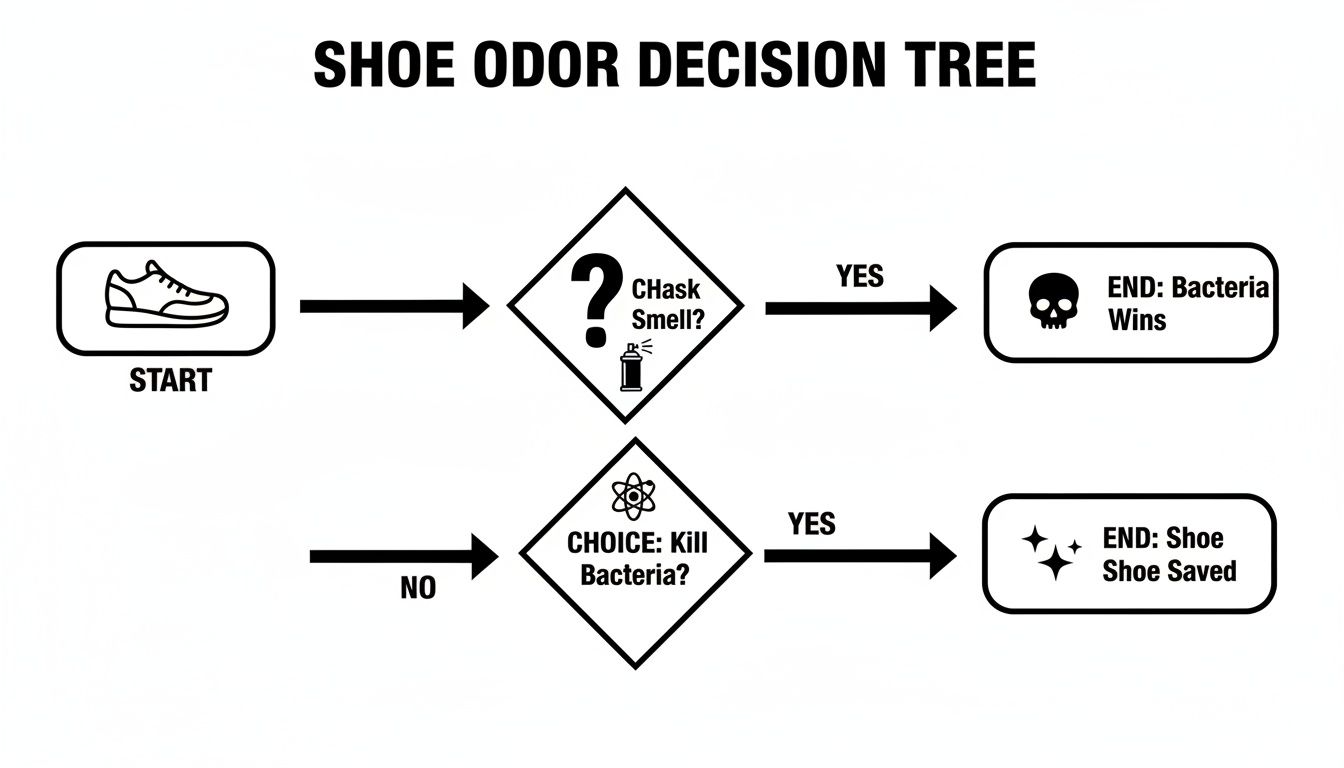
As shown, addressing the bacterial source is the only viable long-term solution.
Freshener Spray Suitability by Shoe Material
This reference table outlines the ideal formula characteristics for common footwear materials.
| Material Type | Ideal Formula Characteristics | Ingredients to Avoid | Gold Standard Suitability |
|---|---|---|---|
| Leather (Smooth/Finished) | Water-based, pH-neutral, may contain light conditioning agents | High-alcohol content, harsh solvents, non-absorbing oils | Excellent (preserves natural oils) |
| Suede & Nubuck | Alcohol-free, fine mist applicator, fast-evaporating | Water-heavy formulas, oils, any chemical that can stain or mat fibers | Excellent (formulated to be non-staining and gentle) |
| Canvas & Cotton | Water-based, effective neutralizing agents | Oily residues, strong dyes | Excellent (penetrates fibers without discoloration) |
| Synthetic Mesh & Knits | Lightweight, non-residue, quick-drying formula | Heavy oils, silicones (can clog breathable pores) | Excellent (maintains breathability and fabric integrity) |
When a shoe combines multiple materials, always select a product suitable for the most delicate one.
A Material-Specific Application Strategy
The construction of your shoe dictates the appropriate freshener. Porous materials like suede and nubuck are far more absorbent and sensitive than the durable synthetics found on athletic footwear.
A frequent error is using a single product for an entire footwear collection. A formula that is safe for rugged leather boots could permanently damage lightweight knit runners. Always consider the most sensitive material on the shoe before application.
Canvas and mesh are resilient, but even they can be compromised by formulas that leave a sticky residue, which can attract dirt. For premium leathers and suedes, a fine mist of a non-staining, alcohol-free spray is the only appropriate method.
When in doubt, perform a spot test on an inconspicuous area, such as the inside of the tongue or along the heel collar. Allow it to dry completely and check for any change in color or texture. This two-minute precaution can prevent irreversible damage.
The Correct Method for Applying Shoe Freshener
A rushed, superficial spray is ineffective. Proper application requires a methodical approach to ensure the formula penetrates the areas where bacteria concentrate, without oversaturating the materials. Improper technique is a primary cause of poor results and potential material damage.
Here is the correct, field-tested process.
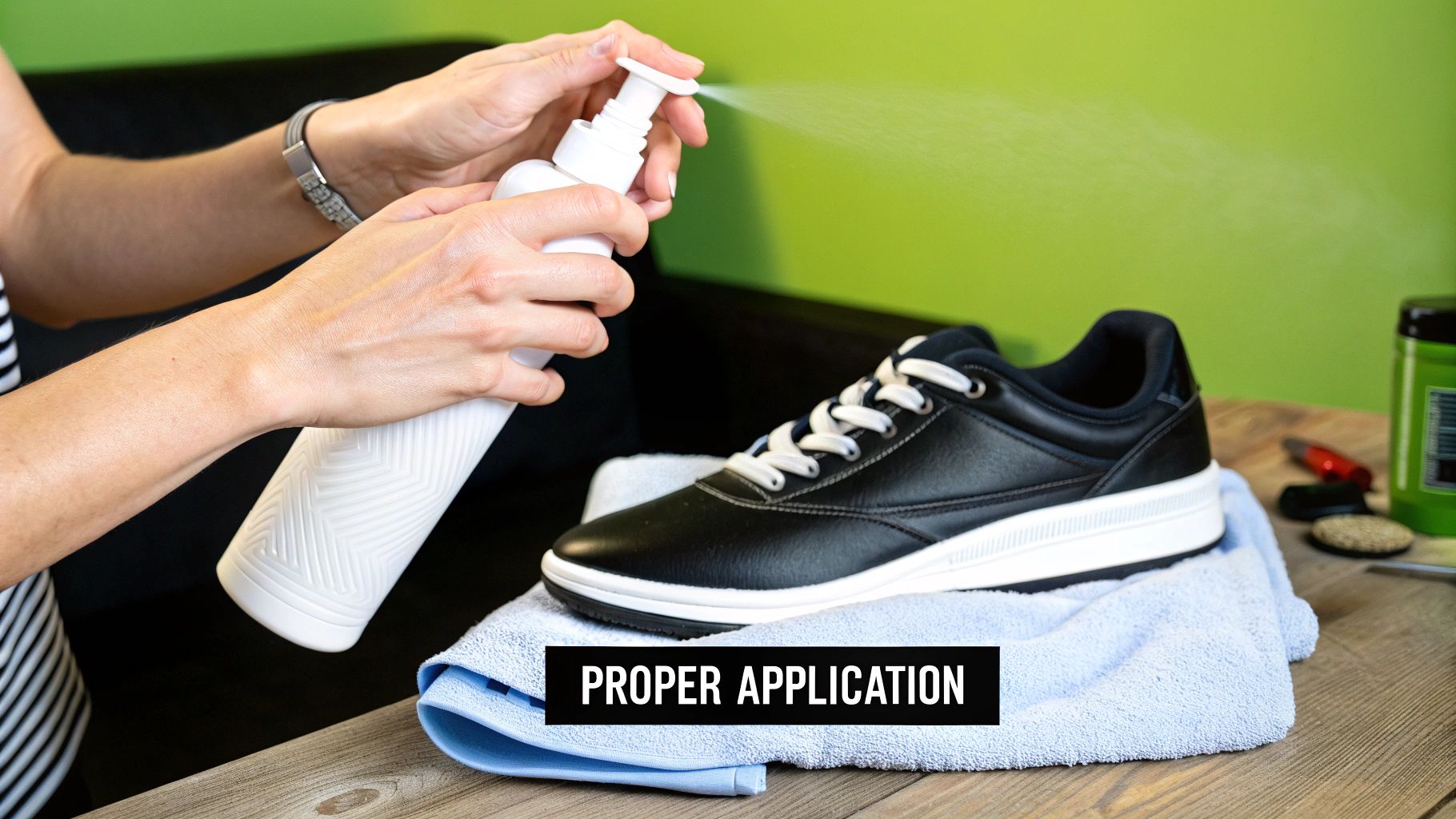
Step 1: Prepare the Footwear
Begin by loosening the laces and pulling the tongue fully forward. This action opens the shoe's interior, providing unobstructed access to the toe box and footbed lining.
If the insoles are removable, take them out. This is a critical step. Bacteria thrive in the space beneath the insole, and treating only the top surface is insufficient. Treat the insoles separately with a light, even coat on both sides.
Step 2: Master the Application Technique
Hold the spray bottle approximately 6-8 inches from the shoe's opening. The goal is to create a fine, encompassing mist rather than a direct, concentrated stream.
Apply a 2-3 second spray, using a sweeping motion to coat the entire interior from heel to toe. This technique prevents oversaturation of any single area, which can prolong drying time and potentially harm materials. A light, consistent coating is the objective.
Step 3: Ensure Proper Aeration
This step is crucial and frequently overlooked. Proper air circulation allows the active ingredients to work effectively and ensures the shoe's interior is completely dry before its next use, breaking the cycle of moisture that bacteria need to thrive.
Follow these guidelines for effective aeration:
- Place the shoes in a well-ventilated area, away from direct sunlight or heat sources, which can damage leather and adhesives.
- Positioning them near an open window or in front of a fan will accelerate the drying process.
- Allow a minimum of 30 minutes for the shoes to air out. For heavily used athletic shoes or work boots, an hour or more is preferable.
Completing this final step is the difference between a temporary scent masking and a genuine interior refresh. This process maximizes the spray's efficacy and protects your footwear.
Building a Proactive Shoe Care Routine
Effective shoe care is proactive, not reactive. Integrating a shoe freshener spray into your regular maintenance routine, rather than using it as an emergency measure, is the key to long-term preservation.
The frequency of application depends entirely on usage patterns. A rigid schedule is less effective than a routine tailored to your lifestyle and footwear rotation.
Establishing Your Application Cadence
Your routine should be dynamic. Footwear used for intense athletic activity requires a different maintenance cadence than formalwear.
These professional guidelines can help establish your rhythm:
- High-Use Footwear (Athletic Shoes, Work Boots): Apply a light mist after each use. This neutralizes odor-causing bacteria before they can proliferate in the warm, moist environment created by sweat.
- Regular Rotation Footwear: For shoes worn for several hours at a time, application every two to three wears is sufficient to maintain a neutral interior environment.
- Occasional Wear Footwear: For dress shoes or other pairs worn infrequently, a light treatment before storage prevents the development of mustiness and protects delicate materials.
The objective is not to mask an existing odor, but to prevent one from ever developing. Proactive application maintains a state of freshness, eliminating the need for reactive, intensive treatments.
Creating a Comprehensive Care System
A shoe freshener is one component of a complete care system. Its effectiveness is amplified when used in conjunction with products for cleaning, conditioning, and protection.
A complete system addresses the shoe from all angles. For example, using a freshener spray after a deep cleaning completely resets the shoe's interior. For leather footwear, it complements conditioning by ensuring the inside is as well-maintained as the exterior.
A complete system includes:
- Cleaner: To remove external dirt and contaminants.
- Freshener: To neutralize odor and bacteria within the shoe.
- Protector: To create a barrier against water and stains on the exterior.
- Conditioner (for leather/suede): To nourish the material and prevent drying and cracking.
By integrating these elements, you build a comprehensive defense for your footwear. Our Gold Standard Shoe Freshener is formulated to integrate seamlessly into this system, providing a material-safe foundation for interior care that protects your investment from the inside out.
Troubleshooting Stubborn Odors and Application Errors
Even with a consistent routine using a quality shoes freshener spray, you may encounter persistent odors or application missteps. These issues are common and can be rectified with the correct approach.
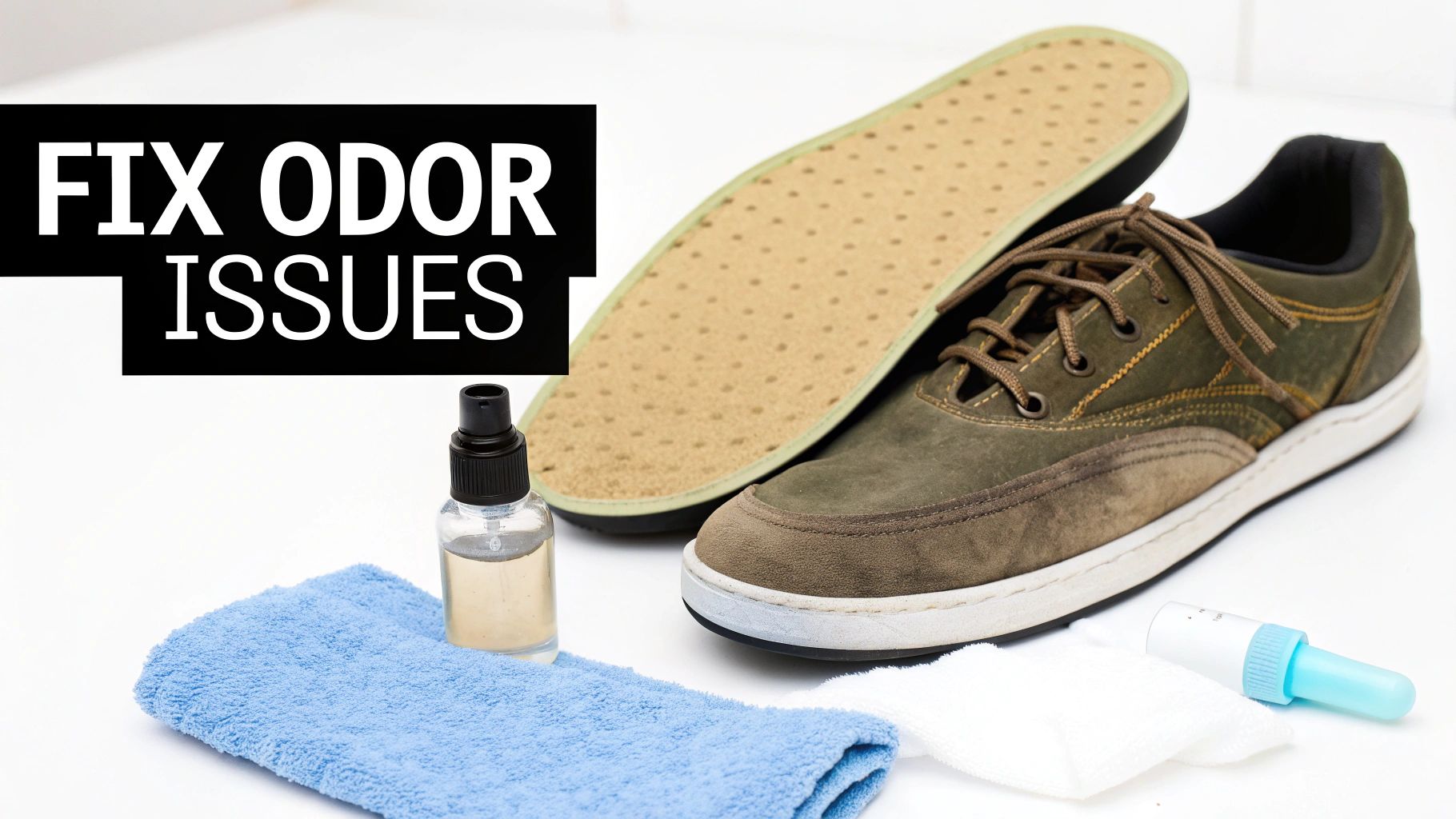
If an odor persists despite regular treatment, the problem likely lies deeper than the surface lining. The first component to inspect is the insole, which absorbs the majority of sweat and pressure.
Remove the insoles and examine them. If they are heavily compressed, discolored, or remain damp long after wear, they have likely reached the end of their functional life. No amount of spray can restore an insole that has become a saturated medium for bacterial growth. In such cases, replacing the insoles is the most direct and effective solution.
Correcting Common Application Errors
The most frequent application error is overspraying, particularly on absorbent materials like suede or nubuck. If this occurs, swift and proper action is necessary to prevent damage.
- For Oversaturation: Immediately blot the interior with a clean, dry microfiber cloth. Use firm pressure to absorb excess moisture. Do not rub, as this can damage the material fibers.
- Promote Airflow: Open the shoe as wide as possible and place it in front of a fan on a cool setting. Active air circulation is essential to prevent moisture from setting, which can cause water spots or stiffen the material.
This level of diagnostic care is what defines expert-level maintenance. And the demand for such expertise is growing; in 2023, North America accounted for 34.5% of the global shoe deodorizer market. For serious collectors, correct product usage can extend a shoe's wearable life by 6-12 months, protecting a significant asset. You can read the full research about the shoe deodorizer market for a deeper analysis.
A recurring odor is a diagnostic signal. Instead of merely continuing to spray, investigate the source. In most cases, it indicates a component, typically the insole, has failed and requires replacement.
Understanding how to diagnose root causes and correct minor errors will give you the confidence to properly maintain every pair in your collection.
Why Discerning Collectors Choose Premium Sprays
For those who have invested significantly in a footwear collection, using inferior care products is a false economy that can lead to irreversible damage. The choice of a premium spray is not about brand loyalty; it is about a commitment to material science and long-term preservation.
The market reflects this understanding. The spray format is the dominant delivery system in the global shoe deodorizer market, holding a 45.6% share. This preference is driven by efficacy.
A professionally formulated shoes freshener spray does more than mask odors. It addresses the microbial source of the problem, thereby actively extending the lifespan of the footwear. You can review the global footwear care trends to see the data for yourself.
Investing in Longevity, Not Illusion
A low-quality aerosol spray provides a temporary olfactory illusion while the underlying bacterial degradation continues. Discerning collectors understand that true value lies in formulas engineered for both material safety and microbiological effectiveness.
Key differentiators of a premium spray include:
- Material Compatibility: Formulated without harsh alcohols or propellants that can dehydrate leather, stain suede, or clog the pores of performance textiles.
- Root Cause Elimination: The primary function is neutralizing bacteria, not layering synthetic fragrance over an existing problem.
- Investment Protection: Proper use from the outset can add months or even years to the functional life of a shoe, preserving its financial and personal value.
The market has validated this approach, with reports indicating sprays outsell powders by a 2-to-1 margin in key regions. It is the pragmatic choice for anyone who views their footwear as an asset.
Selecting a premium spray is an acknowledgment that the shoe's interior integrity is as critical as its exterior appearance. It represents a commitment to comprehensive care that protects the entire structure.
The data is clear: the principles of proper shoe care are practiced by a global community of informed enthusiasts. To maintain your collection in pristine condition, aligning your maintenance routine with these expert standards is the only logical path.
The Gold Standard team engineered our Shoe Freshener to meet these exact professional-grade requirements. It provides a material-safe, powerfully effective solution that protects your investment from the inside out. Don't settle for less—give your collection the care it deserves at https://gold-standard-approved.myshopify.com.