

The odor emanating from your footwear is more than unpleasant—it's a diagnostic signal. Consider it a clear indicator that a bacterial ecosystem is thriving within, feeding on trapped sweat and moisture. This microbial activity isn't just about smell; it is actively degrading the premium leathers, delicate knits, and supportive foams that constitute your investment.
A high-caliber shoes deodorizer spray is not a cosmetic cover-up. It is an essential maintenance tool designed to neutralize the root cause of both odor and material decay.
Why Shoe Odor Is a Material-Killer
The interior of a shoe presents an ideal incubator for odor. The human foot contains more sweat glands per square inch than any other part of the body. When this moisture is trapped within a dark, warm, and poorly ventilated space, it creates a perfect breeding ground for bacteria. The odor you detect is the gaseous byproduct of these microorganisms metabolizing sweat and skin cells.
This biological process inflicts tangible harm. The acidic waste produced by bacteria can corrode the fibers in canvas, stain the linings of dress shoes, and compromise the structural adhesives holding your footwear together.
Beyond Masking a Temporary Smell
Most mass-market sprays are merely fragrant smokescreens. They saturate the shoe with heavy perfumes, providing a temporary olfactory illusion while doing nothing to address the underlying bacterial colony.
A professional-grade shoes deodorizer spray operates on a microbiological level. Its formulation is engineered to target and neutralize odor-causing bacteria, eliminating the problem at its source. This is the fundamental distinction between superficial masking and true footwear preservation.
The objective is to reset the shoe's internal environment, rendering it inhospitable to bacteria. This proactive approach is what maintains the "new shoe" feel and scent. Consumer awareness is growing; the global shoe deodorizer market recently surpassed USD 481.85 million, with sprays accounting for a dominant 45.6% market share. This is not a fleeting trend but a definitive shift toward preventative foot hygiene and expert shoe care. You can review the data behind shoe care market trends on skyquestt.com.
The true purpose of a deodorizer is not fragrance—it is preservation. By eliminating odor-causing bacteria, you are actively protecting the materials and construction of your footwear from long-term damage.
Ultimately, integrating a high-quality deodorizing spray into your care regimen is a direct investment in the longevity and condition of your entire footwear collection. It is a fundamental component of expert-level shoe care.
Selecting a Spray That Protects, Not Damages, Footwear
When choosing a shoe deodorizer spray, the scent profile is the least important attribute. The efficacy and safety of the product are determined by the science within the formula.
Many commercially available sprays are laden with harsh chemicals and alcohols. While they may offer a temporary reprieve from odor, these agents can inflict irreversible damage on premium materials like leather and suede. The goal is not merely to fight odor but to deploy a solution that works in synergy with your shoe's materials to eliminate the problem without causing harm.
What to Look For in a Formulation
A superior deodorizer will feature ingredients that neutralize odor through biological action, not chemical masking. Look for enzymatic formulas. Enzymes are specialized proteins that act as catalysts, actively seeking out and breaking down the organic compounds responsible for odor. They don't cover the scent; they dismantle its molecular structure.
Additionally, seek out natural essential oils, such as tea tree or citrus. These serve two critical functions:
- Antimicrobial Properties: They naturally inhibit the growth of odor-causing bacteria.
- Natural Fragrance: They provide a clean, subtle scent without synthetic, overpowering perfumes.
This approach aligns with a significant market shift. The demand for natural, sustainable shoe care products has grown by approximately 20% annually. This reflects the core philosophy of Gold Standard: prioritizing natural, effective ingredients over harsh chemicals that can degrade leather and other sensitive materials. You can read more about these market shifts in shoe care on techsciresearch.com.
An effective shoe deodorizer spray is a maintenance tool, not a chemical cover-up. Its primary job is to neutralize the source of odor without compromising the shoe's material, color, or texture.
Ingredients That Can Damage Your Shoes
Understanding which ingredients to avoid is as critical as knowing which to seek out.
If alcohol is listed as a primary ingredient, reject the product. Alcohol is a powerful desiccant, meaning it aggressively strips moisture from any surface it contacts.
For leather, this is catastrophic. It leaches the natural oils that maintain the material's suppleness, leading to dryness, brittleness, and eventual cracking. On suede or nubuck, it can cause discoloration and stiffen the delicate nap, destroying its characteristic texture.
Deodorizer Ingredient Comparison: The Good vs. The Damaging
This table provides a clear comparison to guide your selection and protect your footwear from chemical damage.
| Ingredient Type | Mechanism of Action | Material Impact (Leather, Suede, Knit) |
|---|---|---|
| Good: Natural Enzymes | Actively breaks down the molecular structure of odor-causing bacteria. | Safe for all materials. It targets microorganisms, not the footwear itself. |
| Damaging: Alcohol | Temporarily masks odor but strips essential oils and moisture. | Causes leather to dry and crack. Can discolor suede and synthetic knits. |
| Good: Essential Oils | Provides natural antimicrobial benefits and a clean, non-chemical scent. | Gentle and safe when properly formulated. Preserves material integrity. |
| Damaging: Heavy Perfumes | Overpowers existing odor with a strong, synthetic fragrance. | Can cause staining and does not address the underlying bacterial issue. |
Selecting the right spray is an investment in preservation. By scrutinizing labels and choosing formulas designed for material safety, you ensure your entire collection remains in pristine condition for years to come.
The Correct Application Technique for Different Materials
Applying a shoe deodorizer spray is not a one-size-fits-all procedure. Effective deodorizing is a technical skill, not a random act. The interaction between the spray and the material is paramount, and the correct technique distinguishes a temporary fix from a lasting solution.
The core principle is to work with the material's properties, not against them. Smooth leather requires a light surface application to avoid saturation, while porous athletic mesh demands deeper penetration to reach the source of the odor. An incorrect approach can lead to incomplete deodorizing or, worse, material damage.
This expert-approved, three-step process outlines how to select and apply a spray correctly for any material.
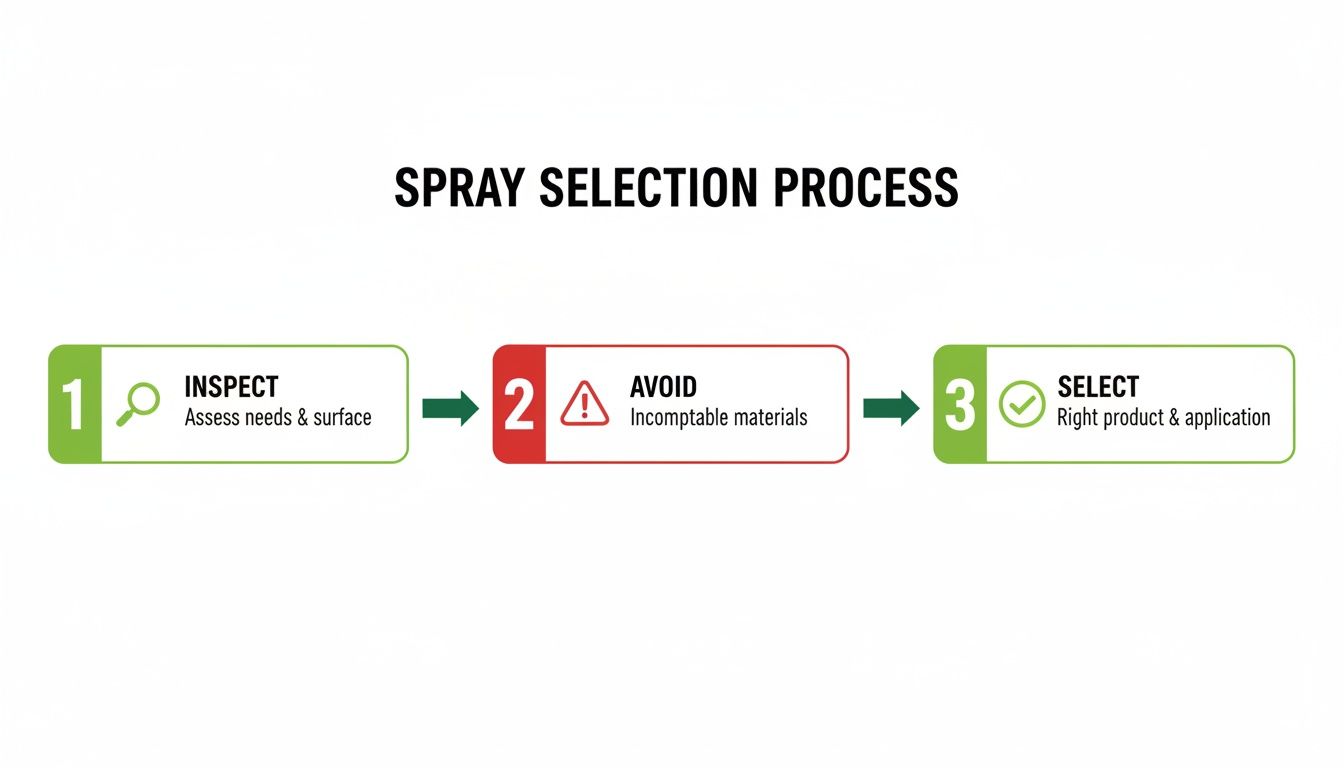
As illustrated, material inspection and ingredient avoidance are as crucial as the product selection itself.
Treating Leather and Synthetic Leathers
Full-grain and synthetic leathers are non-porous. The spray should coat the interior lining, not be absorbed by the upper. The primary target is the shoe's internal environment where bacteria reside.
- Maintain Distance: Hold the spray bottle 8-10 inches from the shoe's interior. This ensures a fine, even mist rather than a concentrated wet spot that can cause water marks or oversaturation.
- Apply Sparingly: One or two brief sprays are sufficient to coat the lining and insole. Over-application introduces excess moisture, undermining the goal.
- Air-Dry Correctly: Never use direct heat (heaters, sunlight) to expedite drying. This will warp the leather and cause it to crack. Allow the shoes to dry naturally in a well-ventilated area.
Suede and Nubuck Application
Suede and nubuck are exceptionally delicate. Their soft, napped texture is highly susceptible to moisture stains and discoloration. Extreme care is required.
The cardinal rule for suede and nubuck: always perform a spot test. Apply a minuscule amount to an inconspicuous area, such as the inner tongue, and let it dry completely to ensure it does not alter the color or texture.
Before application, use a dedicated suede brush to lift dirt from the nap. When applying the deodorizer, use an extremely light mist from a distance of at least 12 inches, and treat the interior of the shoe only.
Deodorizing Athletic Knits and Mesh
Modern athletic materials like Primeknit, Flyknit, and engineered mesh are designed for breathability. This porous structure can trap odor deep within the fibers.
For these materials, controlled saturation is necessary. The formula must penetrate deep into the fabric, footbed, and insole where moisture and bacteria accumulate.
- Remove the Insoles: This is a non-negotiable step for athletic footwear. Treat insoles separately with a thorough spray on both sides. This is the single most effective action for athletic shoe odor.
- Focus on the Interior: Apply the spray generously inside the shoe, ensuring it reaches the entire toe box and side walls.
- Ensure Complete Drying: Knit and mesh retain moisture. Allow both the shoes and insoles to dry for several hours, or overnight, before reassembly. Reinserting damp insoles will trap moisture and restart the odor cycle.
By tailoring your technique to the specific material, you ensure the shoes deodorizer spray performs its function correctly: neutralizing odor at the source while preserving the integrity of your footwear.
Building a Complete Shoe Care Routine
A shoes deodorizer spray should be viewed as a final, protective measure within a larger care system—not as an emergency response to overwhelming odor. True footwear preservation is proactive, not reactive.
The critical shift is from a mindset of remediation to one of prevention. The goal is to maintain an internal shoe environment where odor-causing bacteria cannot establish a foothold. This is achieved through consistency and proper timing.
Establishing Your Deodorizing Cadence
The optimal frequency for deodorizing depends on shoe usage and individual factors. A consistent routine is what prevents deep-set, stubborn odors from developing.
- Daily-Wear Footwear: For shoes worn daily, a light misting of the interior after each wear is the professional standard. This neutralizes the day's moisture and bacteria before they can multiply.
- Athletic Shoes: Gym and running shoes require immediate post-workout attention. As soon as they are removed, take out the insoles, spray both the insoles and the shoe's interior thoroughly, and allow all components to air out completely.
- Occasional-Wear Collection: For footwear worn infrequently, a strategic application before storage and upon removal is key. This maintains freshness during storage and ensures they are ready for wear.
Market data validates this approach. Deodorizer sprays are the preferred tool for sneaker preservation, commanding a 45.7% market share. This market is projected to grow from USD 436.8 million in 2023 to over USD 601.1 million by 2030, signaling a widespread commitment to maintaining footwear in "box-fresh" condition. You can see more on these shoe deodorizer market trends on researchandmarkets.com.
This table provides a framework for establishing a routine tailored to your lifestyle.
Your Weekly Shoe Care Cadence By Wearer Type
| Wearer Profile | Usage Frequency | Recommended Deodorizer Routine |
|---|---|---|
| The Daily Commuter | 5-7 times/week | Lightly spray interior after each wear. Weekly deep clean. |
| The Gym Enthusiast | 3-5 times/week | Spray interior & insoles immediately after every workout. |
| The Weekend Warrior | 1-2 times/week | Spray after wear and allow to air dry completely before storing. |
| The Sneaker Collector | Infrequent | Deodorize before storing and after taking them out for wear. |
A personalized, consistent schedule is your most effective defense against odor.
Integrating Deodorizer into a Full Cleaning Process
A deodorizer is the final step in a cleaning process, not a substitute for it. Applying spray to a dirty shoe is akin to waxing a muddy car—you are merely sealing in the grime. A true, deep clean addresses both visible dirt and invisible bacteria.
The order of operations is critical.
- Dry Brush: Use a soft-bristled brush to remove loose dirt and debris from the uppers and sole.
- Clean: Apply a gentle, material-safe cleaner, such as the Gold Standard All-Natural Shoe Cleaner. Work it into the material with a soft brush in small, circular motions to lift embedded dirt.
- Wipe & Dry: Use a clean microfiber towel to wipe away suds and grime. Allow the shoes to air dry completely, away from direct heat or sunlight.
- Deodorize: Once the shoes are completely dry, apply your deodorizer spray to the interior. This step neutralizes any residual bacteria and leaves your footwear in pristine, ready-to-wear condition.
When deodorizing is the final step of a regular cleaning ritual, you're not just fighting smells. You are completing a full maintenance cycle that protects materials, preserves value, and extends the lifespan of your footwear.
Troubleshooting Odors a Spray Cannot Fix Alone
A high-quality shoes deodorizer spray is highly effective for daily maintenance, but it is not a panacea. If consistent application fails to resolve a persistent odor, it indicates a deeper, more systemic issue. At this point, you must transition from routine maintenance to targeted diagnosis.
When a spray proves insufficient, the cause is typically a heavily saturated insole that has become a bacterial reservoir, fungal growth within the shoe's lining, or improper storage habits creating a perpetually damp environment.
Consider your spray the first line of defense. If the problem is entrenched, a more advanced strategy is required.
Diagnosing the Root Cause of Stubborn Odor
A systematic inspection will usually reveal the source of the problem.
- The Insole Inspection: Remove the insoles completely. Are they damp, discolored, or compressed? Smell them directly. If the odor is intensely concentrated here, you have identified the primary source.
- The Interior Lining Check: Use a flashlight to inspect the inside of the shoe, focusing on the toe box and seams. Look for discoloration or a mildewy texture, which can indicate microbial growth within the shoe’s structure.
- The Storage Environment Analysis: Evaluate where your shoes are stored. Are they placed in a dark, unventilated closet or sealed in a gym bag while still damp? Such conditions actively promote bacterial growth.
Advanced Solutions for Deep-Set Odors
Once you have identified the cause, deploy more powerful solutions.
For deeply saturated insoles, a surface spray is ineffective. While you can attempt a deep clean by hand-washing them with a gentle detergent, if they are foam-based and have been compromised for an extended period, the most effective solution is replacement. This immediately eliminates the primary odor source.
Footwear requires a rest period to dry fully. One of the most effective yet overlooked strategies for odor prevention is rotating between at least two pairs of shoes. This gives each pair a full 24-48 hours to air out completely, interrupting the bacterial life cycle.
Another indispensable tool for moisture management is a pair of high-quality cedar shoe trees. Their function extends beyond maintaining the shoe's shape. The cedarwood actively absorbs moisture and neutralizes odors from within, creating an environment inhospitable to bacteria. For anyone serious about footwear care, they are a non-negotiable accessory.
Got Questions? We’ve Got Answers.
Even with a solid understanding of the fundamentals, specific questions often arise. We've compiled answers to the most common inquiries we receive to help you refine your shoe care regimen.
What About My Vintage Sneakers? Can I Use a Deodorizer on Them?
Excellent question. The answer is yes, but with extreme caution. For vintage footwear or items made with aged, delicate materials, a spot test is mandatory.
Select a hidden area—the inside of the tongue is ideal—apply a minimal amount of spray, and allow it to dry completely to observe the material's reaction.
For the full application, increase the distance to 10-12 inches and use an ultra-fine mist to avoid saturating any single area. Focus exclusively on the interior lining and insoles. For truly irreplaceable pairs, consulting a professional shoe restoration expert is the safest course of action.
Seriously, How Long Does One Spray Last?
The honest answer is: it depends. The longevity of a single application is determined by three variables: frequency of wear, level of foot perspiration, and the quality of the deodorizer formula.
For a pair of dress shoes worn occasionally, a high-quality, antimicrobial spray can maintain freshness for weeks. For athletic sneakers subjected to intense activity, reapplication after every use is recommended—once the shoes have completely dried. This preventative measure stops new bacteria from colonizing.
Is It Okay to Just Spray My Socks?
No. We strongly advise against applying any shoe deodorizer spray directly to socks or skin. Our formulas are scientifically balanced for use on footwear materials. They are not designed or tested for prolonged, direct contact with skin.
Applying the spray to socks could lead to skin irritation. The correct and safe method is always to treat the inside of the shoe, allow it to dry completely, and then wear as usual.
Will This Product Remove Stains Inside My Shoes?
A deodorizer spray is engineered for a single purpose: to neutralize odor-causing bacteria. It is not a stain remover. While it will eliminate odor, it will not affect set-in stains from sweat, dirt, or dye transfer.
For interior staining, a dedicated, material-safe shoe cleaner should be used as a separate step before the deodorizing process.
Your footwear is an investment. You wouldn't settle for subpar shoes; don't settle for a subpar care product. The Gold Standard All-Natural Shoe Deodorizer Spray is engineered to eliminate odor at its source without the harsh chemicals that can ruin premium materials.