

Footwear odor is a matter of material science and microbiology, not personal hygiene. When the foot, sock, and shoe interior create a warm, low-ventilation environment, conditions are ideal for odor-causing bacteria. A properly formulated shoe deodorizer spray is not a fragrance mask; it is a maintenance tool designed to neutralize this environment at the molecular level.
The Origin of Footwear Odor: A Material Perspective
Consider every shoe—from full-grain leather boots to performance knit runners—as a distinct micro-environment. The moment you insert your foot, a predictable chain of events begins that leads to odor generation.
The primary catalyst is moisture. The human foot contains approximately 250,000 sweat glands, one of the highest concentrations on the body. This perspiration is initially odorless but creates the humid conditions required for bacterial proliferation.
The second factor is a nutrient source. Bacteria present on the skin metabolize the compounds in sweat and consume exfoliated skin cells. Their metabolic byproduct is acidic waste, which produces the characteristic malodor associated with footwear.
The Role of Shoe Materials in Odor Retention
A shoe's construction materials significantly influence its susceptibility to odor. Many contemporary athletic shoes utilize non-porous synthetic textiles that trap heat and moisture, accelerating bacterial growth. Conversely, natural materials like leather and canvas offer superior breathability but can still absorb and retain odor-causing compounds within their porous structures over time.
This is why simply "airing out" footwear is often insufficient. The bacteria remain embedded within the shoe's lining and insole, ready to reactivate upon subsequent wear.
A shoe deodorizer spray is not cosmetic. Its function is to alter the chemical environment within the shoe, arresting odor at its source. This is a targeted intervention where the problem originates.
The Growing Demand for Effective Solutions
The market reflects a clear shift toward more sophisticated footwear care. From athletes seeking to maintain performance gear to collectors preserving valuable assets, consumers demand products with demonstrable efficacy. This trend has driven significant growth in the global footwear care market, with shoe deodorizer sprays emerging as the dominant category.
The spray format has captured a 45.6% market share, valued at over USD 481 million, due to its convenience and ability to deliver active ingredients directly to the source of the problem. You can read more about the shoe deodorizer market growth to understand why this delivery system has become the standard for maintaining footwear collections.
The Mechanism of Action: How a Premium Deodorizer Functions
Attempting to mask a potent odor with a low-quality fragrance is an exercise in futility. It creates a discordant combination of scents rather than eliminating the source. A true, high-quality shoe deodorizer does not mask; it dismantles.
Advanced formulations are engineered to deconstruct the volatile organic compounds (VOCs) that cause malodor, operating at a molecular level to neutralize the entire system. To appreciate this process, one must understand the environment inside the shoe.
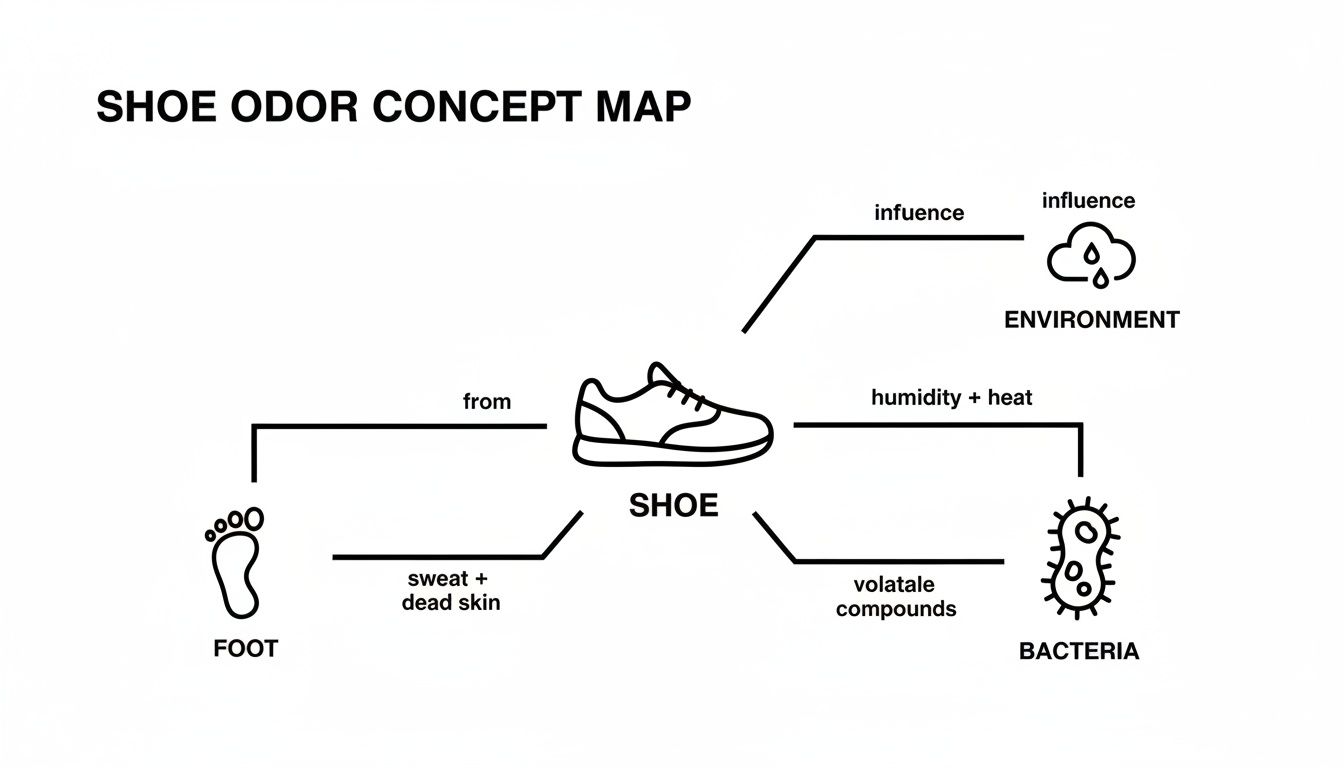
As illustrated, perspiration, heat, and bacteria form a synergistic trio. An effective solution must therefore address the problem from multiple angles.
The Science of Odor Neutralization
At its core, a premium shoe deodorizer spray employs a dual-action mechanism: bacterial disruption and odor encapsulation. First, it inhibits the proliferation of the microorganisms responsible for creating the odor. Second, it neutralizes the malodorous compounds they have already produced.
-
Inhibiting Bacterial Growth: The formula renders the shoe's interior an inhospitable environment for odor-causing bacteria. By interfering with their ability to metabolize and multiply, the active agents cut off the odor-producing cycle at its source. Select natural ingredients, such as certain essential oils, are effective in this role without requiring harsh chemicals that can damage footwear materials.
-
Encapsulating and Neutralizing Odors: For extant odors, specialized molecules in the spray bind with the malodorous compounds. This process, known as encapsulation, effectively isolates the odor-causing particles, neutralizing them and preventing them from reaching olfactory receptors.
This dual-pronged strategy is what provides lasting freshness. The solution is not cosmetic; it fundamentally improves the shoe's internal environment.
Deconstructing Malodorous Compounds
The metabolic waste from bacteria consists of various VOCs, each with a distinct, unpleasant scent profile. The most advanced deodorizers utilize enzymatic formulas that function as targeted catalysts, specifically engineered to break down these complex odor molecules into smaller, non-volatile, odorless components.
An enzymatic cleaner functions analogously to the digestive system. It uses specific proteins to deconstruct complex, malodorous compounds into simple, inert elements. The odor is not masked—it is chemically disassembled.
This process is highly effective and, crucially, safe for a wide range of materials. Whether treating the delicate lining of a leather dress shoe or the technical knit of a running shoe, a well-designed formula maintains the integrity of the footwear while it works.
Why This Methodology Matters for Your Footwear
This scientific approach is becoming the new benchmark in footwear care because consumers are demanding solutions that provide lasting results. Market data validates this shift: sprays command 46.8% of the global shoe deodorizer share because they consistently outperform powders and inserts. You can review the full shoe deodorizer market analysis to see how consumer demand is driving this innovation.
Understanding the science behind odor neutralization clarifies why investing in a properly formulated shoe deodorizer spray is an essential step in any serious footwear maintenance regimen. It is not about masking a problem, but about applying a targeted, scientific solution to preserve the condition, comfort, and value of your footwear from the inside out.
The Professional Application Method for Shoe Deodorizer
You possess a shoe deodorizer spray. The task may seem self-evident, but there is a significant difference between a cursory spritz and a methodical application that achieves lasting results.
To neutralize odor at its source rather than merely masking it, a systematic process is required. This process involves three distinct phases: Preparation, Application, and Curing.
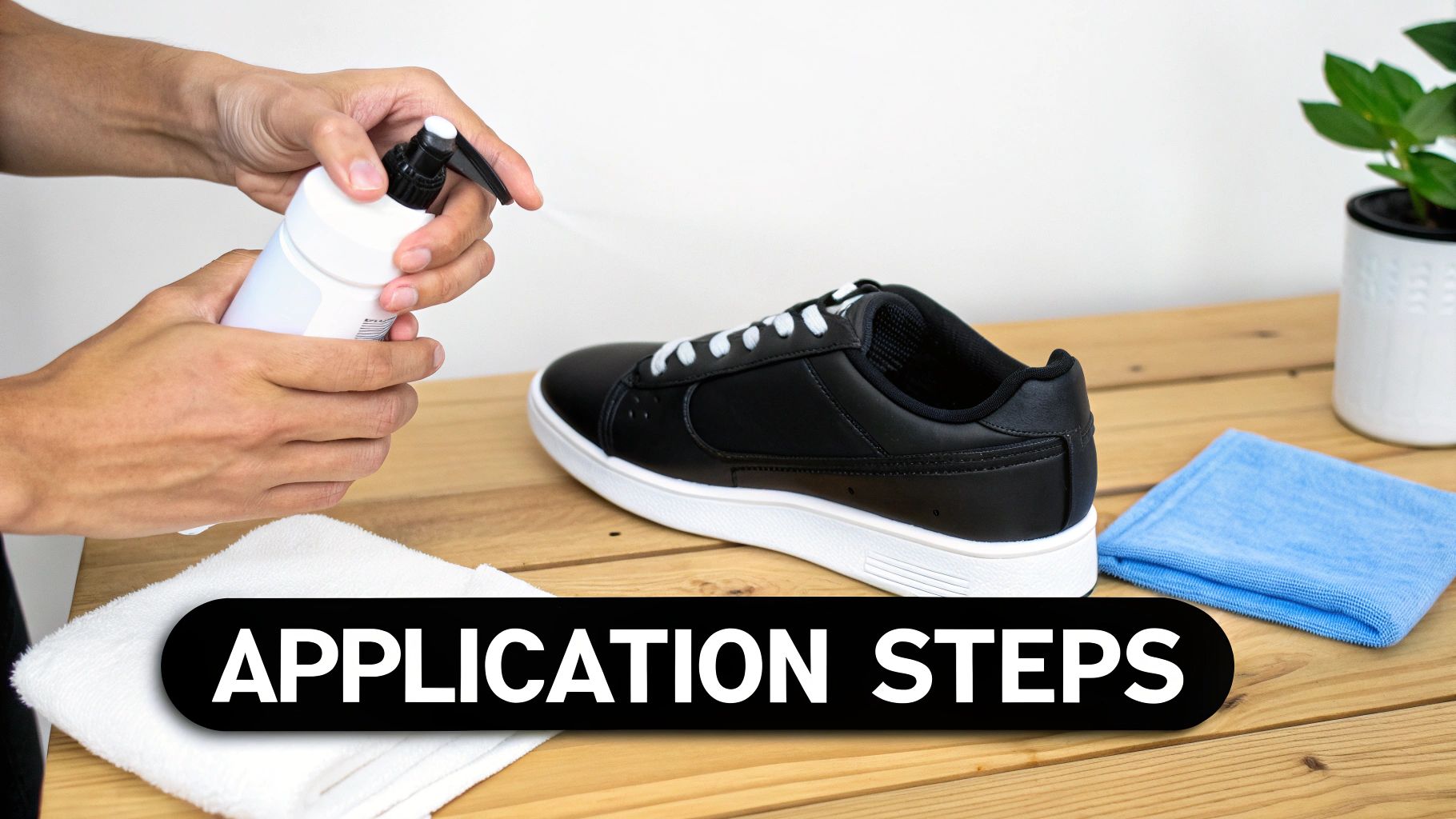
Step 1: Preparation is Critical
Before applying any product, you must prepare the environment. Odor-causing bacteria colonize every interior surface. Applying a deodorizer over debris and a saturated insole is analogous to painting over a dirty, damp wall—the treatment will not adhere and the underlying issue will persist.
First, remove the insoles and laces. This step is non-negotiable. It exposes the shoe's footbed and sidewalls—ground zero for bacterial activity—allowing for direct application of the formula where it is most needed.
Next, clear any loose debris. Invert the shoes and tap them firmly to dislodge dirt, grit, or sand. For any remaining particulates, use a soft-bristled brush to sweep the interior. A clean substrate is essential for the deodorizer to penetrate the material effectively.
Step 2: Precision in Application
With the shoes prepared, it is time for application. The objective is not saturation, but even, comprehensive coverage. Over-applying the product will prolong drying time and can adversely affect certain materials.
Hold the bottle approximately 6-8 inches from the shoe's opening. This distance ensures a fine, even mist rather than a concentrated stream that oversaturates a single area.
For optimal results, follow this application pattern:
- Footbed: Apply two to three sprays along the length of the shoe's interior, from heel to toe. This area harbors the highest concentration of sweat and bacteria.
- Sidewalls: Angle the nozzle and apply a light mist to each interior side.
- Upper Interior: Direct a final spray toward the tongue area and the top of the toe box.
- Insoles: Treat the insoles separately. Apply a light mist to both sides and set them aside to dry.
This methodical technique ensures all critical surfaces receive a consistent, light coating of the active formula.
Pro-Tip for Delicate Materials: For footwear with unlined suede or nubuck interiors, exercise caution. A very light mist applied from a slightly greater distance is sufficient. Oversaturation of these porous materials can cause stiffening or slight darkening upon drying. Always allow them to air dry completely in a well-ventilated area, away from direct heat.
Step 3: Allow for Curing (Do Not Expedite)
This final step is frequently overlooked yet is arguably the most crucial. The formula requires time to penetrate the material, neutralize odor molecules, and fully evaporate. Rushing this process traps moisture and negates the benefits of the application.
Place the shoes and insoles in a cool, dry, well-ventilated location. Avoid direct sunlight or heaters, as concentrated heat can degrade adhesives, warp synthetic materials, and cause leather to become brittle.
Allow them to air dry completely. This may take several hours or overnight, depending on ambient humidity. Patience is essential. The shoes are ready when the interior is completely dry to the touch. At that point, reinsert the insoles, relace the shoes, and they are ready for wear.
For a comprehensive footwear care routine, we recommend an application of Gold Standard Shoe Deodorizer Spray after any significant wear. Its formulation is engineered to be effective against odor while remaining gentle on materials, making it a reliable component of any maintenance regimen.
Material-Specific Deodorizing Protocols
You would not use a single cleaning agent for both a leather jacket and a cotton garment. The same principle applies to your footwear. A one-size-fits-all approach to deodorizing is ineffective and risks damaging the very materials you seek to preserve.
Each material interacts with moisture and odor uniquely. Porous leather traps contaminants differently than a tightly woven performance knit. To neutralize odor without causing material degradation, you must understand the properties of what you are treating. This guide provides protocols for safely deodorizing the most common footwear materials.
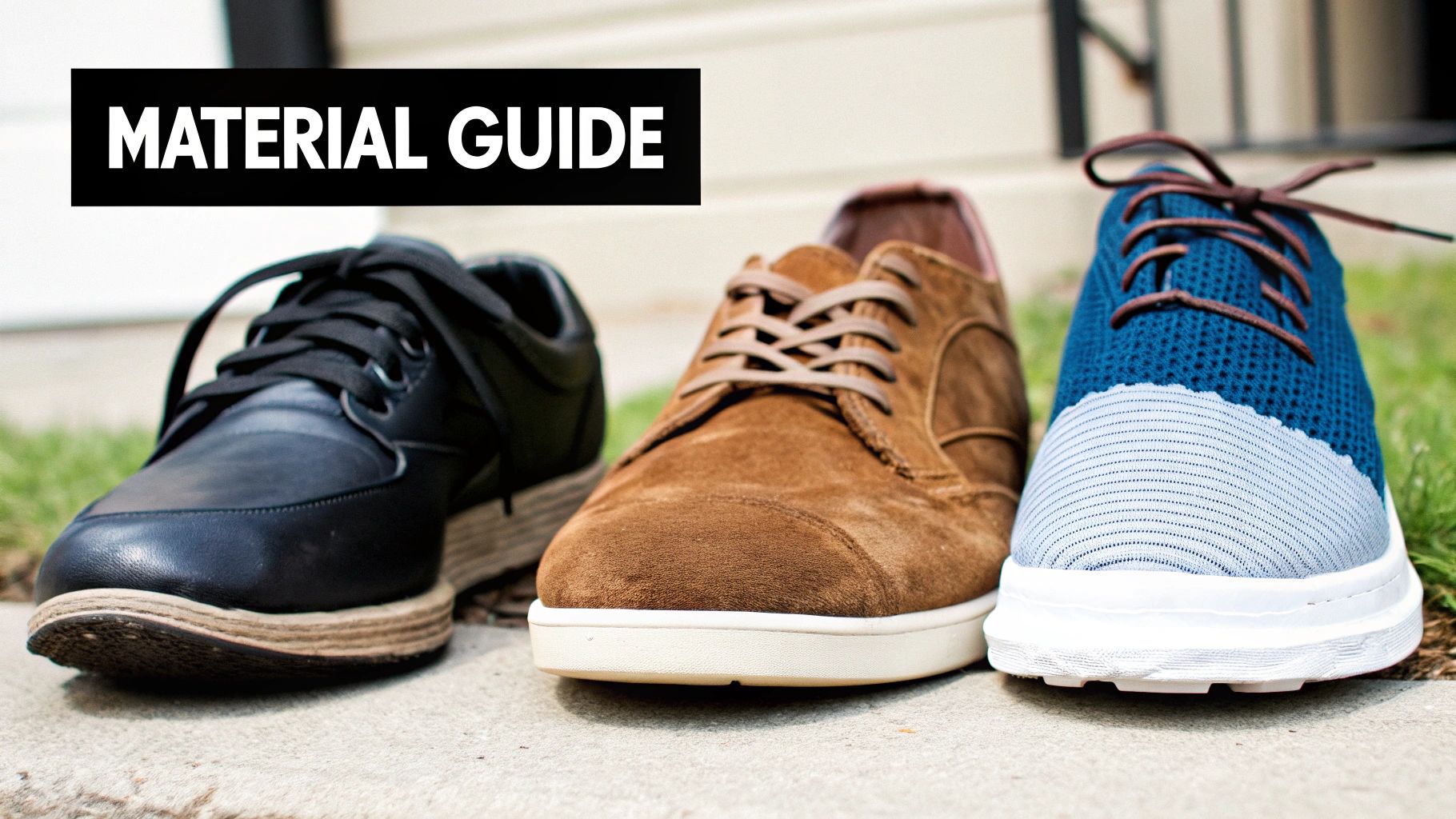
Treating Leather and Synthetic Leather
Genuine leather is a porous, natural skin that breathes but can also absorb sweat and odor deep into its fibers. Synthetic leather, or "pleather," is non-porous and traps moisture, creating a humid microclimate ideal for bacterial growth.
For both materials, the objective is to treat the lining thoroughly without oversaturating the uppers.
- Target the Interior: Direct the spray nozzle at the shoe's lining and insole, which are the primary sites of bacterial colonization.
- Apply a Light Mist: Avoid saturation. Over-applying liquid to genuine leather can cause it to become stiff and discolored as it dries.
- Wipe Away Overspray: If any spray contacts the exterior of your leather footwear, wipe it away immediately with a clean, dry cloth.
Safely Deodorizing Suede and Nubuck
Suede and nubuck are exceptionally sensitive to moisture. Improper application can result in water stains, a stiffened texture, or matted naps. Deodorizing these materials requires a precise, controlled technique.
Field-Tested Advice: Always perform a spot test on suede and nubuck. Apply a minimal amount of spray to a small, inconspicuous area on the shoe's interior. Allow it to dry completely to ensure there is no adverse effect on the material's color or texture.
Once you have confirmed compatibility, hold the container 8-10 inches away and apply an extremely light, diffuse mist to the interior only. Never spray the exterior. Allow the shoes to air dry completely in a room with ample airflow, away from direct heat sources that could warp the material.
Best Practices for Canvas and Mesh
Canvas, a woven fabric common in casual footwear, is highly absorbent. Similarly, the synthetic mesh and knits used in modern athletic shoes, while designed for breathability, can still trap bacteria within their weave. Fortunately, these materials are durable and can tolerate a more direct application.
- Ensure Even Coverage: Apply a consistent mist to the entire interior, focusing on the toe box and footbed where moisture accumulates.
- Treat Insoles Separately: This is a critical step, especially for athletic footwear. Remove the insoles and spray them directly, as they absorb the majority of perspiration.
- Promote Airflow: After application, open the shoes as wide as possible to maximize air circulation. This prevents moisture from being trapped, which would restart the odor cycle.
The demand for effective footwear care products is particularly strong in North America, where sneaker culture has driven the shoe deodorizer spray market to a 45.7% share. This is not a superficial trend; it reflects a growing consumer understanding of foot health and asset protection, propelling the market toward a projected USD 601.1 million by 2030. You can explore more data on these market trends to see how consumer behavior is shaping the industry.
Final Checks for All Materials
Regardless of the material, one rule is universal: ensure your footwear is 100% dry before wearing. Enclosing the foot in a damp shoe creates an ideal environment for microbial growth and will exacerbate any odor issues.
For a formula engineered to be effective against odor while remaining safe for materials from premium leather to technical knits, you can trust Gold Standard Shoe Deodorizer Spray. Its balanced, non-aerosol mist is powerful enough for demanding applications yet respects the integrity of the materials you have invested in, making it a suitable choice for your entire collection.
Selecting a Deodorizer Spray: Formulation Analysis
Not all shoe deodorizer sprays are formulated equally. The market is saturated with options, ranging from inexpensive aerosols that merely mask odor with aggressive fragrances to sophisticated solutions designed to preserve your footwear investment. Making an informed choice is critical for the longevity of your shoes and the health of your feet.
As materials specialists, we evaluate these formulas at a chemical level. A premium spray must be compatible with the complex system of adhesives, dyes, and fibers that constitute modern footwear. Using an improperly formulated product is akin to using the wrong grade of fuel in a high-performance engine—it can cause significant long-term damage.

To make a sound decision, you must be able to identify the hallmarks of a superior formula and, equally important, recognize ingredients to avoid.
Hallmarks of a Premium Formula
A top-tier shoe deodorizer works in synergy with your footwear, neutralizing the root cause of odor while respecting a wide range of materials. These are the components and features to look for on a product label.
- Natural Enzymatic Agents: These are the most valuable players in an effective formula. Enzymes are biocatalysts that actively deconstruct the organic, odor-causing compounds left by bacteria. Instead of masking the scent, they dismantle it at a molecular level.
- Essential Oils: Look for ingredients such as tea tree, peppermint, or citrus oils. These are not included solely for fragrance; they possess natural properties that create an environment inhospitable to odor-causing microbes, providing a dual-action benefit.
- Water-Based Formula: A water-based solution is significantly gentler on materials than one formulated with harsh solvents. It serves as an ideal delivery system for the active ingredients, performing its function without dehydrating leather or compromising the integrity of footwear adhesives.
- Non-Aerosol Delivery: A pump-spray mechanism delivers a fine, controlled mist without the need for the chemical propellants found in aerosol cans. This improves indoor air quality and allows for more precise application.
A well-crafted formula is synergistic. It combines elements that inhibit bacterial growth and neutralize existing odor, all within a safe, non-damaging carrier. This distinguishes a temporary fix from a genuine footwear care tool.
Ingredients to Actively Avoid
Identifying beneficial ingredients is only half the task; you must also recognize detrimental ones. Many mass-market sprays contain aggressive chemicals that can compromise footwear over time, leading to discoloration, material stiffening, and structural failure.
Here is a list of common problematic ingredients to check for on any label:
- Harsh Alcohols (e.g., Isopropyl Alcohol): While effective as disinfectants, high concentrations of certain alcohols will strip natural oils from leather, leaving it dry, brittle, and prone to cracking. They can also damage synthetic materials and cause dyes to fade with repeated use.
- Parabens and Phthalates: These are synthetic preservatives and fragrance carriers commonly found in low-cost consumer products. They serve only to extend shelf life and contribute no value to the deodorizing process or the care of your shoes.
- Aggressive Solvents: Be highly skeptical of formulas containing strong chemical solvents. These can degrade the adhesives used in modern footwear construction, potentially leading to delamination of soles or other components.
- Heavy Synthetic Fragrances: Sprays with an overpowering, artificial scent are merely masking the underlying problem. The malodor will return as the fragrance dissipates, and the chemicals used can be irritants.
Selecting the right shoe deodorizer spray is an investment in your footwear collection. By prioritizing formulas with beneficial, material-safe ingredients, you ensure your shoes remain fresh without sacrificing their structural integrity.
A Systematic Approach to Footwear Freshness
An effective shoe deodorizer is a powerful tool, but it performs best as part of a comprehensive footwear care system. Lasting freshness is not achieved through a single product; it is the result of consistent, intelligent habits that prevent odor from establishing itself in the first place. This is how you protect your investment and maintain your collection in pristine condition.
Consider this analogy: you would not apply wax to a car covered in mud. You would wash, dry, and prepare the surface first. A deodorizer spray operates on the same principle—its efficacy is maximized when used on footwear that is properly managed on a daily basis.
Building a Proactive Care Routine
Preventing shoe odor is far more effective than treating it. By integrating a few simple practices into your weekly routine, you can create an environment where malodor cannot develop. These habits are not complex or time-consuming, but they are fundamental to the long-term health of your shoes.
-
Rotate Your Footwear: This is the single most impactful habit you can adopt. Never wear the same pair of shoes on consecutive days. Allowing a full 24-48 hours for them to air out enables all residual moisture from perspiration to evaporate completely. This deprives bacteria of the damp, dark environment they need to multiply.
-
Utilize Cedar Shoe Trees: Unfinished cedar is a natural desiccant and deodorizer. It actively absorbs moisture from the shoe's lining while neutralizing odors and helping the footwear retain its proper shape. Insert them immediately after removing your shoes for maximum benefit.
-
Perform Regular Cleaning: Do not allow dirt and grime to accumulate. A quick wipe-down of the uppers and soles after wear prevents contaminants from setting in. On a bi-weekly or monthly basis, perform a more thorough cleaning to keep materials fresh and breathable.
The Cornerstone of Your System
Once these foundational habits are established, a high-quality deodorizer spray becomes your strategic advantage. It is the final step that eliminates any residual bacteria and maintains the shoe's interior freshness between wears. With this system, you are no longer reacting to odor; you are proactively preventing it.
This complete system—rotation, moisture management, cleaning, and targeted deodorizing—marks the transition from constantly combating shoe odor to proactively maintaining footwear freshness. It is the difference between a temporary fix and true, long-term preservation.
For a spray specifically engineered to be the cornerstone of this system, we confidently recommend Gold Standard Shoe Deodorizer Spray. Its powerful, material-safe formula is designed to integrate seamlessly into your care routine, providing the reliable performance required to keep your entire collection fresh, wear after wear.
Frequently Asked Questions About Shoe Deodorizer Sprays
Even with a solid understanding of the principles, specific questions often arise. As footwear care specialists, we have addressed nearly every conceivable query from collectors, athletes, and daily wearers. Here are direct, field-tested answers to the most common questions.
What is the Recommended Frequency of Use?
There is no universal frequency; application should be dictated by use. The guiding principle is to be proactive, not reactive. Do not wait for odor to become noticeable.
For daily-wear footwear or athletic shoes subjected to intense use, a light mist after every wear is the optimal protocol. This habit prevents odor-causing bacteria from ever establishing a significant colony. For shoes worn less frequently, such as weekend or dress footwear, an application after every two to three wears is generally sufficient to maintain freshness.
Can a Spray Eliminate Stubborn, Pre-Existing Odors?
Yes, but it requires a more aggressive and consistent treatment plan. A single application will not instantly reverse months or years of odor buildup. For deeply embedded odors, a focused, sustained approach is necessary.
If you are treating a pair with significant, set-in odor, you may need to apply the spray daily for a week or more. The professional protocol is as follows:
- Remove the insoles. Spray them thoroughly on both sides, then apply a comprehensive coat to the entire shoe interior.
- Allow all components to air dry completely—a minimum of 24 hours is recommended.
- Repeat this process daily until the odor is fully neutralized at its source.
This sustained application is necessary to break down the resilient bacterial colonies responsible for persistent malodor.
Is It Safe for Vintage or Delicate Footwear?
Applying any product to vintage or delicate materials requires heightened caution. The materials and dyes in older footwear can be unstable, and delicate textiles like silk or untreated suede are highly sensitive.
Our Expert Recommendation: Always perform a spot test before treating a valuable or delicate pair. Apply a minimal amount of the spray to an inconspicuous interior area, such as under the tongue or along an inner seam. Allow it to dry completely and inspect for any changes to color or texture.
A high-quality, water-based formula with natural ingredients is inherently safer than a harsh, chemical-based aerosol. However, when dealing with an irreplaceable pair, this spot test is not a suggestion—it is a mandatory step to protect your investment.
Ready to integrate lasting freshness into your footwear care system? The Gold Standard Shoe Deodorizer Spray is formulated with powerful, natural ingredients to safely eliminate odor at its source while protecting the materials you value. Shop Now and Experience the Gold Standard Difference.