

Shoe cleaner wipes are an indispensable tool for immediate response. They are the first line of defense for keeping footwear presentable on the move, addressing everything from surface dirt and scuffs to accidental spills. Consider them the essential companion to a comprehensive cleaning kit, ideal for travel, daily maintenance, or managing messes the moment they occur.
Why Immediate-Response Cleaning is Non-Negotiable
Footwear has evolved into a significant personal investment. The desire to maintain the "fresh out of the box" condition is a universal goal among enthusiasts and discerning wearers alike. The era of wearing a pair into the ground without maintenance is over. Today, a single scuff on a limited-edition release or a smudge on premium leather can compromise the entire aesthetic.
This is precisely the scenario where shoe cleaner wipes prove their utility. They are engineered for the real world, where unexpected incidents are inevitable. A quick, effective wipe is the critical action that separates a minor incident from a permanent stain.
Market data validates this shift. The demand for accessible shoe care solutions is expanding rapidly, with the shoe cleaning wipes market projected to reach USD 850 million by 2033. This is not an arbitrary trend; it reflects a culture that values presentation and asset preservation. A quick wipe-down has become a standard practice for anyone serious about their footwear. You can review the data in this recent footwear industry analysis.
For any individual who invests significant capital and consideration into their footwear collection, these wipes are fundamental. They effectively bridge the gap between a deep, restorative clean and the demands of daily wear. Here is why they are so crucial:
- Immediate Action: The moment a spill occurs, you can intervene. This is absolutely critical for preventing stains from setting into porous materials like canvas or untreated leather.
- Material Preservation: A properly formulated wipe cleans without stripping essential finishes or oils. Unlike harsh household cleaners that can dry out leather or accelerate the yellowing of rubber midsoles, these are engineered to be gentle yet effective.
- Enhanced Longevity: Dirt is an abrasive. By regularly removing fine particulate matter, you are physically preventing it from wearing down the materials over time, which helps your shoes last longer and retain their value.
At Gold Standard, we view proper maintenance as integral to the investment itself. Employing the correct tool for the task—such as a high-quality shoe cleaner wipe—is the most intelligent way to protect your assets.
Material-Specific Application: The Foundation of Proper Care
Applying a single cleaning approach to all footwear materials is a common but damaging mistake. It is one of the fastest ways to cause irreversible harm. The soft, textured nap of suede requires a completely different technique than smooth, full-grain leather or a durable rubber midsole. Mastering this distinction is the foundation of expert-level shoe care.
A quality shoe cleaner wipe is a precision tool, not a blunt instrument. Incorrect pressure or motion can escalate a minor scuff into a significant problem. This is where technical knowledge protects your investment and maintains the integrity of your collection for years.
The Correct Approach for Common Materials
Let's detail the specific techniques for the most common materials in a modern footwear collection. Nailing these methods will elevate your shoe care regimen from basic to professional.
Smooth & Full-Grain Leather
Leather is durable, but it is a natural skin. Overly aggressive treatment can cause it to dry out, crack, or lose its finish. The objective is to clean the surface without stripping its essential oils.
Using your shoe cleaner wipe, apply firm but gentle pressure and move in small, circular motions. This is the most effective way to lift dirt from the grain without being abrasive. For dress shoes or premium leather sneakers, this method preserves the subtle luster.
Suede & Nubuck
These are unquestionably the most delicate materials to maintain. Suede and nubuck possess a soft, velvety texture known as "nap." Aggressive rubbing will crush this nap, leaving behind flattened, shiny areas and permanent discoloration.
Never scrub suede or nubuck. Instead, gently blot or dab the affected area with the wipe. Your goal is to lift the soil out, not grind it in. Allow the spot to air-dry completely, then use a proper suede brush to lightly restore the original texture.
Canvas & Knit Uppers
Woven materials like classic canvas and modern knit uppers are magnets for dirt, which becomes trapped between the fibers. While durable, cleaning them too aggressively can lead to fraying or pilling.
On these fabrics, use short, light strokes in a single direction to help pull dirt out of the weave. For a stubborn spot on canvas, you can apply slightly more pressure, but avoid a back-and-forth scrubbing motion, which can damage the fabric's structure.
This infographic provides a quick visual reference for why this type of precise care is crucial for protecting your footwear.
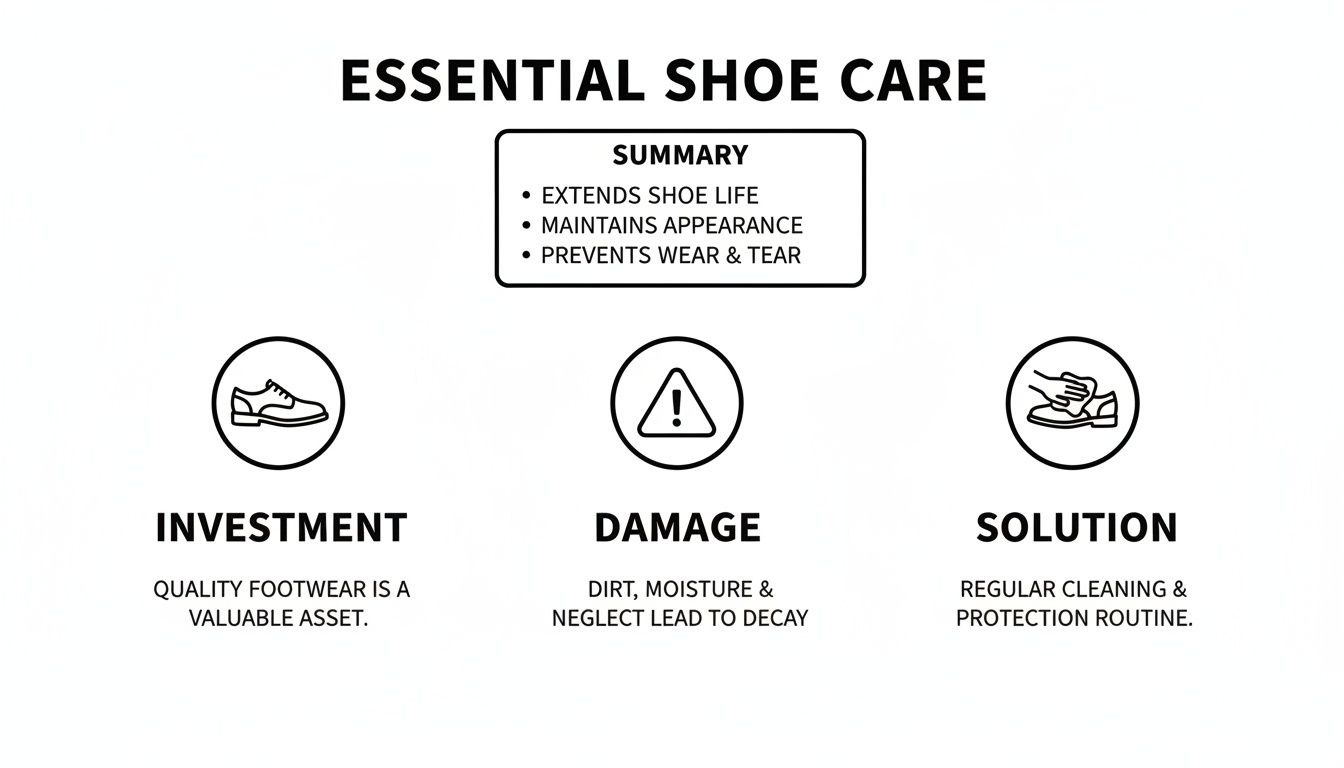
It effectively breaks down how a complete care strategy involves viewing shoes as an investment, actively preventing damage, and using the correct tools for each task.
Midsoles and Rubber Components
This is the one area where more aggressive application is acceptable. The midsoles, outsoles, and rubber toe caps on sneakers are engineered for high wear. This makes them the most straightforward part of the shoe to clean.
Feel free to use firm, consistent pressure and circular motions to buff out scuffs and ground-in dirt. Many midsoles have a textured surface, and this approach helps the wipe penetrate these crevices. A high-quality wipe will not shred or disintegrate, even when applying significant pressure to these tougher areas.
The versatility of modern shoe wipes is a key reason for their widespread adoption. Casual owners, who constitute 55% of the market, rely on them for cleaning everything from leather (45% of usage) to fabric (30%) and synthetics (25%). This isn't just about aesthetics; resale experts indicate that neglected footwear can lose up to 35% of its value. In the massive USD 5.23 billion shoe care industry, wipes are the fastest-growing segment because they offer a real defense against this depreciation. You can explore more of the shoe care market trends for a comprehensive overview.
A Quick-Reference Guide for Different Materials
To simplify the process, we've developed a table that outlines the optimal use of shoe cleaner wipes on various materials. It serves as a practical cheat sheet for achieving correct results every time.
Shoe Cleaner Wipe Application Guide by Material
| Material Type | Recommended Technique | Key Precaution | Gold Standard Suitability |
|---|---|---|---|
| Smooth Leather | Gentle, circular motions with light-to-moderate pressure. | Avoid excessive moisture and harsh scrubbing. | Excellent |
| Suede & Nubuck | Blot or dab gently; never scrub. Use a brush after drying. | Rubbing will crush the nap and cause permanent damage. | Excellent (with caution) |
| Canvas & Fabric | Short, light strokes in a single direction. | Avoid aggressive back-and-forth scrubbing to prevent fraying. | Excellent |
| Rubber/Midsoles | Firm, circular motions to remove scuffs and grime. | Wipes may not remove deep scuffs or sole yellowing. | Excellent |
Remember, this guide is your reference for protecting your collection. While wipes are incredibly versatile, the correct technique is what separates a quick clean-up from a costly error.
A Note on Gold Standard Wipes
We engineered our Gold Standard wipes to be effective enough for robust applications yet safe enough for a wide range of materials. Their balanced cleaning solution and durable, textured design make them an ideal all-around choice, from rugged rubber midsoles to fine, finished leather.
That said, always remember that for delicate materials like suede and nubuck, your technique is what truly dictates the outcome. Adhere to the blotting method we covered, and you will achieve a perfect, damage-free clean every time.
The PRO METHOD for a Flawless Clean
Anyone can wipe a shoe, but achieving a truly flawless, like-new finish is a matter of process. It requires a method that protects your investment while efficiently removing grime. This is not a simple wipe-down; it is a maintenance routine.
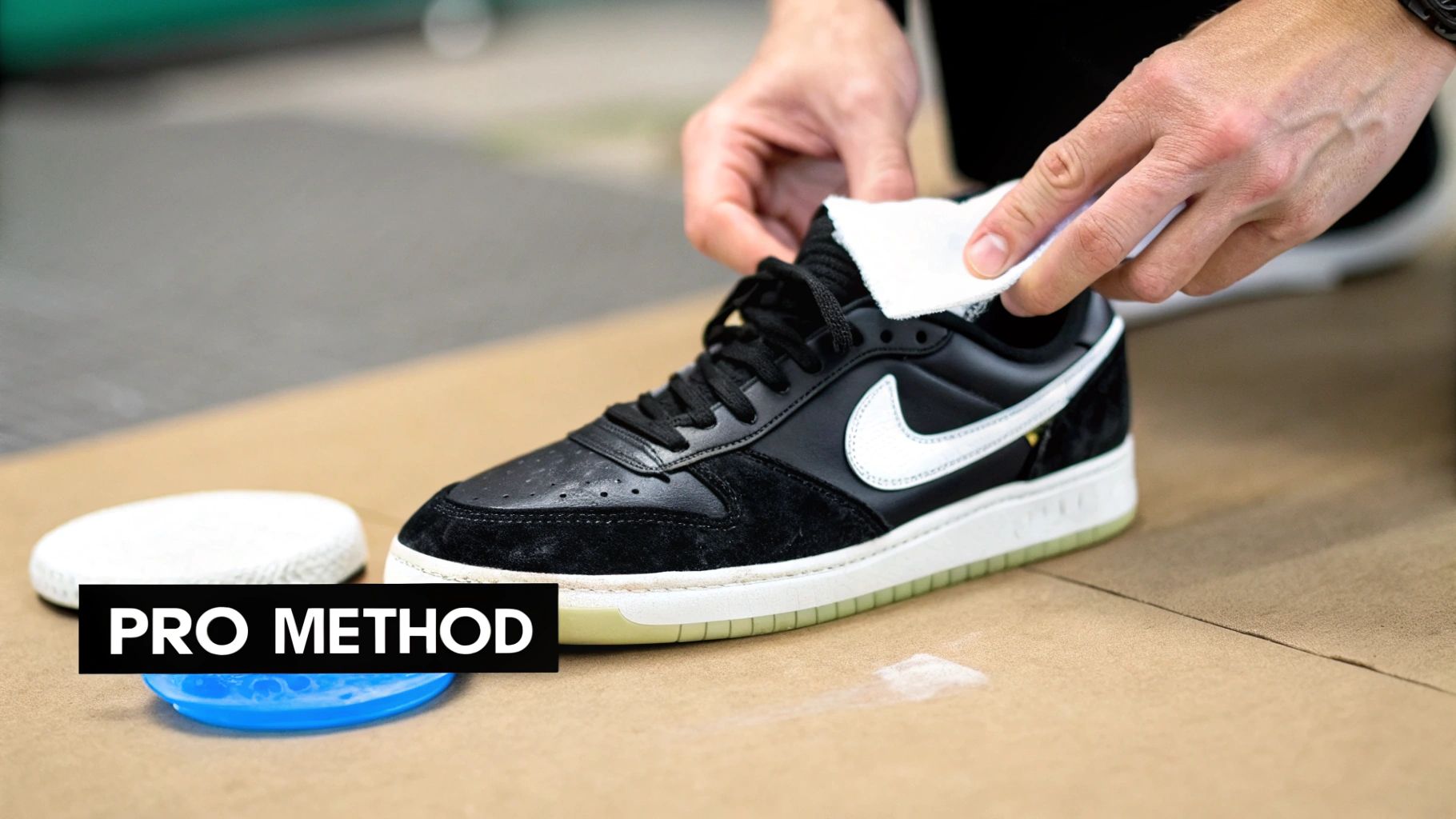
Step 1: Assess the Material and Contaminant
Before opening a wipe, conduct a thorough assessment of the shoe. What is the specific issue? Is it a fresh coffee drip on canvas or caked-on mud on a leather toe cap? The nature of the contaminant and the material will dictate your entire approach.
If you observe any loose debris—dust, dried dirt, sand—remove it first. Use a soft-bristled brush to gently sweep it away. Wiping over grit is a novice error that can easily scratch smooth leather, turning a simple clean into a permanent flaw.
Step 2: The Spot Test (Non-Negotiable)
We cannot overstate this: always perform a spot test. Even with the safest formulas, every shoe's material is unique due to dyes, finishes, and age. A spot test is your insurance policy.
Select a small, inconspicuous area to test the wipe. The inside of the tongue or a small patch near the heel collar is ideal. Dab it gently, let it air dry completely, and inspect for any discoloration or change in texture. If the material is unaffected, you are clear to proceed.
Skipping a 30-second spot test is the fastest way to ruin a pair of shoes. It is the single habit that distinguishes professionals from amateurs.
Step 3: Clean with Precision
Now, it is time to work. Remember, your technique must match the material. Do not scrub indiscriminately.
- Durable Surfaces: For rubber midsoles and coated leathers, you can be more assertive. Use firm, circular motions to lift out stubborn scuffs.
- Delicate Materials: When working with suede or nubuck, the principle is to 'lift,' not 'scrub.' A gentle blotting or dabbing motion will pull the stain out instead of pushing it deeper into the fibers.
- Woven Fabrics: On canvas or knit uppers, use light, short strokes in a single direction. This prevents fraying the fabric or causing it to pill.
As you clean, periodically refold the wipe to a fresh section to avoid redistributing dirt. A high-quality wipe will not tear or disintegrate during this process.
Step 4: The Finishing Steps
Once the dirt is removed, take a clean microfiber towel and gently pat the area dry. This absorbs any residual cleaning solution and excess moisture, which is key to preventing water spots or streaks.
Finally, allow the shoes to air dry completely at room temperature. Never place them near a heater, in front of a vent, or in direct sunlight. Intense heat can cause leather to crack, warp other materials, and accelerate sole yellowing. Patience at this final stage ensures a perfect, uniform finish.
Advanced Techniques & Common Cleaning Errors
Mastering the basic wipe-down is a good start, but the difference between an adequate clean and a professional one lies in the details. Once you are comfortable with the fundamentals, it's time to learn how to handle more challenging situations and avoid common mistakes that can ruin a prized pair. This is how you elevate your routine from simple maintenance to true footwear preservation.
Let's move beyond surface dirt to address real-world problems. Consider stubborn scuffs on a rubber midsole. Applying more force is rarely the solution. Instead, use a quality shoe cleaner wipe and utilize its textured side. Apply firm, consistent pressure directly on the mark. The motion is analogous to using a pencil eraser—concentrating the cleaning power exactly where it is needed.
Winter presents unique challenges, particularly salt stains. The chalky white residue is not just unsightly; it can degrade leather over time. A fresh, moist wipe is the best tool for this. Gently dab the stain to allow the solution to dissolve the salt, then use a clean section of the wipe to lift it away completely.
Navigating Sensitive Materials and Common Issues
Delicate materials, such as the knit uppers on many popular sneakers, demand a more precise touch. These fabrics are prone to snagging or pilling if treated too aggressively.
- For Knit Uppers: Always wipe in the same direction as the knit. Moving against the grain is a direct invitation for a snag. Let the cleaning formula do the work, not excessive force.
- Addressing Yellowing: The yellowing of white midsoles is a common issue. Some generic wipes contain harsh chemicals that react with rubber and light-colored synthetics, accelerating this process. This is precisely why a well-formulated product is critical. A premium wipe cleans without leaving behind the chemical residue that promotes oxidation.
The sneaker community is more focused than ever on maintaining pristine condition. In the U.S., where sneaker sales have surpassed $85 billion, a remarkable 72% of collectors under 35 state that "maintaining mint condition" is their top priority. They are turning to high-quality wipes for daily upkeep, specifically seeking formulas that avoid the 25% material degradation risk associated with cheap, generic cleaners. You can see more on how collectors are protecting their footwear investments in recent market reports.
Mistakes That Cause Permanent Damage
Knowing what not to do is as critical as knowing the correct procedures. We consistently observe the same preventable—and often costly—mistakes.
The most frequent error is using a wipe that has begun to dry out. At that point, it ceases to be a cleaning tool and becomes an abrasive cloth. Without sufficient moisture to lubricate the surface and dissolve dirt, you are essentially grinding grit into the shoe's material. This can leave micro-scratches on leather and permanent scuffs on synthetics.
If your shoe cleaner wipe feels even slightly dry, discard it. It has become a liability. A fresh, fully saturated wipe is the only way to guarantee a safe and effective clean.
Another significant mistake is applying excessive force, especially on delicate surfaces. Suede, nubuck, and soft knit uppers cannot withstand aggressive scrubbing. You will crush the nap of suede, discolor the material, or fray the fibers of knits. Always begin with a light touch. You can increase pressure on robust areas like rubber midsoles, but for all other materials, let the wipe and its solution lift the stain—do not try to force it out.
Building a Complete Shoe Care Routine
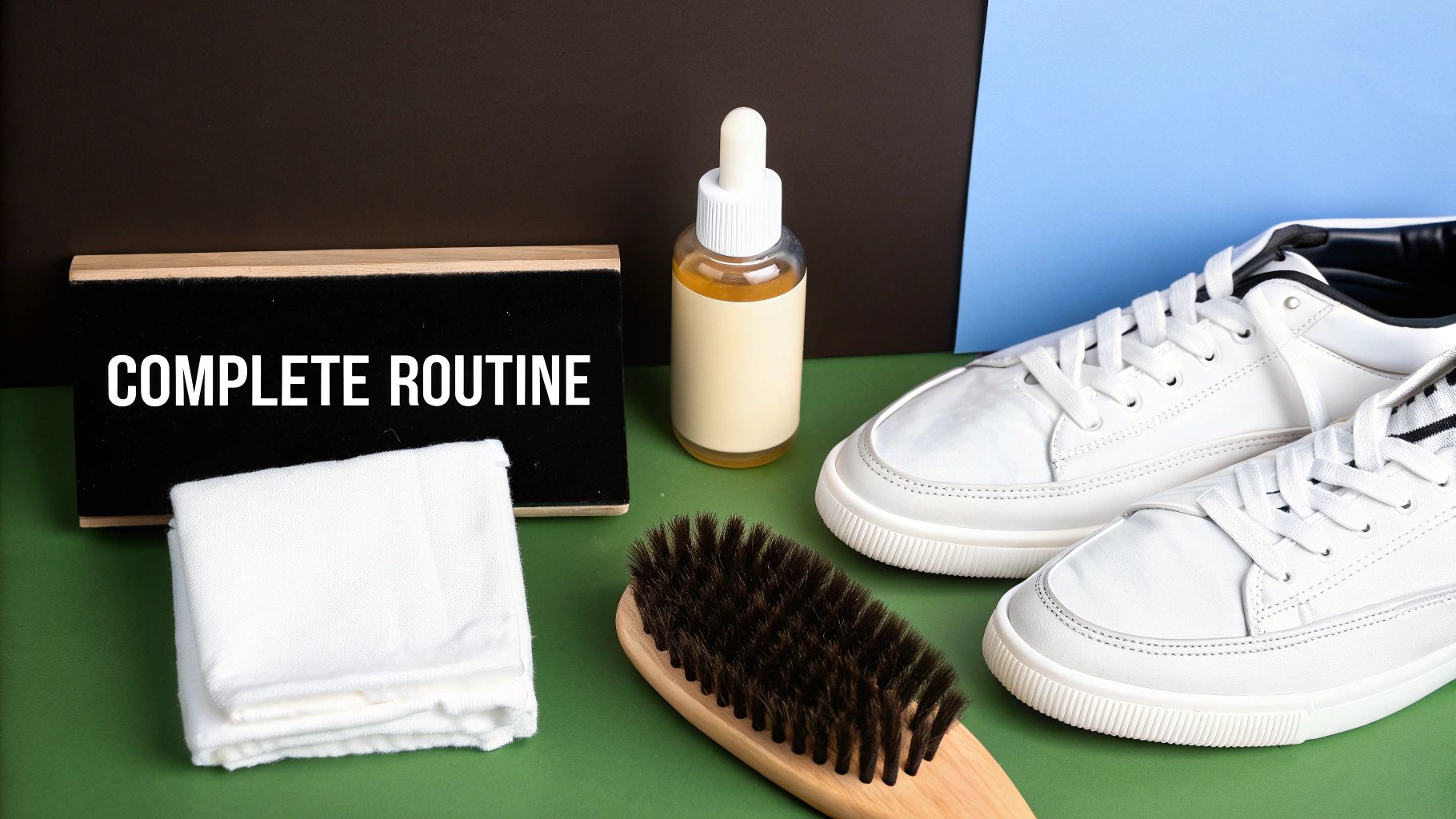
Think of shoe cleaner wipes as first responders—the essential tool for damage control. They are ideal for daily maintenance and for addressing unexpected spills before they can set.
However, relying on them exclusively is like only ever spot-cleaning a car; eventually, it will require a full wash. For footwear to truly last, you need a system that balances immediate response with periodic deep cleaning. Wipes are excellent for surface-level issues, but they are not designed to penetrate material and lift out weeks of embedded grime.
Wipes vs. Deep Cleaning: When to Use Each
Knowing which tool to use for a given task is the key to preserving your collection. You would not use a screwdriver to hammer a nail; the same logic applies here. Each cleaning method serves a distinct purpose.
Reach for a shoe cleaner wipe for:
- Daily Maintenance: A quick wipe of the midsoles and uppers after wear prevents dirt accumulation.
- Immediate Spills: Address coffee drips or food stains the moment they happen. This is where wipes are most valuable.
- Travel Upkeep: They are, without question, the most efficient way to keep shoes presentable while on the go.
A deep clean is non-negotiable for:
- Set-In Stains: Dirt that has penetrated canvas fibers or the grain of leather requires a brush and solution to be properly extracted.
- Seasonal Restoration: A thorough cleaning is the perfect way to restore materials and prepare them for storage or another season of wear.
- Conditioning Prep: Before you can nourish leather, it must be truly clean. A deep clean removes old polish and dirt, allowing conditioners to penetrate effectively.
A complete care routine is not about choosing one method over another. It's about building an arsenal where each tool serves a specific purpose, ensuring your footwear is protected from every angle.
Creating Your Holistic Care System
When you integrate wipes into a broader strategy, you significantly extend the life and value of your collection. It is a matter of establishing a rhythm. A daily wipe-down keeps shoes looking fresh, while scheduling a deep clean every few weeks or months addresses more substantial wear and tear.
This is where a dedicated kit becomes essential. A full set, like the Gold Standard Essential Kit, provides the specialized tools—such as a proper hog-hair brush and a premium cleaning solution—that work in tandem with your wipes. The brush agitates and lifts deep grime from fabrics and midsoles, while the solution provides the power for a full material refresh.
By combining the immediate convenience of wipes with the restorative power of a full kit, you create a system that truly preserves your footwear’s integrity for the long haul.
Your Questions on Shoe Wipes, Answered
Even with a solid process, questions arise. As professionals in this field, we have encountered nearly every query imaginable. Here are the direct, field-tested answers to the questions we are asked most frequently.
Can I Use Shoe Cleaner Wipes on Suede or Nubuck?
Yes, but it requires a strategic approach. This is not a task for any wipe; you must use one specifically formulated for delicate materials.
The technique is paramount. Instead of rubbing—which will crush the nap and leave a permanent mark—you must gently blot or dab the spot. The objective is to lift the stain out of the material, not scrub it in.
After blotting the area, allow it to air dry completely. Do not rush this step. Once fully dry, use a soft-bristled suede brush and gently flick the fibers back up to restore the original texture. And always perform a spot test on an inconspicuous area first.
How Often Should I Use Wipes on My Sneakers?
Consider them your first line of defense. For daily-wear footwear, a quick wipe-down of the midsoles and any visible spots at the end of the day is a critical habit. It prevents dirt from setting in and becoming a more significant problem.
They are ideal for fresh scuffs or minor spills. However, for deep-seated grime that has been present for weeks, you must employ a full cleaning kit. Wipes are meant to complement a deeper clean, not replace it.
Wipes are for daily maintenance; a full kit is for periodic deep cleaning. One keeps sneakers presentable day-to-day, while the other restores them. Consistent use of wipes means you will require those deep cleans far less often.
Are All Shoe Cleaner Wipes the Same?
No. The difference between a quality wipe and a low-grade one is substantial.
Many inexpensive options are saturated with harsh chemicals, alcohol, or aggressive detergents that can damage your shoes. We have observed them stripping the natural oils from leather, causing it to dry and crack. We have also seen them accelerate the yellowing of white rubber midsoles.
A premium wipe is defined by two characteristics: a durable fabric that will not disintegrate during use, and a balanced, gentle cleaning solution. The goal is to lift dirt effectively without leaving behind a sticky residue that subsequently attracts more dirt.
Ready to implement a professional-grade care regimen for your entire collection? Gold Standard provides the premium, material-safe solutions required to protect your investment.