

Properly cleaning Nike Air Max is a matter of material science, not just effort. The process requires specific techniques for the various leathers, synthetics, and textiles used in their construction. The correct methodology begins with a dry-brushing to remove loose, abrasive debris. From there, a targeted, manual cleaning of the uppers, midsoles, and outsoles, followed by a controlled air-drying process, is necessary to preserve the shoe's structural integrity, material finish, and long-term value.
Why Material-Specific Air Max Care Is a Technical Discipline
Nike Air Max are not just casual footwear; they are engineered products and, for many, appreciating assets. This guide provides a professional methodology for maintaining their condition and structural soundness.
Our approach is rooted in material science. Each component—from breathable mesh and full-grain leather to delicate suede and the polyurethane Air unit—possesses unique properties. Understanding how these materials react to moisture, friction, and cleaning agents is the foundation of effective footwear care.
The Consequences of Improper Cleaning Methods
Incorrect cleaning techniques can inflict irreversible damage far exceeding the initial soiling. For example, machine washing Air Max is a critical error. The combination of high heat and mechanical tumbling degrades the adhesives bonding the sole components, leading to separation. This process can also deform the shoe's upper and compromise the clarity of the Air unit window.
Similarly, common household chemicals like bleach or all-purpose cleaners are unsuitable. Their use can result in:
- Color Fading: Stripping dyes from leathers, suedes, and textiles.
- Material Degradation: Dehydrating natural materials, causing them to become brittle and crack.
- Midsole Deterioration: Accelerating the hydrolysis of polyurethane foam, leading to crumbling.
This type of damage diminishes not only the shoe's appearance but also its market value. A 2022 study revealed that 68% of collectors observed a 40-50% decrease in their sneakers' resale value over six months due to poor maintenance. You can learn more about the study's sneaker market findings to understand how proper care protocols protect an asset.
Our philosophy is straightforward: treat footwear with the technical respect its construction demands. This guide transfers our professional knowledge to you, enabling you to preserve your collection for years to come.
The Essential Air Max Cleaning Toolkit
Professional-grade results are achieved not through aggressive scrubbing but through the correct application of specialized tools. Using a single brush for the entire shoe is a common mistake that transfers abrasive grit from the outsole to the delicate upper, causing micro-scratches that permanently dull the material's finish.
A dedicated kit is non-negotiable for proper maintenance.
| Tool | Recommended Material | Purpose and Rationale |
|---|---|---|
| Stiff Bristle Brush | Synthetic Bristles | Engineered exclusively for rubber outsoles and midsoles. The firm bristles effectively dislodge compacted dirt from deep grooves and tread patterns. |
| Soft Bristle Brush | Natural Hog Hair | The industry standard for uppers. The soft bristles are gentle enough for delicate mesh, knit, and premium leathers, yet effective at creating a cleaning foam without snagging or abrading the surface. |
| Premium Cleaning Solution | pH-Neutral Formula | A dedicated sneaker cleaner is essential. The Gold Standard Sneaker Cleaner is formulated to break down dirt and stains without the harsh surfactants that cause materials to dry out, crack, or yellow. |
| Microfiber Towel | High-GSM Weave | Superior to cotton cloths, a quality microfiber towel absorbs moisture and cleaning residue efficiently without leaving lint or causing surface abrasion. |
These four tools form the foundation of any technically sound sneaker maintenance routine.
The Critical First Step: The Dry Brush
This preliminary step is the most frequently overlooked and arguably the most important. Before any liquid is introduced, the sneaker must undergo a thorough dry brushing.
This action removes dry, abrasive particulates. Skipping this step transforms loose debris into a gritty paste upon contact with a liquid cleaner. Subsequent scrubbing with this paste creates an abrasive slurry that damages the very materials you are attempting to preserve.
A comprehensive dry brushing can remove up to 90% of surface-level dirt, rendering the wet cleaning phase more efficient and significantly safer for the footwear. You can explore more insights on why this prep is non-negotiable for a deeper analysis.
Expert Takeaway: Employing material-specific brushes is not a "pro-tip"; it is the standard for preventing cross-contamination and material damage. A soft brush for uppers and a stiff one for soles is the absolute minimum requirement.
A Material-Specific Guide to Cleaning Uppers
A uniform cleaning approach for all Air Max models is a primary cause of damage. The uppers are complex assemblies of different materials, each demanding a specific cleaning protocol. What is effective for a durable synthetic leather panel will ruin the delicate nap of a suede mudguard.
Correctly identifying and treating each material is the difference between a successful restoration and a costly error. This is where material-specific brushes and a properly formulated cleaning solution are indispensable. The objective is not merely to remove dirt, but to do so while preserving the original texture, color, and integrity of each component.
Before beginning, assess the condition of the uppers.
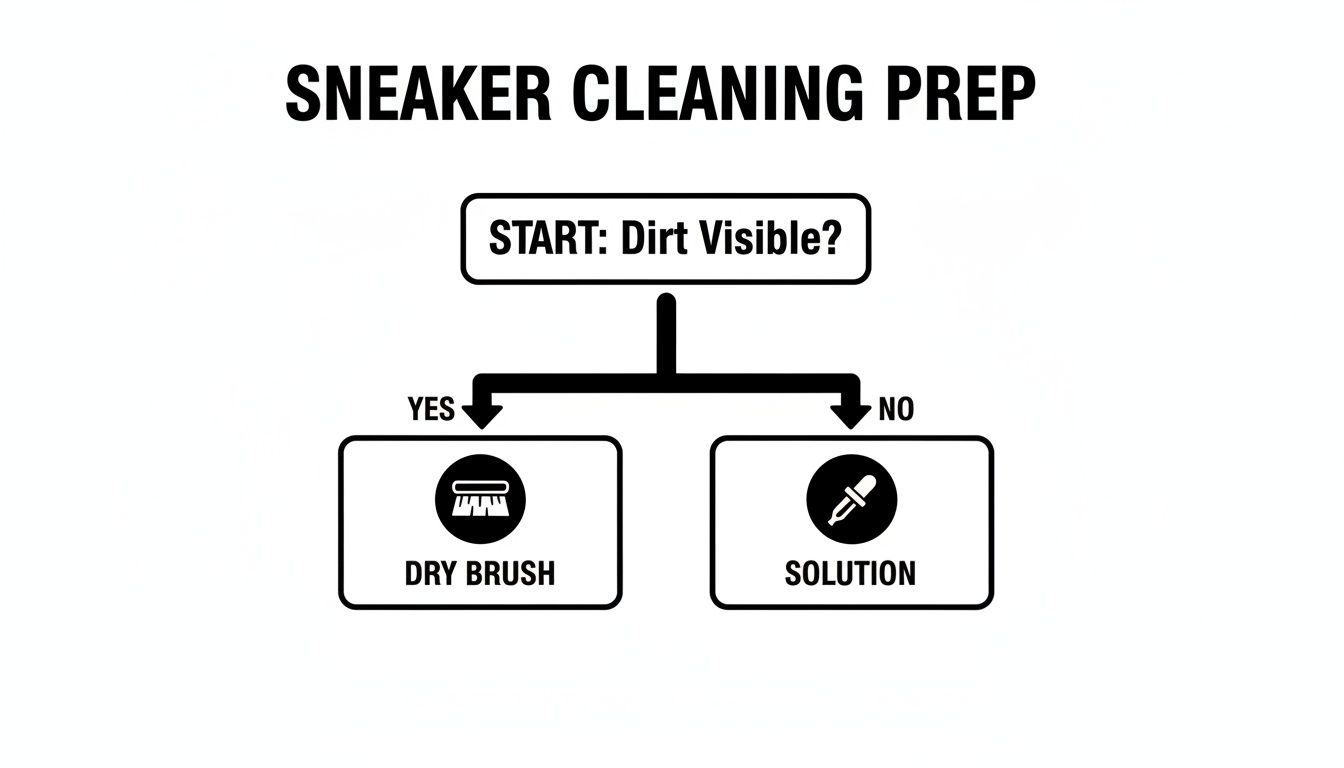
This initial assessment—whether to dry brush first or proceed directly to a wet solution—is fundamental. It prevents the grinding of abrasive particulates into delicate fabrics.
Cleaning Mesh and Knit Uppers
Mesh and knit materials, common on models like the Air Max 270, offer excellent breathability but readily trap dust and dirt within their woven structure. Aggressive scrubbing can cause snagging and fraying. A gentle approach is required.
- Apply a small amount of a quality cleaner, such as the Gold Standard Sneaker Cleaner, directly to a soft hog hair brush.
- Introduce a small amount of water to the brush to activate the solution and generate foam.
- Work the solution into the mesh or knit areas using small, circular motions. The formation of a light foam indicates the solution is lifting dirt from the fibers.
- Blot away the foam and grime periodically with a clean, damp microfiber towel.
The process relies on the efficacy of the cleaning solution, not on mechanical force. Avoid saturating the material.
Tackling Leather and Synthetic Panels
Leather and synthetic panels, as seen on the Air Max 90 and Air Max 1, are more durable but are susceptible to scuffs and stains that can set into the finish. While these materials can withstand more pressure, care must be taken to avoid scratching the surface.
Use the same soft bristle brush. The technique involves creating a consistent lather to lift stains without abrading the material's finish. Work the solution into the panels with a circular motion, paying close attention to seams where dirt accumulates. Immediately wipe each cleaned section with a microfiber towel to remove all residue.
Expert Insight: Never allow a cleaning solution to air-dry on leather or synthetic surfaces. This can leave a residue that dulls the finish and attracts more dirt. The process must be sequential: clean a section, wipe it completely, then proceed to the next.
The Nuances of Suede and Nubuck Care
Suede and nubuck require a completely different protocol. These sensitive materials should not be cleaned with water unless absolutely necessary. Water can flatten the material's nap, cause discoloration, and leave permanent spots. A dry-cleaning method is the primary approach.
The essential tools for suede and nubuck are:
- A Suede Eraser: A precision tool for spot treatment. Gently rub the eraser over specific stains or scuffs. The eraser crumbles as it lifts embedded dirt from the fibers.
- A Suede Brush: Following the use of an eraser, a dedicated suede brush is used to restore the nap. Brush gently in a single direction to realign the fibers and return the material to its original velvety texture.
For heavily soiled suede where a dry clean is insufficient, proceed with extreme caution. Use the absolute minimum amount of cleaning solution and water, work quickly, and blot dry immediately. However, the dry method should always be the first line of defense.
How to Detail Midsoles, Outsoles, and the Air Unit
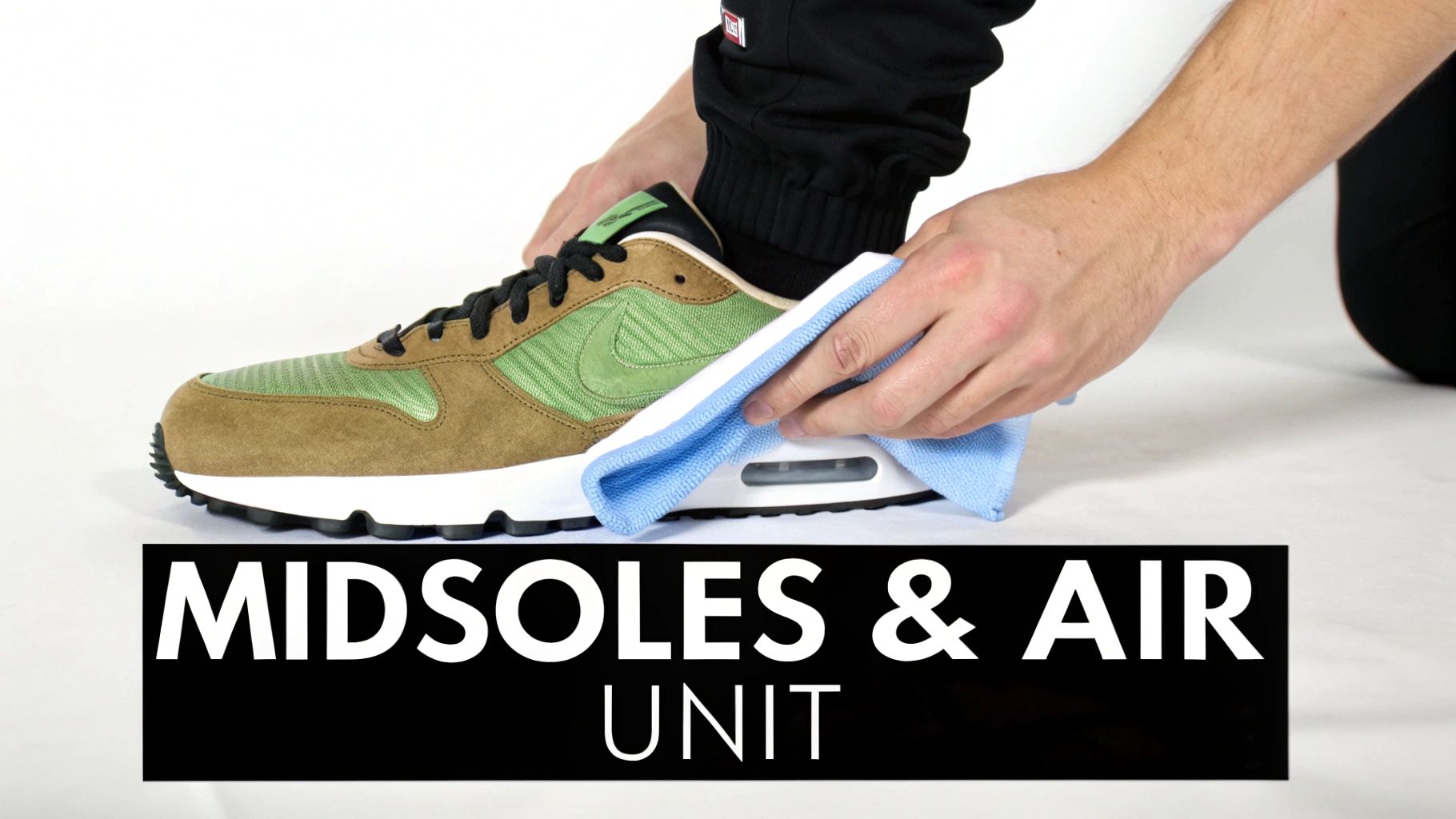
The sole unit is the foundation of the Air Max and endures the most direct contact with abrasive surfaces. While the uppers require a delicate touch, the robust rubber outsoles and foam midsoles can be cleaned more assertively. This is the designated application for your stiff-bristled brush.
These components collect everything from urban grime to organic stains, and a soft brush lacks the rigidity to remove compacted debris from intricate tread patterns. Always treat the sole as a separate cleaning process from the uppers.
Mastering the Outsole Scrub
Begin with the outsole. Apply a premium cleaning solution directly to a stiff brush, add water, and begin scrubbing. The goal is a deep clean within all grooves and textures where dirt becomes compacted.
Do not hesitate to apply firm pressure; the rubber is designed to withstand it. A quality, purpose-made solution can remove embedded grime far more effectively than household mixtures. After scrubbing, use a microfiber towel to wipe away the soiled foam, revealing a clean surface.
Restoring the Midsole
Next, address the foam midsole. This area is prone to scuffs, dirt, and gradual discoloration. While more durable than the uppers, the foam is softer than the outsole and can be damaged by excessive force.
Use your stiff brush with reduced pressure. Work the cleaning solution into the foam with steady, circular motions to lift stains and restore the original color. For stubborn scuff marks, focus on the specific area with small, concentrated scrubbing motions.
Pro Tip: For white or light-colored midsoles, this step is critical for maintaining a clean aesthetic. Consistent cleaning prevents dirt from setting and causing permanent staining.
Detailing the Iconic Air Unit
The visible Air unit is a signature design element and requires careful handling. The clear window is susceptible to scratches, which can permanently cloud its appearance. Never use a stiff brush on this component.
Instead, use your soft hog hair brush or a corner of your microfiber towel dipped in the cleaning solution. Gently wipe the surface to remove smudges and dirt. The objective is to clean the unit without applying pressure that could cause micro-scratches.
The Challenge of Yellowing Soles
Over time, the rubber and foam on soles can begin to yellow due to oxidation, a natural chemical process that standard cleaning cannot reverse.
It is critical to avoid using pure bleach. While it may seem like a quick solution, bleach is a harsh corrosive that will degrade the rubber and foam. This weakens the shoe's structure and can paradoxically accelerate yellowing over the long term.
Focus on targeted, footwear-safe techniques to brighten soles without causing damage. According to Nike's own care guidelines, blotting with a microfiber towel is highly effective at moisture removal—a key step in preventing mildew. You can learn more about professional sneaker care methods and their impact on footwear longevity.
Finishing Touches: Drying and Long-Term Protection
Proper cleaning can be negated by improper drying and after-care. These final stages are crucial for locking in the results and ensuring longevity.
A common mistake is impatience. Never place sneakers near a radiator, heating vent, or in direct sunlight to expedite drying. Intense, direct heat can warp materials, melt adhesives, and cause midsole foam to shrink or crack.
The Correct Air-Drying Protocol
The only safe method for drying footwear is to air-dry at room temperature in a well-ventilated area away from direct sunlight.
To accelerate the drying of the interior and help the sneaker maintain its shape, address internal moisture.
There are two effective options:
- Paper Towels: Loosely stuff the shoe's interior with unprinted paper towels (avoid newspaper, as ink can transfer). These will absorb moisture from the lining. Replace them every few hours as they become saturated.
- Cedar Shoe Trees: This is the professional standard. High-quality cedar shoe trees not only maintain the shoe's structure as it dries but also absorb moisture and possess natural antimicrobial properties that inhibit the growth of odor-causing bacteria.
The objective is to achieve a 100% dry state. Residual dampness creates an environment for mildew and bacterial growth, which will undermine the cleaning process.
Proactive Care with a Protector Spray
Once the Air Max are completely dry, the focus shifts from cleaning to protection. Applying a high-quality protector spray is a critical final step.
A premium repellent, such as the Gold Standard Water & Stain Repellent, creates an invisible, breathable barrier on the shoe's surface. This hydrophobic layer causes liquids to bead up and roll off rather than soaking into the material and causing stains.
This is not only for preventing future spills; it also simplifies subsequent cleanings. Dirt and dust will rest on the protective layer instead of becoming embedded in the material's fibers, allowing for easier removal. It is the most effective way to maintain a pristine condition over time.
Your Top Air Max Cleaning Questions, Answered
Even with a detailed protocol, specific questions often arise. Here are answers to the most common inquiries we receive.
Can I Put My Air Max in the Washing Machine?
We strongly advise against machine washing. The combination of mechanical tumbling, high heat, and excessive water is a triple threat to the integrity of your sneakers.
This process is known to destroy the adhesives that bond the sole to the upper, leading to sole separation. The heat and motion can also permanently warp the shoe's shape and compromise the clarity of the Air unit. A careful hand-cleaning is the only method that protects your investment.
How Do I Eliminate Odors from My Air Max?
Lingering odor is caused by bacteria that thrive in dark, damp environments. The primary defense is ensuring your shoes are 100% dry after cleaning. Subsequently, store them in a well-ventilated area, not a confined closet.
If odor persists, consider these professional solutions:
- Cedar Shoe Trees: Cedar naturally absorbs residual moisture and has antimicrobial properties that actively combat odor-causing bacteria.
- A Quality Deodorizer: A professional-grade shoe deodorizer spray will not just mask the scent but neutralize the bacteria at its source.
What is the Recommended Cleaning Frequency?
This depends entirely on usage. There is no set schedule; the best practice is preventative maintenance.
For a pair in regular rotation, perform minor spot-cleaning as soon as dirt is noticed. A more comprehensive deep clean every two to three weeks will prevent grime accumulation. For sneakers worn only occasionally, a thorough cleaning after every few wears is sufficient to maintain their condition.
The Real Takeaway: It is always more effective to remove fresh dirt than to restore a shoe that has been neglected. Consistency is the key to maintaining a collection.
What Is the Best Method for Yellowed Soles?
Sole yellowing is the result of oxidation, a natural chemical reaction that standard cleaning will not reverse. While some suggest aggressive chemical treatments, this is a high-risk approach that can degrade the rubber and cause more harm.
Before considering extreme measures, try a safer method. Create a paste using baking soda and a few drops of hydrogen peroxide. Carefully apply this paste only to the yellowed areas of the sole. Allow it to sit for approximately 30 minutes (out of direct sunlight), then scrub the area with a stiff brush before rinsing thoroughly. This technique can often lift a significant amount of surface-level oxidation without damaging the sole material.
For every step of the cleaning process—from initial dry brushing to the final protective spray—Gold Standard provides the professional-grade tools and formulations your collection requires. Gear up with the best and maintain your footwear to the highest standard.