

How long do sneakers truly last? The definitive answer depends entirely on their purpose. For daily casual wear, a lifespan of 8-12 months is a reliable benchmark before structural integrity begins to decline. For performance footwear, the metric shifts from time to mileage, with the industry standard set at 300-500 miles before critical midsole cushioning degrades.
Understanding the True Lifespan of Your Sneakers
Determining when to retire a pair of sneakers is a technical assessment, not an aesthetic one. It's less about external appearance and more about internal structural failure. The criteria a collector uses for a preserved pair are fundamentally different from those a runner applies to high-mileage training shoes.
This distinction is critical. For a lifestyle sneaker, wear and tear is often cosmetic—scuffs, creases, or color fading. For athletic footwear, the breakdown is functional and frequently invisible. The primary failure point is the foam midsole, the component responsible for impact absorption. This material degrades silently, long before the upper shows significant distress. Continuing to use a shoe with a compromised midsole can alter biomechanics and increase stress on the wearer's joints.
A Tale of Two Timelines: Time vs. Mileage
A common error is applying a universal lifespan to all footwear. A sneaker's construction and intended use dictate its retirement schedule.
-
Time-Based Lifespan (Casual Wear): This applies to fashion, lifestyle, and daily-use sneakers. Here, lifespan is measured in months of regular activity. This timeline is influenced by user weight, gait, and typical walking surfaces. Footwear experts generally agree that a casual sneaker lasts 8-12 months before signs of significant wear, such as a crushed heel counter or deep midsole wrinkling, become apparent. For a heavier individual, this window may shorten to 6-8 months. Conversely, rotating several pairs can extend this period well beyond a year. To understand the broader context, you can learn more about footwear sustainability and product lifecycles.
-
Mileage-Based Lifespan (Athletic Wear): This is the correct metric for running, basketball, and training footwear. The 300-500 mile guideline is not arbitrary; it is based on the material science of EVA foam degradation. This foam provides essential shock absorption. Once it permanently compresses, the shoe's protective capabilities are compromised, significantly increasing injury risk.
To clarify these standards, let's examine the data.
Sneaker Lifespan at a Glance
This reference table provides an evidence-based estimate of sneaker longevity based on type and application.
| Sneaker Type | Primary Use | Average Lifespan (Time) | Average Lifespan (Mileage/Hours) |
|---|---|---|---|
| Running Shoes | Running/Jogging | 4-6 Months | 300-500 miles |
| Walking Shoes | Daily Walking | 6-10 Months | 500 miles |
| Casual/Lifestyle | Everyday Wear | 8-12 Months | N/A |
| Basketball Shoes | On-court Play | 3-4 Months (heavy use) | ~70 hours of play |
| Cross-Trainers | Gym/Varied Workouts | 6-8 Months | N/A |
These are baseline figures. A disciplined care regimen can extend the functional life of any sneaker.
What 300-500 Miles Means for Performance Footwear
For performance footwear, the 300-500 mile range is a critical safety threshold rooted in materials science. This is the point at which the shoe's midsole—the layer of foam providing cushioning and stability—begins to fail on a structural level.
Once this core component degrades, the shoe can no longer adequately protect joints from impact forces.
A new midsole behaves like an engineered spring, compressing under load and rebounding to absorb force. After repeated impact cycles, the foam—typically EVA (ethylene vinyl acetate)—loses its resilience. This phenomenon is known as midsole compression set. The foam becomes permanently compacted, and its shock-absorbing capacity is drastically reduced.
This degradation is not always visually apparent. A sneaker's upper may appear pristine while its internal support system is functionally dead. Continuing to train on a compromised midsole is analogous to removing a layer of padding and exercising on a harder surface, transmitting significantly more shock through the feet, ankles, knees, and hips.
The Variables That Define Your Mileage Limit
Not every user will achieve 500 miles. The specific lifespan of a shoe is determined by key factors that accelerate or decelerate midsole breakdown. Understanding these variables is crucial for accurately predicting a shoe's retirement point.
- Body Weight: Physics dictates that a heavier individual generates greater force with each footstrike, causing more intense midsole compression and accelerating its fatigue.
- Running Surface: Hard, non-compliant surfaces like concrete and asphalt generate high impact forces, breaking down foam far more rapidly than softer surfaces like trails, tracks, or treadmills.
- Gait Mechanics: Biomechanical inefficiencies such as overpronation (inward foot roll) or supination (outward foot roll) create uneven wear patterns, concentrating stress on specific areas of the midsole and causing premature failure.
This functional difference is the core reason we measure the life of an athletic shoe by mileage, not by calendar days.
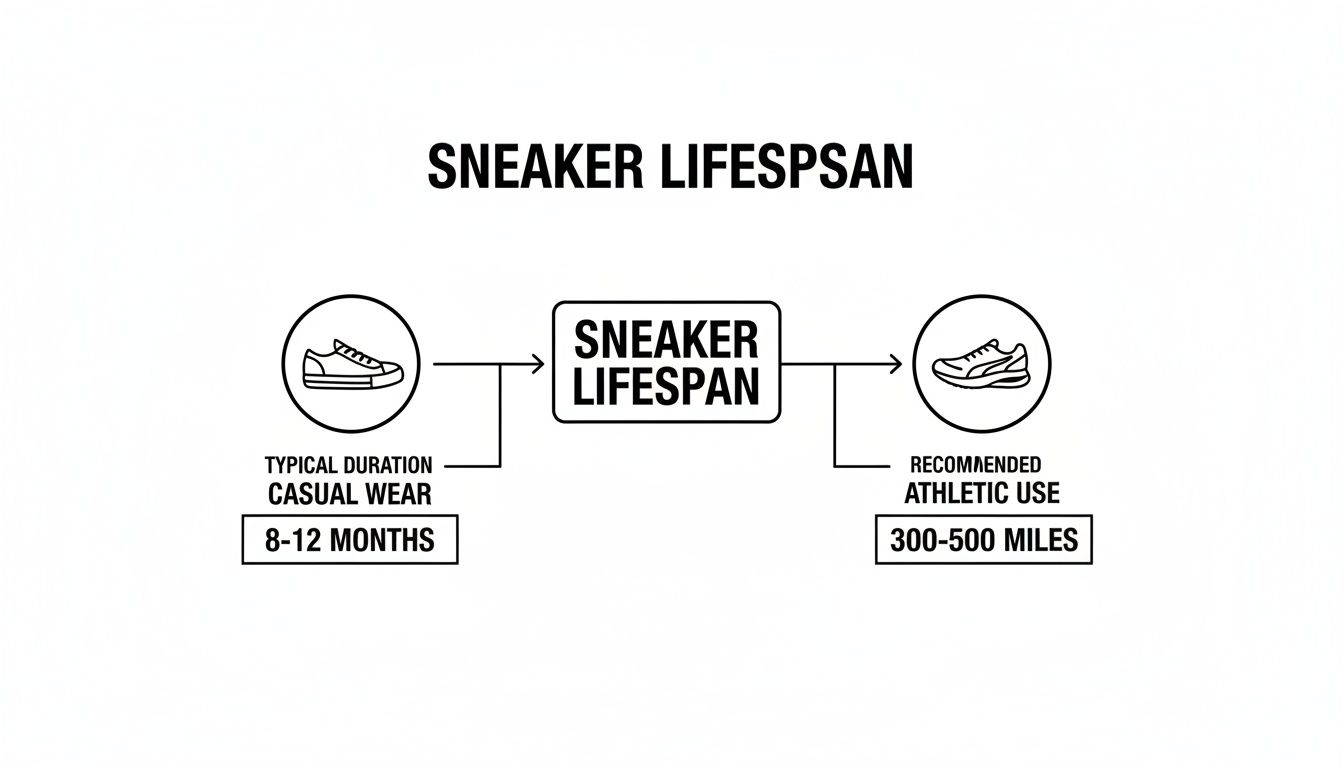
The primary takeaway is that a performance sneaker's lifespan is defined by its functional mileage, as its primary purpose is impact protection.
Once a running shoe enters the 300-500 mile window, it can lose up to 50% of its midsole cushioning capacity. This loss of function may increase injury risk by 30-50%. A 150-pound runner on soft trails might reach the upper end of this range, whereas a 230-pound athlete with overpronation running on asphalt will likely need a replacement closer to 300 miles. You can find more data from extensive biomechanics research about shoe lifespan statistics.
How Sneaker Materials Dictate Durability
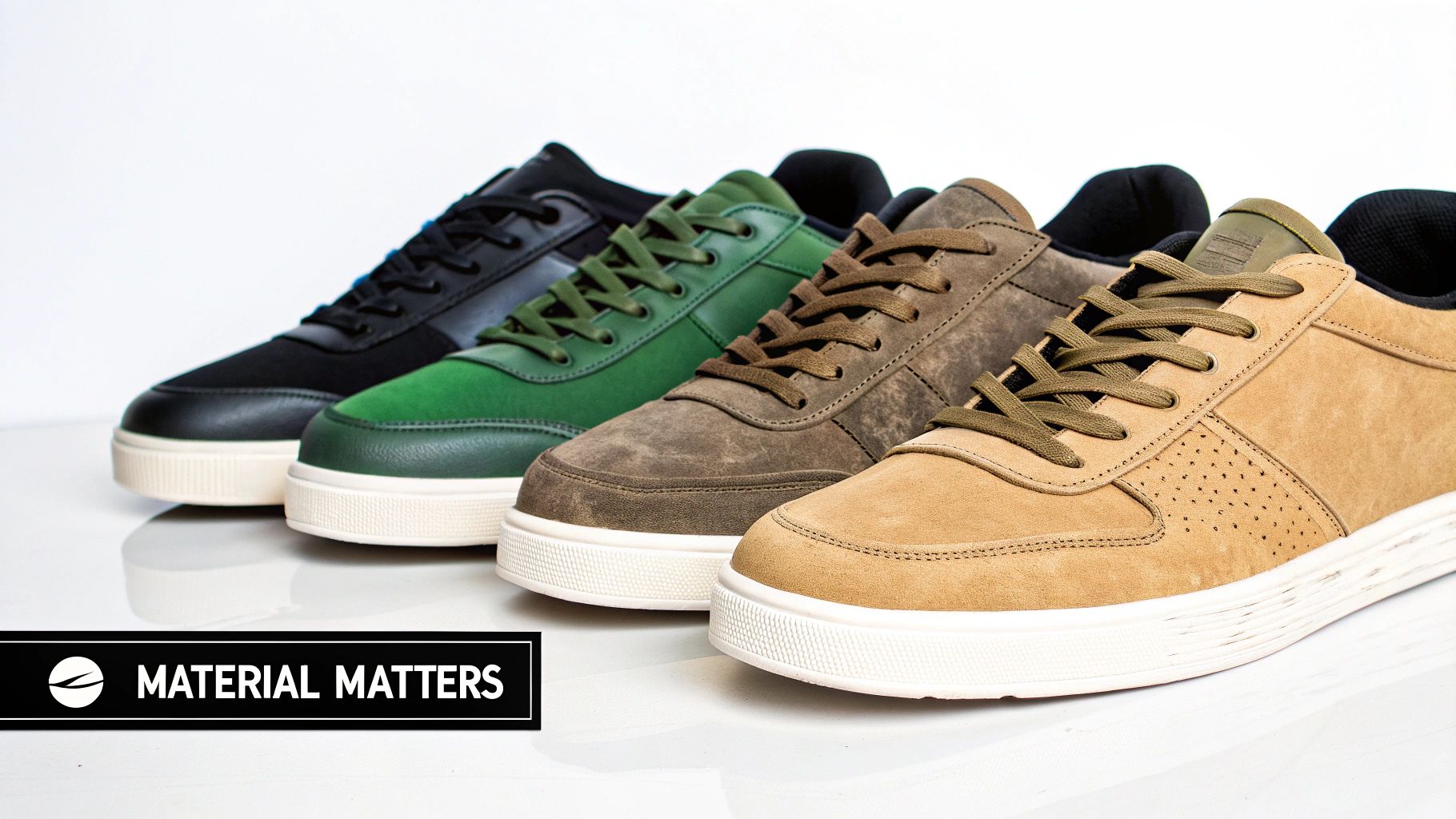
The longevity of a sneaker is predetermined by its material composition. The upper, midsole, and outsole materials each have distinct properties that govern how they age, where they will fail, and their ultimate lifespan.
Understanding these materials is the first step toward a care protocol that works with the shoe's construction, not against it.
Leather and Suede Uppers
In terms of raw durability, full-grain leather is the benchmark material for classic sneaker uppers. Its dense, natural fiber structure is inherently resistant to abrasion. With proper conditioning to replenish its natural oils, a quality leather upper can last for years. If neglected, it will dry, crack, and fail, particularly at high-flex points.
Suede, while offering a premium aesthetic, trades durability for its soft, napped texture. It is highly susceptible to water and stains, which don't just mar its appearance—they actively weaken the material by causing it to become brittle.
A common mistake is treating all leathers identically. A full-grain leather court sneaker can outlast a synthetic equivalent by years, but only if it is regularly cleaned and conditioned to maintain its flexibility.
Canvas and Modern Knit Materials
Canvas is a traditional material valued for its strength and breathability. Its primary vulnerability is friction. Constant abrasion, particularly around the ankle collar and toe cap, will eventually wear through the woven cotton fibers, leading to holes. It is also highly absorbent, making prompt stain treatment essential to prevent permanent discoloration.
Modern knit uppers, engineered for a lightweight, anatomical fit, offer exceptional comfort. However, their synthetic yarns are susceptible to snagging and tearing. Their structural weak point is often at the primary flex zone, where repeated creasing can cause the material to stretch, thin, and ultimately tear.
The Foundation: Midsoles and Outsoles
Regardless of the upper's condition, the sole unit dictates the sneaker's functional lifespan.
- Midsoles: Typically composed of foams like EVA or polyurethane, their sole function is impact absorption. With each step, they compress and rebound. Over time, this rebound capability diminishes as the foam's cellular structure breaks down, resulting in a permanent loss of cushioning.
- Outsoles: This rubber layer provides traction and protects the midsole. Its longevity depends on the specific rubber compound. Softer compounds offer superior grip but wear down quickly, while harder compounds are more durable but less pliable.
Answering the question "how long do sneakers last?" begins with understanding their material DNA. This knowledge allows for a targeted care strategy that anticipates and mitigates wear.
Using a premium, all-material cleaner like the Gold Standard Sneaker Cleaner Kit is essential. It is formulated to work safely across diverse materials without harsh chemicals that can accelerate their breakdown. The goal is to preserve every component—from leather and knits to foam and rubber—in optimal condition.
Seven Signs Your Sneakers Are Functionally Dead
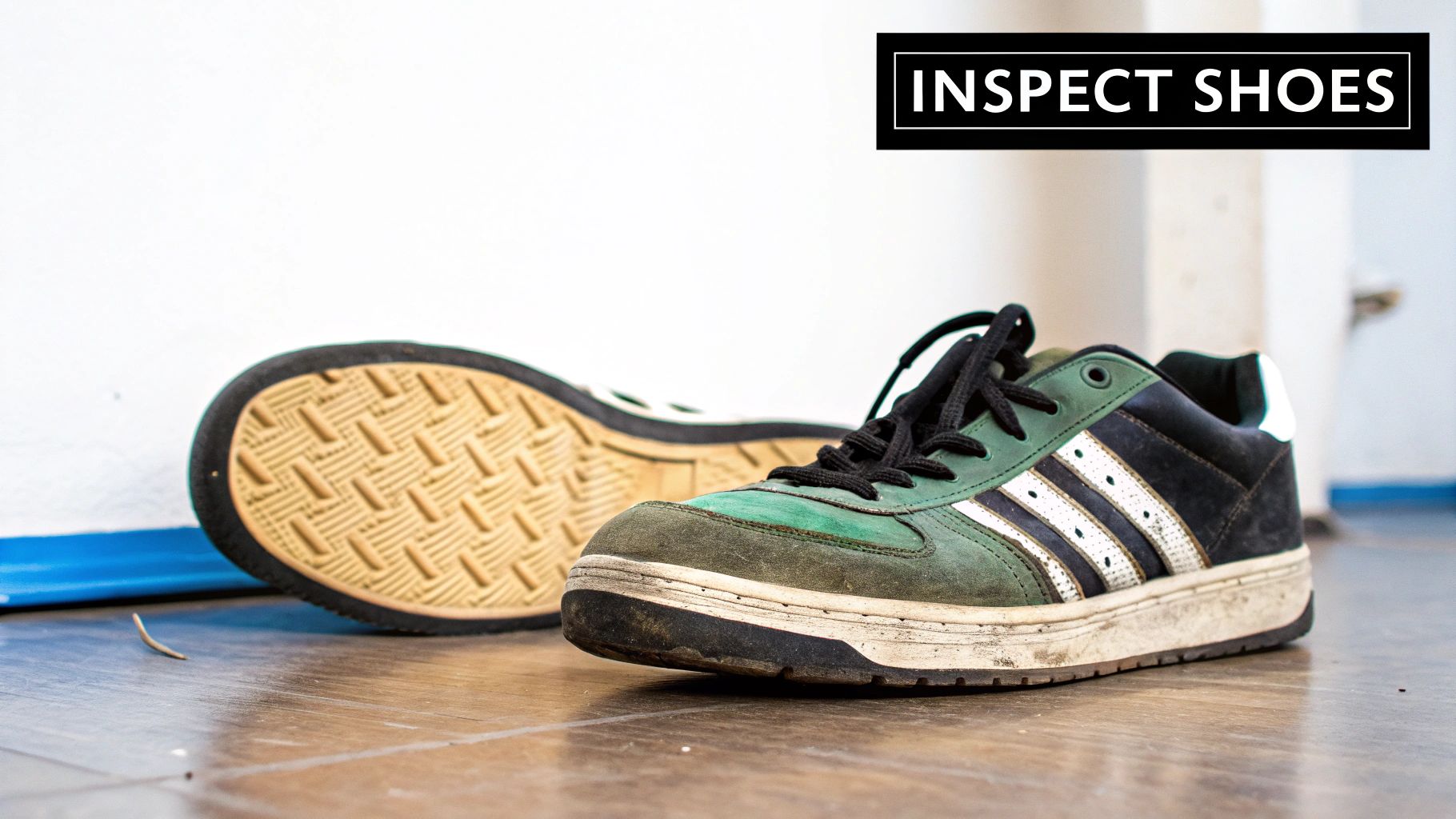
While mileage and time are effective guidelines, a physical inspection provides the most accurate assessment of a sneaker's condition. Learning to identify the key indicators of structural failure is the most reliable method for knowing when to retire a pair.
This seven-point inspection is your definitive guide to moving beyond guesswork and making an informed decision based on physical evidence.
1. The Outsole is Bald or Uneven
Examine the outsole. The tread provides traction and stability. If the pattern is worn smooth in high-impact areas, such as the heel or ball of the foot, the shoe has lost its grip.
Uneven wear is a more serious indicator. If one side is significantly more worn than the other, it signals a collapse of the shoe's internal support structure, which can negatively affect your natural gait.
2. The Midsole is Heavily Wrinkled
Inspect the foam midsole from the side, focusing on the area under the heel and forefoot. While fine compression lines are normal, deep, transverse wrinkles are a clear sign of foam collapse. This indicates the material has lost its ability to absorb impact. The cushioning is gone.
3. The Heel Counter is No Longer Rigid
The heel counter is the rigid internal structure at the back of the shoe that cups the heel. A firm counter is essential for foot stability. If you can easily compress it with your thumb or it feels soft, it has failed and is no longer providing support.
The Professional's Table Test Place your sneakers on a flat surface and view them from behind at eye level. If they tilt inward or outward instead of standing upright, the support structure has failed. This instability is a non-negotiable sign that they must be replaced.
4. They Feel "Flat" Underfoot
Trust your proprioception. If your sneakers have lost their responsive, cushioned feel and now feel hard and unresponsive, the midsole has failed. The rebound you felt when they were new is gone because the foam's internal structure has permanently broken down.
5. The Upper Has Lost Its Shape
A sneaker's upper is engineered to secure the foot. If the material—be it leather, knit, or canvas—has stretched, appears baggy, or has significant tears at flex points, the shoe can no longer provide necessary support.
6. You Are Experiencing New Aches and Pains
Your body often provides the earliest warning. The sudden onset of new pain in your feet, shins, knees, or hips following a walk or workout is a strong indicator that your footwear is no longer providing adequate shock absorption.
7. They Fail the Torsion Test
Hold the sneaker by the heel and toe and gently twist it. A structurally sound shoe will flex but should offer moderate resistance. If it twists easily with minimal effort, like a wet cloth, its torsional support is gone. It can no longer properly guide the foot through the gait cycle.
Extend Your Sneaker Lifespan with Proactive Care
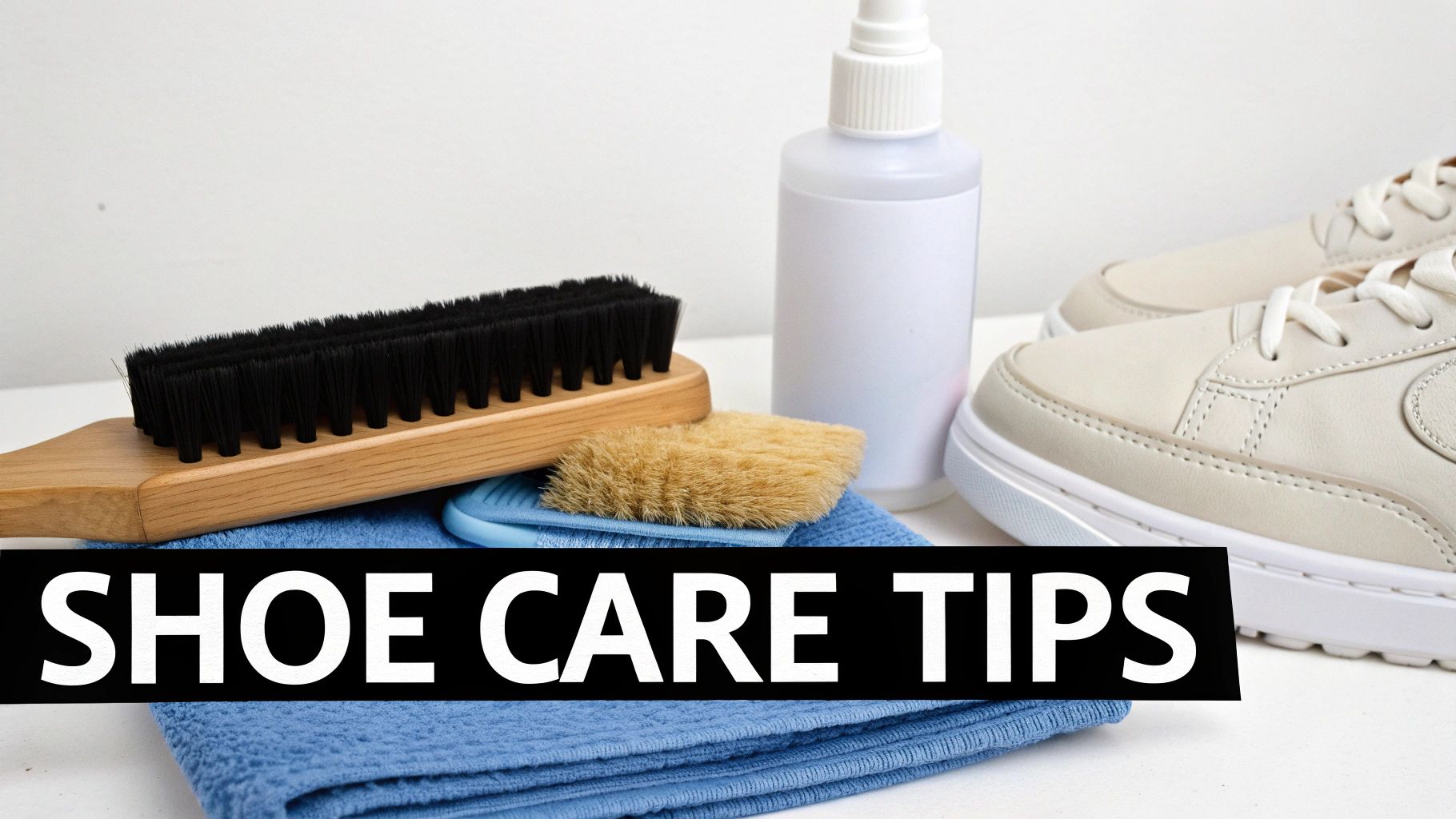
A sneaker's lifespan is not entirely predetermined. Proactive maintenance is the most effective method for preserving both the aesthetics and the structural integrity of your footwear. This is not about obsessive cleaning; it's about implementing consistent, intelligent habits that prevent premature material degradation.
One of the most effective yet overlooked strategies is footwear rotation. Allowing sneakers to rest between wears gives the midsole foam a crucial 24-hour period to decompress and return to its original shape. It also allows trapped moisture from perspiration to evaporate fully, preventing the growth of bacteria that can degrade adhesives and fabrics from within.
The Foundation of Proper Sneaker Care
Beyond rotation, a robust care protocol is built on two pillars: correct storage and proper cleaning. Mastering these fundamentals protects your sneakers from the environmental and physical stresses that cause them to age prematurely.
Proper storage is the first line of defense. Store footwear in a cool, dry environment away from direct sunlight. UV radiation is highly damaging, causing colors to fade and materials like rubber and synthetic leather to become brittle and crack.
Effective cleaning requires the right tools. Using harsh, all-purpose household cleaners is a critical error. Their chemical compositions can strip essential oils from leather, dissolve glues, or discolor sensitive fabrics. For serious enthusiasts, professional-grade solutions are non-negotiable.
A frequent mistake is the one-size-fits-all cleaning approach. A stiff brush suitable for a rubber outsole will permanently damage the delicate nap of suede or snag the yarns of a knit upper. Material-specific care is not a luxury; it is a necessity.
A Material-Specific Cleaning Strategy
To master sneaker maintenance, you must address each material according to its specific needs. Using the correct tools and techniques prevents the common errors that can ruin valuable footwear.
A versatile toolkit is indispensable. The Gold Standard Sneaker Cleaner Kit was engineered to solve this problem, providing a gentle yet effective all-natural solution and specialized brushes designed to clean every surface without causing damage. It is the professional's choice for executing an expert-level care strategy.
Here is a concise guide to the correct approach for each material.
Material-Specific Cleaning Guide
This table outlines the essential cleaning protocols for common sneaker materials.
| Material | Best Cleaning Tool | Recommended Technique | Key Precaution |
|---|---|---|---|
| Leather | Soft Hog Hair Brush | Use a gentle, circular motion with a foaming cleaner to lift dirt without scratching the surface. | Avoid oversaturating the leather; wipe clean with a microfiber towel immediately. |
| Suede/Nubuck | Dry Suede Brush & Eraser | Always brush in one direction when dry to lift dirt from the nap. Use the eraser for stubborn spots. | Never use water as a first step, as it can set stains and ruin the texture. |
| Knit/Mesh | Soft Bristle Brush | Gently scrub with a cleaning solution, paying attention to the weave. Blot with a towel to absorb moisture. | Avoid aggressive scrubbing, which can cause pilling or snag the delicate yarns. |
| Canvas | Medium Bristle Brush | Work the cleaner into the fabric to lift deep-set dirt. This material is durable and can handle slightly more pressure. | Test cleaner on a small, hidden spot first to ensure it doesn't cause color bleeding. |
Adhering to these protocols is the difference between routine maintenance and a costly mistake.
The True Cost of Neglecting Your Footwear
Proper footwear care transcends aesthetics. It is a prudent financial and environmental practice. Neglecting your sneakers has tangible consequences, beginning with the devaluation of your asset.
A well-maintained pair, particularly a sought-after release, can retain or even appreciate in value. Conversely, allowing scuffs, stains, and structural damage to accumulate actively diminishes its resale price. What could be an asset becomes just another worn-out shoe.
The Environmental Toll of Disposable Footwear
Beyond financial loss, neglect contributes to a significant environmental problem. The culture of disposable footwear has created a massive waste stream, with millions of pairs discarded annually.
When sneakers are retired prematurely due to poor maintenance, they compound this issue. Most are sent to landfills, where their composite materials may take centuries to decompose.
Consider the decomposition timeline of a discarded sneaker. Leather may take 25-40 years. Rubber soles can persist for 50-80 years. Modern synthetic materials can remain in a landfill for up to 1,000 years. Now multiply that by the estimated 300 million pairs of shoes discarded annually in the U.S. alone, many of which could have been preserved with proper care. To dive deeper, you can learn more about how sneaker materials decompose.
Shifting from Consumption to Preservation
This is the core of the Gold Standard philosophy: a focus on preservation over disposable consumption. When you commit to a disciplined maintenance routine, you are not merely cleaning a shoe—you are extending its functional and aesthetic life.
This simple act transforms shoe care into an act of sustainability. It is about maximizing the value of your possessions, reducing your contribution to landfills, and respecting the craftsmanship of the product. Every cleaning session is a deliberate choice to preserve, not replace.
Expert Answers to Common Questions
Let's conclude by addressing some frequently asked questions from sneaker owners. Consider this the definitive word on maintaining your collection.
Can I put my sneakers in the washing machine?
No. The combination of high heat and aggressive tumbling action will destroy the adhesives bonding your shoes together. It can also permanently deform the midsole and damage delicate materials like suede and premium leather. A manual, targeted cleaning is always the safer and more effective method.
How often should I clean my daily-wear sneakers?
For sneakers in regular rotation, a light cleaning every 1-2 weeks is recommended. This prevents dirt and grime from becoming deeply embedded. Address any scuffs or spills immediately, before they can set and cause permanent staining.
Remember, routine cleaning is not just about appearance. You are physically removing abrasive particles that grind away at the upper's fibers, directly impacting how long your sneakers last.
Do more expensive sneakers automatically last longer?
Not necessarily. A high price often reflects premium materials, a limited collaboration, or complex design—not inherently superior durability. While a well-constructed leather sneaker will outlast a cheaply made canvas one, the user's care regimen is the most significant factor in its ultimate lifespan. Proactive maintenance is the great equalizer.
Does rotating sneakers actually make a difference?
Yes. It is arguably the simplest and most effective way to extend the life of your footwear. Allowing a pair to rest for a minimum of 24 hours enables the midsole foam to fully decompress and recover its cushioning properties. It also allows trapped moisture to evaporate, which preserves the integrity of the shoe's internal structure.
Maintaining your collection comes down to establishing correct habits and utilizing the proper tools. When you require a professional-grade result that respects every material and component, trust Gold Standard to protect your investment.
Explore our complete care solutions at https://gold-standard-approved.myshopify.com.