

A properly formulated shoe spray does not mask odor with heavy fragrance. Its purpose is to neutralize the source of the malodor by addressing the environmental factors within the shoe—specifically, the moisture and bacteria that create the problem—and restoring a neutral state.
The Science of Shoe Odor: Understanding the Cause
To effectively neutralize shoe odor, one must first understand its origin. The unpleasant smell emanating from footwear is not an indicator of poor quality; it is a sign of a microbial ecosystem thriving within the shoe's interior.
The global demand for effective foot care solutions is substantial. The market, valued at USD 11.46 billion, is projected to reach USD 19.41 billion by 2033. You can review the data behind these foot care market trends to appreciate the scope of the issue.
The primary culprit is microbial activity. A shoe provides an ideal incubator: it is dark, warm, and frequently damp from perspiration. This environment is highly conducive to the proliferation of bacteria.
These microorganisms exist naturally on human skin. When introduced into the warm, humid climate of footwear, they multiply rapidly, metabolizing the sweat and dead skin cells feet naturally shed.
The Origin of Malodor
The odor itself is a byproduct of this bacterial metabolism. As bacteria break down sweat and skin particles, they release volatile organic compounds (VOCs). It is these specific compounds, such as isovaleric acid, that produce the distinct, powerful odor associated with smelly shoes.
Therefore, true odor elimination is not achieved by applying a fragrance. An effective solution must disrupt this microbial cycle by managing the shoe's internal environment.
Expert Insight: Consider the interior of a shoe as a micro-ecosystem. When the balance of moisture, heat, and organic matter is favorable, odor-causing bacteria flourish. The objective of superior shoe care is to manage this ecosystem, not merely to treat the symptoms.
To clarify this relationship, consider the primary factors involved.
Key Factors Contributing to Shoe Odor
This table outlines the primary causes of odor within your footwear.
| Factor | Scientific Explanation | Impact on Footwear |
|---|---|---|
| Moisture (Sweat) | Perspiration provides the necessary hydration for microbial life to thrive within the shoe. | Acts as the foundational element, converting a dry shoe into a potential breeding ground. |
| Heat | Body heat trapped within the shoe elevates the internal temperature, accelerating bacterial metabolic rates. | Creates an incubator-like setting that expedites the odor-producing process. |
| Bacteria | Microorganisms feed on organic matter (sweat, skin cells), releasing odorous metabolic byproducts. | These are the "factories" producing the actual malodor through natural biological processes. |
| Lack of Airflow | Enclosed footwear designs trap heat and moisture, preventing evaporation and sustaining the microbial habitat. | Restricts ventilation, ensuring the ideal conditions for odor development persist for extended periods. |
As illustrated, this is a chain reaction. The following diagram demonstrates how these elements interact.
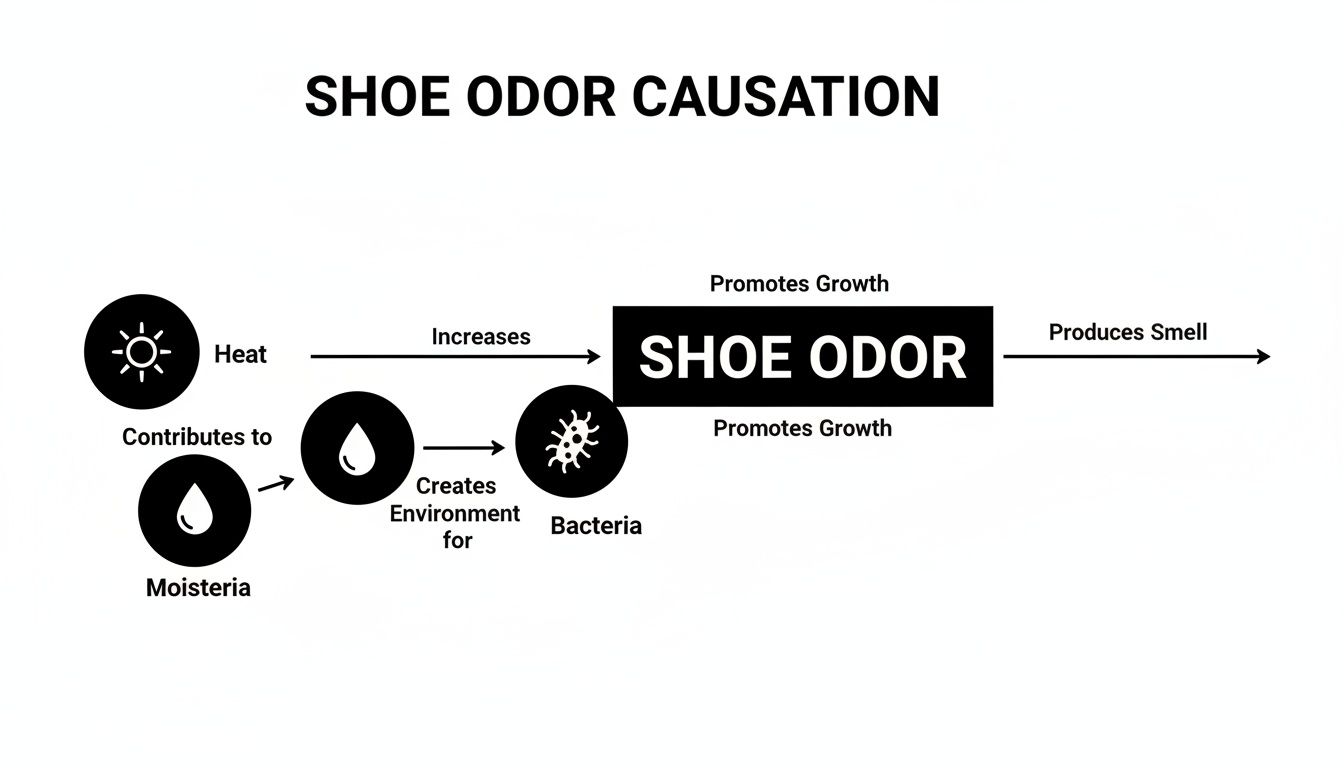
This visual reinforces how each element—heat, moisture, and bacteria—compounds the next. Left unmanaged, the result is a persistent odor problem. Understanding this cause-and-effect relationship is the first step toward implementing a successful care regimen for all your footwear.
How a Premium Shoe Spray Neutralizes Odor
Many commercially available sprays function as simple masking agents. They deploy a heavy, artificial fragrance to temporarily overpower shoe odor. This approach is fundamentally a temporary fix. Once the fragrance dissipates, the underlying microbial activity continues unabated, and the odor returns.
A premium foot spray for smelly shoes, in contrast, operates on a different principle. It is engineered not to mask the problem, but to neutralize it at its source—the molecular level.
The distinction is critical. A masking spray is akin to increasing the volume of a car radio to obscure an engine noise. A neutralizing formula is the skilled mechanic who addresses the mechanical issue itself. One provides a distraction; the other, a genuine solution.
Managing the Internal Climate
The most effective shoe sprays function as a climate control system for your footwear's interior. They are engineered to rebalance the environment that allows odor to develop.
First, these formulas manage moisture. By helping to control the dampness from perspiration, they remove the primary element bacteria require for proliferation. A drier internal environment is significantly less hospitable to these microorganisms.
Second, they actively neutralize the volatile organic compounds (VOCs)—the true source of the smell. Instead of layering a new scent over the existing malodor, these sprays interact with and break down the odor molecules, rendering them inert. This is the critical difference between masking and neutralization.
The Gold Standard Approach: A truly effective shoe care product must respect the materials of your footwear. It must be formulated not only to neutralize odor but to do so without compromising the integrity of leather, suede, knit, or canvas. The objective is to restore freshness, not to cause collateral damage.
Proactive Prevention vs. Reactive Fixes
Using a premium spray is an exercise in proactive care. A consistent, light application establishes a defensive barrier inside your footwear, preventing the odor-causing ecosystem from taking hold. This is far more effective than attempting to combat a deeply entrenched odor after it has become established.
A simple breakdown of the two approaches:
- Odor Masking Sprays: Rely on heavy perfumes to overpower existing smells. The effect is short-lived, and the original odor returns once the fragrance fades.
- Odor Neutralizing Sprays: Are formulated with ingredients that bond to and break down odor molecules. They eliminate the malodor itself, leaving a neutral, genuinely fresh environment.
Ultimately, selecting a well-formulated spray is an investment in the longevity and wearability of your footwear. It is a fundamental component of a sophisticated care regimen that protects your shoes from the inside out.
Selecting the Right Spray for Your Footwear Materials
Your footwear is an investment. When selecting a solution for shoe odor, the goal is not merely to eliminate the smell but also to protect the materials of your collection. When choosing a foot spray for smelly shoes, it is essential to look beyond marketing claims and consider the formulation itself. A premium product recognizes that the preservation of your footwear is as important as odor neutralization.
The ideal spray dries quickly and does not rely on harsh or aggressive chemistry. Any product that leaves a sticky or oily residue should be avoided, as this can attract dirt and potentially stain materials over time. The goal is a seamless addition to your care routine—one that leaves nothing behind but freshness.
Material-Specific Considerations
Not all shoes are constructed from the same materials, and a generic, one-size-fits-all spray can be detrimental. Each material possesses unique properties and requires specific care. The wrong formula can lead to discoloration, stiffening, or permanent damage to the fibers of your footwear.
Consider the material diversity in your own collection:
- Premium Leather: A porous material that must breathe. A quality formula will not clog its pores or strip the natural oils that prevent cracking.
- Suede & Nubuck: These materials are notoriously sensitive to moisture. An ultra-fine mist that evaporates rapidly is required to avoid water spots and textural damage.
- Technical Knits & Mesh: Modern synthetics are durable, but certain solvents can degrade them. A gentle, non-aggressive formula is key to maintaining the fabric's color and structural integrity.
- Canvas: While durable, canvas can absorb liquids unevenly. A spray designed for a quick, even application is necessary to prevent splotching.
This focus on material-safe care explains the growing demand for specialized shoe maintenance products. Sprays now represent a significant segment of the shoe deodorizer market, driven by increased consumer awareness of foot hygiene and material science. This trend confirms that knowledgeable enthusiasts understand the value of specialized products for superior care. You can discover more about these shoe care market insights to see how the industry is evolving.
Interpreting Product Labels
When examining a product, certain language can indicate a higher standard of quality. The best brands are transparent about their approach, even without listing every proprietary ingredient.
Expert Takeaway: A superior shoe spray must be gentle enough for potential skin contact yet powerful enough to control the shoe's internal environment. It must respect the craftsmanship of the entire shoe, from the leather lining to the suede upper.
Look for phrases that signal a balanced, well-researched approach. Wording such as "safe for all materials" or "formulated for premium footwear" suggests the product was developed with material science as a primary consideration. Ultimately, selecting the right spray is about protecting your investment and ensuring your footwear remains in pristine condition, inside and out.
The Expert Method for Applying Shoe Spray
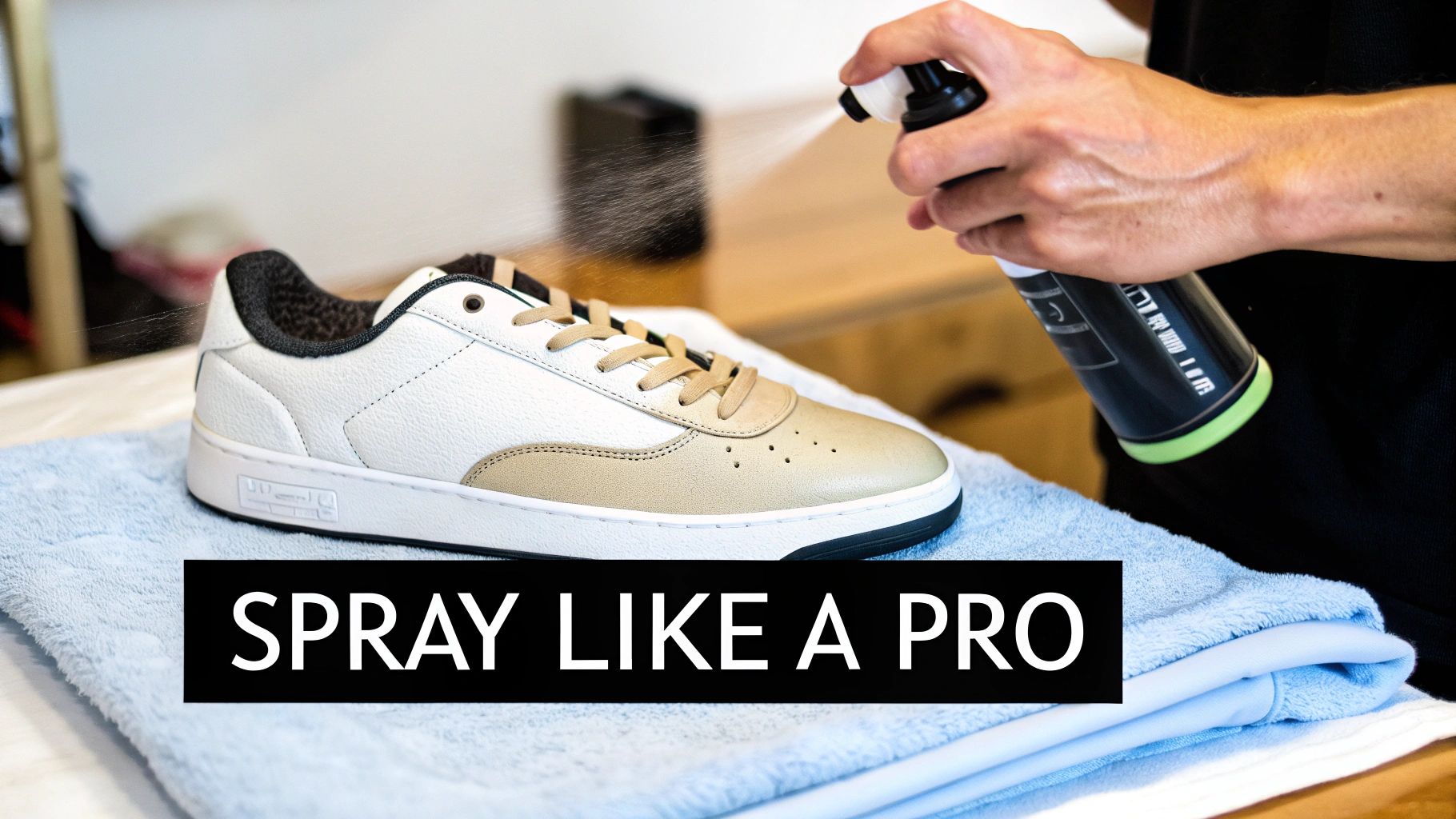
Possessing a premium spray is only half the solution. Proper application is critical to achieving desired results and protecting the materials of your shoes. An incorrect technique can lead to oversaturation of the lining, inconsistent odor control, and even damage to delicate materials like suede or leather.
Consider the process analogous to detailing a high-end automobile. One would not use the same pressure washer setting on the paint as on the tires. This same logic applies to shoe care. A methodical application respects the craftsmanship of your footwear and ensures optimal outcomes.
The first rule is non-negotiable: always begin with clean, dry shoes. Applying a spray to damp or dirty footwear traps moisture and grime, defeating the product's purpose and creating a swampy environment where odor will persist. Before application, ensure the shoe's interior is completely aired out.
Pre-Application Essentials
A few seconds of preparation can significantly improve efficacy. Before spraying, perform these steps to prepare your footwear.
- Open the Shoe: Remove the insoles and loosen the laces completely. This provides unobstructed access to the entire interior, including the toe box and seams where bacteria accumulate.
- Confirm Dryness: If the shoes have just been worn, allow them several hours to air out. Applying spray to a moist interior is a common error that severely compromises the product's effectiveness.
Material-Specific Application Guide
Different materials require different application techniques. A heavy application on suede can be disastrous, while a mist that is too light may be insufficient for rugged work boots. Adapting your approach to the material is key.
Field-Tested Advice: The optimal application distance is 6 to 8 inches from the shoe's interior. This allows the formula to disperse as a fine, even mist rather than a concentrated stream, preventing oversaturation and promoting faster drying.
This table provides a guide for correct application, helping you avoid common and costly mistakes.
| Material Type | Best Practice | Common Mistake to Avoid |
|---|---|---|
| Leather & Synthetics | Apply a light, even coat to the entire interior with a single, smooth pass. | Spraying too closely, which can cause the formula to pool and leave wet spots on the lining. |
| Suede & Nubuck | Increase the distance to 8-10 inches and use an extremely fine, sweeping mist. Application must be minimal. | Saturating the material. Excess moisture can stain and permanently alter the delicate nap. |
| Canvas & Mesh | These absorbent materials require a slightly more generous mist to ensure complete coverage. | Failing to allow for complete drying time, which can trap moisture and result in a musty smell. |
After application, allow the shoes to air dry completely in a well-ventilated area for at least 30 to 60 minutes before re-inserting insoles or wearing them. This allows the formula to work and fully evaporate, leaving a clean, neutral environment.
A Proactive Strategy for Preventing Shoe Odor
While a premium foot spray for smelly shoes is an effective tool for immediate odor neutralization, a comprehensive footwear preservation strategy requires a broader perspective. True expertise lies not in reactive measures but in proactive care.
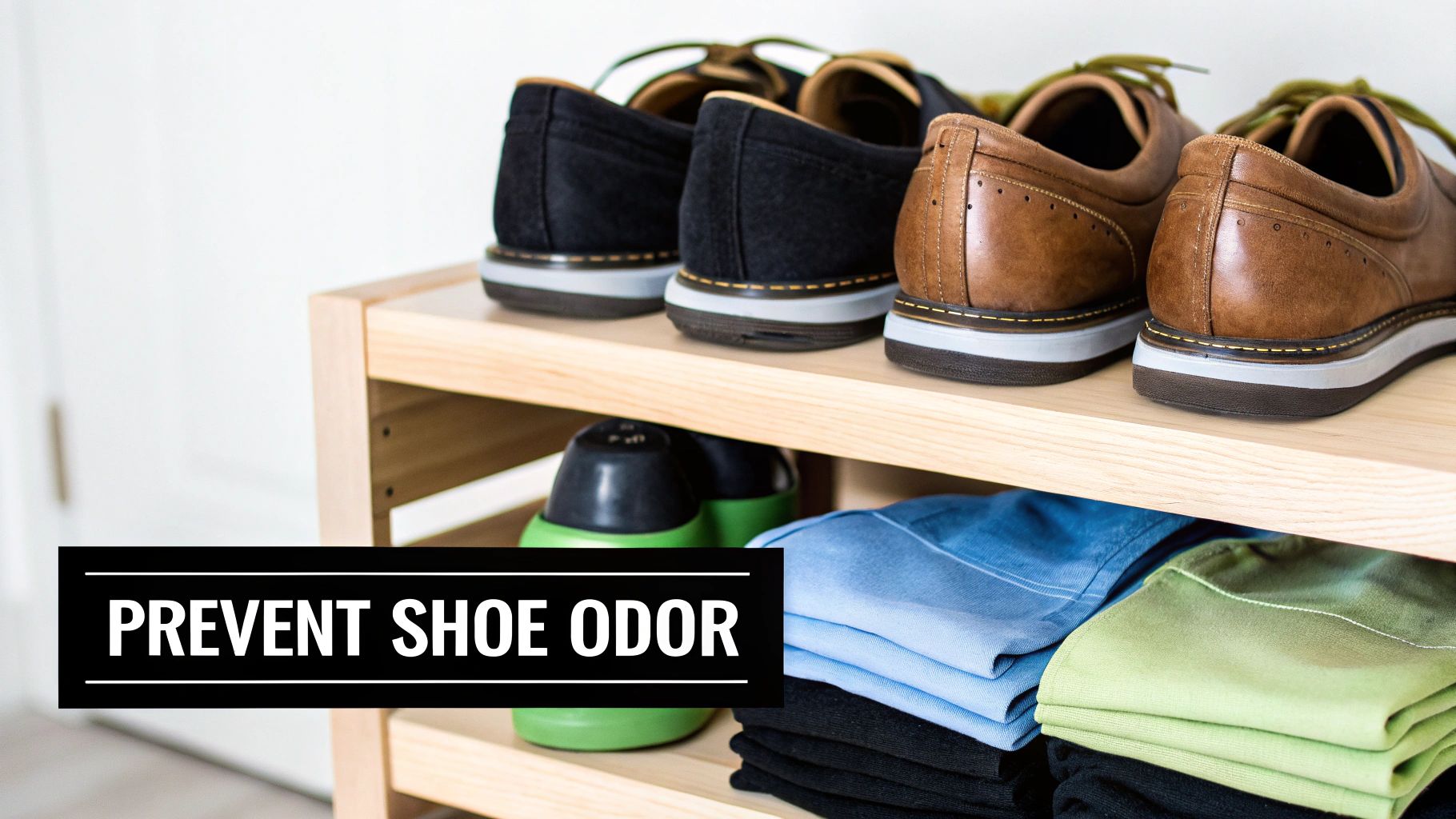
The optimal strategy involves creating an internal shoe environment where odor cannot gain a foothold. This requires a complete care regimen that addresses the root causes of odor long before they become problematic. When a spray is integrated into this larger system, you are no longer just fighting smells; you are actively preserving your investment and extending the life of your footwear.
The Critical Importance of Shoe Rotation
The single most effective preventative measure is also the simplest: do not wear the same pair of shoes on consecutive days.
Each time you wear a pair of shoes, they absorb a significant amount of moisture from your feet. Allowing them a minimum of 24 hours to air out enables this trapped moisture to evaporate completely. This simple habit disrupts the cycle of moisture that bacteria require for proliferation, keeping your shoes dry and hostile to odor-causing microbes.
The Functional Benefits of Cedar Shoe Trees
Once a rotation is established, the next step is the use of shoe trees—specifically, those made from unfinished cedar. For any serious footwear enthusiast, these are an essential tool. Their benefits extend far beyond maintaining the shoe's shape.
Expert Insight: Unfinished cedar is a natural desiccant. Its porous wood actively absorbs moisture from a shoe’s lining, leather, and insole, dramatically accelerating the drying process. This wicking action is critical for arresting the odor cycle before it can begin.
Insert them as soon as you remove your shoes to combat moisture while simultaneously preserving the shoe's structure and preventing creasing from wear.
The Foundational Role of Sock Selection
The materials you wear on your feet are as important as any post-wear treatment. Your choice of socks plays a significant role in managing moisture levels within your footwear.
- Avoid 100% Cotton: Cotton is highly absorbent. It soaks up perspiration and holds it against the skin, creating a damp microclimate inside your shoe—the ideal breeding ground for bacteria.
- Utilize Moisture-Wicking Blends: Transition to socks made from merino wool or modern synthetic blends. These technical fabrics are engineered to pull moisture away from the skin for faster evaporation, keeping both your feet and your shoes significantly drier.
When you rotate your footwear, use cedar shoe trees, and wear appropriate socks, you establish a powerful, multi-layered defense. Adding a high-quality spray like the Gold Standard Shoe Deodorizer to this routine completes a comprehensive preservation strategy that keeps your entire collection in optimal condition.
Why Foot Health Is the Foundation of Fresh Shoes
A premium foot spray for smelly shoes is a powerful tool, but to win the war on odor, you must begin at the source. The ecosystem inside your footwear originates with your feet. Neglecting them means fighting only half the battle.
The relationship is direct and inseparable. Shoe care and self-care are two sides of the same coin. Maintaining clean, dry feet is the single most important foundational step you can take.
This is not a niche concern. Studies indicate that 13% to 36% of adults experience foot-related issues, driving consistent demand for effective hygiene solutions. To understand the scale of this issue, you can learn more about trends in the foot care market and see how many people are seeking solutions.
The Shoe-and-Wearer System
The most effective approach is to view your feet and your footwear as a single, interconnected system. Proactive personal hygiene makes it exceptionally difficult for odor-causing microbes to establish themselves in the first place.
The Holistic View: Effective shoe care is a mindset. It is the recognition that the condition of the wearer directly impacts the condition of the shoe. A healthy foundation makes every other treatment significantly more effective.
By prioritizing foot health, you are not just preventing odor; you are protecting your investment and extending the life of your entire collection. It is a simple shift in perspective that distinguishes amateurs from experts.
Frequently Asked Questions About Shoe Sprays
When it comes to maintaining fresh footwear, several questions consistently arise. As professionals in shoe care, we have addressed nearly every scenario. Here are direct, field-tested answers to the most common inquiries.
How often should I spray my shoes?
This depends on your lifestyle and the frequency of wear for a specific pair of shoes.
For daily-wear footwear, such as athletic sneakers or work shoes, a light mist after each use is the recommended practice. This functions as preventative maintenance, stopping the odor-causing environment from developing. For shoes worn less frequently, an application before and after wearing is sufficient.
The guiding principle: Consistency is more effective than intensity. Regular, light applications provide far better long-term odor control than infrequent, heavy applications.
Can this spray be used on suede or nubuck?
Extreme care must be taken with delicate materials like suede and nubuck. While a high-quality spray with a gentle formulation is safer, you must always test it on a small, inconspicuous area first.
The proper technique is to hold the can 8-10 inches away and apply an exceptionally fine, even mist. Do not saturate the material. After application, allow the shoes to air dry completely in a well-ventilated area before wearing.
What is the difference between a foot spray and a shoe spray?
While the terms are often used interchangeably, there can be formulation differences. A product marketed exclusively as a foot spray may contain skin-conditioning agents. A dedicated shoe spray is formulated specifically to neutralize odors and manage moisture within the footwear materials.
A truly premium, versatile spray is engineered to be safe and effective for application on both feet and in shoes. This is the most intelligent approach, as it treats the entire system—from skin to sock to shoe lining—as one complete ecosystem.
Will a spray eliminate strong odors, or just prevent them?
A well-formulated spray should do both. For prevention, it creates an internal shoe environment where odor-causing bacteria cannot thrive. For existing odors, its active neutralizing agents break down the volatile organic compounds causing the malodor.
For a particularly stubborn, deep-set odor, a two-step approach may be necessary. This typically involves a thorough cleaning of the shoe first, followed by consistent use of a spray to manage the internal climate and prevent the odor's return.
A proactive care routine is the best defense for protecting your investment. The Gold Standard Shoe Deodorizer is formulated to neutralize odor at its source while respecting the premium materials of your footwear. Explore the Gold Standard of shoe care today.