

Proper sneaker storage is a discipline. It's the critical, often-overlooked step that separates a well-maintained collection from one that succumbs to premature aging. The best way to store sneakers doesn't begin with a box or a display case; it begins with meticulous preparation.
Storing a sneaker with residual dirt, oils, or moisture is a direct invitation for material degradation. These contaminants accelerate the breakdown of fibers, adhesives, and dyes, leading to permanent stains, microbial growth, and structural failure. The preparatory phase is non-negotiable for anyone serious about preserving the value and integrity of their footwear.
Step 1: Prepare Your Sneakers for Storage
Preservation is impossible without proper preparation. Even the most sophisticated, climate-controlled storage environment cannot undo the damage caused by storing a dirty or damp sneaker. Contaminants left on the shoe—visible or not—will slowly break down materials at a molecular level.
The most insidious threat, however, is trapped moisture. Moisture is the catalyst for hydrolysis, the chemical reaction that causes polyurethane midsoles to crumble, and it creates the ideal environment for mildew and the dreaded sole separation that plagues so many iconic silhouettes.
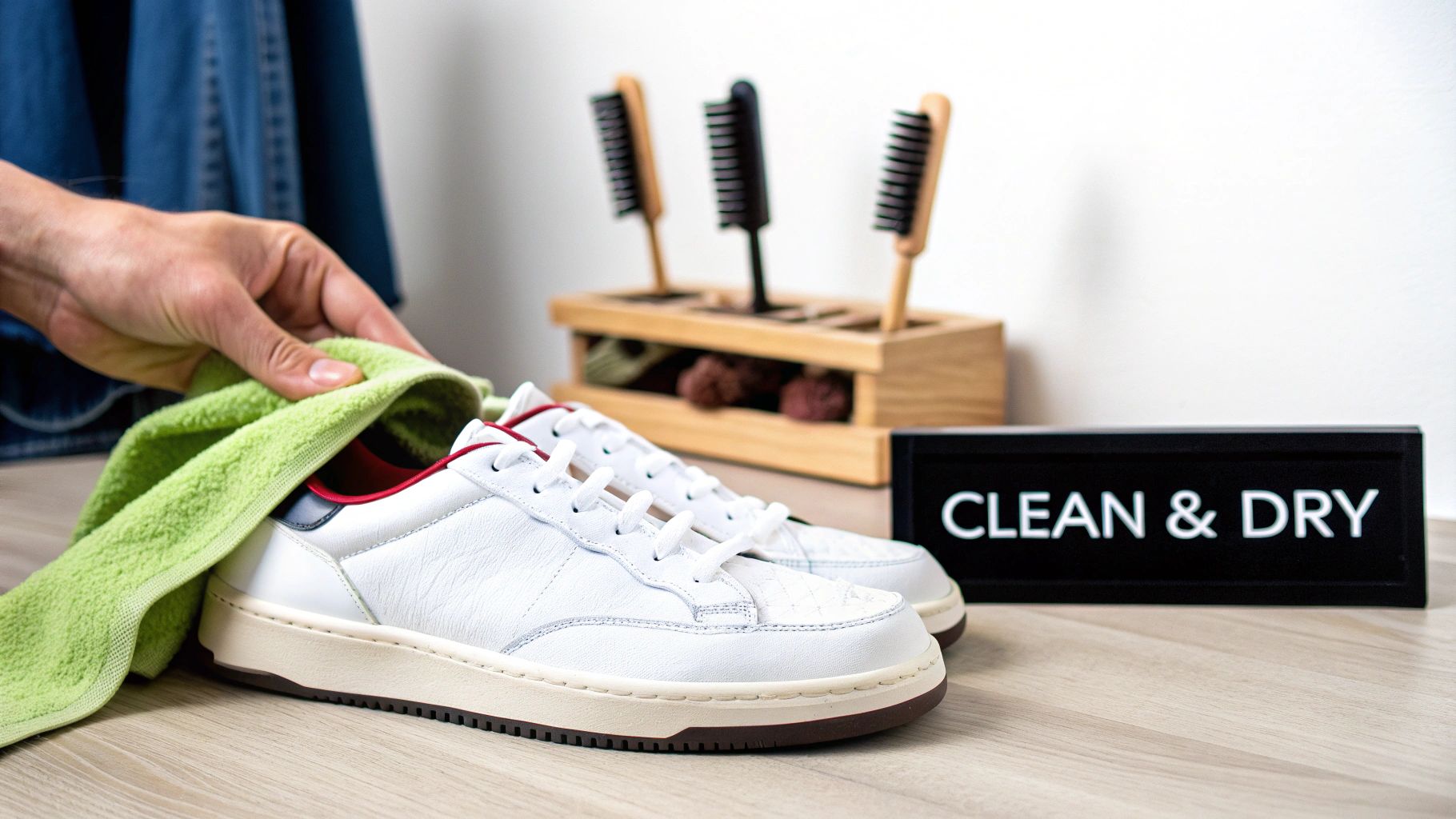
This stage is your opportunity to neutralize these threats. The goal is to stabilize the sneaker in its optimal state, ensuring it is chemically and physically ready for a period of dormancy, whether that's for months or years.
The Foundation: Material-Specific Cleaning
Every material used in sneaker construction has unique properties and requires a specific cleaning protocol. A universal approach risks damaging delicate materials. Before storage, conduct a targeted cleaning based on the sneaker's composition.
- Leather and Synthetics: For smooth leather uppers, like those on an Air Jordan 1 or Stan Smith, begin by removing loose debris with a soft-bristle brush. Apply a quality cleaning solution with a microfiber towel, using deliberate motions to lift grime without over-saturating the material.
- Suede and Nubuck: These napped leathers are highly susceptible to water damage. A dry suede brush and a suede eraser are the primary tools for removing surface dirt and minor stains without liquid. Avoid aggressive scrubbing, which can damage the delicate texture.
- Mesh, Canvas, and Knits: Textiles like Primeknit or engineered mesh require a gentle approach. The Gold Standard Sneaker Cleaner, formulated with naturally derived ingredients, effectively lifts dirt without the harsh surfactants that can degrade textile fibers. Use a soft brush, minimal water, and blot with a towel rather than rubbing.
Remove laces and insoles to clean them separately. This ensures all areas of the sneaker are addressed and can dry thoroughly.
The Critical Drying Phase
Patience during the drying phase is paramount. Attempting to accelerate the process with direct heat from a hairdryer or radiator will compromise the integrity of the shoe's adhesives, potentially warping midsoles and causing leather to crack. The only correct method is air drying in a well-ventilated space.
To aid the process, stuff the sneakers with acid-free paper or a clean, dry towel. This wicks moisture from the interior lining while helping the shoe maintain its intended shape. A sneaker must be 100% dry—internally and externally—before being stored. Even trace amounts of residual dampness can lead to catastrophic mildew growth.
Expert Takeaway: Trapped moisture is the primary catalyst for sole separation and material rot. If you believe a sneaker is fully dry, allow an additional 24 hours to ensure complete moisture evaporation.
Maintain Shape with Cedar Shoe Trees
Once impeccably clean and completely dry, the final preparatory step is inserting shoe trees. This is not an affectation reserved for dress shoes; it is an essential practice for sneaker preservation.
Shoe trees serve two critical functions:
- Shape Retention: They provide internal structure, preventing the collapse of the toe box and minimizing creasing from wear. This is especially crucial for leather and knit sneakers, which are prone to losing their form over time.
- Moisture Absorption: Unfinished cedarwood is hygroscopic, meaning it naturally absorbs ambient moisture and neutralizes odors. A pair of cedar shoe trees acts as the final line of defense against humidity within the shoe's lining.
Neglecting this step allows the sneaker's upper to crease and collapse under its own weight. By cleaning, drying, and supporting your footwear, you are setting the stage for successful long-term preservation.
Step 2: Establish the Optimal Storage Environment
With your sneakers properly prepared, attention must turn to their environment. The storage location is a constant, 24/7 factor that will either preserve your collection or actively contribute to its decline.
Too often, collectors focus solely on the storage container while ignoring the conditions of the room itself. The three primary environmental aggressors are light, temperature, and humidity. Mastering control over these elements is the key to long-term success.
Light: The Silent Oxidizer
Direct sunlight is the most destructive environmental factor for sneakers. The ultraviolet (UV) radiation it contains triggers photochemical reactions that cause irreversible damage to materials and dyes.
This is more than simple color fading. UV exposure initiates photo-oxidation, a process that breaks down the chemical bonds in pigments. Vibrant colors become muted, and white midsoles or translucent outsoles undergo accelerated yellowing.
Expert Takeaway: UV damage is cumulative and irreversible. Once a color has faded or a sole has yellowed due to light exposure, the damage cannot be undone. Prevention is the only effective strategy.
Finding a Safe Location in Your Home
Selecting the right storage area is a process of elimination. Certain areas of a typical home are fundamentally unsafe for a sneaker collection.
Hazardous Zones to Avoid:
- Sunlit Rooms: Any space with windows that receive direct sunlight is unsuitable.
- Damp Basements: High humidity in basements creates a breeding ground for mold and mildew.
- Garages & Attics: These uninsulated spaces experience extreme temperature fluctuations that stress materials.
- Near Vents or Radiators: The constant flow of forced hot air dehydrates materials like leather and can warp foam components.
The ideal location is cool, dark, and stable. An interior closet in a climate-controlled part of the home is often the best choice. The lack of windows eliminates the threat of UV radiation, and its position away from exterior walls buffers it from temperature swings.
Controlling Temperature and Humidity
The operative word for both temperature and humidity is consistency. Drastic fluctuations cause the various materials in a sneaker—rubber, foam, leather, adhesives—to expand and contract at different rates. This constant stress weakens the materials at a molecular level.
The consequences of this stress include:
- Cracking: Plastic components and rubber outsoles lose their plasticity and become brittle.
- Sole Separation: Adhesives fail, causing the sole unit to detach from the upper.
- Leather Damage: Leather dehydrates, becoming stiff and prone to cracking.
The ideal temperature range is between 60-75°F (15-24°C). More important than the specific number is maintaining a stable temperature without dramatic peaks and valleys.
Humidity is equally critical. Relative humidity above 60% significantly increases the risk of mold. Conversely, excessively low humidity can dehydrate leather. The target range is 40-50% relative humidity.
For those in challenging climates, simple tools can help maintain this balance.
- A dehumidifier is a necessary investment for storage in humid basements or climates.
- Silica gel packets placed inside storage containers absorb excess moisture directly surrounding the shoe.
By controlling light, temperature, and humidity, you create a stable sanctuary for your collection, effectively slowing the aging process and preserving your sneakers for years to come.
Step 3: Select the Right Sneaker Storage System
With your sneakers prepared and the environment controlled, the final layer of defense is the storage container itself. Migrating your collection from original cardboard boxes to a purpose-built system is a significant upgrade. The right system protects from dust, impact, and light while allowing for essential air exchange.
Many common storage methods fail because they create harmful micro-environments that negate the benefits of a controlled room.
The Modern Standard: Clear Acrylic Boxes
Stackable, drop-front acrylic boxes have become the industry standard for valid reasons. They offer an optimal balance of protection, accessibility, and display. Unlike the original cardboard, a rigid acrylic box provides structural protection against crushing when stacked.
Key features of a quality acrylic box include:
- UV Protection: High-grade acrylic can filter a significant portion of ambient UV radiation, providing a crucial defense against light-induced yellowing and fading.
- Visibility: The ability to view the entire collection facilitates easy selection without disturbing the stack.
- Accessibility: A drop-front door mechanism is essential, allowing access to any pair, even at the bottom of a stack, without disassembly.
- Ventilation: This is a critical and often overlooked feature. Ventilation holes permit air circulation, preventing humidity buildup and allowing for the off-gassing of volatile organic compounds (VOCs) from factory adhesives, which can otherwise accelerate material decay.
Your storage location and storage container must function as a system. This flowchart illustrates the decision-making process.
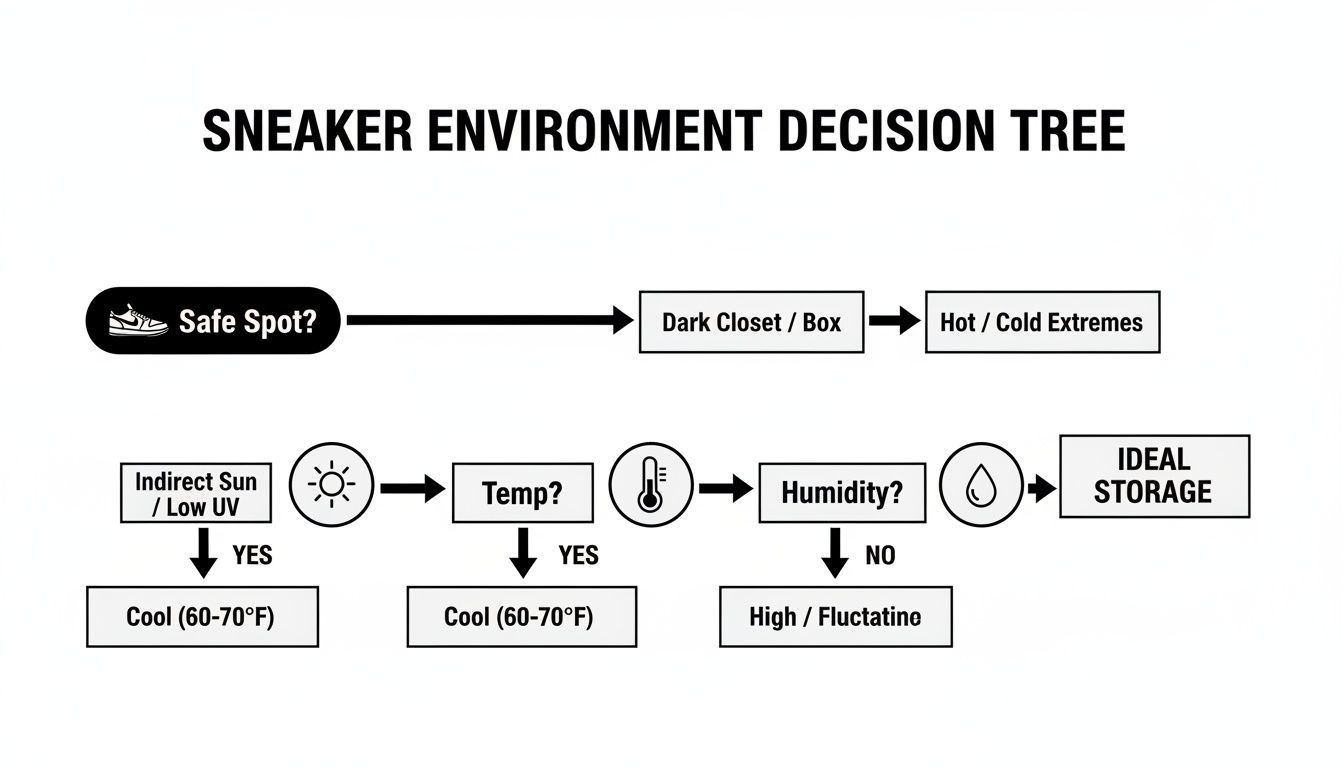
A superior system in a hostile environment provides only a partial solution.
Why Common Alternatives Fail
While convenient or inexpensive, common storage shortcuts often lead to long-term damage. Understanding their specific failure points makes the case for investing in a proper system.
The original shoebox is a poor choice for long-term storage. The cardboard and adhesives are acidic, which can leach into the sneaker materials and accelerate yellowing. Cardboard also readily absorbs atmospheric moisture, creating an ideal environment for mildew. It offers zero protection from compression.
Large, airtight plastic bins are another common mistake. While they protect from dust, they create a dangerous, sealed environment.
Expert Takeaway: An airtight container traps moisture and volatile organic compounds (VOCs) that off-gas from a shoe's materials. This creates a concentrated, damaging micro-environment that can accelerate sole separation and cause materials to become brittle.
Without airflow, any residual moisture is trapped, drastically increasing the risk of mildew—a leading cause of damage. Sneakers require air exchange to remain stable.
Choosing the best way to store sneakers requires a cost-benefit analysis of available options.
A Comparison of Popular Sneaker Storage Methods
| Storage Method | Protection Level | Visibility/Display | Best For |
|---|---|---|---|
| Clear Acrylic Boxes | High | Excellent | Serious collectors, long-term preservation, and displaying grails. |
| Original Cardboard Box | Low | None | Very short-term storage; not recommended for anything valuable. |
| Airtight Plastic Bins | Low | Poor | Transporting shoes; extremely risky for long-term storage due to trapped moisture. |
| Open Shelving/Racks | Medium | Good | Daily-wear rotation; offers good airflow but no protection from dust or light. |
Clear acrylic boxes consistently emerge as the most effective strategy, delivering the best combination of protection, accessibility, and display.
A Smart Investment in Your Collection
The global sneaker storage box market is projected to grow from $1,171.78 million in 2021 to $1,778.84 million by 2025, indicating a widespread shift toward better preservation methods. The financial return is tangible; resellers often report achieving 15-20% higher prices for pairs with verifiable, proper storage history. It is an investment in the asset. You can learn more about these market trends to understand the growing emphasis on sneaker care.
Ultimately, a well-chosen storage system is an active tool against aging. It works in concert with a controlled environment to provide the final, crucial layer of defense required to maintain a collection in pristine condition.
Advanced Storage Techniques for Different Materials
A uniform storage strategy is insufficient for a diverse collection. Different materials have unique vulnerabilities that require specialized care. Treating a full-grain leather upper the same as a delicate knit textile is a flawed approach.
Understanding the specific failure points of each material allows for a targeted preservation strategy. This is the transition from basic storage principles to advanced material science.
Preserving Premium Leathers
While durable, premium leathers are organic materials that are susceptible to environmental changes. Their primary enemy in storage is dehydration. When leather's natural oils evaporate, the material becomes stiff, brittle, and prone to cracking.
Before storage, leather sneakers must be conditioned. Conditioning is distinct from cleaning; it replenishes the essential oils that maintain the leather's flexibility and strength.
- Actionable Tip: Apply a thin, even layer of a quality leather conditioner with a microfiber cloth. Allow it to penetrate for at least one hour, then gently buff away any excess. This process creates a barrier that helps lock in moisture.
Shielding Suede and Nubuck
The napped texture of suede and nubuck makes them highly porous and susceptible to dust and moisture. The primary storage goal for these materials is creating a physical barrier against airborne contaminants.
Simply placing them in a box is not enough. Dust can settle deep into the nap, becoming extremely difficult to remove. Even minor humidity can cause water spotting or encourage microbial growth.
Expert Takeaway: Suede and nubuck should always be stored in an enclosed, ventilated container, never on open shelving. Applying a light coat of a quality stain and water repellent provides an additional layer of protection against ambient moisture.
Supporting Modern Knits and Mesh
Materials like Flyknit and Primeknit offer exceptional comfort but possess little inherent structure. Without internal support during storage, these woven uppers will sag, stretch, and permanently lose their intended shape.
For these sneakers, shoe trees are not optional; they are mandatory. They provide the necessary internal tension to maintain the upper's form and prevent the toe box from collapsing.
- Cedar Shoe Trees: The superior option. They provide ideal shape support while also absorbing residual moisture from the shoe's interior.
- Adjustable Plastic Trees: A viable, cost-effective alternative that provides the necessary structure without the moisture-wicking properties of cedar.
Without internal support, a knit sneaker can become permanently misshapen, ruining its silhouette and fit.
Combating Sole Oxidation and Yellowing
The discoloration of white or translucent soles is a collector's primary concern. This yellowing is the result of oxidation—a chemical reaction between the sole's polymer compounds and atmospheric oxygen, accelerated by UV light.
While oxidation cannot be stopped entirely, its rate can be significantly reduced. This requires limiting exposure to both UV light and air.
- Location is Everything: Store susceptible pairs in the darkest area of your storage space. Even low levels of ambient light contribute to yellowing over time.
- Control Air Exposure: Use ventilated boxes. This reduces direct exposure to open air while still allowing the shoe to breathe and off-gas properly. Avoid completely airtight containers, which can trap VOCs and accelerate the breakdown of adhesives.
This material-specific methodology is the hallmark of a serious preservationist. By understanding the unique needs of leather, suede, knits, and rubber compounds, you can ensure every pair in your collection is positioned for long-term stability.
How to Display Your Collection Safely
Displaying a collection transforms a storage space into a personal gallery. However, this should not compromise the long-term integrity of the footwear. A successful display balances aesthetics with preservation, ensuring prized pairs are admired without being damaged.
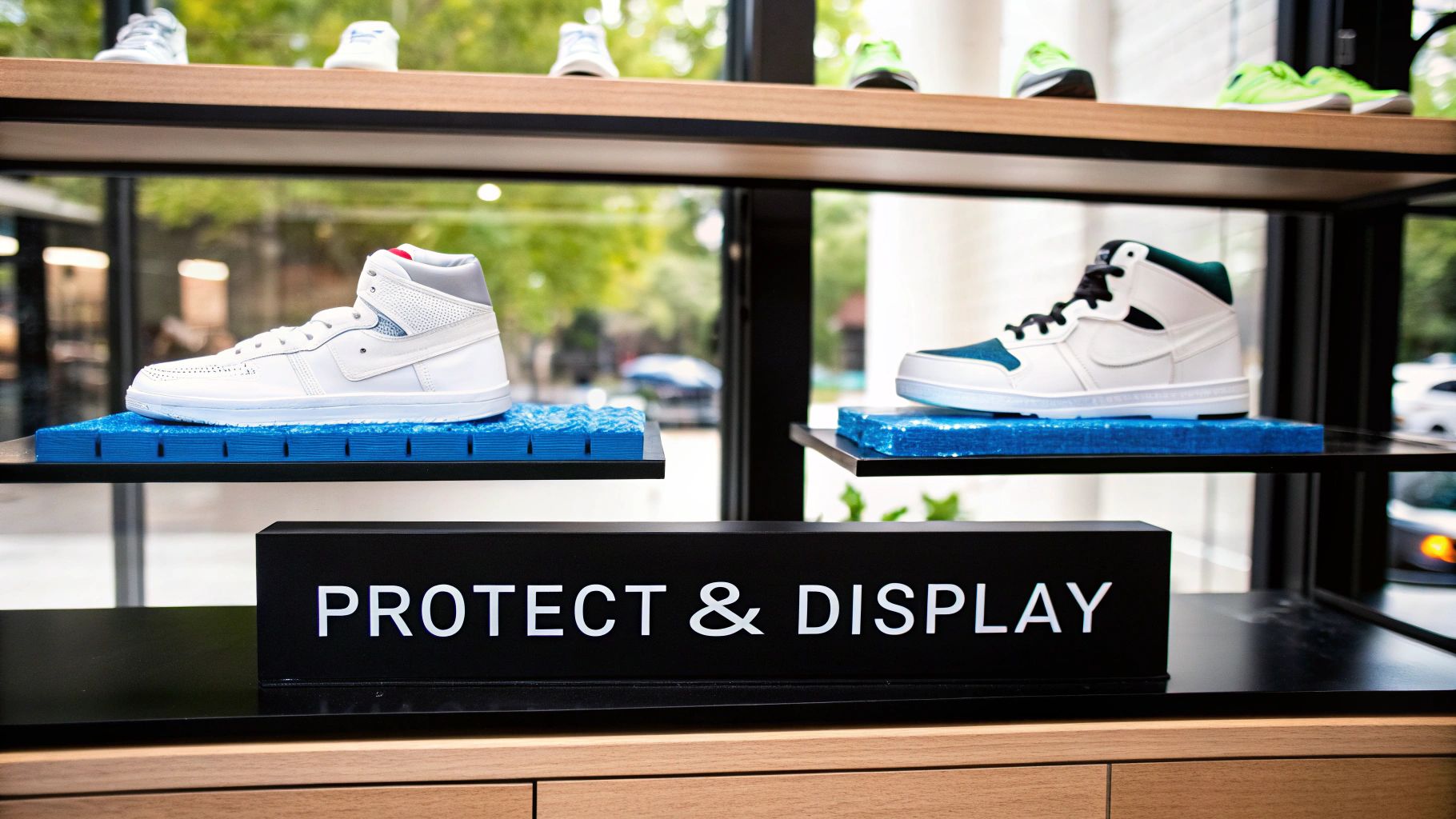
A safe display is not a passive shelf; it is an intentionally designed environment that actively shields sneakers from light, heat, and dust.
Strategic Placement for Shelves and Cases
The first rule of safe display is location. An otherwise excellent display system placed in a hazardous zone becomes a liability. Keep any open displays, such as floating shelves or bookcases, away from windows that receive direct or significant indirect sunlight.
Heat sources are another major threat. A display near a heating vent, radiator, or heat-producing electronics will dehydrate leather and degrade adhesives. The ideal location is on a cool, stable interior wall.
Wall-mounted shelving is a popular solution for maximizing space and creating a clean aesthetic. The market for shoe organization is rapidly expanding, projected to grow from $5.2 billion in 2023 to $8.4 billion by 2032. This growth is fueled by products designed for both display and preservation. Proper placement can reduce light-induced fading by over 50%, and well-preserved pairs command a resale premium of up to 22%. You can discover more insights about the shoe organizer market and its trajectory.
Creating a Controlled Micro-Environment
For top-tier pairs, a dedicated display case provides the highest level of protection. Within the case, you can create an even more controlled micro-environment.
Consider these professional techniques:
- Install UV-Protective Film: Apply clear UV-blocking film to the glass of the display case or any nearby windows. This can filter over 99% of harmful UV rays without altering visibility.
- Manage Humidity Discreetly: Place renewable silica gel packs or a small, wireless hygrometer inside the case to monitor and maintain humidity within the optimal 40-50% range.
- Ensure Gentle Airflow: A completely airtight seal is detrimental. Ensure the case allows for passive ventilation to prevent the buildup of off-gassed VOCs from adhesives and synthetic materials.
Expert Takeaway: A beautiful display becomes a liability if it exposes your collection to environmental threats. The best setups merge visibility with preservation, treating each sneaker as a valuable artifact that deserves to be both seen and safeguarded.
A safe display is an active component of your storage strategy. By selecting a location carefully and implementing protective measures like UV film and humidity control, you can create a gallery-worthy showcase that also functions as a sanctuary for your most valued pairs.
Your Top Sneaker Storage Questions, Answered
Even with a well-planned strategy, specific questions arise. Addressing these details is crucial for avoiding common and costly mistakes. Here are our answers to the most frequent inquiries from the sneaker community.
Is it acceptable to keep sneakers in their original box?
For short-term storage of a frequently worn pair, the original box is passable. For long-term preservation, it is highly inadvisable. The cardboard and the inks and glues used in its production are typically acidic. Over time, these acids can migrate to the sneaker, accelerating the yellowing of midsoles and other components.
Furthermore, cardboard is porous and readily absorbs ambient moisture, creating a micro-environment conducive to mildew. For any pair you intend to preserve, upgrading to an inert, ventilated acrylic box is a necessary investment.
How often should I check on my stored sneakers?
"Set it and forget it" is a dangerous approach. For sneakers in long-term storage, a physical inspection should be conducted every three to six months. This allows you to detect early signs of trouble, such as the initial onset of sole yellowing, changes in material texture, or the first hint of a musty odor.
This check-in is also an opportunity to verify the stability of your storage environment:
- Is the dehumidifier functioning correctly?
- Do the silica gel packets need to be recharged or replaced?
- Have environmental conditions in the room changed?
A few minutes of periodic inspection can prevent minor issues from becoming irreversible damage.
Are shoe trees necessary for every pair?
Yes. We advocate for the use of shoe trees in every pair designated for preservation. They are the single most effective tool for maintaining a sneaker’s intended shape, preventing toe box collapse, and minimizing wear-induced creasing.
Expert Takeaway: Consider shoe trees an investment in the structural integrity of your footwear. While plastic trees maintain shape, unfinished cedar shoe trees offer the additional benefit of absorbing residual moisture and acting as a natural deodorizer—a critical defense against the internal humidity that can degrade materials over time.
What about using vacuum-sealed bags for storage?
Under no circumstances should you use vacuum-sealed bags. This is a common but extremely damaging misconception. The pressure from vacuum sealing can physically crush the shoe's structure, causing permanent creasing in leather and deforming foam midsoles.
Worse yet, the airtight seal traps all the volatile organic compounds (VOCs) that naturally off-gas from the shoe's adhesives and synthetic materials. This creates a concentrated chemical environment that dramatically accelerates the decay of those adhesives, leading to sole separation and crumbling. Proper air circulation is non-negotiable for sneaker longevity.
The preservation of your collection begins before a sneaker ever enters storage. The foundational step is a thorough, material-safe cleaning. For that, Gold Standard provides a trusted solution. Our Premium Shoe Cleaner Kit is formulated with naturally derived ingredients that effectively remove contaminants without the harsh chemicals that cause long-term damage. Invest in proper care from day one.